

A content promotion strategy is a structured plan for distributing and amplifying published content across owned, paid, and earned media channels to maximize reach and engagement. Most creators publish great content and then do almost nothing with it. That gap between creation and distribution is where audience growth stalls. 97% of businesses using content marketing report positive results when they follow a documented distribution strategy. That number tells you one thing: the plan matters as much as the content itself. This content promotion strategies list covers every major tactic worth your time in 2026, from email and social to paid ads and the 3-3-3 recirculation framework.
1. What are the most effective content promotion strategies?
The most effective content promotion strategies combine owned, earned, and paid media into a repeatable system. No single channel does the job alone. Here are the core tactics that consistently deliver results.
Email marketing and list building
Email delivers the highest return on investment of any digital channel. Customer acquisition costs are 5 to 7 times higher than retention costs, which makes your existing email list the most cost-efficient distribution asset you own. Send every new piece of content to your list before you promote it anywhere else. Segment your list by interest or behavior to increase open rates.

Social media promotion with a quality focus
Post on the platforms where your audience already spends time. Quality beats quantity here. A single well-crafted post with a strong hook outperforms five generic updates. Use native formats: short video on TikTok and Instagram Reels, long-form threads on X, and carousels on LinkedIn. Each platform rewards content that keeps users on the platform, so adapt your format accordingly.
Paid advertising and PPC
Paid ads extend reach beyond your existing audience. Personalized landing pages matched to specific ads improve PPC campaign effectiveness by at least 5%. A micro landing page built around one offer converts better than sending paid traffic to a generic homepage. Start with a small daily budget, test two ad creatives, and scale what works.
Content repurposing and cross-promotion
One article can become a LinkedIn post, a short video script, an email newsletter, and a podcast talking point. Cross-promoting content across formats multiplies your reach without multiplying your production time. Repurposing also reinforces your message. Audiences rarely see every piece you publish, so repetition across formats builds recognition.
Community engagement and earned media
Post in relevant Reddit threads, Facebook Groups, Slack communities, and industry forums. Answer questions with genuine value, then link to your content when it directly answers the question. Earned media, including press mentions, podcast appearances, and guest posts, builds credibility that paid ads cannot buy. Pitch one guest post or podcast per month to compound your earned reach over time.
Influencer and partnership outreach
Co-promotions with creators in adjacent niches expose your content to warm, relevant audiences. A newsletter swap, a co-hosted webinar, or a shared social post costs nothing but coordination. Small business promotion tactics consistently show that partnership-driven reach outperforms cold paid traffic for brand trust.
Pro Tip: Build a simple content promotion checklist with 8 to 10 steps you run every time you publish. Consistency beats inspiration every time.
2. How to design an integrated multi-channel promotion plan
An integrated promotion plan means every channel tells the same story at the same time. Without coordination, your email says one thing, your ads say another, and your audience gets confused.
Step 1: Pick three core channels
Running excellent campaigns on three channels consistently outperforms mediocre campaigns spread across many channels. Choose channels based on where your audience is most active and where you have the capacity to show up well. For most creators and small businesses, the right three are email, one social platform, and either paid search or organic SEO.
Step 2: Apply the POEM framework
POEM stands for Paid, Owned, and Earned Media. Paid media buys reach. Owned media, like your email list and website, builds long-term audience assets. Earned media, like shares and press, adds credibility. A healthy promotion plan uses all three. Owned media assets like email lists are more sustainable than relying solely on algorithm-driven social reach. Platforms change their algorithms; your email list does not disappear overnight.
Step 3: Synchronize messaging
Write one core message for each campaign. Then adapt the tone and format for each channel without changing the central claim. Your email can be longer and more personal. Your social post should be punchy and visual. Your paid ad should focus on one clear benefit. Integrated campaigns telling a unified story outperform siloed channel efforts.
Step 4: Build a campaign calendar and asset map
Map out every asset you need before launch: the email copy, the social graphics, the ad creative, and the landing page. Assign deadlines and owners. A campaign calendar prevents last-minute scrambling and keeps your messaging synchronized across channels.
Pro Tip: Create a shared folder with all campaign assets labeled by channel and date. Anyone on your team can find the right version without asking.
3. What is the 3-3-3 content distribution rule and why does it matter?
The 3-3-3 distribution rule structures content promotion into three phases: launch (days 0–2), recirculation (days 3–7), and evergreen (days 30–90). Most creators stop promoting after day one. That is a costly mistake.
About 90% of B2B blog traffic happens within the first week without ongoing distribution. Without a recirculation plan, you abandon most of your potential audience before they ever see the content.
The three phases in practice:
- Launch (days 0–2): Publish and promote across all owned channels. Send your email, post on social, and run any paid ads. This is your highest-energy push.
- Recirculation (days 3–7): Reformat the content. Turn the article into a short video, a quote graphic, or a Twitter thread. Post in communities and pitch to partners for shares. Content recirculation beyond the launch phase can reclaim up to 80% of potential reach and engagement.
- Evergreen (days 30–90): Republish updated versions, add the piece to email sequences, and link to it from newer content. Evergreen distribution keeps older content generating traffic long after the launch buzz fades.
3-3-3 implementation checklist:
- Schedule launch emails and social posts before publishing
- Prepare two to three reformatted assets for recirculation week
- Add the piece to at least one email automation sequence
- Set a calendar reminder at day 30 to review and reshare
- Update the content at day 90 if the topic is still relevant
The 3-3-3 rule works because it matches how audiences actually discover content. Not everyone sees your launch post. Recirculation catches the people who missed it the first time.
4. Which promotion tactics offer the best cost efficiency?
Cost-efficient promotion focuses on retention and owned channels before spending on acquisition. The math is straightforward: acquiring a new customer costs 5 to 7 times more than keeping an existing one. Your email list, your social followers, and your website visitors are already warm. Promote to them first.
Owned vs. paid channel comparison:
| Tactic | Cost level | Best for |
|---|---|---|
| Email newsletter | Low | Retention, direct conversions |
| Organic social | Low | Awareness, community building |
| SEO content | Medium (time) | Long-term traffic |
| Paid social ads | Medium to high | Reach expansion, retargeting |
| PPC search ads | High | High-intent acquisition |
User-generated content and referral programs cost almost nothing to run. Ask your audience to share their results, tag you in posts, or refer a friend in exchange for a small incentive. This tactic builds social proof while extending your reach organically.
Set your promotional budget based on desired outcomes, not arbitrary revenue percentages. Decide how many leads or impressions you need, then work backward to the budget required. This approach prevents the most common small business mistake: spreading a small budget across too many channels and getting mediocre results everywhere.
Pro Tip: Use personalized links for every paid campaign. Tracking which link drove which conversion tells you exactly where to put your next dollar.
5. How to avoid the most common promotion mistakes
The biggest promotion mistake is treating social platforms as your primary audience home. Algorithms change, accounts get suspended, and reach drops without warning. Creators should treat social platforms as bridges to owned assets, not as primary destinations. Every social post should have one goal: move people to your email list, your website, or another owned channel.
Spreading your budget too thin is the second most common error. Spending $50 per month across six platforms produces nothing measurable. Spending $50 per month on one well-targeted channel produces data you can act on. Concentrate your resources until you see results, then expand.
Distinguish between cold prospecting and warm retargeting in your paid campaigns. Cold audiences need awareness-level messaging. Warm audiences who already visited your site or engaged with your content need conversion-level messaging. Running the same ad to both groups wastes money and confuses potential customers.
Track meaningful metrics: email open rates, click-through rates, conversion rates, and revenue per subscriber. Vanity metrics like follower counts and impressions feel good but rarely correlate with business outcomes. A multi-link strategy that consolidates your key destinations into one trackable hub makes it far easier to see which channels actually drive results.
Key Takeaways
The most effective content promotion strategies list combines owned, paid, and earned media in a structured, repeatable system that prioritizes depth on fewer channels over shallow presence on many.
| Point | Details |
|---|---|
| Owned media first | Build and promote to your email list before spending on paid acquisition. |
| Three channels beat ten | Consistent, quality effort on three channels outperforms thin presence on many. |
| Use the 3-3-3 rule | Structure promotion into launch, recirculation, and evergreen phases to maximize reach. |
| Match message to audience temperature | Use awareness messaging for cold audiences and conversion messaging for warm ones. |
| Track outcomes, not vanity metrics | Measure email clicks, conversions, and revenue per subscriber to guide budget decisions. |
Why most creators are promoting content backwards
The conventional advice says publish first, then promote. What I have seen consistently is that creators who plan their distribution before they write a single word get dramatically better results. They know which email segment will receive the piece, which social format they will repurpose it into, and which community they will share it with. The content itself gets shaped by the distribution plan, not the other way around.
The other thing most articles on this topic get wrong is the obsession with reach. Reach is a vanity metric unless it converts. I would rather have 500 email subscribers who open every message than 50,000 social followers who never click. Owned audience assets compound over time. Social reach is rented.
The hardest part of content promotion is not knowing what to do. Every creator knows they should be building an email list and repurposing content. The hard part is doing it consistently when you are also creating, editing, and running a business. The solution is a repeatable process, not more tactics. Build a promotion checklist, run it every time you publish, and measure what moves the needle. Adjust quarterly, not weekly.
— Axion
Lflow makes content promotion easier to manage
Running a multi-channel promotion plan means juggling links across email, social, paid ads, and communities. Lflow gives creators and marketers a single branded hub that consolidates every destination into one clean, trackable URL.
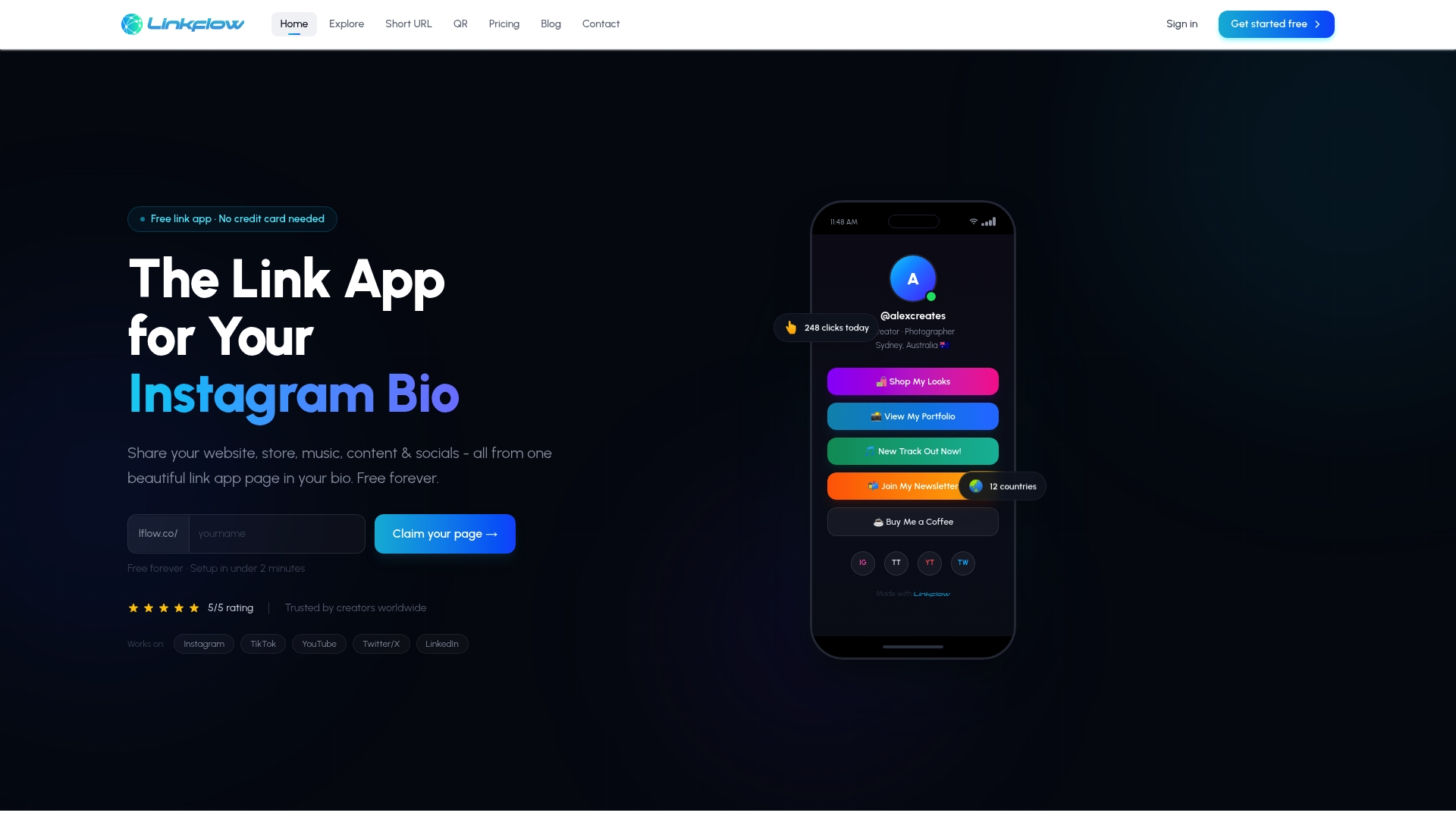
With free link in bio templates built for creators and small businesses, you can set up a professional link page in under two minutes. Lflow also includes a free QR code generator for offline promotion and a free URL shortener for cleaner campaign tracking. Real-time analytics show you exactly which links your audience clicks, so you can see which channels are actually working. Every tool is free to start, with no credit card required.
FAQ
What is a content promotion strategy?
A content promotion strategy is a documented plan for distributing published content across owned, paid, and earned channels to reach the right audience and drive measurable engagement.
How many channels should I promote content on?
Focus on three core channels consistently. Running strong campaigns on three platforms outperforms spreading thin effort across many, especially when budget and team bandwidth are limited.
What is the 3-3-3 distribution rule?
The 3-3-3 rule divides content promotion into a launch phase (days 0–2), a recirculation phase (days 3–7), and an evergreen phase (days 30–90) to extend content reach well beyond the initial publish date.
Why is email the most cost-efficient promotion channel?
Customer acquisition costs 5 to 7 times more than retention, making your existing email list the highest-return channel for content distribution. Email also bypasses algorithm restrictions that limit organic social reach.
How do I measure content promotion success?
Track email click-through rates, landing page conversion rates, and revenue per subscriber rather than follower counts or impressions. These metrics connect directly to business outcomes and guide smarter budget decisions.