

Effective online music promotion is a coordinated system, not a collection of isolated posts. The best ways to promote music online combine Spotify editorial pitching, short-form video content, email marketing, and press outreach into a single release campaign that builds on itself. Independent artists who treat each release as a standalone event consistently underperform compared to those running structured, multi-channel campaigns. Platforms like Spotify, TikTok, and Instagram reward consistency and early engagement, making timing and coordination as important as the music itself.
1. What are the best ways to promote music online?
The most effective online music marketing strategies share one trait: they run across multiple channels at the same time. Playlist pitching, social content, email outreach, and PR all reinforce each other when timed around a single release. Coordinated campaigns across playlisting, PR, social media, and live shows generate more sustainable audience growth than any single tactic. That means your Spotify pitch, your TikTok content, and your email newsletter should all point toward the same release date.

The standard industry term for this approach is a "release campaign." Most artists skip the planning phase and wonder why streams plateau after day one. A release campaign gives every channel a role and a timeline, so nothing is wasted.
2. Pitch Spotify editorial playlists before anything else
Spotify for Artists pitching is the highest-leverage free promotion tool available to independent musicians. Submit your pitch at least 7 days before release to qualify for editorial playlists and Release Radar. Ideally, pitch 3–4 weeks out to give Spotify's editorial team enough time to evaluate your track.
Three types of playlists matter here:
- Editorial playlists are curated by Spotify's internal team and require the official pitch tool inside Spotify for Artists.
- Algorithmic playlists like Discover Weekly and Release Radar respond to early saves and listener engagement.
- Independent curator playlists are run by bloggers and playlist managers you can contact directly.
Pre-saves drive algorithmic results. When fans save your track before it drops, Spotify's algorithm reads that as demand and pushes the song into more listener feeds. Personalized outreach to independent curators also works. Reference their playlist by name, explain why your track fits their audience, and keep the message under 100 words.
Pro Tip: Use a waterfall release strategy by dropping singles every 4–6 weeks. Each release keeps you active in streaming algorithms and creates a new pitching window.
3. Use short-form video to drive music discovery
TikTok, Instagram Reels, and YouTube Shorts are the primary discovery channels for independent artists right now. Short-form video platforms can deliver massive reach even with small follower counts, but viral views do not guarantee sustained listener intent. A video with 500,000 views means nothing if none of those viewers save your song or follow your profile.
Post 3–7 times per week across your primary platform. Use the 70/20/10 content rule: 70% value-driven content (behind the scenes, songwriting process, relatable moments), 20% community content (responding to fans, duets, collaborations), and 10% direct promotion (new releases, merch, show dates). This ratio keeps your feed from feeling like an advertisement.
TikTok's algorithm surfaces content to non-followers by default, making it the strongest discovery tool for new artists. Meta platforms (Instagram and Facebook) favor retargeting, meaning they work better for converting existing fans into buyers or stream listeners. Use both, but understand what each one does well.
Pro Tip: Check your social media content strategy for each platform before posting. What works on TikTok rarely translates directly to Instagram without adjustments.
4. Build an email list you actually own
Email marketing delivers the highest return on investment of any channel available to musicians. Artists with 500 engaged email subscribers often generate more release-day streams than artists with 10,000 passive social media followers. That gap exists because email reaches people who asked to hear from you, while social algorithms decide who sees your posts.
Build your list through smart links, pre-save pages, and incentives. Offer something specific: an unreleased demo, a discount code, early access to tickets. Vague "join my newsletter" prompts convert poorly. Once you have subscribers, send them content that rewards their attention: studio updates, the story behind a lyric, exclusive listening links.
Community platforms like Discord extend this further. A Discord server lets your most engaged fans interact with each other, which deepens loyalty without requiring you to post constantly. The most successful independent artists build an owned email list from day one and use it for exclusive content and early release access.
Pro Tip: Pair your email list with direct outreach techniques to build genuine fan relationships that social platforms cannot replicate.
5. Invest in paid ads only after organic proof
Paid advertising amplifies content that already works. Running ads on a song that has no organic traction wastes budget. Effective paid campaigns focus on scaling content that has shown organic success and optimizing for intent actions rather than impressions or views.
TikTok ads require a minimum of $50 per day at the campaign level and $20 per day at the ad group level. Meta ads can start at $5–$10 per day, making them more accessible for artists testing their first paid campaign. Start small, run two or three creative variations, and measure saves and profile follows rather than raw view counts.
Paid ads are a multiplier, not a starting point. If your organic content is not converting attention into saves and follows, more ad spend will not fix that. Fix the content first, then scale what works.
Lookalike audiences on Meta let you target people who share characteristics with your existing fans. This is one of the most efficient ways to reach new listeners who are likely to engage. Avoid any service that promises guaranteed streams or playlist placements for a fee. These violate platform terms of service and can result in account penalties.
Pro Tip: Monitor intent actions like saves, follows, and playlist adds rather than clicks. Those metrics tell you whether listeners actually want more of your music.
6. Pitch music blogs and press for credibility
Press coverage provides three things that social media cannot: credibility, SEO backlinks, and third-party social proof. PR and music blog coverage help sustain long-term music promotion success by giving potential fans a reason to trust you before they press play.
A strong press kit includes:
- A high-resolution photo (at least 300 DPI)
- A short bio (under 150 words) written in third person
- A one-paragraph description of the new track, including genre, mood, and influences
- An embeddable stream link or private SoundCloud link
- Your social media handles and contact email
Research blogs that cover your genre specifically. Pitching a hip-hop blog with an ambient folk track wastes everyone's time. Reference a recent article the blog published and explain why your music fits their audience. Follow up once, politely, after 10 days. Realistic expectations matter here: even a well-crafted pitch has a low acceptance rate, so volume and targeting both count.
7. Centralize your links with a smart hub
Every channel you use (Spotify, TikTok, Instagram, your website, your merch store) needs to point somewhere. Sending fans to a different link every time you post creates friction and loses conversions. Smart links that aggregate streaming platforms increase conversion opportunities and provide analytics to inform your marketing focus.
A single, branded link hub solves this. You post one URL in your bio, and fans can reach your music, your store, your email signup, and your social profiles from one page. Tools like artist bio links let you track which links get clicked, so you know where your audience actually goes. That data tells you which platforms to prioritize in your next campaign.
Pro Tip: Use a free QR code alongside your smart link for offline promotion. Print it on flyers, merch, and show posters to capture fans who discover you in person.
8. Optimize your social profiles before you promote
A strong profile is the first thing a new listener sees after clicking your content. If your bio is vague, your profile photo is blurry, or your link leads nowhere useful, you lose that fan before they ever hear a full song. Social profile optimization directly affects how many new visitors convert into followers and streams.
Write a bio that tells someone who you are in two sentences. Include your genre, your location if it matters to your brand, and one specific detail that makes you memorable. Pin your best-performing content to the top of your profile. Update your link in bio every time you have a new release, and make sure that link leads to a page with clear next steps for the fan.
Key Takeaways
The most effective music promotion strategy combines Spotify editorial pitching, short-form video content, owned email marketing, and coordinated press outreach into a single, repeatable release campaign.
| Point | Details |
|---|---|
| Pitch Spotify early | Submit to Spotify for Artists 3–4 weeks before release for the best editorial playlist consideration. |
| Own your audience | An email list of 500 engaged subscribers outperforms 10,000 passive social followers on release day. |
| Earn organic traction first | Run paid ads only on content that already converts attention into saves and follows. |
| Coordinate all channels | Align your social content, email sends, and PR pitches around one release date for maximum impact. |
| Centralize your links | Use a single smart link hub to reduce friction and track where your audience actually engages. |
What I've learned about building a real promotion system
Most artists I've watched struggle share the same mistake: they treat every release as a fresh start. They post the day the song drops, pitch one playlist, and move on when streams plateau after a week. That approach guarantees mediocre results regardless of how good the music is.
The artists who grow consistently run structured 8-week release campaigns with pitching starting 3–4 weeks before the drop and content running for 6 weeks after. They treat their email list as their most valuable asset, not an afterthought. They do not chase viral moments. They build systems that produce predictable results across every release.
The uncomfortable truth is that promotion is a skill, and most artists invest far more time in their craft than in learning how to share it. That imbalance is fixable. Start with one channel, do it consistently for 90 days, and measure what moves. Then add the next channel. The magic of digital music promotion happens when streaming, PR, social media, and email are coordinated and synchronized. That coordination does not happen by accident. It requires a plan.
— Axion
Lflow makes it easier to connect every channel
Running a multi-channel music promotion campaign means managing a lot of links. Every platform, every release, every campaign needs a clear destination for your fans.
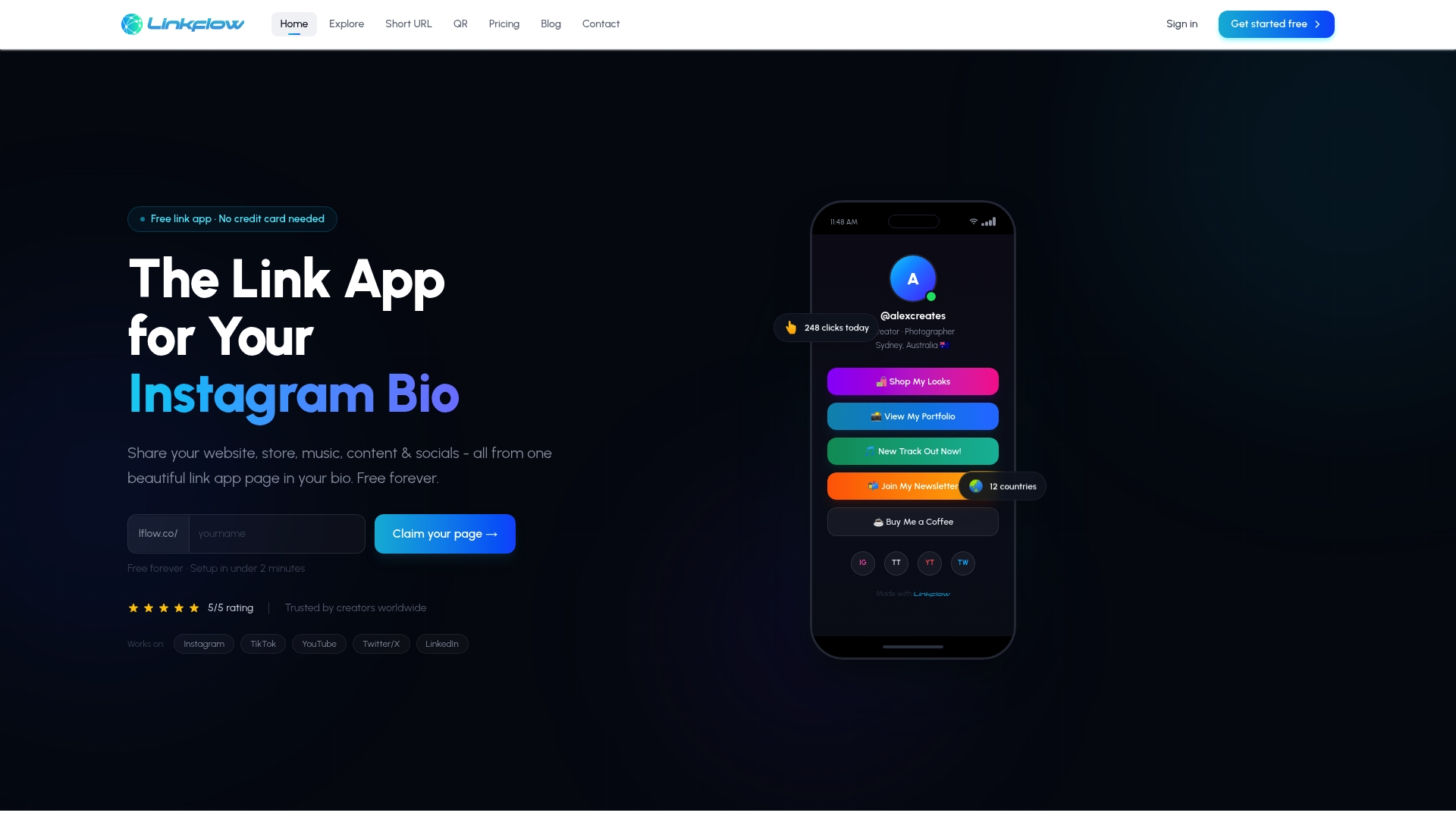
Lflow gives you a free, branded link in bio page that consolidates your Spotify, TikTok, Instagram, merch store, and email signup into one professional hub. Setup takes under two minutes, and real-time analytics show you exactly which links your fans click. You can also generate a free QR code for offline promotion and use free link in bio templates designed specifically for musicians. Every tool is free, mobile-optimized, and ready to support your next release campaign from day one.
FAQ
How early should I pitch Spotify for Artists?
Submit your pitch at least 7 days before your release date, but 3–4 weeks ahead gives editorial teams the best opportunity to consider your track for curated playlists.
What is the best platform for music discovery in 2026?
TikTok delivers the widest organic reach for artists with small followings because its algorithm surfaces content to non-followers by default, making it the strongest discovery tool available.
How do I build an email list as a musician?
Offer a specific incentive such as an unreleased track or early ticket access in exchange for an email address, and drive sign-ups through your smart link hub and pre-save pages.
Are paid ads worth it for independent artists?
Paid ads work when you scale content that already shows organic engagement. Start with $5–$10 per day on Meta and measure saves and follows, not just views.
What should a music press kit include?
A press kit needs a high-resolution photo, a short third-person bio, a one-paragraph track description, a stream link, and your contact information and social handles.