

A link hub is a centralized, owned webpage that consolidates every important link an artist controls, from portfolio pages and merch stores to press kits and social profiles, into a single professional destination. This is the core reason why artists need link hubs: scattered links across Instagram, TikTok, and YouTube bios fragment your audience and hand control of your digital presence to platforms you do not own. Tools like Lflow give artists a branded, analytics-backed hub that works as a real headquarters, not just a list of URLs. The difference between a basic bio link and a true link hub is the difference between a sticky note and a storefront.
Why artists need link hubs more than basic bio links
A link hub gives artists something a standard bio link never can: brand ownership. Social media profiles are leased spaces. When an algorithm changes or a platform restricts your reach, you lose ground you cannot recover. A link hub sits on a domain you control, and social media profiles are leased spaces while link hubs offer a stable, owned digital home critical for press, agents, and long-term growth.

The SEO gap between a link hub and a basic link list is significant. Linktree pages carry almost zero SEO value because they contain almost zero content. A search engine cannot index a list of buttons. A link hub built with descriptive copy, clear headings, and real context gives Google and AI-driven search tools something to read, rank, and surface to new audiences.
Here is what a well-built link hub delivers that a basic bio link cannot:
- Brand narrative control: You write the copy, set the visual tone, and decide what visitors see first.
- SEO indexability: Rich content and logical structure make your hub discoverable through organic search.
- Audience segmentation: You can direct fans to new music, direct press to your media kit, and direct clients to your commission inquiry form, all from one page.
- Conversion tracking: Real-time analytics show you which links get clicked, by whom, and when.
- Professional credibility: Journalists and booking agents move on if they cannot find a professional, centralized digital hub quickly.
"A link hub is not a convenience feature. It is the single most controllable piece of digital real estate an artist owns outside of a full website." — Creative tech strategist perspective, via Social Animal
The analytics point deserves emphasis. Knowing that 60% of your hub visitors click your merch link but ignore your newsletter signup tells you exactly where to focus your next campaign. That data does not exist inside a standard bio link.
How do link hubs fit into an artist's full digital ecosystem?
Artists typically manage a website, multiple social profiles, a merch store, a newsletter, and a press kit. Without a central hub, every one of those destinations competes for attention. A link hub acts as the gateway that connects all of them without replacing any.
The distinction between a link hub, a product hub, and a full website matters here. Each serves a different function.
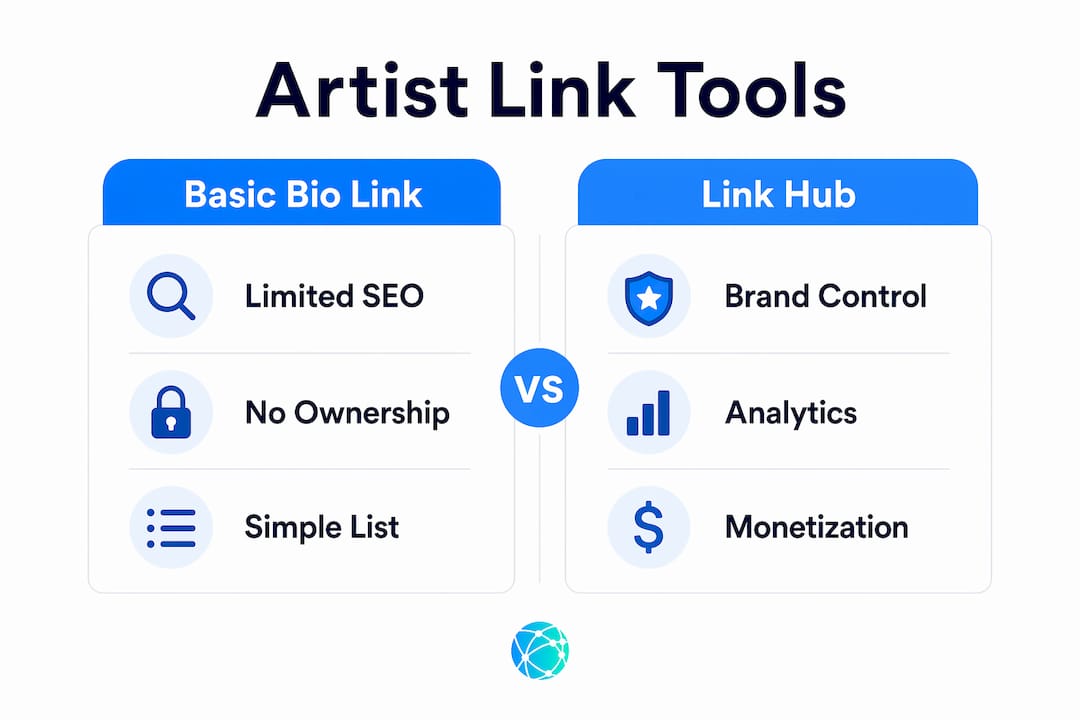
| Tool | Primary purpose | SEO value | Monetization | Best for |
|---|---|---|---|---|
| Basic bio link (e.g., Linktree) | Share multiple URLs | Very low | None | Casual link sharing |
| Link hub | Centralize and brand all destinations | Medium to high | Indirect (drives traffic) | Artists, creatives, professionals |
| Product hub | Showcase and sell products directly | High | Direct sales | Merch-heavy creators |
| Full website | Complete online presence | Highest | Full e-commerce possible | Established brands |
A link hub sits between a basic bio link and a full website. It is more purposeful than a list of URLs and faster to build and update than a complete site. Product hubs provide visual product showcases, themed setups, enhanced analytics, and long-term earning potential versus text lists, making them the next step for artists who sell physical or digital goods.
The key insight for artists managing multiple audiences is separation. A visual artist who also teaches workshops serves two very different audiences. Fans want to see new work and buy prints. Students want course schedules and registration links. Mixing those two groups on one page creates confusion and reduces conversion for both. Using distinct hubs for portfolio, social, and collaborators isolates identities and prevents mixing audiences.
Pro Tip: Build one hub for your public-facing creative work and a separate hub for professional inquiries, press, and collaborations. Label each clearly and link between them only when the crossover makes sense.
What are the best practices for setting up an artist link hub?
Structure is the first decision. A link hub without clear organization is just a fancier version of the problem you are trying to solve. Group your links by audience intent, not by platform. "Listen to my music" belongs in a different section than "Book me for an event."
Follow this setup sequence for a link hub that actually converts:
- Define your audiences first. List every type of person who visits your profile: fans, press, clients, collaborators. Each group needs a clear path.
- Write descriptive copy for each link. "Shop prints" converts better than "Store." Tell visitors what they get, not just where they go. This also feeds SEO, since the 2026 search landscape favors pages that are modular, clearly labeled, and rich in context for passage-level retrieval.
- Prioritize your top three links visually. Place your most important calls to action above the fold. Most visitors will not scroll.
- Connect your mailing list. A link hub that funnels social traffic into owned channels like email lists or online stores increases long-term audience loyalty and revenue potential. An email address you own is worth more than a follower you rent.
- Add a press kit section. Include a downloadable bio, high-resolution photos, and a contact email. This single addition makes you immediately accessible to curators, journalists, and event organizers.
- Set an update schedule. Review your hub every four to six weeks. Remove outdated links, add new releases, and check your analytics to see what is working.
Avoid the most common pitfall: treating your hub as a static page. Changing links constantly confuses followers and weakens conversion, but never updating your hub is equally damaging. The goal is a living page that reflects your current work and priorities.
Pro Tip: Use your hub's analytics to run simple A/B tests. Change one link label or button color per month and track whether click rates improve. Small changes compound over time.
Branding consistency matters more than most artists realize. Your hub should use the same color palette, fonts, and tone of voice as your other platforms. A visitor who lands on your hub from Instagram should feel like they are still in your world. Platforms like Lflow offer link branding tools that let you match your hub's visual identity to your existing creative brand without needing a designer.
How advanced artists use link hubs to manage multiple audiences
Experienced creatives treat link hubs as long-term digital assets, not temporary campaign pages. The difference in mindset produces very different results. A temporary page gets built for a single album drop and forgotten. A long-term asset gets refined, measured, and improved with every campaign.
A well-built link hub acts as a control center for growth, providing reliable data on audience behavior and allowing rapid adaptation to platform volatility. When TikTok restricts external links or Instagram changes its algorithm, an artist with a strong hub loses nothing. They update one page and every platform reflects the change.
Advanced strategies used by established creatives include:
- Multiple specialized hubs: One for fans and public work, one for industry contacts and press, one for teaching or consulting. Each hub speaks directly to its audience without distraction.
- Editorial-style content: Treating the hub as a mini-publication with short descriptions, project context, and curated visuals. This supports AI-driven search and passage-level content retrieval, making the hub discoverable beyond social media.
- Conversion data loops: Using click data to identify which projects generate the most interest, then doubling down on promotion for those specific works.
- QR code integration: Linking physical work, exhibition cards, and merchandise tags to the hub via QR codes, creating a direct path from offline to online.
"The artists who grow consistently are the ones who treat their link hub like a product. They ship it, measure it, and improve it. Everyone else treats it like a chore." — Insight from Link Hubs, Volatility and Creator Growth
Industry experts confirm that link hubs should be conversion-focused, organizing links by audience intent to guide visitors rather than overwhelming them with unstructured lists. The artists who understand this build audiences. The ones who ignore it build follower counts that never convert.
Key Takeaways
A link hub is the single most controllable digital asset an artist owns, and building one correctly determines whether your online presence generates real career opportunities or just accumulates passive followers.
| Point | Details |
|---|---|
| Own your digital home | Social profiles are rented space; a link hub is an owned, stable destination you control. |
| SEO requires real content | Basic bio links have no SEO value; link hubs with descriptive copy get indexed and discovered. |
| Segment your audiences | Separate hubs for fans, press, and clients prevent confusion and improve conversion for each group. |
| Update on a schedule | A hub reviewed every four to six weeks stays relevant and continues to drive clicks. |
| Analytics drive decisions | Real-time click data tells you what your audience actually wants, not what you assume they want. |
The case for treating your hub as your most important creative asset
I have watched artists spend months perfecting their Instagram grid while their bio link points to a dead Linktree page with three outdated URLs. The grid looks great. Nobody buys anything. Nobody books them. The problem is not the work. The problem is that the path from "I love this artist" to "I want to hire or buy from this artist" is broken.
A link hub fixes that path. Not because it is a magic tool, but because it forces you to think clearly about what you want people to do when they find you. That clarity alone is worth more than any algorithm trick.
The artists I have seen grow most consistently share one habit: they treat their hub like a product launch. They plan it, test it, and update it based on what the data tells them. They do not set it and forget it. They also separate their audiences deliberately. A photographer who shoots weddings and also sells fine art prints needs two different conversations happening in two different places.
The long-term benefit goes beyond clicks. A well-maintained hub builds a professional reputation that compounds over time. Press contacts save it. Curators reference it. Agents send it to clients. That kind of discoverability does not come from a follower count. It comes from having a credible, organized, and current digital presence that makes it easy for the right people to say yes.
If you have been putting off building a proper hub because it feels like a technical project, stop waiting. The setup takes less time than you think, and the cost of not having one is real career opportunities you will never know you missed.
— Axion
Start building your artist link hub with Lflow
Lflow gives artists a free, professional link hub with unlimited links, real-time analytics, and a downloadable QR code built in. Setup takes under two minutes, and the customization options, including themes, fonts, colors, and custom domains, mean your hub looks like your brand from day one.
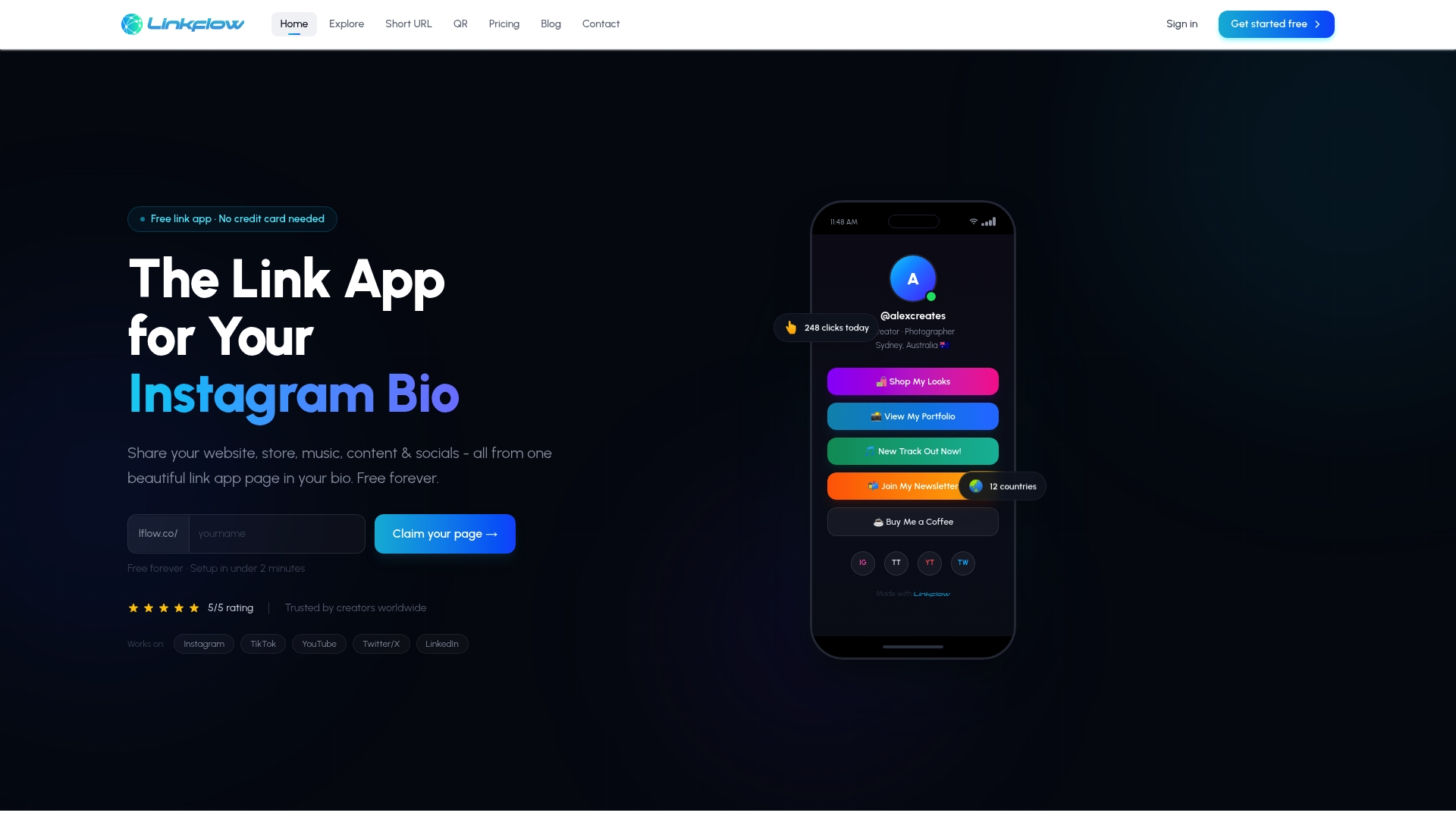
Whether you are a musician directing fans to new releases, a visual artist linking to your shop and press kit, or a freelance creative managing client inquiries, Lflow handles the structure so you can focus on the work. Start with the free link in bio tool and have a professional hub live before your next post goes out. No technical skills required, no credit card needed.
FAQ
What is a link hub for artists?
A link hub is a centralized webpage that consolidates all of an artist's important links, including portfolio, store, social profiles, and press kit, into one branded, owned destination. It functions as a professional digital headquarters that works across every platform.
How is a link hub different from Linktree?
Linktree and similar tools create basic lists of buttons with almost no SEO value or branding control. A full link hub includes descriptive copy, visual identity, analytics, and indexable content that search engines can rank and AI tools can retrieve.
Why do artists need link hubs for press and bookings?
Journalists and booking agents expect to find a bio, press photos, and contact information in one place quickly. Artists without a professional hub risk being passed over because industry contacts will not search multiple platforms to piece together basic information.
How often should an artist update their link hub?
A review cycle of every four to six weeks keeps the hub current and relevant. Update it after new releases, exhibitions, or campaigns, and use click analytics to remove links that generate no traffic.
Can an artist have more than one link hub?
Yes. Advanced creatives use multiple specialized hubs to separate audiences, such as one for fans and one for industry contacts, preventing brand confusion and keeping conversion data clean for each audience segment.