

A link hub platform is a centralized landing page that consolidates multiple key destinations into one URL, giving visitors a structured menu of next actions rather than a dead end. Platforms like Linktree, Beacons, and Lflow have made this concept mainstream, but most marketers still treat their link hub as a convenience feature rather than a strategic asset. That's a costly mistake. A well-built link hub converts social media clicks into sustained engagement, preserves attribution data across channels, and functions as the connective tissue between your Instagram bio, your TikTok profile, your email list, and your product pages. Explaining link hub platforms fully means understanding both what they do and why their architecture matters.
What is a link hub and how does it work?
A link hub is a centralized landing page consolidating multiple important destinations for users to choose their next action. It acts as a routing layer rather than replacing your full website, sitting between your social media bio and the destinations you actually want people to reach.
Think of it this way: your Instagram bio allows one URL. Without a hub, you pick one destination and lose every other conversion opportunity. With a hub, that single URL expands into a structured menu of choices, from your latest product launch to your newsletter signup to your YouTube channel.
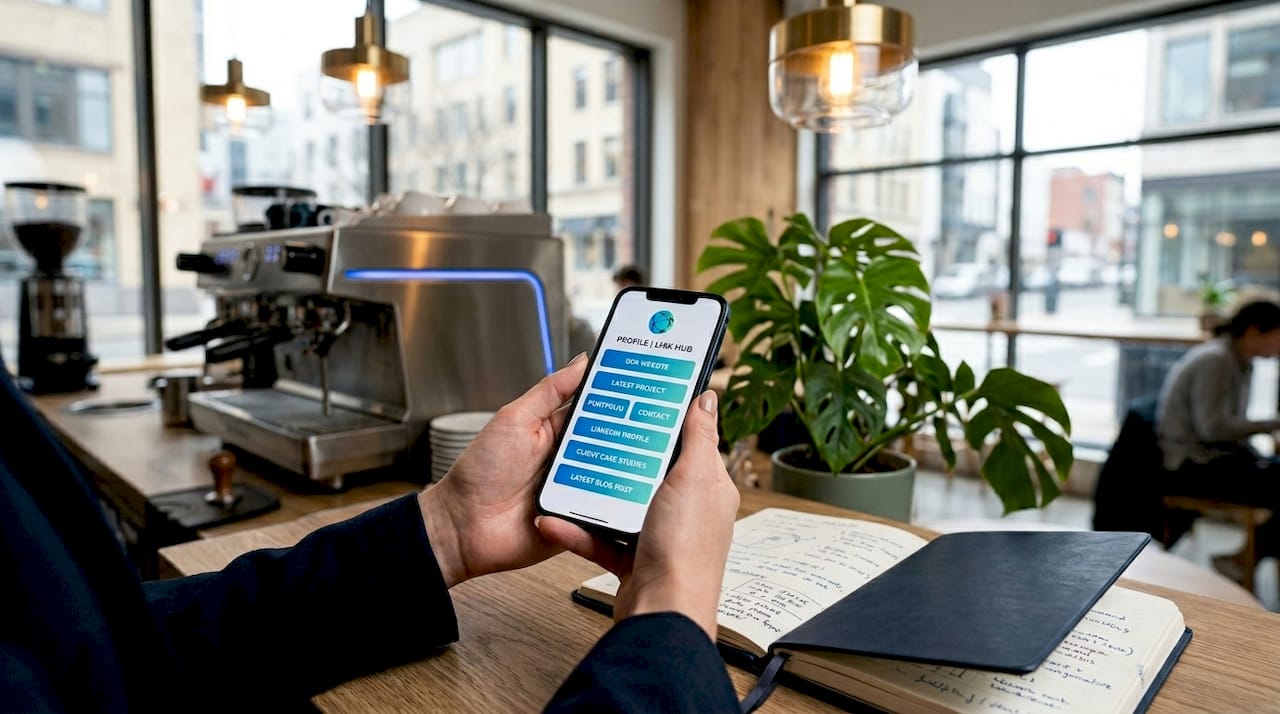
The mechanics are straightforward. A visitor clicks your bio link, lands on your hub page, and selects the destination most relevant to them. The hub records that click, passes attribution data downstream, and routes the visitor accordingly. What separates a real link hub from a basic list of URLs is the layer of intelligence built into that routing.
Link hubs also solve a timing problem that most marketers underestimate. Social media discovery spikes last roughly 24 hours before an algorithm buries the post. A well-structured hub preserves audience intent and converts that brief spike into traffic that compounds over weeks and months through search and direct visits. Your hub URL stays consistent even as your content changes around it.
Pro Tip: Treat your hub URL like a permanent address. Change the links inside it as often as you want, but never change the URL itself. Consistency is what allows it to accumulate SEO authority and audience familiarity over time.
What are the benefits of using link hub platforms?
The benefits of link hubs extend well beyond convenience. For digital marketers and creators, the platform delivers measurable advantages across attribution, branding, and conversion performance.
- Sustained traffic from social spikes. Social discovery is ephemeral, but a hub page indexed by Google can receive organic traffic long after the original post disappears. This compounds your content investment.
- Clean attribution across channels. Tagging outbound links with UTMs (for example, utm_source=instagram or utm_source=tiktok) lets you see which platform actually drives conversions, not just which platform sends visitors to your hub.
- Dynamic content management. You update one hub page instead of editing bios across Instagram, TikTok, LinkedIn, and Twitter/X separately. One change propagates everywhere your hub URL appears.
- Brand trust through custom domains. Custom branded short domains increase click-through rates and signal professionalism. A URL like links.yourbrand.com outperforms a generic third-party subdomain in both trust and memorability.
- Richer analytics for optimization. Hub platforms surface click data by link, by time of day, and by device type. This tells you which offers resonate, which content categories underperform, and where to focus your next campaign.
- Reduced decision fatigue through intent grouping. Grouping links by audience intent and staging calls to action by temperature (hot campaigns, warm product pages, evergreen content) increases engagement and conversion rates compared to flat, undifferentiated lists.
"A link hub is not a shortcut. It's a measurement system, a branding asset, and a conversion tool wrapped into a single URL."
The attribution benefit alone justifies the investment. Most marketers running multi-channel campaigns have no idea whether their Instagram Reels or their LinkedIn posts actually drive sales. A properly tagged hub answers that question with data.
How do link hubs differ from simple link lists or generic bio pages?
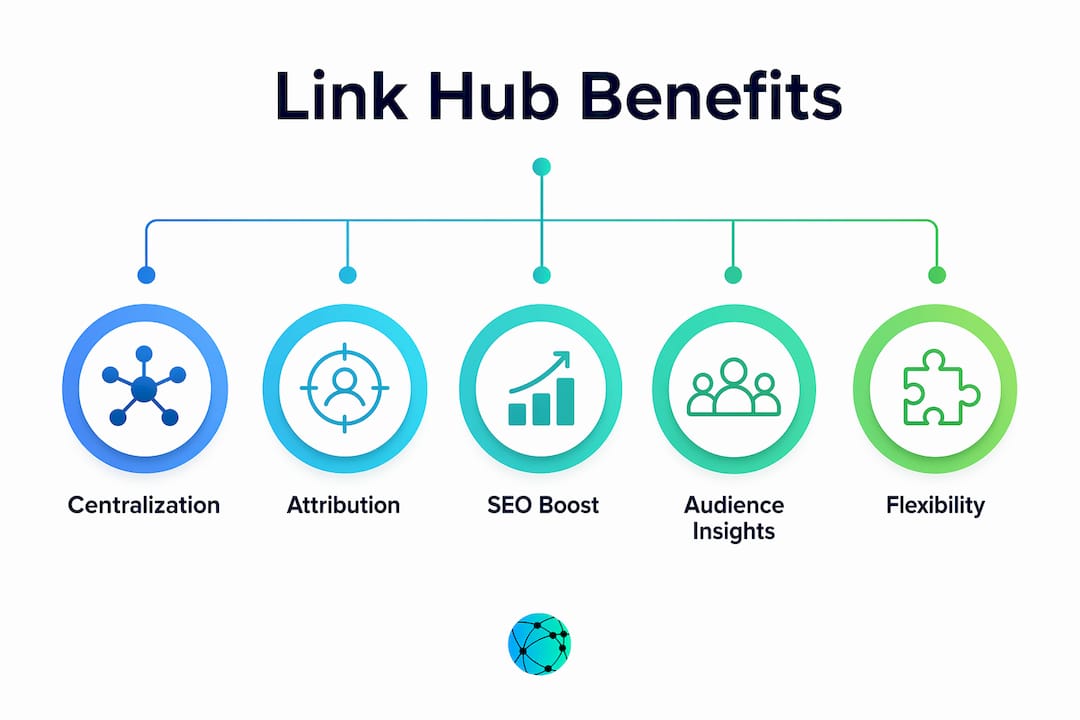
The difference between a link hub and a generic bio page is the difference between a curated menu and a pile of business cards. Both contain information. Only one guides the visitor toward a decision.
Simple link lists are flat and undifferentiated. Every link receives equal visual weight, equal positioning, and zero context. A visitor landing on that page has no signal about which link matters most or which one matches their intent. The result is higher bounce rates and lower conversion.
Smart link hubs function as lightweight discovery systems with content hierarchy, descriptive labels, and semantic structure that serves both human visitors and AI-driven search systems. A flat button list labeled "Shop," "Blog," and "Contact" tells a search engine almost nothing. A hub with labeled sections, descriptive link text, and structured groupings tells both the algorithm and the visitor exactly what to expect.
| Feature | Generic bio page | Smart link hub |
|---|---|---|
| Link hierarchy | Flat, equal weight | Prioritized by intent and campaign stage |
| Analytics | Page-level views only | Per-link click data with source attribution |
| SEO value | Minimal | Structured labels improve machine readability |
| Update frequency | Manual, scattered | Centralized, real-time updates |
| Branding | Generic subdomain | Custom branded domain option |
The SEO dimension is increasingly significant. Designing link hubs like an SEO hub-and-spoke model with semantic clusters and clear labels improves navigation, machine interpretability, and conversion. As AI-powered search tools like Perplexity and ChatGPT increasingly surface direct answers from structured web content, a semantically organized hub has a real discoverability advantage over a flat link dump.
Pro Tip: Label every link on your hub with a brief description, not just a title. "Download the free 2026 content calendar" outperforms "Free Download" in both click rate and AI discoverability.
How to effectively use and optimize link hub platforms
Setting up a link hub takes minutes. Optimizing it for real performance takes a system. Here is how to build that system from the ground up.
Start with platform-specific UTM tagging. The most common mistake marketers make is using one generic hub URL across every channel. Create platform-specific short links with destination-level UTMs to avoid losing attribution data. Your Instagram bio link should carry utm_source=instagram. Your TikTok bio link should carry utm_source=tiktok. Both point to the same hub, but your analytics now separate the traffic cleanly.
Structure links by audience journey stage. Organize your hub into three temperature zones:
- Hot links are time-sensitive campaign pages, limited offers, or new content drops. Place these at the top.
- Warm links are product pages, service pages, and lead magnets that convert visitors who need a little more context.
- Evergreen links are your best content, your about page, and your social profiles. These anchor the bottom of the hub.
Use descriptive labels, not generic button text. "Watch the tutorial" converts better than "YouTube." "Get the free audit" converts better than "Contact." Specificity reduces hesitation and increases clicks.
Review and update based on click data. Link hubs work best as continuously updated routing maps where link priority and labels evolve based on actual user click behavior. Check your hub analytics weekly during active campaigns and monthly during quieter periods. Demote underperforming links. Promote what's working.
Add QR codes for offline channels. QR codes integrated into link hub strategies enable tracking of offline engagement from events, product packaging, and printed materials. Each QR code links to a branded short URL, maintaining full tracking and retargeting capability. This closes the loop between your physical and digital marketing.
| Optimization tactic | Impact area | Difficulty |
|---|---|---|
| UTM tagging per platform | Attribution accuracy | Low |
| Intent-based link grouping | Conversion rate | Low |
| Descriptive link labels | Click-through rate | Low |
| Custom branded domain | Trust and branding | Medium |
| Weekly analytics review | Ongoing performance | Medium |
| QR codes for offline traffic | Channel coverage | Low |
For deeper guidance on tracking the performance of each link, the link tracking guide from Lflow covers attribution methods in detail.
Pro Tip: Run A/B tests on your top two hub links by swapping their position for two weeks. Position one consistently outperforms position three, but the magnitude of that difference tells you how price-sensitive or intent-driven your audience actually is.
What tools are available for building link hubs?
The link hub platform overview has expanded significantly. Creators and marketers now have options ranging from free, template-based tools to fully custom-coded solutions.
Popular platforms by use case:
- Linktree is the most recognized name in the category. Its free tier is functional but limited on analytics and branding. The paid tiers add custom domains and deeper click data.
- Beacons targets creators specifically, with built-in monetization features like tip jars and digital product sales alongside standard link management.
- Lflow combines free link-in-bio pages with real-time analytics, custom domains, QR code generation, and mobile-optimized templates. The onboarding process takes under two minutes, which makes it practical for both solo creators and marketing teams managing multiple brand profiles.
- Generic website builders like Squarespace or Webflow can replicate hub functionality but require significantly more setup time and technical knowledge, with no built-in link analytics.
The free versus paid decision comes down to one question: do you need attribution data? Free tiers on most platforms show total page views. Paid tiers show per-link clicks, geographic data, and device breakdowns. For any marketer running paid campaigns or managing multiple channels, per-link data is not optional. It's the only way to know what's working.
For local service businesses, online lead generation strategies that incorporate link hubs can significantly improve conversion tracking from Google Business Profile and social ads. The hub becomes the single conversion point across every traffic source.
Affiliate marketers benefit from link hubs differently. Rather than exposing raw affiliate URLs in bios (which look untrustworthy and can be stripped by platforms), a hub page presents affiliate destinations as curated recommendations with clean, branded links. This improves click rates and protects commission attribution.
Key takeaways
A link hub platform is the most underutilized tool in digital marketing because most users treat it as a static page rather than a living measurement system.
| Point | Details |
|---|---|
| Core function | A link hub consolidates multiple destinations into one URL, acting as a routing layer between social media and your key pages. |
| Attribution is critical | Tag every outbound link with platform-specific UTMs to separate Instagram, TikTok, and LinkedIn traffic in your analytics. |
| Structure beats lists | Intent-based groupings and descriptive labels outperform flat link lists for both conversion rates and AI discoverability. |
| Treat it as infrastructure | Update link priorities based on click data weekly during campaigns, not just when you remember to. |
| Offline integration | QR codes linked to branded hub URLs extend your tracking into events, packaging, and print materials. |
Why most link hubs fail before they start
Most link hubs fail not because the platform is wrong but because the thinking behind them is wrong. Marketers build a hub once, add seven links, and walk away. Six months later, the top link still points to a campaign that ended in February. That's not a hub. That's a graveyard.
The mental shift that changes everything is treating your hub as infrastructure rather than decoration. Infrastructure gets maintained. Infrastructure gets measured. Infrastructure gets updated when conditions change. Link hubs treated as measurable infrastructure that you test, adapt, and optimize dynamically outperform static pages by a wide margin, not because the technology is different but because the discipline is different.
The second failure mode is one-size-fits-all link pages. A creator with audiences on both TikTok and LinkedIn is serving two completely different visitor profiles from the same hub. The TikTok audience wants entertainment and quick wins. The LinkedIn audience wants credentials and case studies. A single undifferentiated hub serves neither well. The solution is either platform-specific hub variants or a hub architecture that surfaces different featured links based on the referral source, which several advanced platforms now support.
The third failure mode is ignoring the SEO dimension entirely. Smart link hubs with semantic structure help AI systems and search engines quickly navigate next best actions. In 2026, when AI-powered search tools are actively crawling and summarizing web content, a hub page with clear labels, structured sections, and descriptive text has a real advantage over a page that just says "Click here" five times.
The marketers who get this right use their hub analytics to make content decisions, not just link decisions. If your newsletter signup link gets three times the clicks of your product page, that's a signal about where your audience is in their journey. Act on it.
— Axion
Build your link hub with Lflow
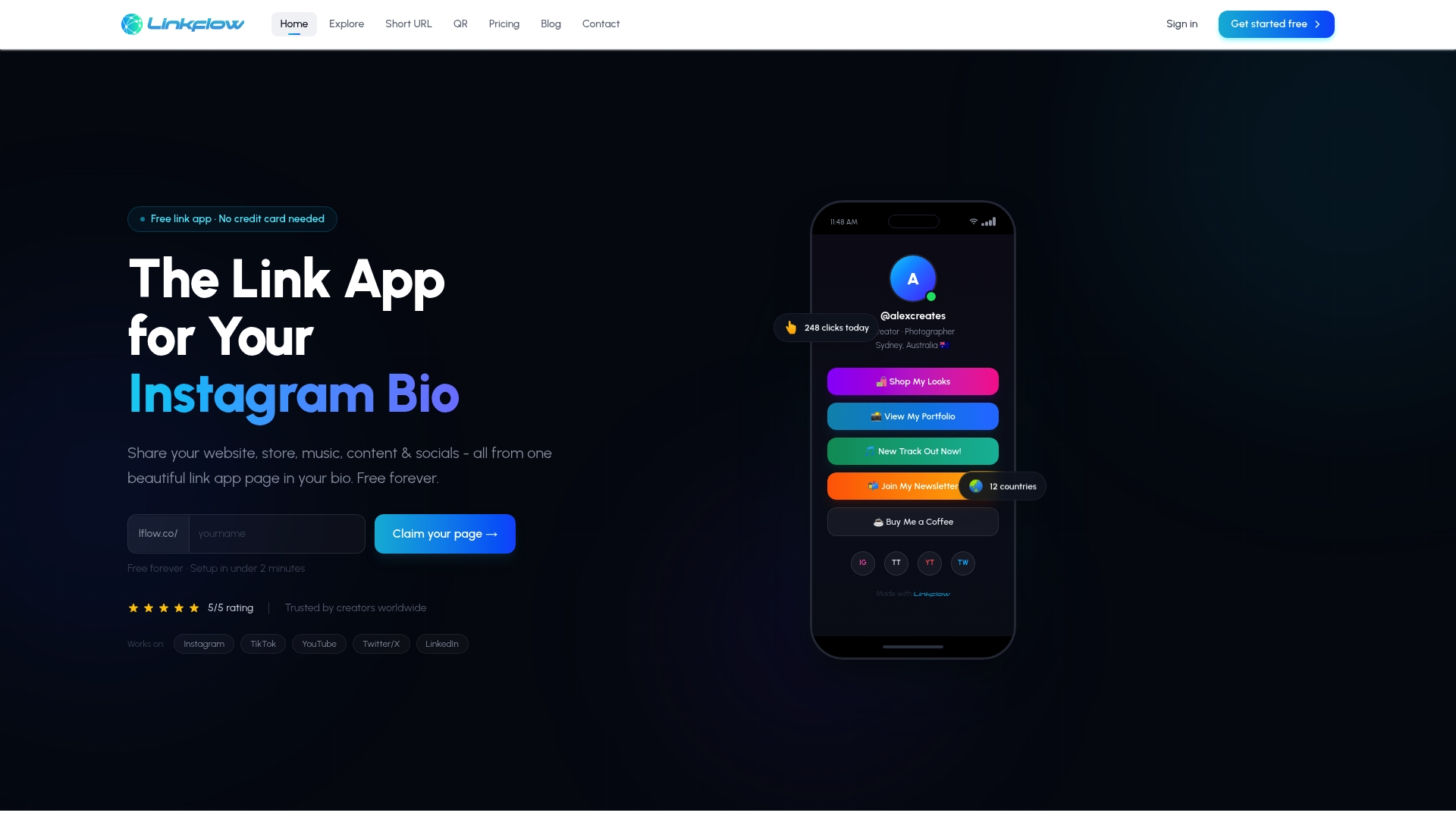
Lflow makes building a professional link hub page genuinely fast. The free plan includes customizable templates, real-time per-link analytics, and mobile-optimized designs that work across Instagram, TikTok, YouTube, and LinkedIn. You can add a custom branded domain to replace the generic subdomain, and the built-in QR code generator connects your offline promotions directly to your hub's tracking system. Setup takes under two minutes. For creators and marketers who want to see how Lflow compares to the most widely used alternative, the Lflow vs Linktree comparison breaks down the differences across features, pricing, and analytics depth. Start free and upgrade only when your data tells you to.
FAQ
What is a link hub platform?
A link hub platform is a tool that creates a single landing page consolidating multiple links, allowing visitors to choose their next destination from one URL. It acts as a routing layer between your social media profiles and your key web destinations.
How do link hubs help with SEO?
Link hubs improve SEO by providing structured, semantically labeled content that search engines and AI tools can interpret and index. A well-organized hub with descriptive link labels contributes to discoverability beyond just social media traffic.
Do I need a paid plan to use a link hub platform?
Free plans on platforms like Lflow provide functional link hub pages with basic analytics. Paid plans add per-link click data, custom domains, and deeper attribution reporting, which are worth the investment for marketers running active campaigns.
What is UTM tagging and why does it matter for link hubs?
UTM tagging adds tracking parameters to your URLs so analytics tools can identify which platform or campaign sent each visitor. Without UTM tags on your hub's outbound links, you can see total hub visits but not which platform actually drove conversions.
How often should I update my link hub?
Update your hub's featured links whenever you launch a new campaign, publish high-priority content, or notice a link underperforming in your analytics. During active campaigns, a weekly review of link management practices keeps your hub aligned with current priorities.