
Alabama Shakes proved that a single, well-placed bio link can transform a tour. Their Laylo x Linktree bio link for presale success drove 15% of total tour traffic and helped sell out multiple cities through presale sign-ups alone. Most artists scatter their energy across five different platforms, posting links in captions, stories, and comments, hoping fans find their way. That fragmented approach loses people. This guide cuts through the confusion and shows you exactly how to build, choose, and optimize a bio link strategy that works as hard as you do.
Table of Contents
- Why bio links matter for artists
- Choosing the right bio link tool for your needs
- Essential features to look for in your bio link
- How to craft an impactful bio link strategy
- What most artists miss about bio links
- Level up your bio link with Linkflow
- Frequently asked questions
Key Takeaways
| Point | Details |
|---|---|
| Amplify engagement | Bio links make it simple for fans and industry contacts to explore all your work in one place, increasing traffic and engagement. |
| Choose smarter tools | Specialized music and artist bio links outperform generic options by offering campaign tools and analytics tailored for your needs. |
| Keep links updated | Updating your bio link with new releases, shows, or merch ensures you never miss an opportunity for exposure or sales. |
| Think beyond generic | A generic bio link can hurt your professional image—customize and diversify for fans versus booking partners. |
| Bio links drive results | A strategic bio link helped Alabama Shakes sell out multiple cities by channeling fans to presales and priority actions. |
Why bio links matter for artists
A bio link is one single URL you place in your social profile that leads to a custom page hosting all your most important links. Think of it as your digital headquarters. Instead of asking fans to "check the link in my story" or "search my name on Spotify," you give them one destination that holds everything.
Without a consolidated link, artists deal with a predictable set of frustrations:
- Lost traffic: Fans click away when they can't find what they're looking for in two seconds.
- Missed sales: Merch drops and ticket presales fail to reach their full audience because the link is buried or expired.
- Weak analytics: Posting links across platforms gives you no clear data on what's actually driving clicks.
- Inconsistent branding: Random shortened URLs look untrustworthy and forgettable.
The data backs this up. Creating shortlinks for enhanced brand engagement shows branded bio pages and shortlinks boost clickthrough rates by 18% and conversions by 9% in creator campaigns. That's not a marginal gain. That's the difference between a sold-out show and empty seats.
"Your bio link is the only clickable real estate on most social platforms. Treat it like prime property, not an afterthought."
Pro Tip: Always use a branded custom URL for your bio link. A link like "lflow.co/yourartistname" instantly builds trust and recognition compared to a generic auto-generated string of characters. Fans and industry contacts are more likely to click something that looks intentional.
Understanding why bio links boost engagement is the first step. The next step is choosing the right tool to make that happen.
Choosing the right bio link tool for your needs
Not all bio link tools are created equal, and this is where a lot of artists make their first mistake. They grab the most well-known option without thinking about whether it actually fits their specific goals as a musician.
There are three broad categories to know:
- Generic bio link builders: Simple, easy to use, work for any creator. Great for fans but often lack music-specific features.
- Music-focused smart link tools: Designed specifically for artists. They offer pre-save campaigns, streaming service routing, and fan data collection.
- Branding-forward platforms: Prioritize custom domains, visual design, and analytics. Ideal for artists who want professional polish across all touchpoints.
Music-specific tools like Linkfire and Feature.fm offer smart links and pre-save functionality that generic bio link builders simply cannot match for campaign-driven promotion. If you're dropping an album and need fans to pre-save across Spotify, Apple Music, and Tidal simultaneously, those tools earn their keep.
Here's a quick comparison to guide your decision:
| Tool | Best for | Strengths | Limitations |
|---|---|---|---|
| Linktree | General creators | Fast setup, wide recognition | Limited music features, generic look |
| Linkfire | Music campaigns | Smart links, pre-saves, streaming data | Less visual customization |
| Feature.fm | Release promotion | Fan gates, pre-saves, email capture | Learning curve for new users |
| Lflow.co | Branded artist presence | Custom domains, themes, analytics, QR codes | Focused on brand-first creators |
One crucial insight that many artists overlook: Linktree was never meant as your artist resume/press kit. Sending a booking agent or festival programmer to a fan-facing bio link full of Spotify embeds and merch links sends the wrong message. Professionals need to see your EPK, your press quotes, your booking contact, and your technical rider. A fan-facing tool doesn't serve that audience.
If you want to set up an artist bio link the right way, it helps to explore what's available before committing. There are plenty of bio link alternatives worth reviewing depending on your career stage and goals. For artists serious about their visual identity and building a professional profile, choosing a platform that allows real customization is non-negotiable.
Pro Tip: Run two separate bio links. One for fans (music, merch, social, shows) and one for industry professionals (EPK, press shots, booking contact, media). Link the professional page from your website footer, not your Instagram.
Essential features to look for in your bio link
Once you've narrowed down your tool options, the next question is: what features actually matter? The answer depends on what you're trying to accomplish, but several features separate a powerful artist bio link from a basic one.
Custom branding and visuals sit at the top of the list. Your bio link page is an extension of your artist brand. It should reflect your album artwork, your aesthetic, your colors. A generic white template with default fonts looks like you didn't try. Artists who invest in visual consistency across every touchpoint, including their bio link, see higher recall and stronger fan loyalty.
Here's a breakdown of the key features to look for and why each one matters:
| Feature | Why it matters | Example use |
|---|---|---|
| Custom domain | Builds brand trust and recognition | lflow.co/artistname |
| Music integrations | Direct streaming links in one tap | Spotify, Apple Music, SoundCloud |
| Merch store link | Converts fans into buyers | Shopify, Bandcamp |
| Ticketing link | Drives presales and event traffic | Eventbrite, See Tickets |
| Analytics dashboard | Shows what's working | Track clicks by link, device, time |
| QR code download | Bridges offline and online promotion | Merch table, posters, flyers |
| Mobile optimization | Most fans are on phones | Fast load, tap-friendly layout |
The Alabama Shakes case study is worth revisiting here. Their presale bio link strategy channeled 15% of their entire tour traffic through a single link. That's possible only when the bio link integrates directly with ticketing and presale platforms in a frictionless way.
Analytics deserve extra attention. Knowing which links get clicked most, at what time of day, and from which platform tells you what your audience actually cares about. If your merch link gets three times more clicks than your Spotify link on Fridays, you know when to post about drops. That kind of data doesn't come from gut instinct.
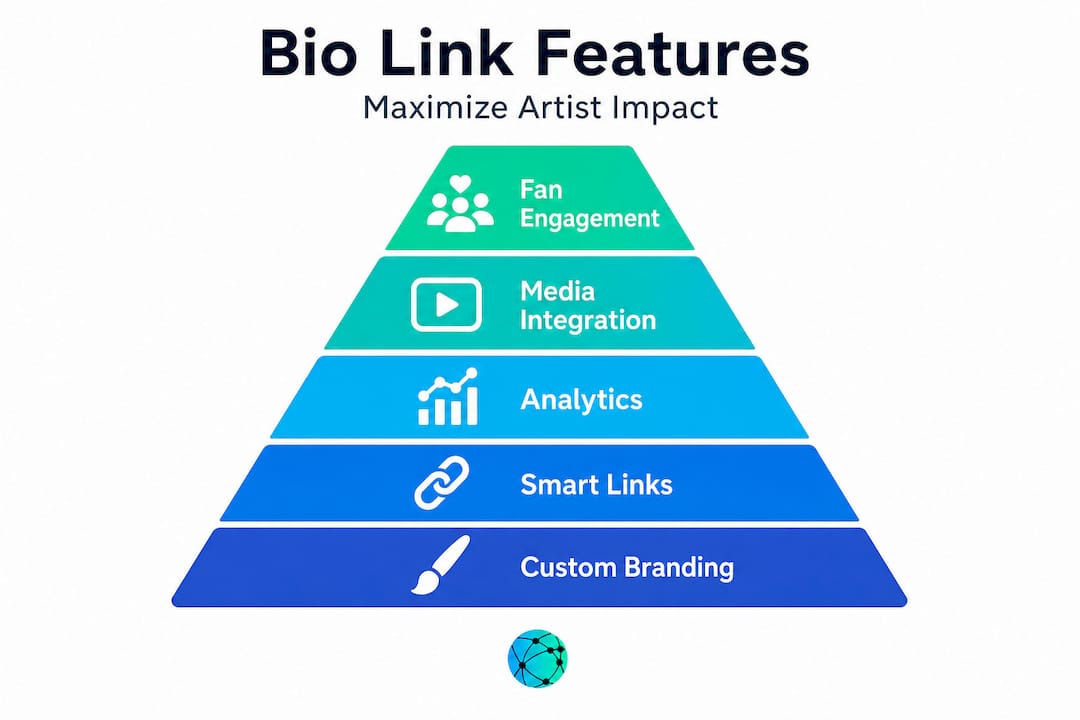
Reviewing top bio link features can help you prioritize what your setup needs right now versus what you can add later. And understanding how custom bio pages boost engagement puts the design investment in perspective. The benefits of bio links compound over time when the foundation is strong.
How to craft an impactful bio link strategy
Knowing what tools and features exist is one thing. Knowing how to use them strategically is what actually moves the needle. Here's a step-by-step playbook built for working artists.
-
Choose your platform based on your primary goal. If you're releasing music, prioritize pre-save and streaming integration. If you're building your brand, prioritize visual customization and custom domains. Match the tool to the mission.
-
Brand the page before you go live. Upload your artist photo or artwork, set your colors, choose a font that matches your aesthetic. First impressions count. A fan landing on your bio link page should instantly recognize they're in your world.
-
Prioritize your links by importance. The top link should be whatever you're actively promoting. That might be a new single, a presale, or a merch drop. Below that, keep a consistent order: streaming profiles, social channels, merch store, booking contact. Don't dump twenty links on one page without hierarchy.
-
Add a QR code to all physical materials. Your merch table, show posters, press kits, and even business cards should carry your bio link QR code. This bridges the gap between someone discovering you in person and following you online. It's one of the most underused tactics for offline-to-online audience growth, and digital tools for artists that integrate this well make it seamless.
-
Test before you announce. Click every link from your phone. Check load time. Make sure the page looks right on a small screen. A broken link during a release day is an avoidable disaster.
-
Update the page with every release or show. This is the step most artists skip after the initial setup. A bio link pointing to an album from two years ago signals to fans and industry contacts that you're not active.
-
Track your results and adjust. After every release cycle, pull your analytics and look at what got clicked. Cut what nobody uses and promote what fans respond to. Treat your bio link like a living document, not a static page.
Understanding how bio links power influencer audience engagement gives you a broader perspective on what's possible. And if you're managing multiple campaigns at once, a solid multi-link bio strategy helps you maximize traffic without overwhelming your audience.
Pro Tip: Pin your most time-sensitive link at the very top and update it every Monday. Fans who check your bio regularly will learn to expect fresh content there, which trains them to visit more often.
What most artists miss about bio links
Here's the uncomfortable truth: most artists set up a bio link once, post it to their Instagram, and never touch it again. They treat it like a business card rather than a storefront. That mindset is costing them real opportunities.
The conventional advice says just have a link. Any link. Get it up and you're done. That logic worked in 2018 when the bio link concept was novel. In 2026, every artist has a bio link. The ones who stand out are the ones who treat theirs as an active part of their career infrastructure.
Generic links also carry a specific professional risk that fan-facing metrics won't reveal. Booking agents, sync licensing supervisors, festival programmers, and brand partners all look at your online presence before reaching out. When a music supervisor finds your Instagram and your bio link leads to a Spotify playlist and a merch drop, they bounce. They needed your EPK, your contact, and your press coverage. A generic link-in-bio tool was never built to function as an artist resume, and using it as one leaves a weak impression at the moment it matters most.
The artists who get this right build two tracks. One track is fan-facing: high-energy, visually compelling, always updated with the latest release or event. The other track is professional-facing: clean, credible, and loaded with the information industry contacts need to take the next step. Both pages live under the same artist brand but serve completely different audiences.
Advanced link branding for artists goes even further. Your custom domain, your color palette, your page layout. These aren't vanity decisions. They're signals that tell every visitor, fan or industry contact, that you're serious about your craft and your career. A well-branded bio link page tells a story before anyone reads a single word. That story should say: this artist is professional, active, and worth paying attention to.
Think of your bio link as a launchpad, not a menu. Every link you include should have a purpose, drive a specific action, and reflect where you are in your career right now. Strip out anything that doesn't serve that goal and give everything that remains the space to shine.
Level up your bio link with Linkflow
Putting all of this into practice requires a tool that actually delivers on the features that matter for artists. That's exactly where Lflow.co comes in.
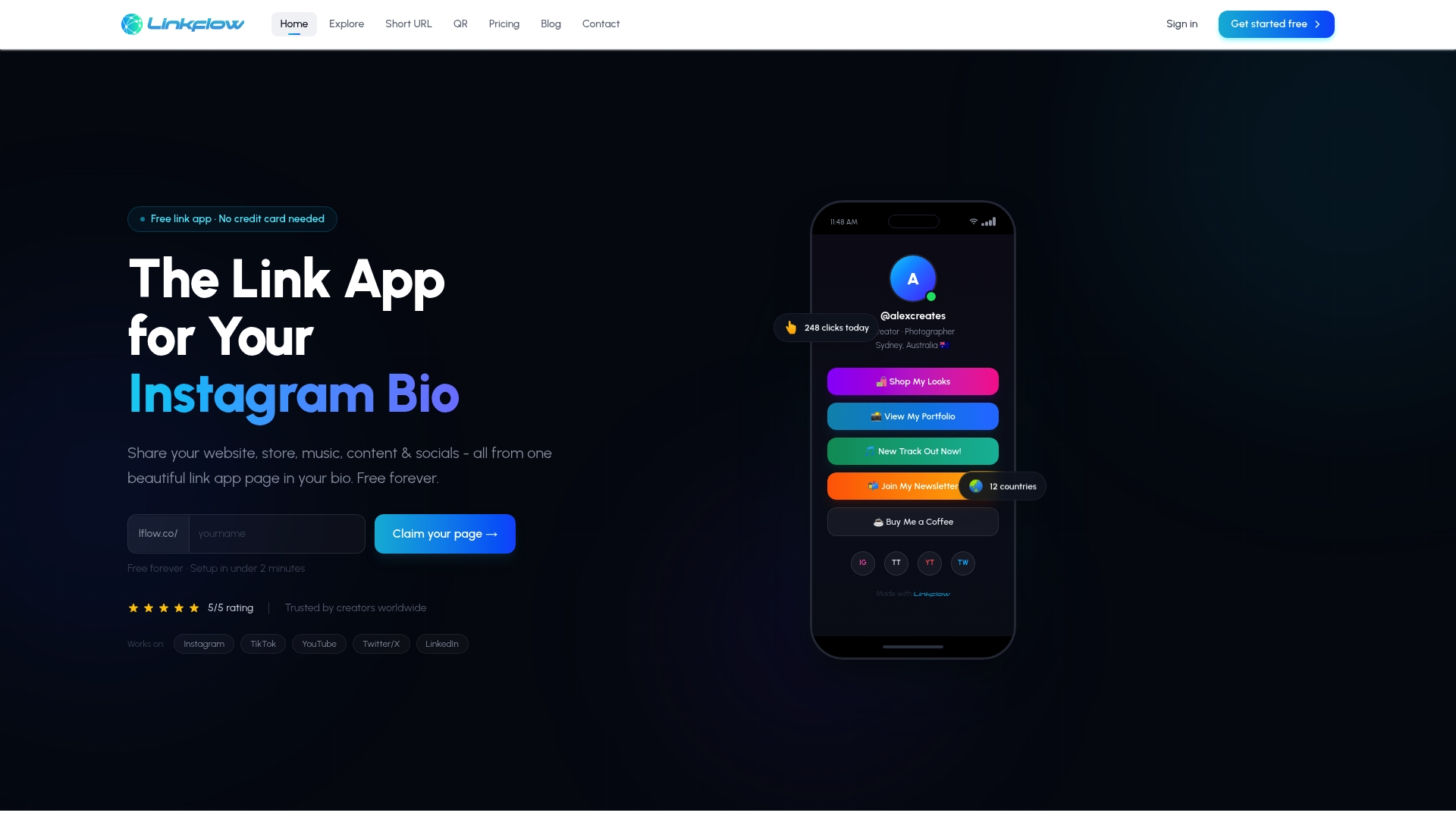
Lflow.co gives artists a free, fully branded bio link page with real customization: custom domains, themes, fonts, colors, and layouts that match your visual identity. Setup takes under two minutes, and the platform's real-time analytics show you exactly which links your fans are clicking and when. You also get free downloadable QR codes to bridge your offline presence with your online audience, whether that's at a show, on a poster, or tucked into a merch package. If you're ready to stop leaving traffic on the table and start building a bio link that works as hard as you do, Lflow.co is the place to start.
Frequently asked questions
What is the main benefit of a bio link for artists?
A bio link consolidates your music, merch, shows, and more into one clickable destination for fans and industry contacts. Branded bio pages boost CTR by 18% and conversions by 9% compared to unbranded alternatives.
Can I use the same bio link for fans and professional bookings?
It's best to use separate pages: one fan-centric bio link and another as a professional press kit for booking. A generic bio link tool was never designed to serve as an artist resume or press kit for industry use.
How often should I update my artist bio link?
Update your bio link every time you release new music, merch, or content to ensure fans always see your latest work. A stale bio link signals inactivity, which can quietly damage your professional reputation over time.
Which bio link tool is best for musicians?
It depends on your goals, but music-specific tools like Linkfire and Feature.fm offer smart links and pre-save features that generic tools can't match for campaign-driven releases.
How do bio links help with ticket sales?
Well-placed bio links centralize presales and ticketing links, driving significant traffic and higher sales volumes. The Alabama Shakes presale campaign showed that a single optimized bio link can account for 15% of total tour traffic and contribute directly to sold-out shows.