

A centralized link is a single URL that routes visitors to every destination you want them to reach, replacing the scattered mess of multiple links with one clean, professional hub. Platforms like Instagram, TikTok, and LinkedIn allow only one clickable link per profile, which makes that single URL the most valuable real estate in your entire digital presence. Knowing why centralized links matter is the difference between an audience that finds everything you create and one that bounces after hitting a dead end. Tools like Lflow turn that single slot into a full navigation system, connecting your store, content, social profiles, and offers in one place.
Why centralized links matter for user engagement
Centralized link hubs reduce friction for visitors by replacing multiple URLs with a single shared link that opens access to all main destinations. That reduction in friction is not cosmetic. Every extra step you ask a visitor to take, whether that means searching your bio, Googling your store, or hunting through old posts, is a step where you lose them permanently.
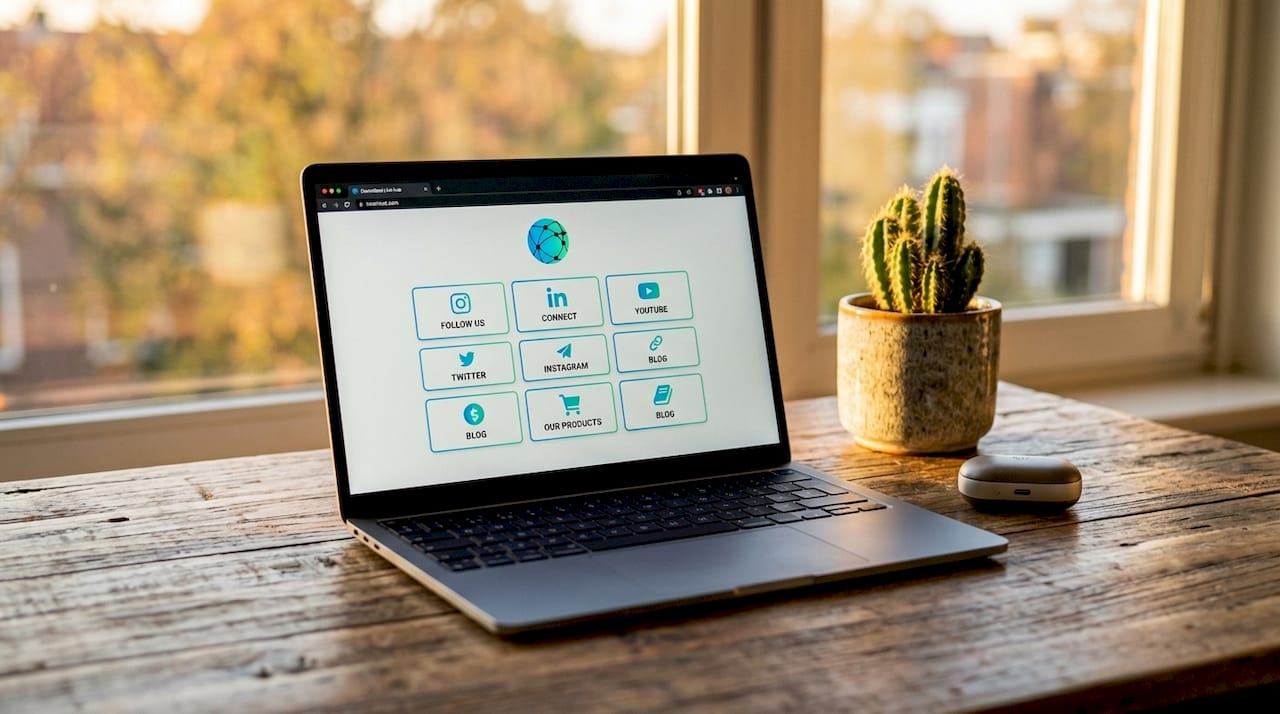
Consider a food creator on Instagram who posts recipes, sells a cookbook, runs a newsletter, and uploads YouTube tutorials. Without a centralized hub, each piece of content competes for the one bio link slot. With a hub, every destination lives one tap away. The result is longer session time, more clicks across multiple destinations, and a measurable lift in follower-to-customer conversion.
The key insight most creators miss is that unorganized link lists confuse visitors and reduce engagement. A centralized page works only when links are grouped by visitor intent, not dumped in chronological order. Think of it as a router, not a list. A visitor arriving from a TikTok cooking video wants your recipe page first, not your podcast.
- Group links by what the visitor came to do: buy, read, watch, or follow.
- Put your highest-priority destination at the top, since most clicks go to the first two links.
- Use clear, specific labels instead of generic ones like "click here" or "my stuff."
- Revisit the order every time you launch something new.
Pro Tip: Treat your centralized link page the way a good homepage treats navigation. Every link should answer a specific visitor question, not just exist because you wanted to include it.
How centralized linking improves SEO and site architecture
The SEO case for centralized links is grounded in how search engines allocate authority across a website. A hub-and-spoke internal link structure concentrates link equity on the hub page, increasing its chances of ranking for broad head terms compared to flat or scattered link structures. If a hub page receives 12 internal links from related spoke pages, it accumulates 12 strong authority signals from a tightly themed cluster. That concentration is what pushes hub pages into competitive ranking positions.
Crawl budget is the second major factor. For large websites, centralized internal linking can raise crawl coverage from 40% to 70% after optimization. That number matters because pages Googlebot never crawls cannot rank, no matter how good the content is. Orphaned pages and dead-end URLs waste the crawl budget that should be spent on your best content.
"Effective internal linking is not brute-force linking but strategic equity routing that improves page ranking by focusing link authority precisely." — Digital Applied, 2026
Hub-and-spoke architecture also signals comprehensive topical expertise to Google and AI systems, making hub pages more authoritative and more likely to be cited in AI-generated answers. This matters in 2026 because AI search tools like Perplexity and ChatGPT pull citations from well-structured, authoritative pages. A centralized hub that links to every relevant piece of content on a topic tells both human readers and AI systems that this page is the definitive source.
| SEO factor | Impact of centralized linking |
|---|---|
| Link equity concentration | Hub pages accumulate authority from all spoke pages in the cluster |
| Crawl budget efficiency | Structured routing reduces wasted crawls on orphan or low-value pages |
| Topical authority signals | Clustered content tells Google the hub page covers a topic comprehensively |
| AI citation probability | Well-structured hubs are more likely to be cited by AI search tools |
| Ranking velocity | Architectural decisions to centralize linking outperform unstructured sites by 30% to 70% in organic visibility |
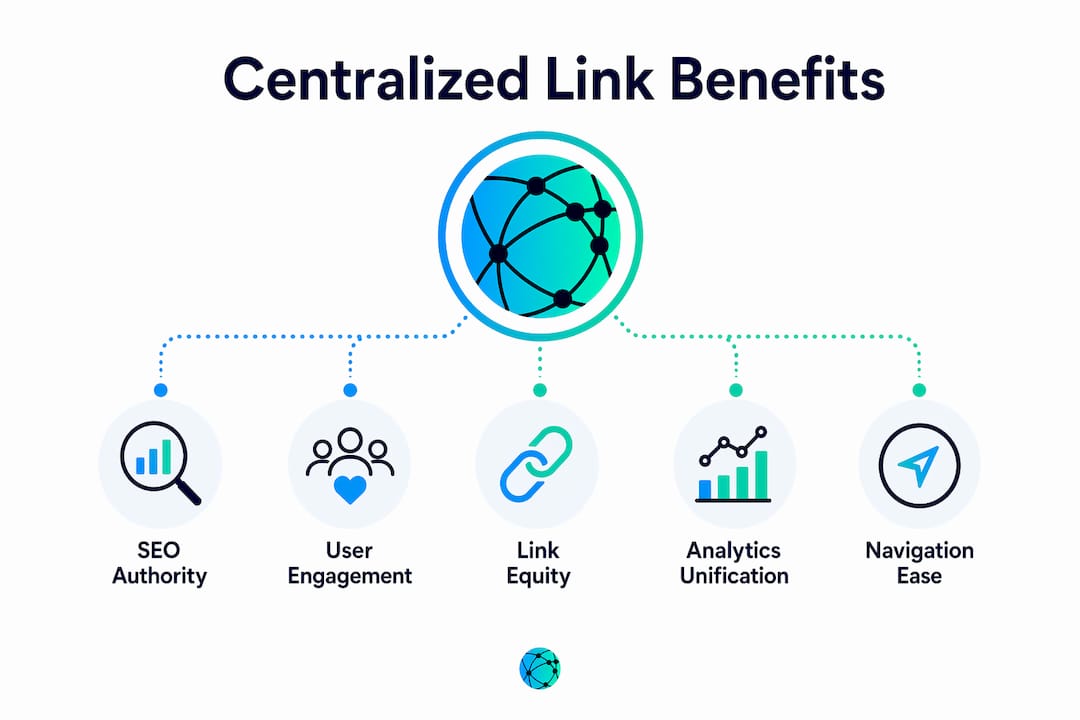
One important nuance: internal linking is an equity-allocation problem where too many outbound links dilute the authority passed to each linked page. A hub page that links to 80 destinations passes less authority to each one than a hub linking to 12 focused destinations. Quality and intent matter more than volume.
Centralized vs decentralized links: what are the pros and cons?
Decentralized linking means your content, products, and profiles each live at separate URLs with no single organizing hub. This approach is common among creators who built their presence organically, adding a new link every time they launched something new. The result is a digital presence that resembles a filing cabinet with no folders.
Centralized linking solves that problem by creating one authoritative source of truth. Centralizing marketing data into one place eliminates silos, improves data quality, and supports more targeted campaigns. The same logic applies to links. When all your destinations live under one hub, you can track performance, update destinations, and maintain brand consistency without touching a dozen separate pages.
That said, centralization tradeoffs depend on context. Total centralization is not always optimal. A creator with a single product and a simple audience may not need a full hub. A brand running 15 campaigns across 6 platforms absolutely does.
| Approach | Strengths | Weaknesses |
|---|---|---|
| Centralized links | Consistent navigation, unified analytics, concentrated link equity | Single point of failure if hub goes down; requires ongoing curation |
| Decentralized links | Resilient across platforms, no single dependency | Fragmented analytics, inconsistent user experience, diluted authority |
The most common mistake with centralized hubs is treating them as permanent and static. Creators build a hub, add 20 links, and never revisit it. Six months later, half the links are outdated and the page looks abandoned. The most common mistake with decentralized approaches is assuming that more links mean more reach. Scattered links without a hub actually reduce discoverability because no single page accumulates enough authority to rank or convert.
The practical answer for most content creators and marketers is a centralized hub with a curated, regularly updated set of links. You can read more about managing multiple links without creating confusion in Lflow's guide on link organization.
How to build an effective centralized link strategy
Building a centralized link strategy is a four-step process that takes less time than most creators expect.
-
Choose a hub tool with custom branding options. A generic link page with no brand identity undermines trust. Look for a platform that supports custom domains, color schemes, and fonts. Lflow offers all of these with setup under two minutes. Your hub URL should match your brand name, not a third-party subdomain.
-
Organize links by visitor intent, not by what you want to promote. Group your destinations into clear categories: content, products, social profiles, and contact. A visitor from YouTube wants your video archive first. A visitor from your email newsletter wants your latest offer. Structuring by intent increases click-through rates across every destination.
-
Update and rotate links on a schedule. A centralized hub is only as useful as its current content. Set a calendar reminder to audit your hub every two to four weeks. Remove outdated links, add new launches, and adjust the order based on what is currently most relevant. This keeps the hub feeling active and trustworthy.
-
Connect analytics to every link. Knowing which links get clicked, by whom, and from which platform is the data that turns a link hub into a marketing tool. Lflow's real-time analytics show you exactly where your audience is engaging, so you can double down on what works. You can explore link management best practices to get more from your hub's performance data.
Pro Tip: Add a QR code to your centralized hub URL and use it on physical materials like business cards, packaging, or event signage. Lflow generates free QR codes for every hub, turning offline touchpoints into tracked digital traffic.
The importance of centralized links compounds over time. A hub that starts with five links and grows to fifteen, each one tracked and optimized, becomes one of the most valuable assets in your digital presence. Treat it as a living page, not a one-time setup.
Key takeaways
A centralized link strategy concentrates authority, reduces visitor friction, and gives creators a single, trackable hub that outperforms scattered links on every measurable dimension.
| Point | Details |
|---|---|
| Single hub beats multiple URLs | One link reduces cognitive load and increases click-through rates across all destinations. |
| SEO authority concentrates at the hub | Hub-and-spoke architecture passes link equity to the central page, improving ranking potential. |
| Crawl efficiency improves measurably | Structured internal linking can raise Googlebot crawl coverage from 40% to 70%. |
| Curation beats volume | A hub with 10 well-organized links outperforms one with 30 random destinations. |
| Analytics turn hubs into strategy | Tracking clicks by source and destination converts a link page into a real marketing asset. |
The case for treating your link hub as a core asset
Most creators I have watched build their digital presence treat the link in bio as an afterthought. They paste in a few URLs, move on, and wonder why their audience never finds the thing they just launched. The real problem is not the platform or the algorithm. It is the absence of a deliberate routing strategy.
What I have found is that the creators who grow fastest are the ones who think about their centralized hub the way a product manager thinks about a homepage. Every link has a job. Every position on the page is a decision. The hub is not a convenience feature. It is the connective tissue between every platform you publish on and every goal you are trying to reach.
The SEO angle reinforces this. Poorly designed internal linking wastes crawl budget on low-value pages and actively hurts rankings. The same principle applies to your link hub. A hub that sends visitors to dead links or irrelevant content signals low quality to both users and search engines.
My honest advice: audit your current link hub today. Count how many links are outdated. Check whether the order reflects what your audience actually wants right now. If the answer to either question makes you uncomfortable, that is your starting point. The technical setup takes minutes. The strategic thinking is what separates a hub that converts from one that just exists.
— Axion
Build your centralized hub with Lflow
If you are ready to put a real link strategy in place, Lflow gives you everything you need at no cost.
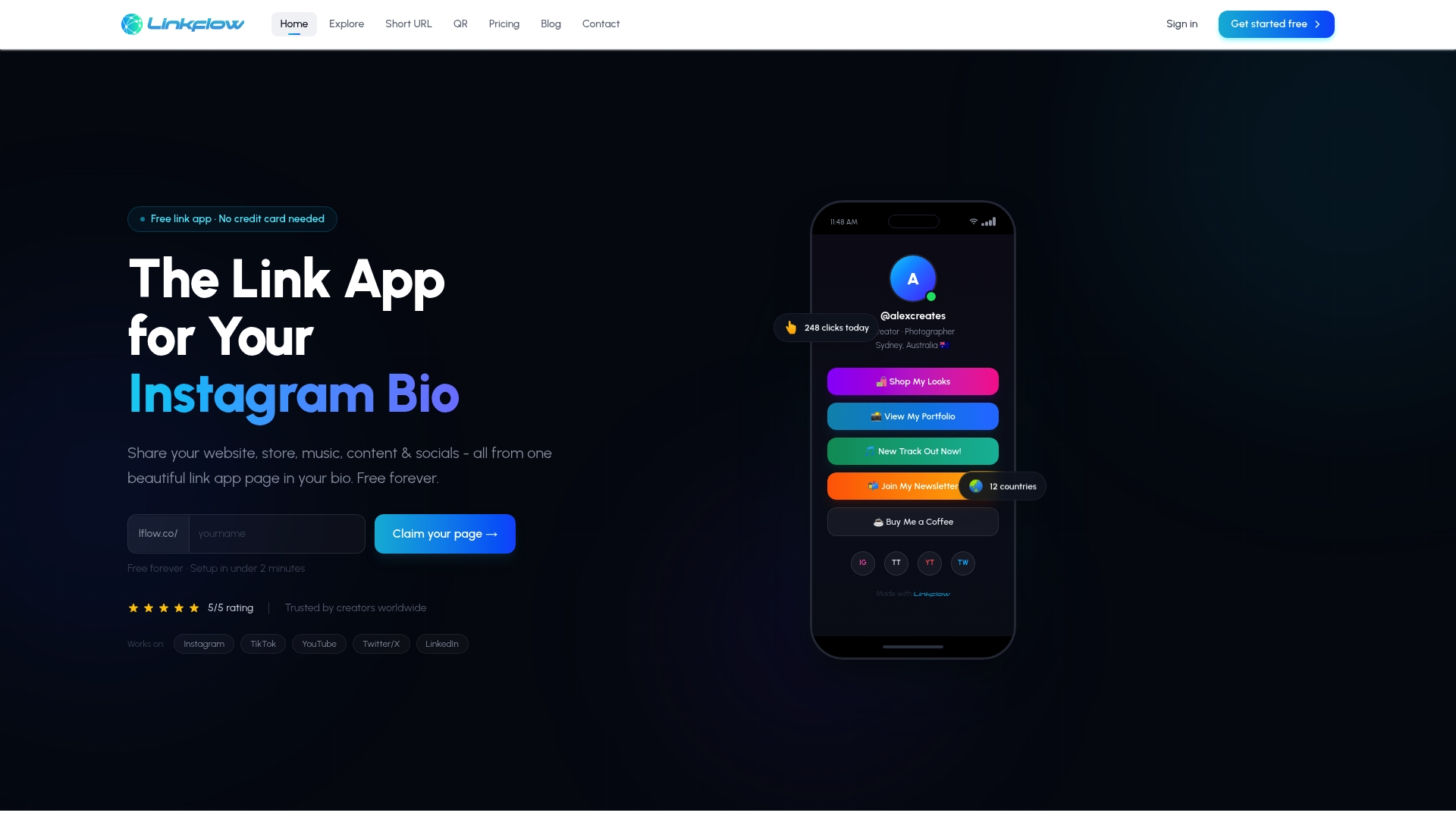
Lflow's free link in bio tool lets you consolidate every destination into one branded, mobile-optimized page in under two minutes. Choose from professionally designed link in bio templates, add your custom domain, and connect real-time analytics to track every click by platform and destination. The platform also generates free QR codes for offline promotion and supports unlimited links on the free plan. Whether you are a solo creator on TikTok or a marketing team managing multiple campaigns, Lflow gives you the infrastructure to turn a single URL into your most productive digital asset.
FAQ
What are centralized links?
Centralized links are single URLs that consolidate multiple destinations, such as websites, stores, social profiles, and content, into one accessible hub. They replace the need to share multiple separate links across platforms.
Why do centralized links matter for SEO?
A hub-and-spoke internal link structure concentrates link equity on the central hub page, improving its ranking potential for broad search terms. Structured linking also raises crawl coverage and signals topical authority to search engines and AI systems.
How do centralized links improve user experience?
Centralized links reduce cognitive load by giving visitors one place to find everything they need. Organized by visitor intent, a well-built hub increases click-through rates and session time compared to scattered or unlinked destinations.
What is the difference between centralized and decentralized links?
Centralized links route all destinations through one hub, offering consistent navigation and unified analytics. Decentralized links spread destinations across separate URLs, which can reduce dependency on a single page but fragments authority and makes performance tracking harder.
How often should I update my centralized link hub?
Audit your hub every two to four weeks to remove outdated links, add new launches, and reorder destinations based on current priorities. A static hub quickly loses relevance and signals low engagement to both visitors and search engines.