

Every content creator knows the frustration: you update a link, forget to test it on mobile, and your audience hits a dead end right when engagement should be peaking. Link management sounds simple until you're juggling five platforms, three campaigns, and a bio page that hasn't been touched in weeks. The good news is that a handful of focused strategies can dramatically change how your audience interacts with your content, and this guide walks you through exactly what to do, from centralizing your links to reading analytics that actually tell you something useful.
Table of Contents
- Start with a centralized link strategy
- Prioritize speed: Why tool performance matters
- Maintain, audit, and update your links
- Use analytics beyond native platform reports
- Consider publishing platform constraints
- A smarter approach: Why ownership and ongoing testing matter most
- Ready to level up your link management?
- Frequently asked questions
Key Takeaways
| Point | Details |
|---|---|
| Centralize your links | Use a single page for all your important destinations to keep everything organized and easy to update. |
| Prioritize speed | Choose link tools with fast mobile load times to reduce bounce rates and keep your audience engaged. |
| Audit links regularly | Schedule monthly checks and always test after campaign changes to avoid broken or misdirected links. |
| Track deeper analytics | Go beyond platform stats and use independent tracking for better insights into your link performance. |
| Own your audience | When possible, use your own domain or landing page to future-proof your strategy and build SEO authority. |
Start with a centralized link strategy
Once you recognize how daunting piecemeal links can be, establishing a centralized strategy is your foundation.
A centralized link strategy means directing every follower to one landing page that holds all your important destinations. Whether someone finds you on Instagram, TikTok, or YouTube, they all arrive at the same hub. That consistency eliminates confusion and makes updating painless. When you land a new brand deal or release a new product, you change one page instead of hunting through dozens of posts.
The practical benefits go deeper than convenience:
- Consistent branding: One URL reinforces your identity and makes your presence look polished across every platform.
- Simplified updates: Change a destination once and it reflects everywhere instantly.
- Unified analytics: All click data flows through a single source, so you can compare traffic sources without piecing together reports.
- Better user experience: Followers aren't confused by mismatched styles or broken redirects.
All-in-one link tools are built specifically for this workflow, combining multiple link types into a single branded page with built-in tracking.
"Centralize and regularly maintain social destination links (e.g., a single 'link in bio' page), and test links on iOS and Android to prevent misdirected clicks and lost engagement windows."
Once your page is live, build a simple weekly routine. Open your link hub after any content change, click every link manually, and test on both iOS and Android. Redirects that work perfectly on desktop sometimes behave differently on a Safari browser or inside the Instagram in-app browser. Catching those breaks before your audience does protects your credibility and your campaign ROI.
Pro Tip: Keep a simple spreadsheet with your active link destinations, the date last tested, and the live URL. If something breaks, you'll know instantly what changed and can fix it in under two minutes instead of twenty.
Prioritize speed: Why tool performance matters
With a central page in place, the next step is ensuring fast, smooth access for your followers.

Load time is one of the most underestimated factors in link management. When a follower taps your bio link on mobile, they expect something to happen immediately. A page that takes even two extra seconds to load can feel broken. Many users bounce before the page fully renders, and you lose the engagement opportunity entirely.
The numbers tell a stark story. Link-in-bio tool performance varies widely, with some tools loading in under 1.1 seconds while others take over 4 seconds. That gap is enormous when you consider that mobile users are famously impatient and often on slower cellular connections.
| Tool type | Typical load time | Engagement risk |
|---|---|---|
| Lightweight tools | Under 1.1s | Low risk |
| Mid-range tools | 1.5 to 2.5s | Moderate risk |
| Script-heavy tools | Over 4s | High bounce risk |
What causes those performance gaps? Usually it's unnecessary third-party scripts, large unoptimized images, or over-engineered animations. A simple, fast page with clean code will consistently outperform a visually busy alternative that takes forever to paint on screen.
When evaluating tools, consider these performance factors:
- Mobile-first rendering: Does the page prioritize above-the-fold content?
- Script load: How many external scripts does the tool inject?
- Image compression: Are thumbnails served in a modern format like WebP?
- Server response time: Is the tool hosted on a fast CDN or a shared server?
Explore link in bio engagement ideas to learn how design choices and performance work together, and check out multi link bio strategies for building pages that load fast without sacrificing depth.
Pro Tip: Before committing to any link management tool, open its demo page on your actual phone using cellular data, not Wi-Fi. What you experience is exactly what your audience experiences.
Maintain, audit, and update your links
With performance dialed in, even the best tool loses value if your links break or expire. Here's how to prevent link rot.
Link rot is a real problem that most creators discover only after a follower complains. A campaign ends, a domain lapses, or you swap out a landing page, and suddenly a shortened URL that used to work leads nowhere. Every dead link is a moment of lost trust.
A structured audit routine solves this. Here's a practical schedule you can implement right now:
- Weekly check: Review your bio link page manually. Click every destination and confirm it lands where expected.
- Post-campaign review: Within 24 hours of ending any campaign, update or redirect links that pointed to time-sensitive content.
- Monthly deep audit: Test all links in an incognito window and on at least one mobile device. Check legacy shortened URLs that may have been shared in older posts.
- Quarterly domain review: Confirm any custom domains or third-party redirect services you rely on are still active and renewing automatically.
| Audit type | Frequency | Focus area |
|---|---|---|
| Quick bio check | Weekly | Active links and destinations |
| Campaign closeout | Per campaign | Time-sensitive and promo links |
| Full page audit | Monthly | All links, incognito and mobile |
| Domain/service check | Quarterly | Custom domains, shorteners |
Avoiding link rot means auditing critical and evergreen links when you change destinations or campaigns, especially testing in incognito and mobile contexts where redirects and tracking can break in ways desktop testing misses.
Legacy shortened URLs are a particularly sneaky problem. A link you shortened two years ago using a free service might stop resolving if that service shuts down or changes its domain policy. Always own your redirect layer when possible. Tools like a free URL shortener integrated with your bio link platform keep everything under one roof, reducing the risk of third-party failures. If you're evaluating what level of control you need, reviewing link in bio plans can help clarify which features prevent exactly these kinds of breakdowns.
Use analytics beyond native platform reports
Continuous link health is vital, but truly optimizing performance requires understanding what happens after the click.
Most creators rely entirely on native platform analytics. Instagram shows you profile visits, TikTok shows you video views, YouTube shows you watch time. But none of those numbers tell you which link got clicked, from which device, in which country, or whether that click converted into a purchase or a sign-up.
Native platform stats are headline numbers. They're useful for measuring reach, but they're not granular enough for optimizing your link strategy. Independent link analytics fill that gap with data most platforms deliberately withhold.
Key metrics to track beyond native reports:
- Click-through rate (CTR) by channel: Which platform is actually driving traffic to your links versus just views?
- Device and OS breakdown: Are your iOS users clicking more than Android? Does your landing page perform differently on each?
- Geographic data: Which countries or cities are your most engaged link clickers?
- Conversion tracking: Which specific link drove a sale, a download, or a form completion?
Tracking CTR and conversions across channels, rather than relying on any single platform's analytics, reveals that social benchmarks and native reporting can differ significantly from what your independent link tool measures.
The difference between a creator who grows strategically and one who plateaus is almost always data. When you know that 73% of your link clicks come from Instagram Stories but only 12% convert compared to 40% from your YouTube description, you make completely different content decisions.
Independent analytics let you build a real picture of your audience's behavior. You can A/B test button placement, try different link labels, and track whether a Sunday post outperforms a Wednesday one based on actual click behavior, not just impressions. Dig into top bio link features to understand which analytics capabilities to prioritize when choosing a platform.
Consider publishing platform constraints
Beyond analytics, platform rules and restrictions also shape what link management options actually work in practice.
Not every link strategy works equally well across all platforms. Some publishing environments, especially third-party marketing tools, automatically append their own tracking parameters to links you publish. Others restrict your ability to use custom URLs entirely. If you're not aware of these constraints, you can end up with double-tracked URLs, broken redirects, or analytics that report the same click twice.
Common platform-specific link constraints to watch for:
- Auto-appended UTM parameters: Some scheduling tools add their own UTM tags, which can conflict with your manually set parameters.
- Restricted custom URL fields: Certain marketing platforms don't allow custom tracking domains on social posts published through their composer.
- In-app browser behavior: Instagram and TikTok open links in their own stripped-down browsers, which can strip cookies and break some tracking methods.
- API-level link shortening: Some tools shorten URLs automatically when publishing through their API, creating redirect chains you didn't intend.
For example, HubSpot's social composer has built-in link shortening and attribution settings, but it specifically limits your ability to use custom tracking URLs when publishing through the platform. Understanding these limits helps you plan your tracking structure before a campaign goes live, not after.
Pro Tip: When a marketing platform's restrictions conflict with your tracking needs, publish natively on the social platform and add your links manually. You sacrifice some scheduling convenience but gain full control over your analytics layer, which is almost always worth it for high-priority campaigns.
Resources like AI for bio links can help you build smarter workflows that account for platform constraints without adding hours to your process.
A smarter approach: Why ownership and ongoing testing matter most
With practical tips covered, here's a real-world perspective that challenges the platform convenience mindset.
The link management tool market is crowded, and the pitch is always the same: sign up, customize your page, and watch your engagement grow. Many creators hop between aggregator tools chasing the newest feature, better analytics, or a cleaner design. But the real risk isn't which tool you choose. It's how dependent you become on any tool you don't control.
Here's the uncomfortable truth most tool reviews skip: every time you build your audience around a third-party aggregator's URL structure, you're betting that company will exist, maintain your links, and keep your data accessible indefinitely. When a service shuts down or changes its pricing model, creators who used that tool's subdomain as their primary link lose everything overnight, including historical analytics, custom branding, and audience trust built around a URL they no longer own.
Some creators choose aggregator stacks for convenience, and the tradeoff is real: fast setup versus long-term defensibility. But reviews consistently note that if you can rank with an owned domain, a custom-domain landing page will outperform a shared-platform URL for SEO and audience trust over time.
Our perspective at Lflow.co is that the best link strategy combines the speed of a well-designed bio link tool with the ownership of a custom domain. You get the quick setup and real-time analytics of a modern platform while keeping your brand's URL structure in your own hands. Understanding why bio links boost engagement is about more than features. It's about building a durable digital presence that doesn't disappear when a vendor changes direction.
Regular manual testing, not just relying on automation or dashboard alerts, remains the single most reliable way to catch broken links, misaligned tracking, and redirect errors before they cost you audience trust. No automated tool catches 100% of edge cases. A human clicking through your own content is still the gold standard for quality control.
Ready to level up your link management?
If you've made it through this guide, you already know more about link management than most creators who've been at this for years. Now it's time to put that knowledge into a system that runs smoothly without constant firefighting.
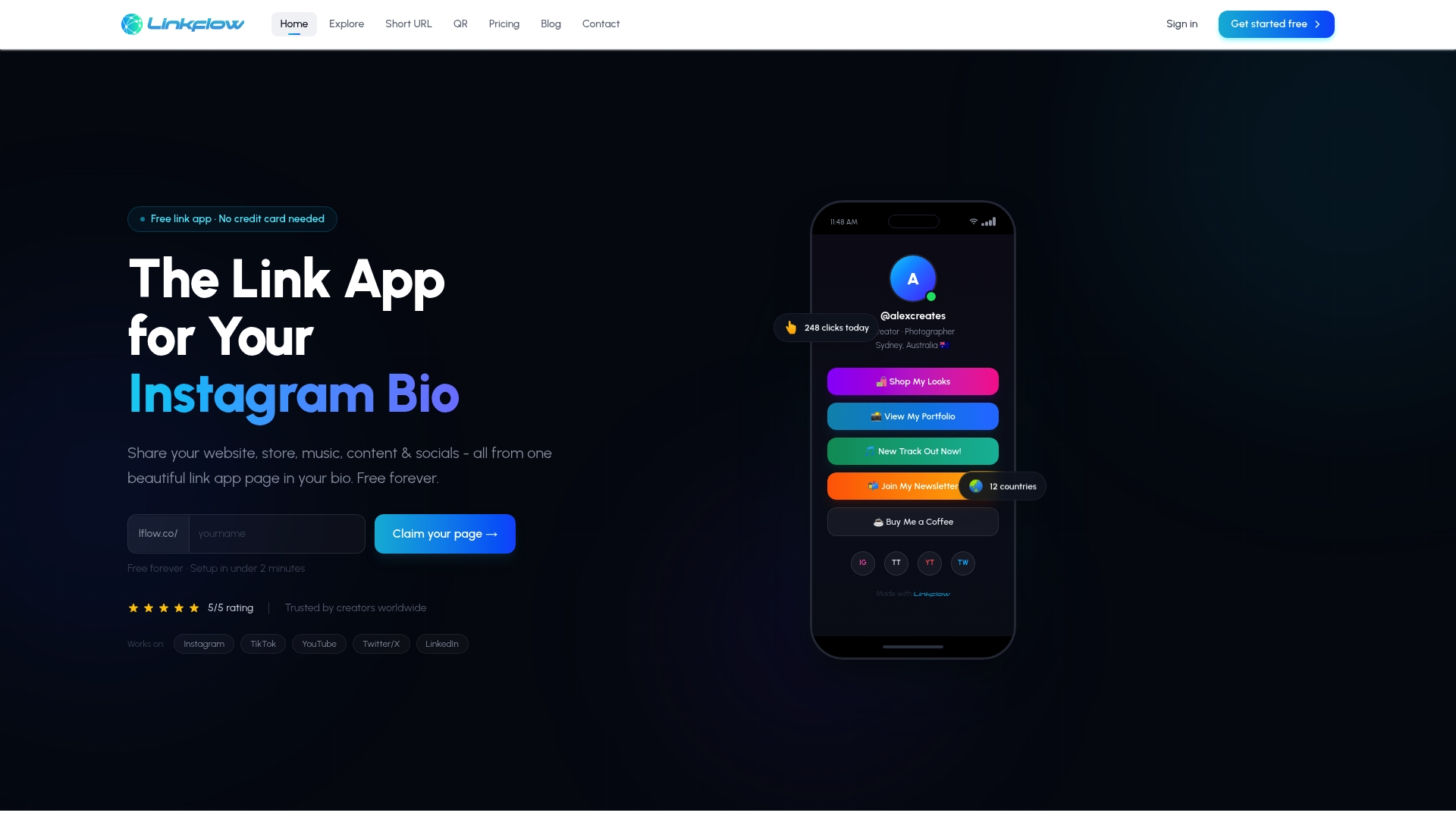
Lflow.co makes the transition from scattered links to a smart, centralized hub genuinely fast. You can build a fully branded free link in bio page in under two minutes, with real-time analytics, mobile-optimized design, and custom domain support included. Need quick tracking links for your next campaign? The free URL shortener gives you clean, manageable links that feed data directly back to your dashboard. If you want a head start on design, browse the bio link templates to find a layout that fits your brand and audience instantly. The infrastructure to grow is already here.
Frequently asked questions
How often should I audit my social media links?
You should audit all live and evergreen links at least monthly, and immediately after launching or updating any campaign. As link rot prevention guidance confirms, testing in incognito mode and on mobile is essential because redirects can break in contexts that desktop testing misses.
Do I need a paid tool to manage my links effectively?
Free centralization and tracking tools cover most creators' core needs well. However, advanced features like branded custom domains, detailed device analytics, or premium templates typically require a pro plan upgrade.
Why do my shortened links sometimes break or misdirect?
Shortened links can break when the destination URL, campaign domain, or analytics parameters change after the link was created. Always test legacy links in a private browser and on mobile whenever you update campaigns or switch platforms.
What makes a bio link tool better than just listing URLs?
Bio link tools provide centralized link management, mobile-friendly layouts, analytics, and consistent branding in one place. Updating a single page beats editing multiple posts across every platform every time.
What's the most important metric for tracking link performance?
CTR combined with conversions gives the most complete picture of link effectiveness across channels. Click volume alone doesn't tell you whether that traffic is actually turning into meaningful action for your business.