

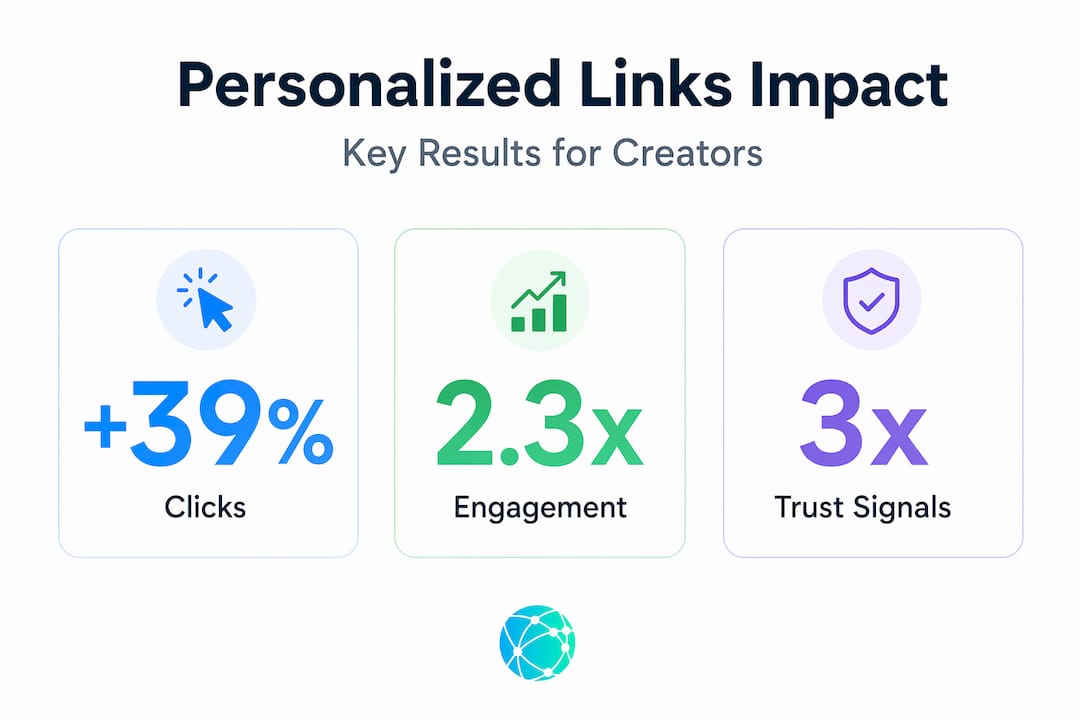
Most people treat links as an afterthought. You copy a URL, paste it somewhere, and move on. But that assumption costs you clicks, trust, and real data every single day. The importance of personalized links becomes obvious the moment you see the numbers: branded links earn 2.3x more clicks than generic alternatives, and that gap only widens as audiences grow more skeptical of random URLs. If you create content, run a brand, or own a small business, the links you share are doing more work than you realize. This article breaks down exactly what that work looks like and how to make it count.
Table of Contents
- Key takeaways
- Why the importance of personalized links is often underestimated
- Why personalized links get more clicks and build more trust
- How personalized links sharpen your tracking and analytics
- Best practices for creating and managing personalized links
- Real-world applications that prove personalized links work
- My take on what most people get wrong about link strategy
- Start building personalized links with Lflow
- FAQ
Key takeaways
| Point | Details |
|---|---|
| Branded links outperform generic ones | Personalized URLs generate up to 39% higher click-through rates than standard shortened links. |
| Trust is built before the click | A recognizable branded domain reduces hesitation and signals legitimacy to your audience instantly. |
| Tracking accuracy depends on link structure | Properly built personalized links with UTM parameters give you clean attribution and reliable campaign data. |
| Naming conventions prevent analytics chaos | Consistent, lowercase UTM standards across your team protect the integrity of your performance reports. |
| Personalization works across every channel | Custom links connect offline campaigns like direct mail to online tracking, closing the attribution gap. |
Why the importance of personalized links is often underestimated
A personalized link, sometimes called a PURL (personalized URL) or branded link, is a URL built around your name, brand, or campaign rather than a generic platform domain. Instead of sharing something like "bit.ly/3xkP9q, you share yourbrand.co/summer-saleoryourname.link/new-video`. That shift is not cosmetic. It changes how people perceive and interact with what you share.
There are a few distinct types worth knowing:
- Vanity URLs: Short, memorable links tied to a specific campaign or product, like
brand.co/launch - Campaign-specific URLs: Links built for a single promotion, usually with UTM parameters attached for tracking
- Influencer links: Unique URLs assigned to individual creators for partner attribution and commission tracking
- Link-in-bio pages: A single branded URL that consolidates multiple destinations, common on Instagram and TikTok
The difference between a personalized link and a generic shortened URL comes down to three components: the branded domain (your own, not a third-party shortener's), the custom slug (the text after the slash that you choose), and any unique identifiers added for tracking. Generic links hand all three of those components to someone else's platform.
Here is a quick comparison to make that concrete:
| Feature | Generic short link | Personalized link |
|---|---|---|
| Domain | Third-party (e.g., bit.ly) | Your own brand domain |
| Slug | Random characters | Descriptive, chosen by you |
| Trust signal | Low, often suspicious | High, recognizable brand |
| Analytics ownership | Platform-controlled | Fully owned by you |
| Brand recall | None | Reinforces every share |
The custom link functionality you get with personalized URLs is not a luxury for big brands. It is a practical tool for anyone who shares links regularly and wants to know what happens after the share.
Why personalized links get more clicks and build more trust
This is where the importance of unique links becomes tangible. Branded short links improve click-through rates by up to 39% compared to generic links. That figure is not just marketing noise. It reflects a straightforward human behavior: people click things they recognize.
The trust element runs deeper than most creators expect. Branded links act as a trust signal, instantly verifying the sender's legitimacy and reducing the suspicion that comes with random URLs. In SMS marketing especially, where a generic link looks almost identical to a phishing attempt, a branded domain can be the difference between a click and a delete.

For small businesses, the advantages of tailored links extend into brand recall. Every time you share yourbrand.co/offer instead of a random string, you are reinforcing your name. That repetition compounds over months of consistent sharing across email, social media, and print.
78% of consumers are more likely to repurchase from brands providing personalized content, and 76% say personalized communications affect how they think about a brand. A personalized URL is one of the simplest ways to inject that personalization directly into your marketing, before a single page even loads.
The emotional layer matters too. When someone sees a link that includes their name or a reference to something specific to them, it creates a moment of recognition. That moment lowers friction. And lower friction means higher engagement.
Pro Tip: If you are just starting with link branding, pick one consistent domain and use it everywhere before worrying about advanced personalization. Consistency alone will move your metrics.
How personalized links sharpen your tracking and analytics
Generic links give you a rough idea of traffic. Personalized links give you answers. The impact of personalized URLs on your analytics is substantial when you build them with the right structure.
Here is a practical process for getting clean tracking data from every link you create:
- Assign unique links to each segment. Create separate URLs for your email list, Instagram bio, YouTube description, and any paid placements. This tells you exactly which channel is driving results, not just total clicks.
- Add UTM parameters consistently. Every campaign link should include
utm_source,utm_medium, andutm_campaignat minimum. UTM parameters are case-sensitive, so enforce lowercase across your entire team. One inconsistency fragments your reports. - Never tag internal links. Adding UTM parameters to internal site links corrupts attribution data by resetting the user's session source. UTMs belong only on external traffic sources.
- Check your anchor link structure. If a link points to a section within a page (using a
#fragment), tracking parameters must come before the hash fragment to preserve both tracking and navigation. Getting this wrong breaks your data silently. - Review link performance weekly. Segment your click data by source and campaign, then reallocate attention toward what is working. The data is only useful if you act on it.
Pro Tip: Build a shared link-creation doc or spreadsheet for your team with pre-filled UTM values. This single step eliminates the most common cause of fragmented analytics.
Better data ownership is one of the most overlooked benefits of custom links. When you use a third-party generic shortener, performance data lives in their platform and on their terms. With your own branded domain and centralized link management, you own the full picture.
Best practices for creating and managing personalized links
Knowing why personalized links matter is half the battle. Knowing how to create personalized links without turning your backend into a mess is the other half.
- Choose a branded domain you will keep long-term. Changing your domain mid-campaign breaks every link you have shared. Pick something short, on-brand, and memorable from the start. You can learn more about what link branding involves before committing to a format.
- Write slugs that describe the destination.
/new-collectionbeats/p1234every time. Descriptive slugs improve trust, aid recall, and make your analytics reports readable without a decoder. - Standardize your naming conventions. Decide on a format (
campaign-channel-dateorproduct-audience-month) and stick to it. Structured link management with naming conventions prevents the fragmentation of campaign analytics that kills attribution clarity. - Centralize link creation. Whether you use a dedicated platform or a shared spreadsheet, all links should live in one place. Scattered links across individual accounts lead to duplicate campaigns and lost history.
- A/B test your slugs. Testing different URL slugs can statistically improve link performance by identifying what resonates with your specific audience. Try
/get-startedversus/start-freeand let click data tell you which framing wins.
Here is how different link types stack up for common use cases:
| Use case | Recommended link type | Key benefit |
|---|---|---|
| Social media bio | Branded link-in-bio page | Consolidates all destinations in one place |
| Email campaigns | Campaign URL with full UTMs | Precise source attribution per send |
| Influencer partnerships | Unique influencer slug | Individual performance tracking |
| Print or offline materials | Short branded URL or QR code | Easy to type, trackable offline response |
| Paid ads | Ad-specific campaign URL | Isolates paid traffic from organic |
Good link management tips separate creators who scale from those who hit a wall when campaigns multiply.
Real-world applications that prove personalized links work
The personalized link strategy that works in theory holds up just as well in practice. Here are situations where the impact is clear and measurable.
- Influencer campaign attribution: A fitness brand gives three different creators three unique URLs. After 30 days, the data shows Creator A drove 4x more conversions than Creator B despite fewer followers. That insight redirects the budget immediately and informs every future partnership decision.
- Small business brand recall: A local bakery prints
bakery.co/menuon every receipt instead of a generic shortened link. Customers can remember and revisit it without needing to search. The branded domain also reinforces the business name on every piece of print material. - Content creator link hub: A YouTube creator replaces five separate links scattered across their bio with one personalized link page at
creatorname.co. Every new video, merch drop, and podcast episode gets added to that one destination. Audience friction drops, and click-through on individual items goes up because the page is always fresh. - Direct mail campaigns: Personalized URLs connect offline and online marketing by giving each recipient a unique link. A postcard campaign with recipient-specific URLs tells you exactly who responded, turning a traditionally untraceable channel into a measurable one.
- Cross-platform consistency: A small e-commerce brand uses the same branded slug structure across Instagram, email, and their YouTube description. When a customer sees the same link style in three different places, it reinforces legitimacy and increases the likelihood they will engage.
The significance of customized links in all of these scenarios comes from the same core fact: they give you data, build trust, and create consistency that generic links never can.
My take on what most people get wrong about link strategy
I've watched creators and business owners spend serious time and money on content, ads, and design, then share a random-looking URL that quietly undermines everything they built. In my experience, link branding is treated as infrastructure only after something goes wrong. A campaign gets no clicks. Analytics show nothing. Budget gets misallocated because no one knows which channel actually worked.
The truth I've learned is this: most link problems are not technical. They are discipline problems. Someone on the team used capital letters in a UTM value. Someone created a new short link instead of updating the existing one. Someone tagged an internal page and blew up two months of attribution data. These are not rare edge cases. They happen constantly, and they cost real money.
What I've found actually works is treating your link architecture the way you treat your brand visual identity. You would not let different team members use five different logo variations. You should not let them create five different UTM formats either. The payoff for that consistency is not just cleaner reports. It is a genuine competitive advantage because you can make decisions faster and with more confidence than someone flying blind.
My other hard-won observation: do not over-personalize too early. One clean branded domain used consistently will outperform a dozen clever campaign URLs with inconsistent structure. Get the foundation right, then add complexity. The results compound, and you will be glad you built it properly from the start.
— Axion
Start building personalized links with Lflow
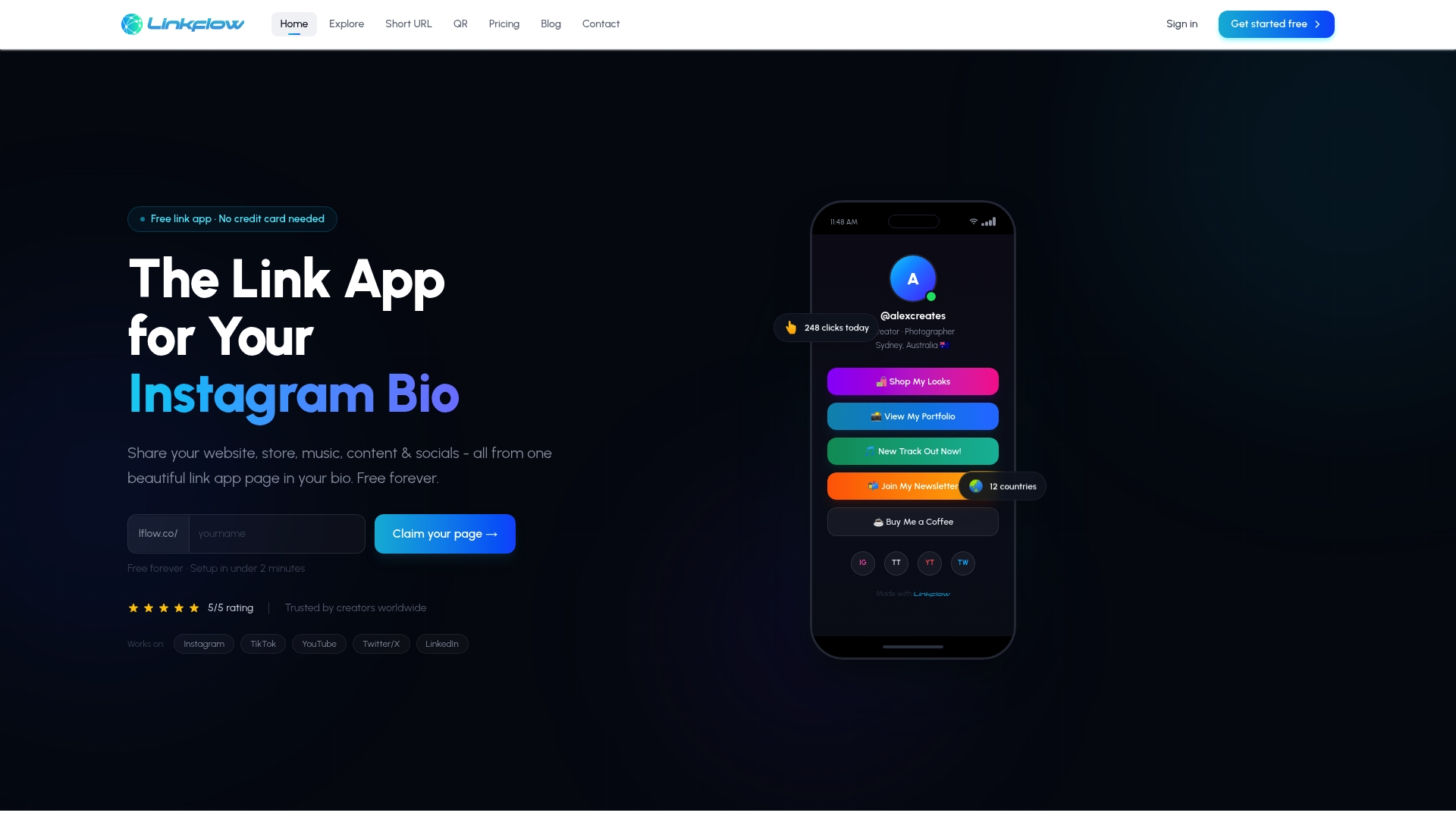
If you are ready to put the benefits of custom links to work, Lflow makes the setup faster than you might expect. The platform lets you create a branded link-in-bio page in under two minutes, complete with your own custom domain, real-time analytics, and a free QR code you can use for offline promotion. You can also use Lflow's free URL shortener to create clean, branded short links for individual campaigns and track every click from a single dashboard. For creators and small businesses who want a polished starting point, free link-in-bio templates are ready to customize right away, with no design experience required.
FAQ
What are personalized links?
Personalized links, also called PURLs or branded links, are custom URLs built around your brand name or campaign rather than a generic third-party domain. They typically include a branded domain and a descriptive custom slug you choose.
How much do personalized links improve click-through rates?
Branded short links improve click-through rates by up to 39% compared to generic links and earn 2.3x more clicks on average, according to research on custom URL shortener benefits.
Why do personalized links build more audience trust?
A branded domain signals legitimacy before anyone clicks, reducing the suspicion that random or generic-looking URLs create. This is especially true in SMS and email marketing, where branded links verify sender identity instantly.
How do I use UTM parameters correctly with personalized links?
Always use lowercase UTM values and apply them only to external traffic sources, never to internal site links. Consistent naming conventions across your team prevent fragmented analytics and protect your attribution data.
Can personalized links work for offline marketing?
Yes. A short, branded URL printed on a business card, flyer, or receipt is easy to remember and fully trackable. Unique URLs assigned per campaign or per recipient connect offline engagement directly to your digital analytics.