

Cross-promotion is the practice of adapting and distributing your core content across multiple platforms to expand reach, increase engagement, and reduce dependence on any single channel. Marketers and creators who cross-promote content consistently outperform those who publish in silos. Platforms like Instagram, TikTok, YouTube, and LinkedIn each hold distinct audiences that rarely overlap completely. That gap is exactly where cross-promotion pays off. This guide covers the real benefits, the strategic frameworks, and the mistakes that kill results before they start.
Why cross promote content: the core benefits
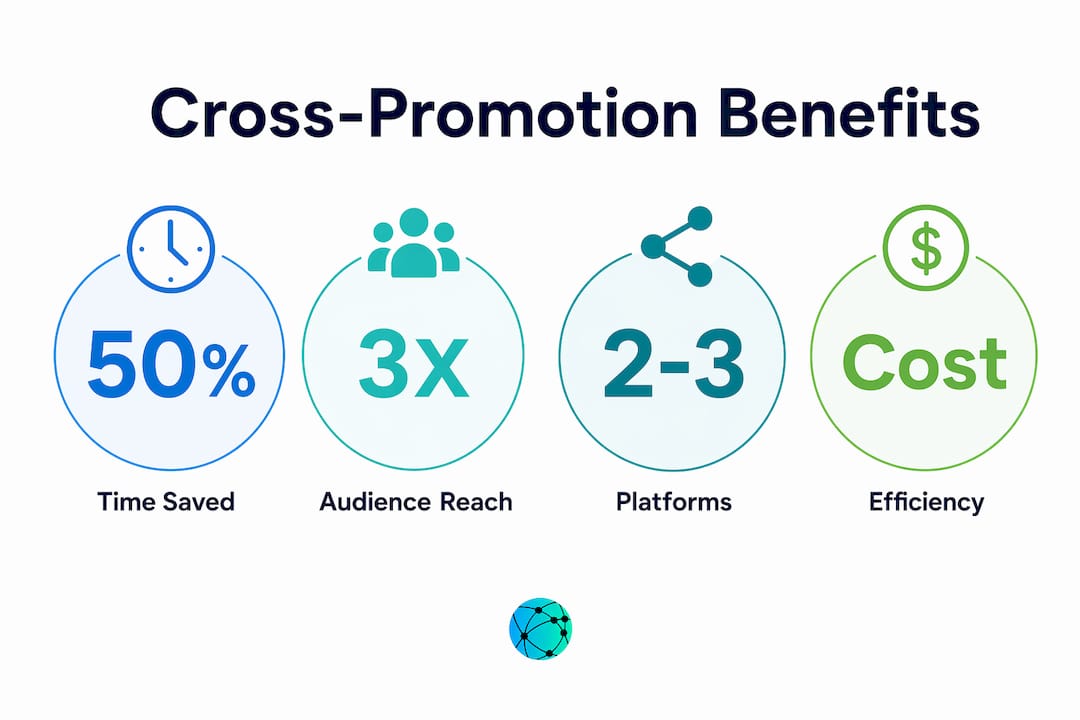
Cross-promoting content solves three problems at once: limited reach, wasted production effort, and fragile platform dependency. Each benefit compounds the others.
Expanded audience reach is the most obvious win. Every platform holds a different demographic slice. A YouTube tutorial reaches a different viewer than the same content clipped for TikTok or summarized in a LinkedIn post. Creators who publish across multiple platforms consistently access audiences that would never find them through a single channel.

Time and production efficiency is the less obvious but equally powerful benefit. Cross-promoting content saves 30–50% of production time by reusing one core asset across channels. A single long-form video becomes a blog post, three short clips, a newsletter section, and a carousel. That is five pieces of content from one production session.
Risk management is the benefit most creators ignore until it is too late. Maintaining presence on 2–3 platforms protects creators from algorithm changes, account suspensions, or platform shifts that can erase reach overnight. A creator who built entirely on one platform and lost their account loses everything. A creator spread across three platforms loses one third.
Cost efficiency through partnerships rounds out the core advantages. Cross-promotion with non-competing brands doubles audience exposure without doubling ad spend. Partners share resources and tap into each other's trusted audiences. That shared trust matters because audiences are more receptive to recommendations from sources they already follow.
How does cross-promotion differ from simple crossposting?
Crossposting means copying a post from one platform and pasting it to another unchanged. Cross-promotion means translating the core message into a format native to each platform. The difference in results is significant.
Successful campaigns adapt hooks, CTAs, and formats to match what each platform's audience expects. A LinkedIn audience responds to professional framing and data. A TikTok audience responds to fast hooks and personality. Posting the same caption and image to both platforms treats them as identical audiences. They are not.
Platform algorithms also penalize low-effort repetition. Posting identical content triggers platform-native fatigue and can lead to algorithmic suppression. Rotating the entry point, meaning the hook, the opening visual, or the angle, signals native behavior and keeps the algorithm treating your post as fresh content.
Pro Tip: Write three different opening lines for the same piece of content before you distribute it. Use one per platform. The core message stays the same. The entry point changes. This single habit separates effective cross-promotion from lazy crossposting.
The practical checklist for adapting content across platforms looks like this:
- Rewrite the hook for each platform's native style
- Adjust the CTA to match where that audience is in the funnel
- Resize visuals to platform-specific dimensions
- Trim or expand length to match platform norms (short for TikTok, longer for LinkedIn or YouTube)
- Remove platform-specific references that confuse audiences on other channels
What strategic frameworks drive successful cross-promotion?
Planning cross-promotion without a framework produces scattered results. The most effective approach builds from a single hero asset and maps every supporting piece to a clear goal.
Successful cross-promotion campaigns focus on one primary and one secondary goal per content cluster. A primary goal might be newsletter signups. A secondary goal might be profile follows. Trying to drive purchases, follows, signups, and shares from one campaign dilutes every outcome. Focused goals produce measurable handoffs.
The content cluster model works like this: one hero asset (a long video, a detailed blog post, or a podcast episode) anchors the cluster. Supporting posts on Instagram, LinkedIn, X, and TikTok each pull from the hero asset and point back to it or to a destination page. Each supporting post serves as a discovery vehicle, not a standalone piece.
For testing which platforms actually work for your specific audience, the 30-day sprint approach is the most reliable method. Run active cross-promotion across your chosen platforms for 30 days. Track which source platforms drive discovery and which destination platforms convert. Then automate the combinations that performed and cut the ones that did not.
The metrics that matter in cross-promotion are not vanity numbers. Track these specifically:
| Metric | What it measures |
|---|---|
| Handoff CTR | Percentage of viewers who click through to the destination |
| Destination conversion rate | How many arrivals take the desired action |
| Subscriber growth per source | Which platform drives the most new followers |
| Engagement rate by platform | Which adapted format resonates most per channel |
A clear handoff strategy directing audiences to prepared destinations is critical. Sending traffic to an unoptimized profile or a landing page that does not match the promise of the original post kills conversions regardless of how good the promotion was.
How to form cross-promotion partnerships with non-competing brands
Brand partnerships are the fastest way to double your audience without doubling your workload. The key word is non-competing. A food blogger partnering with a kitchenware brand reaches the same audience without competing for the same sale.
Collaboration with reputable partners produces trust transfer, which increases conversion rates compared to cold outreach. When a trusted creator recommends your content to their audience, that audience arrives already warm. They convert at higher rates because the endorsement carries credibility.
Finding the right partner requires one clear filter: shared audience, different offer. A fitness creator and a nutrition brand share an audience of health-focused consumers. Neither competes with the other. Both benefit from the introduction. Understanding influencer partnerships at a structural level helps creators identify which collaboration formats produce the best returns.
Effective partnership formats include:
- Joint content: Co-created videos, podcasts, or blog posts that both parties distribute to their audiences
- Bundled offers: Combining products or resources into a single package promoted across both channels
- Newsletter swaps: Each partner features the other in their email list, driving direct signups
- Live events or webinars: Co-hosted sessions that attract both audiences simultaneously
- Social takeovers: One creator posts on the other's account for a day, introducing each audience to the other
The cost-sharing element matters too. Joint campaigns split production costs, ad spend, and distribution effort. Both partners gain reach at a fraction of what solo promotion would cost.
What common pitfalls should creators avoid in cross-promotion?
The most common mistake in cross-promotion is also the most avoidable: posting identical content everywhere and calling it a strategy. Identical posts produce identical results across platforms, which means mediocre performance on all of them.
The second major pitfall is sending audiences to unprepared destinations. A well-crafted TikTok drives 10,000 viewers to a bio link that goes to a cluttered, confusing page. The traffic evaporates. Every destination channel must be ready before promotion starts. That means a clear profile, a focused CTA, and a landing page that matches the promise of the original content.
Overloading posts with multiple competing calls to action is the third mistake. Asking viewers to follow, subscribe, buy, share, and comment in one post produces decision paralysis. One CTA per post. One goal per campaign cluster.
Pro Tip: Before launching any cross-promotion campaign, audit every destination your content points to. Open each link on a mobile device. If the page loads slowly, looks cluttered, or buries the CTA, fix it first. Promotion quality cannot compensate for a broken destination.
Audience mismatch is the subtler risk. Promoting B2B content to a consumer audience wastes effort and trains the algorithm to show your content to the wrong people. Match the platform to the audience segment, not just to the content format.
Key Takeaways
Cross-promotion works because it multiplies the value of content you have already created while protecting your reach across platform changes.
| Point | Details |
|---|---|
| Adapt, do not copy | Rewrite hooks and CTAs for each platform to avoid algorithm penalties and low engagement. |
| Build content clusters | Create one hero asset and distribute supporting pieces across channels, each pointing to a clear destination. |
| Diversify platform presence | Maintaining 2–3 active platforms protects reach from account suspensions or algorithm shifts. |
| Use the 30-day sprint | Test source and destination platforms for 30 days before automating your cross-promotion workflow. |
| Prepare your destinations | Ensure every link, profile, and landing page is ready before driving traffic to it. |
The shift that actually changes results
Cross-promotion clicked for me the moment I stopped thinking about it as distribution and started thinking about it as translation. The content is the same. The language changes per platform.
The creators and marketers I have watched succeed with cross-promotion share one habit: they treat each platform as a separate audience with separate expectations, not as a copy-paste target. A LinkedIn post that performs well is not a TikTok script. A TikTok that goes viral is not a newsletter. The core insight travels. The packaging does not.
The other shift worth making is from output to outcome. Most creators measure cross-promotion by how many places they posted. The right measure is how many people moved from one platform to another and took a meaningful action. That handoff metric, the percentage of viewers who clicked through and converted, tells you whether your cross-promotion is actually working or just creating noise.
Partnerships accelerate everything. The fastest audience growth I have seen came from two non-competing creators swapping newsletter features. Both gained thousands of subscribers in a week. No ad spend. No production overhead. Just mutual trust and a shared audience.
The data-driven approach matters more than most creators admit. Run the 30-day sprint. Measure the handoffs. Cut what does not convert. Scale what does. Cross-promotion without measurement is just posting more.
— Axion
How Lflow supports your cross-promotion workflow
Running cross-promotion across Instagram, TikTok, YouTube, LinkedIn, and X creates one immediate problem: too many links, too many CTAs, and no clean way to send audiences anywhere useful.
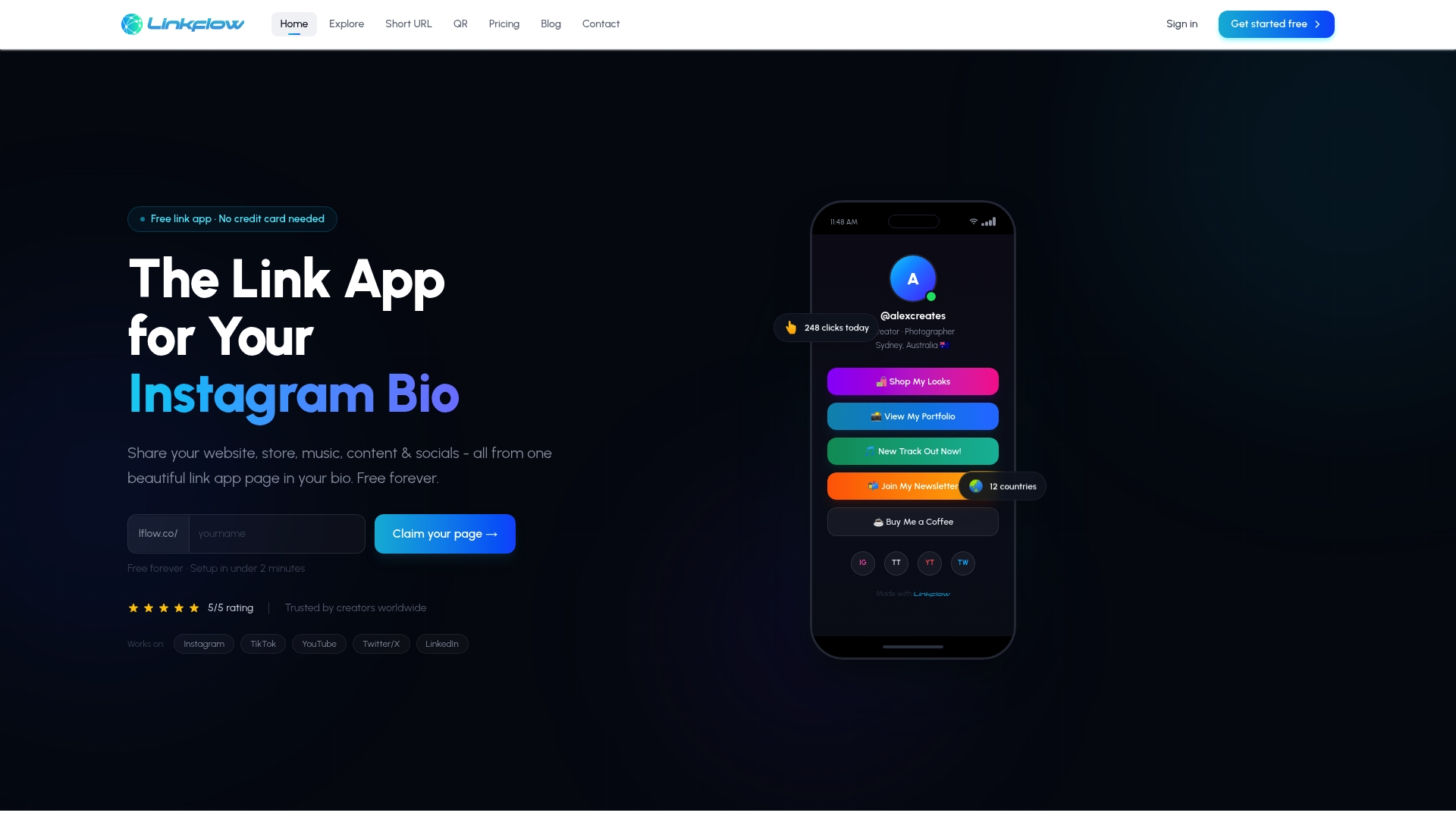
Lflow solves that with a free link in bio that consolidates unlimited links into one branded, mobile-optimized page. Every destination your cross-promotion points to lives in one place. Lflow also includes a free QR code generator, which extends your cross-promotion into offline channels like events, print, and packaging. Real-time analytics show you exactly which links your audience clicks, so you can measure handoff performance without a separate tool. Setup takes under two minutes. For creators managing multiple platform links, that single hub removes the friction between promotion and conversion.
FAQ
What does cross-promotion mean in content marketing?
Cross-promotion means adapting and distributing your core content across multiple platforms to reach different audience segments. It differs from crossposting because it requires translating the format, hook, and CTA for each channel.
How much time does cross-promotion save?
Cross-promoting content saves 30–50% of production time by reusing one core asset across multiple channels instead of creating original content for each platform.
Why is adapting content per platform so important?
Posting identical content across platforms triggers algorithmic suppression and produces low engagement. Each platform's algorithm rewards native behavior, which means adapted formats and varied entry points.
How do I find the right cross-promotion partner?
Look for brands or creators who share your audience but offer a different product or service. The shared audience ensures relevance. The different offer removes competition and makes the partnership mutually beneficial.
What metrics should I track in a cross-promotion campaign?
Track handoff CTR, destination conversion rate, and subscriber growth per source platform. These three metrics show whether your cross-promotion is moving audiences and driving real outcomes, not just generating impressions.