

Multi-link management is the practice of using a centralized platform to control, update, and analyze multiple URLs across every marketing channel you publish on. Without it, content creators and marketers face a predictable cascade of broken links, inconsistent tracking, and wasted hours chasing down outdated URLs scattered across spreadsheets and social bios. The question of why multi-link management deserves serious attention comes down to one fact: your links are your infrastructure, and infrastructure that breaks silently costs you audience trust and attribution data simultaneously. Platforms like Lflow, link-in-bio tools, and dedicated URL management systems exist precisely because scattered link handling is not a minor inconvenience. It is a structural problem.
Why multi-link management is the foundation of modern content operations
Multi-link management, also called centralized link infrastructure or link hub management, refers to organizing all your URLs inside a single system that controls destinations, tracks performance, and maintains brand consistency. The industry term most professionals use is link management, but multi-link management specifically describes the practice of handling many links across many channels from one place.
The mechanics work through three core components. First, a centralized redirect layer sits between your public-facing URLs and your actual destinations. When you update a destination, the public URL stays intact. Stable public URLs with flexible backend destinations are the key operational invariant that prevents audience confusion and broken links. Second, campaign parameter management standardizes your UTM tags so that Google Analytics, Meta Ads Manager, and any other analytics tool receives clean, consistent data. Third, a link hierarchy separates permanent branded links from campaign-specific and post-level links, so you can update a promotion without touching your evergreen content.

A useful analogy comes from networking. Wi-Fi 7's Multi-Link Operation achieves up to 75% downlink and 116% uplink throughput improvements by routing traffic dynamically across multiple bands. The principle maps directly to content operations: managing multiple channels through one coordinated system produces results that no single-channel approach can match. Just as MLO performance depends on device compatibility, link management gains depend on how well your tools and workflows align with each other.
Pro Tip: Before choosing a link management platform, map every channel where you currently publish links. Instagram bio, TikTok bio, YouTube descriptions, email newsletters, and podcast show notes each need a dedicated link tier. Knowing your full link surface area prevents gaps in your setup.
The integration layer matters as much as the redirect layer. Centralized link management tools can connect with content calendars, scheduling software, and analytics dashboards to eliminate manual link swapping entirely. That integration is what separates a link hub from a simple URL shortener.
What are the benefits of multi-link management for creators and marketers?
The benefits of multi-link management fall into four categories: operational efficiency, brand consistency, analytics accuracy, and audience trust.
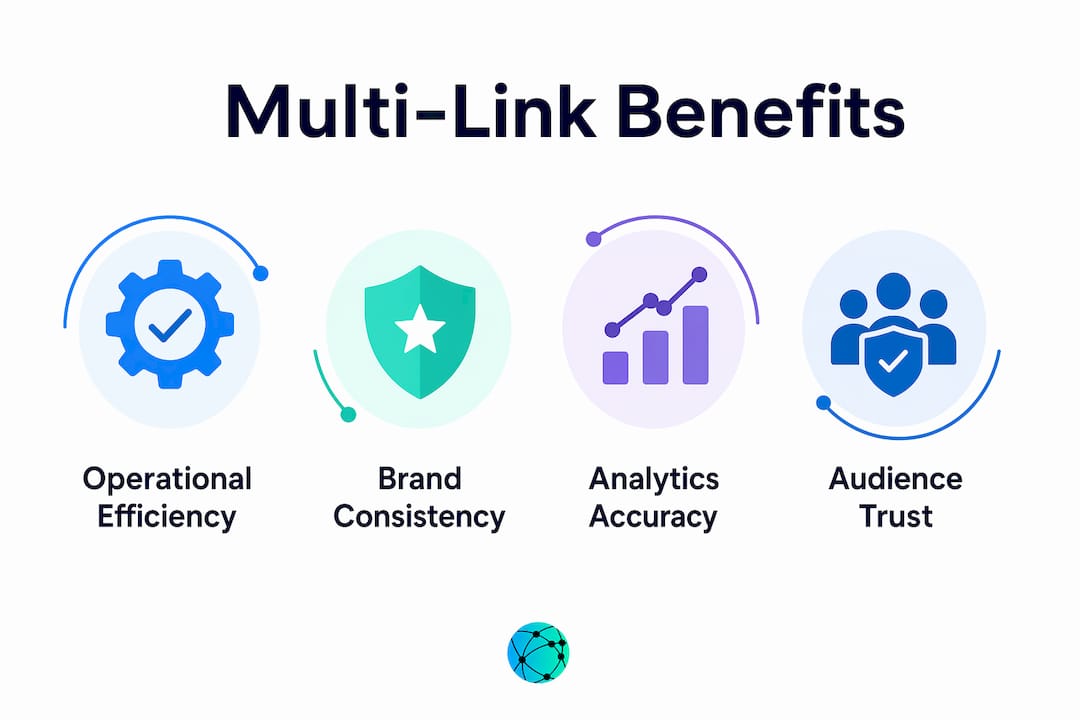
Operational efficiency is the most immediate gain. Consolidating distributed URLs into a centralized system eliminates spreadsheet chaos and gives teams better attribution visibility. A creator publishing across Instagram, TikTok, YouTube, and a newsletter no longer needs to manually update four separate links when a product page changes. One destination update propagates everywhere.
Brand consistency is the benefit most creators underestimate. Every link you share is a brand touchpoint. A branded short link like "brand.co/summer-dropcommunicates professionalism in a way that a raw affiliate URL or a genericbit.ly` link never will. Understanding what link branding means for your marketing analytics is the first step toward treating links as brand assets rather than functional afterthoughts.
Analytics accuracy is where multi-link management advantages compound over time. Disorganized UTM parameters and inconsistent link usage create major analytics gaps. Varied source labels across campaigns break cross-channel analysis, making it impossible to know which platform actually drove a conversion. Centralized management enforces naming conventions so your data stays clean.
"Multi-link management is less about simply having more links and more about managing them as a coherent system that preserves brand consistency and measurement integrity." — Best Link Management Setup for Multi-Channel Creators
Audience trust is the long-term payoff. Broken links erode credibility faster than almost any other technical failure. A follower who clicks a dead link in your bio does not file a support ticket. They leave and often do not return. Multi-link pages are essential for creator growth precisely because they give audiences a reliable, always-current destination regardless of what campaign is running.
How does multi-link management compare to scattered link approaches?
| Approach | Link updates | Analytics quality | Brand consistency | Scalability |
|---|---|---|---|---|
| Scattered links (spreadsheets, manual) | Update each platform individually | Inconsistent UTMs, broken attribution | Varies by platform and team member | Breaks down above 3-4 channels |
| Centralized multi-link management | Single destination change updates all | Standardized UTMs, clean cross-channel data | Enforced via branded links and templates | Scales to unlimited channels |
The table above reflects a pattern that shows up repeatedly in creator team case studies. Manual link tracking works when you publish on one or two platforms. It fails when you add a third channel, bring on a second team member, or run more than one campaign simultaneously. The failure mode is not dramatic. It is gradual: a UTM tag gets misspelled, a destination URL changes without updating the bio link, a campaign ends but the link still points to a 404 page.
Scale Computing's SC//Connect SD-WAN platform demonstrates the same principle at the network level. Multi-link resilience through load-balancing and failover keeps operations running when one path fails. Content operations need the same logic: if one link breaks, your system should catch it before your audience does.
The attribution confusion problem deserves specific attention. When a campaign runs across Instagram, TikTok, and email with three different UTM source labels for the same destination, your analytics platform treats them as three separate traffic sources. You cannot aggregate performance, cannot compare channels fairly, and cannot make confident budget decisions. Centralized link management resolves attribution confusion by enforcing a single naming convention across every channel from the start.
Pro Tip: Run a link audit before migrating to a centralized system. Pull every URL you have published in the last 90 days across all channels, check each one for 404 errors, and document your current UTM patterns. This audit typically reveals 20 to 40 percent more link inconsistencies than most creators expect.
How to implement multi-link management effectively
Implementing a multi-link strategy effectively requires a structured approach. Rushing into a new tool without a clear taxonomy produces the same chaos you were trying to escape, just in a different location.
-
Define your link naming conventions before you publish a single link. Decide on UTM source names for every channel (instagram, tiktok, youtube, email) and stick to them. Inconsistency at this step is the single most common cause of analytics failure. SEO analytics best practices consistently identify naming convention discipline as a prerequisite for accurate attribution.
-
Build a three-tier link hierarchy. Tier one holds permanent branded links for your homepage, store, and evergreen content. Tier two holds campaign-specific redirects that you can update or retire without touching tier one. Tier three holds post-level unique links for individual pieces of content. A tiered link structure enables updates without breaking live links and preserves both branding and measurement.
-
Choose a platform with native analytics and redirect control. A URL shortener that only shortens is not a link management platform. You need real-time click data, geographic breakdowns, device data, and the ability to change a destination without changing the public URL. Lflow, for example, provides all of these alongside QR code generation and custom domain support.
-
Integrate your link platform with your content calendar. Creators who build a disciplined link taxonomy before campaigns scale their analytics and reduce operational friction even under fast publishing schedules. Connecting your link hub to your scheduling tool means links get created and assigned as content is planned, not scrambled together at publish time.
-
Audit and maintain on a monthly cadence. Check for broken destinations, retire expired campaign links, and review your UTM data for any naming drift. Common SEO content management mistakes include neglecting link hygiene, which compounds over time into significant traffic and attribution losses.
The implementation process typically takes one to two weeks for a solo creator and two to four weeks for a team. The upfront investment pays back within the first campaign cycle through cleaner data and faster link updates.
Key takeaways
Multi-link management works because it treats your URLs as a coherent system rather than isolated assets, which is the only approach that preserves brand integrity and measurement accuracy at scale.
| Point | Details |
|---|---|
| Centralized redirect control | Update any destination once and every public-facing link reflects the change instantly. |
| Three-tier link hierarchy | Separate permanent, campaign, and post-level links to balance stability with promotional flexibility. |
| UTM naming conventions | Define source labels before publishing to prevent attribution gaps across channels. |
| Brand consistency at scale | Branded short links build audience trust and signal professionalism on every platform. |
| Monthly link audits | Regular maintenance catches broken destinations and naming drift before they damage analytics. |
Why I think most creators are still underestimating their link infrastructure
I have watched creators spend thousands of dollars on content production and paid promotion, then lose a significant share of that investment to a broken bio link or a mismatched UTM tag. The link layer is treated as an afterthought because it is invisible when it works. The damage only surfaces in analytics reports weeks later, and by then the campaign budget is spent.
The deeper issue is that most creators think about links tactically rather than architecturally. They ask "what link should I put here?" instead of "what system should govern all my links?" That shift in framing changes everything. Once you treat your link infrastructure the way a developer treats a codebase, with version control, naming conventions, and a clear hierarchy, the operational benefits compound fast.
The future of link management is moving toward automation and AI-assisted destination optimization. Platforms will soon route audiences to different destinations based on device type, geography, or referral source without any manual intervention. But automation built on a disorganized foundation produces automated chaos. The creators who invest in clean link architecture now will be the ones who can actually leverage those capabilities when they arrive.
My honest advice: start with the audit, build the taxonomy, and pick one platform to centralize everything. The link consolidation process is less technically complex than most creators assume. The hard part is the discipline to maintain it. That discipline is what separates creators who can measure their growth from those who are guessing.
— Axion
Take control of your links with Lflow
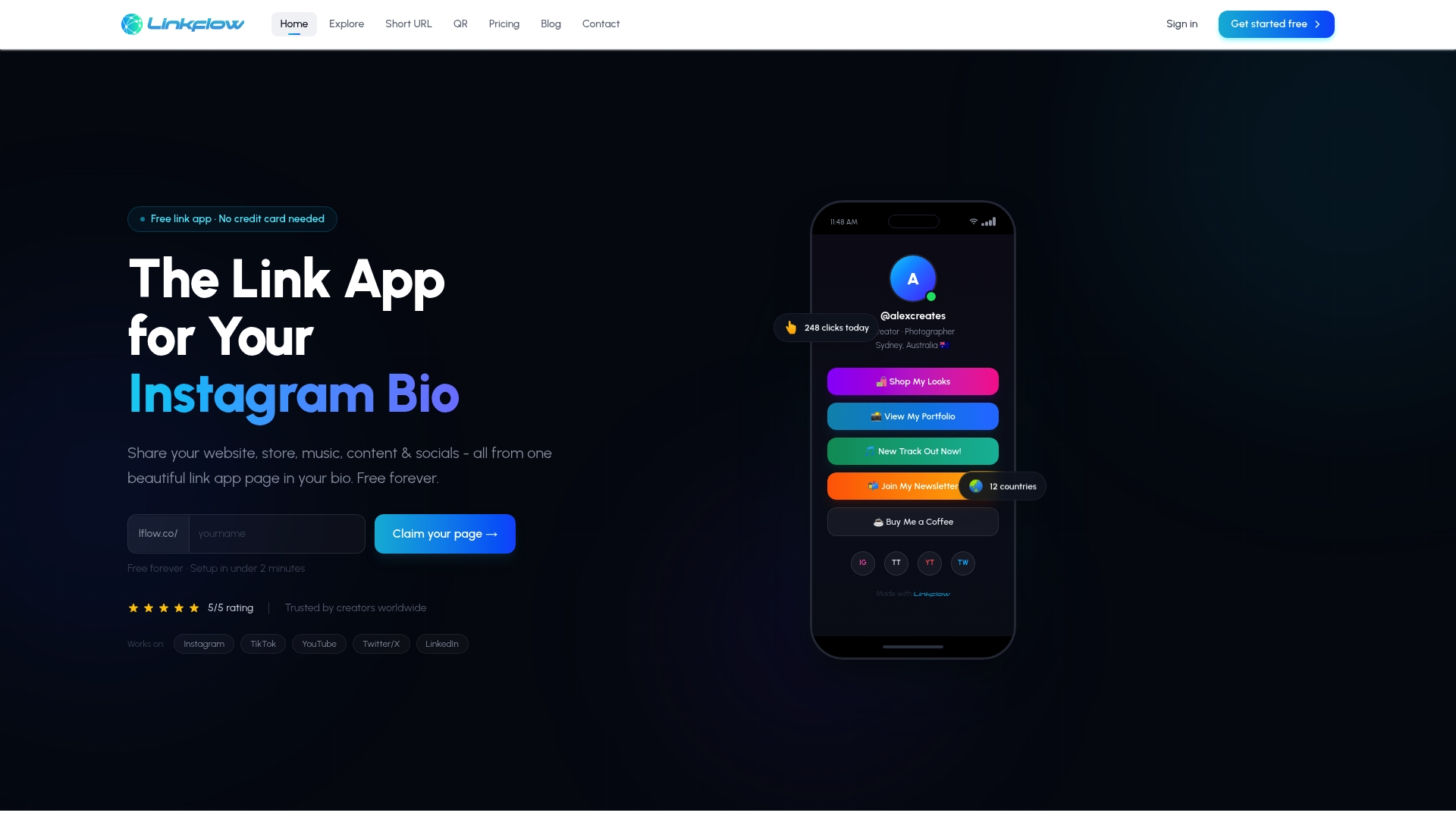
Lflow gives content creators and marketers a free, centralized link hub that handles everything described in this article. You get a branded link-in-bio page that consolidates your store, videos, social profiles, and campaign links into one mobile-optimized URL. Real-time analytics show you exactly which links drive clicks, from which platforms, and on which devices. Setup takes under two minutes, and custom domains, QR codes, and full theme customization are included at no cost. If you are ready to replace scattered links with a system that actually works, start your free link-in-bio on Lflow today and see the difference one organized link hub makes for your next campaign.
FAQ
What is multi-link management?
Multi-link management is the practice of controlling, updating, and analyzing multiple URLs from a single centralized platform. It replaces scattered link handling across spreadsheets and individual platform bios with one system that maintains brand consistency and analytics accuracy.
How does multi-link management improve analytics?
Centralized management enforces consistent UTM naming conventions across every channel, which prevents the attribution gaps that occur when source labels vary between campaigns. Clean UTM data lets you compare channel performance accurately and make confident budget decisions.
What is a tiered link structure?
A tiered link structure organizes links into three levels: permanent branded links for evergreen content, campaign-specific redirects for promotions, and post-level unique links for individual pieces of content. This separation lets you update campaigns without breaking stable links.
Why do branded links matter for creators?
Branded short links signal professionalism and build audience trust at every touchpoint. A custom domain link communicates that you control your digital presence, while generic shortener links can appear untrustworthy or spammy to followers.
How often should I audit my links?
A monthly audit is the recommended cadence for active creators. Check for broken destinations, retire expired campaign links, and review UTM data for naming inconsistencies. Creators publishing across four or more channels benefit from a bi-weekly review during active campaign periods.