

A multi-link strategy is a coordinated plan to distribute your online presence and inbound links across multiple relevant platforms simultaneously, creating cohesive engagement rather than isolated, single-channel efforts. The industry term most closely aligned with this approach is "multi-channel link management," and understanding what is multi-link strategy means recognizing it as far more than just posting on several platforms. It means deliberately connecting your SEO links, social profiles, email touchpoints, and content hubs so each channel reinforces the others. Companies that execute this well see retention rates of 89% versus just 33% for brands with weak multi-channel engagement. That gap is the entire argument for taking this approach seriously.
What is multi-link strategy and why does it matter?
A multi-link strategy is the deliberate management of every inbound link and audience touchpoint across platforms like Instagram, LinkedIn, email, and organic search, treated as a single coordinated system rather than separate efforts. The core insight is this: no single channel is stable enough to carry your entire audience relationship. Algorithm changes, platform policy shifts, and audience migration all threaten brands that rely on one source of traffic.
The 89% vs. 33% retention gap between strong and weak multi-channel engagement is not a marginal difference. It means brands with a coordinated multi-link approach retain nearly three times more customers than those without one. For content creators on TikTok or YouTube, that translates directly to subscriber loyalty and repeat engagement. For B2B marketers on LinkedIn, it means pipeline continuity even when one channel underperforms.
"Being present on the three most relevant platforms beats scattered presence on many irrelevant ones. Cohesion is the deciding factor."
Single-channel dependence is the most common structural risk in digital marketing today. A creator who builds their entire audience on Instagram and then faces a reach drop due to an algorithm update has no fallback. A multi-link approach solves this by distributing audience relationships across email lists, SEO-driven content, social profiles, and link hubs, so no single change wipes out your visibility.
Data silos obstruct effective multi-link management. When your email team, SEO team, and social team operate independently, they send redundant messages, miss cross-channel opportunities, and waste budget. Unified data is what separates a multi-link strategy from just "being on multiple platforms."

What are the core components of a multi-link strategy?
An effective multi-link approach in 2026 combines four distinct link types into one coordinated system.
- Internal links improve site crawlability and guide users through your content architecture. Internal linking for semantic clustering distributes authority efficiently within your site and complements every inbound effort.
- External backlinks from authoritative, topically relevant domains signal credibility to search engines and drive referral traffic.
- Social mentions and profile links on platforms like Instagram, TikTok, and LinkedIn create direct audience touchpoints outside of search.
- Email links remain one of the highest-converting link types, connecting owned audiences directly to your content or offers.
The distinction between a multi-link strategy, a multi-channel marketing strategy, and an omnichannel approach matters here. Multi-channel means being present on several platforms. Multi-link means actively managing the links and touchpoints across those platforms as a system. Omnichannel goes further: most businesses evolve from multi-channel toward omnichannel as they mature, weaving channels into a unified customer journey rather than parallel tracks.
Thematic coherence is the quality filter for every link you build. Topically aligned links signal clearer relevance and hold their SEO value longer than links from high-authority but off-topic sources. A fitness creator getting a backlink from a nutrition blog carries more weight than one from a general news aggregator, even if the aggregator has higher domain authority.
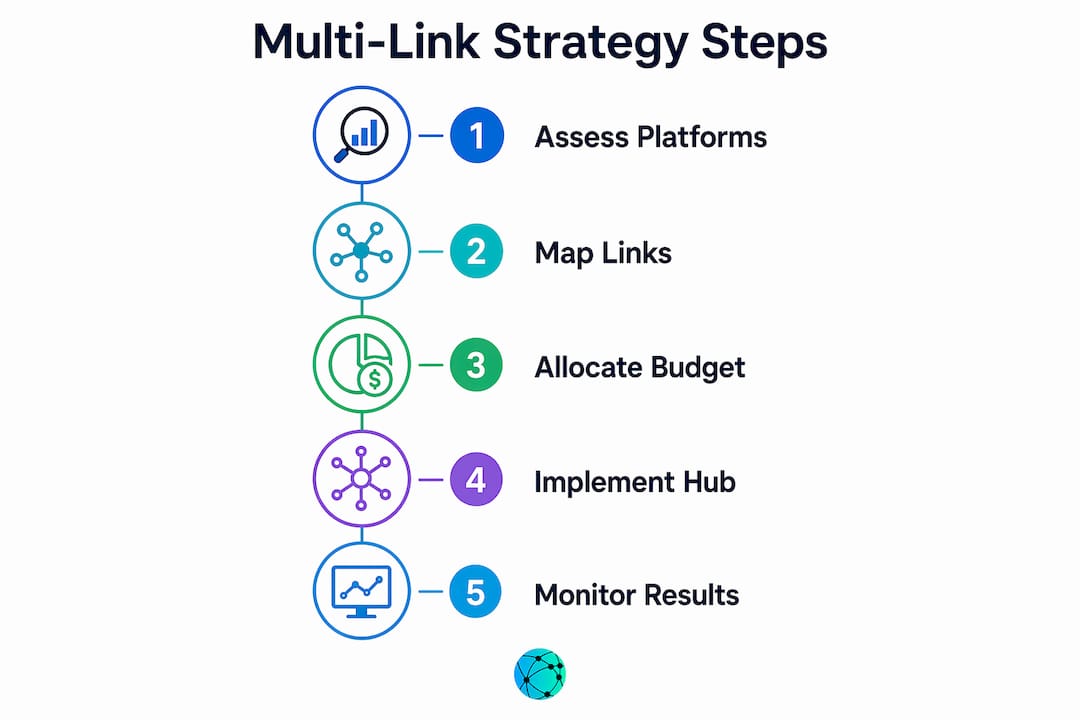
Pro Tip: Use a simple spreadsheet to map every active link by platform, topic cluster, and last-updated date. This single document will reveal gaps and redundancies faster than any audit tool.
The 70/20/10 budget allocation rule gives you a practical framework for managing effort across channels. Spend 70% of your resources on proven channels that already convert, 20% on scaling channels that show promise, and 10% on experiments. This prevents the common mistake of spreading budget evenly across every platform and getting mediocre results everywhere.
| Channel Tier | Allocation | Purpose |
|---|---|---|
| Proven channels (Tier 1) | 70% | Maximize returns on what already works |
| Scaling channels (Tier 2) | 20% | Grow platforms showing early traction |
| Experimental channels (Tier 3) | 10% | Test new platforms and link types |
How to implement a multi-link strategy step by step
Building a multi-link marketing strategy from scratch follows a clear sequence. Skipping steps, especially the audit phase, is the most common reason implementations fail.
-
Audit your existing links and channels. List every platform where you have a presence, every backlink pointing to your site, and every email sequence that drives traffic. Tools like Google Search Console, Ahrefs, and Semrush give you a complete picture of your current link profile.
-
Define your audience touchpoints. Map where your audience actually spends time versus where you assume they do. A B2B SaaS marketer may find LinkedIn and email outperform Twitter/X by a factor of three. A lifestyle creator may find Pinterest drives more consistent traffic than Facebook. Data, not assumption, should drive this decision.
-
Build links with thematic coherence. Every new link you pursue, whether a guest post, a social profile, or a directory listing, should connect topically to your core content. Topical coherence between source and destination is what makes links durable rather than disposable.
-
Apply the 70/20/10 rule to your resources. Allocate your time, budget, and content production according to the framework above. Revisit the allocation quarterly as channel performance shifts.
-
Integrate your tracking into a single source of truth. Use UTM parameters on every link, connect your analytics into one dashboard (Google Analytics 4, HubSpot, or a comparable platform), and review cross-channel performance weekly. Cross-channel data integration prevents silos and gives you a clear picture of which links are actually driving results.
-
Use explicit cross-channel referencing. Cross-channel referencing is the highest-impact tactic in multi-channel outreach. Mention your email list in your Instagram bio. Reference your YouTube channel in your email footer. Link your podcast in your LinkedIn posts. Each reference builds context and continuity for your audience.
-
Set a unified stopping rule. When a contact opts out on one channel, remove them from all active sequences. Unified opt-out handling protects your brand reputation and reduces audience fatigue across every platform you manage.
Pro Tip: Consolidate all your active links into a single link hub page, like an Lflow bio page, so every platform bio points to one URL. This makes updating your link portfolio instant instead of a platform-by-platform chore.
For creators managing Instagram, TikTok, and YouTube simultaneously, a centralized link hub is not optional. It is the operational backbone of the entire strategy. Learn more about multi-link management for creators to see how this plays out in practice.
What are the biggest challenges in multi-link strategy management?
Managing multiple links and channels at scale introduces predictable problems. Knowing them in advance lets you build defenses before they become expensive.
-
Silos between teams or channels produce redundant messaging and conflicting campaigns. A prospect who receives the same offer via email, LinkedIn, and a retargeting ad on the same day is more likely to unsubscribe than convert. Integrated data and shared campaign calendars solve this directly.
-
Pacing and link acquisition speed matter more than most marketers realize. A 3:1 ratio of high-quality Tier 2 to Tier 1 links with gradual rollout avoids spam signals. Acquiring 200 backlinks in a week looks unnatural to search engines regardless of link quality.
-
Over-reliance on low-quality links is the fastest way to undermine an otherwise solid strategy. Tier 3 links, such as low-authority blog comments, forum signatures, and directory spam, dilute your link profile and can trigger manual penalties. Prioritize fewer, better links over volume.
-
Thematic drift under scaling happens when you start accepting any link opportunity rather than filtering for topical relevance. As your outreach scales, maintain a strict relevance checklist for every link you build or accept.
| Challenge | Solution |
|---|---|
| Team silos | Shared campaign calendar and unified analytics dashboard |
| Spam signals from fast link acquisition | Gradual rollout, 3:1 Tier 2 to Tier 1 ratio |
| Low-quality link overload | Strict topical relevance filter for all new links |
| Thematic drift at scale | Quarterly link audit against core topic clusters |
For a deeper look at how single-platform dependence creates these exact vulnerabilities, the breakdown of risks from one-platform reliance is worth reading before you finalize your channel mix.
You can also explore multi-channel outreach strategies for practical frameworks on building link diversity without sacrificing quality.
Key takeaways
A multi-link strategy works because coordinated, thematically coherent links across multiple channels retain more customers, reduce single-channel risk, and compound SEO authority over time.
| Point | Details |
|---|---|
| Retention advantage | Strong multi-channel engagement retains 89% of customers vs. 33% for weak engagement. |
| Thematic coherence beats volume | Topically aligned links hold SEO value longer than high-authority but off-topic sources. |
| 70/20/10 allocation rule | Spend 70% on proven channels, 20% on scaling ones, and 10% on experiments. |
| Unified data prevents silos | Integrated tracking across all channels stops redundant messaging and wasted budget. |
| Centralized link hub is foundational | A single link hub page makes cross-platform management fast and consistent. |
Why thematic coherence is the metric most marketers ignore
Most marketers I work with obsess over domain authority scores and follower counts. They treat link building as a numbers game and channel management as a coverage exercise. The results are predictable: broad presence, thin engagement, and SEO gains that evaporate after the next algorithm update.
What actually moves the needle is thematic coherence. A tightly clustered set of links from topically relevant sources, pointing to content that genuinely serves a specific audience, outperforms a scattered portfolio of high-DA links every time. I have seen creators with fewer than 50 backlinks outrank sites with thousands, purely because every link they had was contextually precise.
The same principle applies to channel selection. Three platforms where your audience is genuinely active and where your content fits the format will always beat seven platforms where you are just maintaining a presence. The omnichannel evolution is not about adding more channels. It is about making the channels you have work together.
My honest advice: run a thematic audit before you run a link audit. Ask whether each link and each channel you manage actually belongs in the same conversation as your core content. If the answer is no, cut it. The discipline to remove low-coherence links and channels is rarer than the ambition to add them, and it is far more valuable.
— Axion
Build your multi-link strategy with Lflow
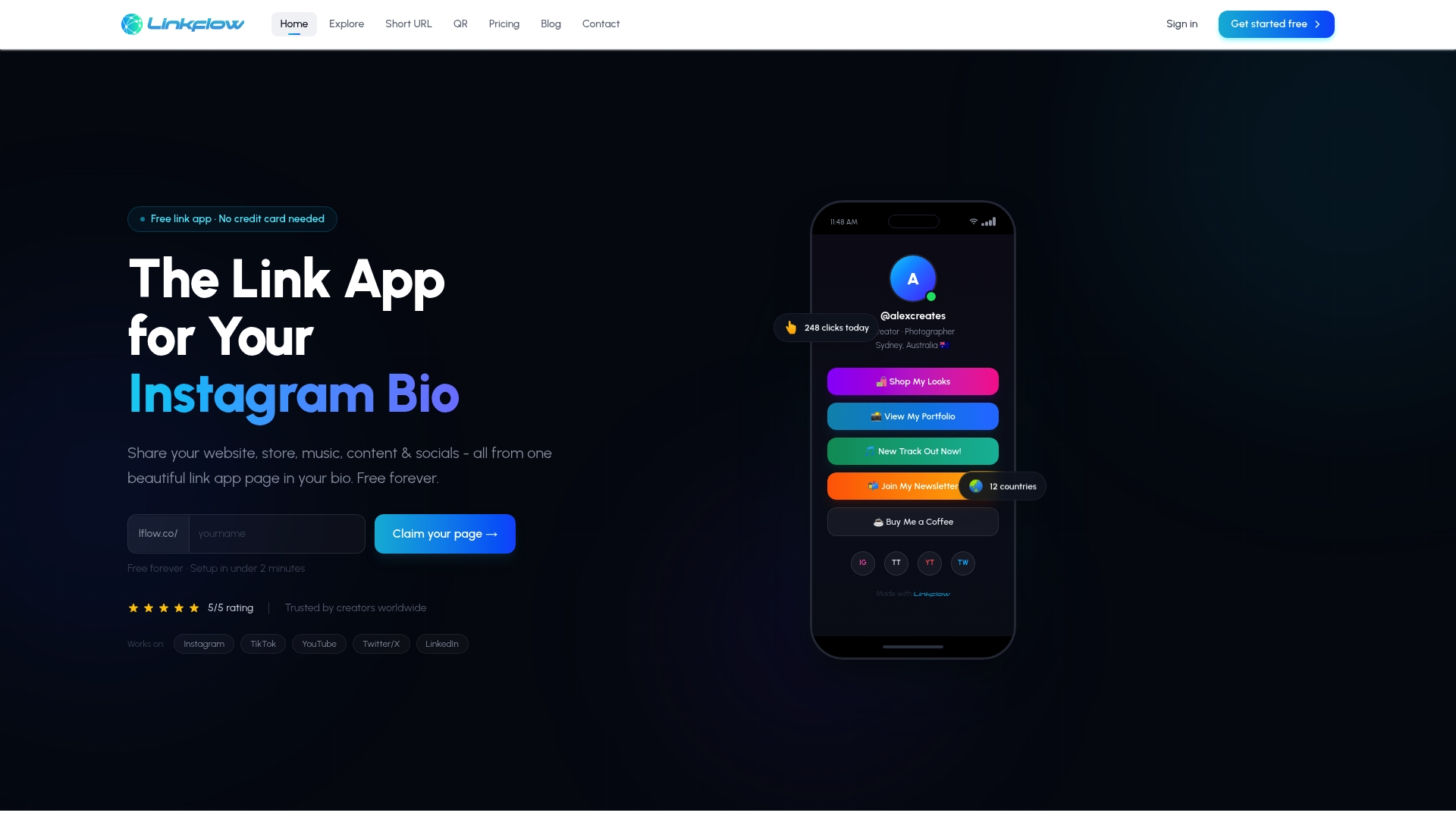
Lflow gives content creators and marketers the infrastructure to execute a multi-link approach without the operational overhead. With Lflow's free link in bio tool, you consolidate unlimited links, websites, stores, videos, and social profiles into a single branded URL. Real-time analytics show you exactly which links drive clicks, so you can apply the 70/20/10 rule with actual data instead of guesswork. The free QR code generator connects your offline presence to your digital hub in seconds. Setup takes under two minutes, and the platform works across Instagram, TikTok, YouTube, Twitter/X, and LinkedIn. If you are serious about building a coordinated link presence in 2026, Lflow is the operational center that makes it practical.
FAQ
What is a multi-link strategy in digital marketing?
A multi-link strategy is a coordinated system for managing inbound links and audience touchpoints across multiple platforms, including SEO backlinks, social profiles, and email, as a single unified effort rather than isolated channel activities.
How does a multi-link strategy differ from multi-channel marketing?
Multi-channel marketing means being present on several platforms. A multi-link strategy goes further by actively managing the links and data connecting those platforms, so each channel reinforces the others rather than operating independently.
Is a multi-link strategy effective for content creators?
Yes. Companies with strong multi-channel engagement retain 89% of customers compared to 33% for weak engagement, and creators who centralize their links see measurably higher repeat audience engagement.
How many channels should a multi-link strategy include?
Focus on the three most relevant platforms for your audience rather than spreading thin across many. Cohesion and thematic relevance across a smaller set of channels consistently outperforms broad but shallow presence.
What tools help manage a multi-link strategy?
Platforms like Lflow centralize your links into one branded hub, while Google Analytics 4, Ahrefs, and Semrush provide the tracking and link analysis needed to measure performance across every channel in your strategy.