

Omnichannel links are trackable URLs embedded with structured UTM parameters that unify customer attribution across every marketing channel, from Instagram to in-store QR codes. Understanding omnichannel strategy starts here: these links are not just shortened URLs. They are the connective tissue of a unified customer journey, feeding real-time data into a single analytics view. Platforms like Bitly, Lflow, and enterprise tools like Linkkit have built entire product lines around this concept because fragmented link tracking costs marketers measurable revenue. Brands that implement a proper omnichannel data foundation see retention gains within 30 to 60 days, which makes explaining omnichannel links one of the most practical conversations in 2026 marketing.
What are omnichannel links and why do they matter?
Omnichannel links are trackable URLs with structured UTM parameters that enable attribution across platforms including email, social media, paid ads, and offline QR codes. The industry term for managing these at scale is "enterprise link management," though most marketers simply call them tracked or UTM links. What separates them from a basic hyperlink is the layer of structured data attached to every click.
Each link carries metadata that answers four questions: where did this visitor come from, through which channel, as part of which campaign, and in response to which specific content variant. That data flows directly into tools like Google Analytics 4, HubSpot, or Salesforce, building a continuous picture of how a customer moves from a TikTok ad to a product page to a purchase. Without this structure, you are guessing at attribution.

The business case is direct. Omnichannel customers retain at 89% compared to 33% for single-channel customers, and they spend 30% more while shopping 70% more frequently. Those numbers reflect what happens when a brand stops treating each channel as a separate experiment and starts treating every touchpoint as part of one conversation.
How omnichannel links fit into the broader strategy
Omnichannel marketing is an operating model that integrates all digital and physical touchpoints around a persistent customer profile with real-time shared data. Multichannel marketing, by contrast, runs each channel independently with no shared context. Cross-channel sits in between, with some data sharing but no unified profile. The distinction matters because omnichannel links only deliver their full value inside a true omnichannel setup.
Here is how the three models compare in practice:
- Multichannel: Your email team uses one link format, your social team uses another, and your paid team uses a third. No one shares data. A customer who clicks your Instagram ad and later opens your email is counted as two separate people.
- Cross-channel: Some data passes between platforms, but it is often delayed or incomplete. Attribution is partial.
- Omnichannel: Every link, regardless of channel, feeds into the same customer profile. A click on a QR code in a physical store connects to the same journey as a click on a Facebook retargeting ad.
"True omnichannel builds deeper cross-department connections enabling seamless service and marketing conversations without forcing customers to repeat information." — Zendesk on omnichannel expectations
The practical implication for small businesses and social media managers is this: you do not need enterprise software to start. You need consistent link structure and a shared naming convention. Link tracking across channels captures device type, location, referral source, and engagement time, making offline initiatives as measurable as digital campaigns.
How to build omnichannel links: the technical anatomy
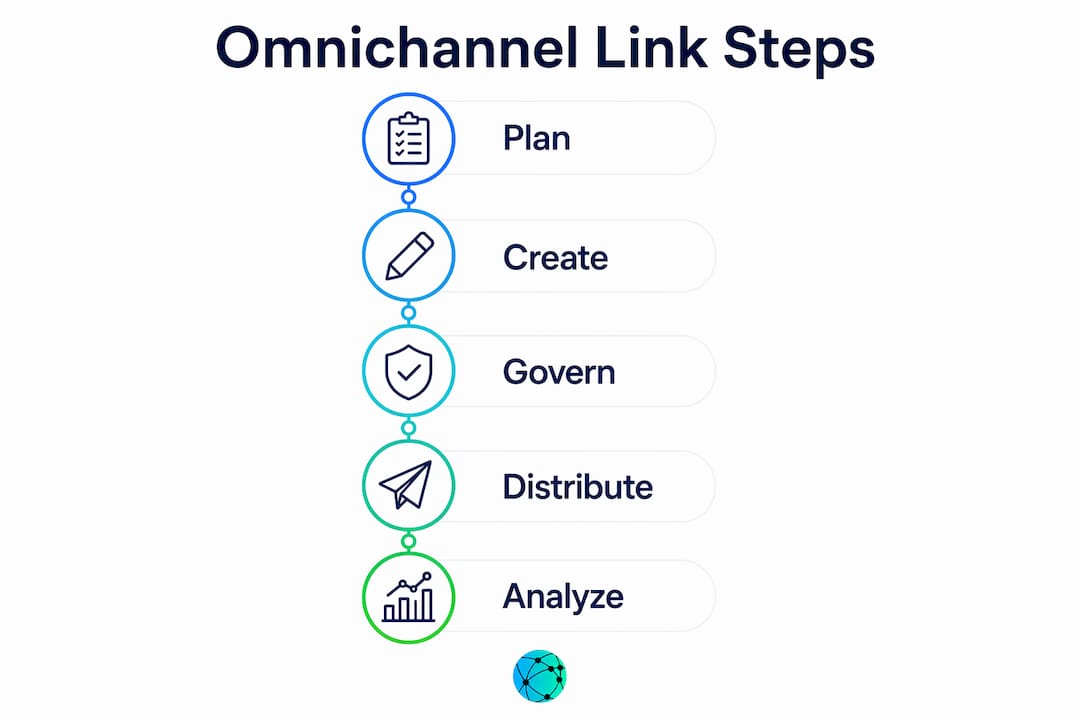
A properly constructed omnichannel link has five UTM components. UTM parameters appended to URLs capture source, medium, campaign, content variant, and keyword for granular attribution. Combining UTM tags with link shortening yields more complete campaign data than either approach alone.
Here is the standard build order for a UTM-tagged omnichannel link:
- utm_source — Identifies the traffic origin. Examples: "instagram
,newsletter,google`. - utm_medium — Identifies the channel type. Examples:
social,email,cpc,qr. - utm_campaign — Names the specific campaign. Examples:
summer_sale_2026,product_launch_q2. - utm_content — Differentiates between creative variants. Examples:
video_ad_v1,banner_blue. - utm_term — Captures paid search keywords. Examples:
running_shoes,crm_software.
Beyond the parameters themselves, three additional practices determine whether your omnichannel link system holds up at scale.
Branded short links replace long, parameter-heavy URLs with clean, recognizable domains. Instead of a 200-character string, your audience sees brand.link/summer26. This protects click-through rates and reinforces brand recognition in every channel. Enterprise link management platforms provide branded custom domains, real-time click analytics, team controls, QR code tracking, and API access, preventing broken links and lost data across teams.
Link governance is the discipline that keeps your data clean. Consistent UTM naming and link governance prevent data clutter and attribution confusion, turning link management into a scalable system. Assign clear ownership of link naming and registries to maintain reliable campaign analytics. A shared spreadsheet or a dedicated link registry tool works for teams of any size.
QR codes paired with tracked links extend omnichannel attribution into physical spaces. A QR code on a product package, event banner, or print ad that points to a UTM-tagged URL makes that offline touchpoint as measurable as a paid social click.
| Component | Purpose | Example value |
|---|---|---|
| utm_source | Traffic origin | instagram |
| utm_medium | Channel type | social |
| utm_campaign | Campaign name | summer_sale_2026 |
| utm_content | Creative variant | video_v1 |
| utm_term | Paid keyword | running_shoes |
Pro Tip: Create a master link registry in a shared Google Sheet or Notion database. Every UTM link your team creates gets logged with its destination URL, channel, campaign, and owner. This single habit eliminates duplicate links, naming conflicts, and the attribution chaos that follows a team member's departure.
Omnichannel links vs. multichannel and basic link tracking
The clearest way to understand what omnichannel links add is to see what they replace. Basic link tracking, the kind you get from a generic URL shortener with no UTM structure, tells you how many people clicked a link. It does not tell you which campaign drove the click, which creative variant performed better, or how that click connected to a downstream conversion.
Multichannel link setups go further but still operate in silos. Each channel team builds its own links with its own naming conventions, or no conventions at all. The result is a data environment where:
- The same customer appears as multiple users across platforms
- Campaign performance cannot be compared across channels
- Attribution models assign credit incorrectly, often over-crediting the last click
- Offline touchpoints like events or print ads produce zero measurable data
Omnichannel links solve each of these problems by enforcing a shared data structure from the moment a link is created. Link tracking captures digital clicks and offline QR code scans, generating data on device type, location, referral source, and engagement time. This comprehensive approach makes offline initiatives as measurable as digital campaigns, which is a capability multichannel setups simply cannot replicate.
The comparison is not subtle. A brand running a product launch across Instagram, email, Google Ads, and an in-store display with properly structured omnichannel links can tell you exactly which combination of touchpoints drove a purchase. A brand using unstructured links across the same channels can only tell you that a purchase happened.
Practical implementation for marketers and small businesses
Deploying omnichannel links effectively requires three layers: a creation system, a distribution system, and an analysis system. Most small businesses and social media managers already have the tools. The gap is usually process.
Start with a link hub as your central entry point. A link hub is a dynamic routing layer that guides users from one URL to relevant content based on context, distinct from a single landing page. Lflow's link-in-bio pages function exactly this way: one branded URL on your Instagram or TikTok bio routes visitors to your store, latest content, booking page, or any other destination. Each outbound link from that hub carries its own UTM parameters, so you know which destination attracted which visitor.
From there, apply these implementation practices:
- Integrate with your CRM. Connect your UTM data to HubSpot, Salesforce, or Mailchimp so link clicks enrich individual contact records. A contact who clicked your "summer_sale_2026" email link three times before purchasing tells a different story than one who clicked once.
- Use link hubs for campaign routing. Separate link hubs and landing pages support clearer user navigation and campaign tracking. Your hub is the always-on entry point; your landing page is the campaign-specific conversion destination.
- Address dark social directly. Dark social sharing can obscure referral data, but branded short links combined with UTM parameters minimize blind spots. When someone shares your link in a WhatsApp group or Slack channel, a branded short link with UTM parameters still captures the click data, even if the referral source shows as "direct."
- Run A/B tests through link variants. Create two versions of the same campaign link with different
utm_contentvalues. Send each to a segment of your audience. The click and conversion data tells you which creative, subject line, or call to action wins.
Pro Tip: Never reuse a campaign link across multiple campaigns. A link tagged utm_campaign=summer_sale_2026 that you repurpose for a fall promotion will corrupt six months of attribution data. Create a new link every time, even if the destination URL is identical.
For managing multiple links across campaigns and platforms, a centralized tool with bulk creation and API access dramatically reduces errors. Automated workflows reduce errors and accelerate consistent link deployment across teams, which matters most when you are running five or more active campaigns simultaneously.
Key takeaways
Omnichannel links work because structured UTM parameters, consistent governance, and centralized link hubs turn every click into a data point that builds a complete, actionable customer journey.
| Point | Details |
|---|---|
| Definition of omnichannel links | Trackable URLs with UTM parameters that unify attribution across digital and physical channels. |
| Retention advantage | Omnichannel customers retain at 89% versus 33% for single-channel, spending 30% more per transaction. |
| Five UTM components | Source, medium, campaign, content, and term together create granular, comparable attribution data. |
| Link governance is non-negotiable | Consistent naming conventions and a shared link registry prevent data clutter and attribution errors. |
| Link hubs as entry points | A centralized hub like a link-in-bio page routes visitors contextually while tracking every outbound click. |
Why most marketers get omnichannel links wrong
The most common mistake I see is treating omnichannel links as a technical detail rather than a strategic decision. Teams spend weeks debating campaign creative and five minutes on link structure. Then they wonder why their attribution data is unreliable three months later.
The second mistake is assuming governance is someone else's problem. In practice, brands with clear rules for link governance and canonical URL management consistently outperform those without. The difference is not the tool they use. It is the discipline of a shared naming convention enforced across every team that touches a campaign.
What I have found genuinely surprising is how much omnichannel link strategy depends on cross-department trust. Your email team, paid team, and social team all need to agree on the same UTM taxonomy before a single link goes live. That conversation is harder than the technical setup, and it is the one most organizations skip. The operational frustration gaps that plague omnichannel implementations almost always trace back to scattered legacy data and disconnected teams, not missing software.
My honest advice: start with a one-page UTM naming guide shared across your marketing team. Define five source values, four medium values, and a campaign naming format. Enforce it. You will have cleaner data within 30 days than most enterprise teams achieve with six-figure tooling.
— Axion
Build your omnichannel link hub with Lflow
If you are ready to put this into practice, Lflow gives you the infrastructure to do it without a development team or a complicated setup.
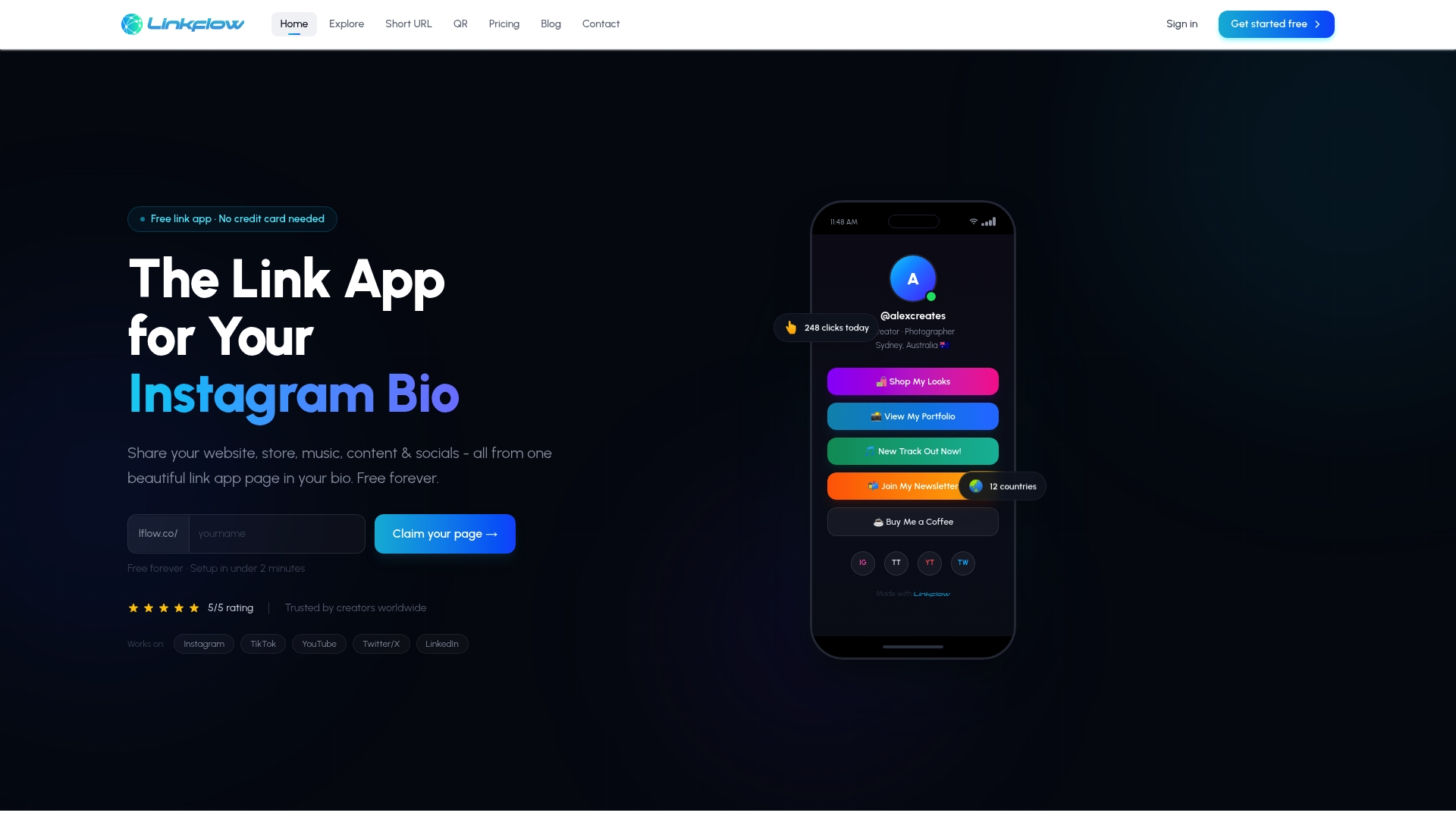
Lflow's free link-in-bio tool lets you create a branded link hub in under two minutes, consolidating your store, content, social profiles, and campaign destinations into one trackable URL. Every outbound link supports UTM parameters, and real-time analytics show you exactly which destinations your audience clicks. Lflow also generates free QR codes tied to your tracked links, so your offline channels feed the same data pipeline as your digital campaigns. For social media managers running campaigns across Instagram, TikTok, and YouTube, Lflow's free URL shortener creates branded short links that protect click-through rates while keeping your attribution data intact.
FAQ
What are omnichannel links?
Omnichannel links are trackable URLs structured with UTM parameters that capture attribution data across every marketing channel, including email, social media, paid ads, and offline QR codes. They feed click data into a unified customer profile rather than siloed channel reports.
How do omnichannel links differ from regular tracked links?
Regular tracked links often use inconsistent or absent UTM parameters, making cross-channel comparison unreliable. Omnichannel links follow a governed naming convention that ensures every click, regardless of channel, maps to the same attribution framework.
What UTM parameters do omnichannel links use?
The five standard UTM parameters are utm_source, utm_medium, utm_campaign, utm_content, and utm_term. Together, they identify the traffic origin, channel type, campaign name, creative variant, and paid keyword for each link click.
How do I handle dark social with omnichannel links?
Branded short links combined with UTM parameters minimize dark social blind spots. When a link is shared privately via WhatsApp or email forwarding, the UTM data still captures the click even when the referral source registers as direct traffic.
Can small businesses use omnichannel links without enterprise tools?
Yes. A shared UTM naming convention, a free link management tool like Lflow, and a Google Analytics 4 account give small businesses the same attribution capability as enterprise setups. The discipline of consistent naming matters more than the sophistication of the platform.