

Cross-platform linking is the practice of connecting apps, accounts, or content across different platforms to deliver a unified user experience and enable accurate multi-device attribution. The term covers everything from deep links that open specific in-app screens to account linking that syncs user progress across devices. For digital marketers, content creators, and social media managers, understanding how cross-platform linking works is the difference between campaigns that track cleanly and campaigns that bleed attribution data. The industry commonly refers to the underlying technology as deep linking, universal linking, or cross-platform integration, depending on the layer being addressed.
What is cross-platform linking and how does it work technically?
Cross-platform linking operates across four distinct layers: native configuration, framework bridging, navigation routing, and deferred deep linking. Each layer must function correctly before the next one can do its job. A failure at the native configuration level means the app never receives the link event, even if every other layer is perfectly coded.
The native configuration layer is where iOS Universal Links and Android App Links live. iOS requires an apple-app-site-association file hosted on your domain. Android requires an assetlinks.json file. Missing these files prevents the app from receiving deep link events entirely. This is the most common reason cross-platform links silently fail in production.

Framework bridging sits above native configuration. It translates the incoming URL into a format your app's routing logic can read. Navigation routing then directs the user to the correct screen inside the app. These two layers are where most cross-platform frameworks like React Native operate, but no framework fully abstracts all four layers. Developers must handle native files and deferred linking separately, regardless of the framework chosen.
Deferred deep linking is the layer that matters most for marketers. It captures user context before app install, so when someone clicks a link, downloads the app, and opens it for the first time, they land on the exact content they originally clicked. Without deferred deep linking, that context is lost. The user lands on a generic home screen, and your campaign's conversion path breaks.
Account linking adds a second dimension. It synchronizes user progress and purchases across platforms by designating one account as the primary source of truth. Progress made on one device becomes accessible on all linked devices. This is the mechanism behind cross-device content synchronization in subscription apps, gaming platforms, and creator tools.
Pro Tip: Test your deep link flow on a fresh device with the app uninstalled. This is the only way to verify that deferred deep linking is capturing and restoring context correctly before a campaign goes live.
- Verify native configuration files are live and publicly accessible on your domain.
- Confirm app entitlements and manifest settings match your domain exactly.
- Test standard deep links on both iOS and Android before adding deferred logic.
- Add deferred deep linking through a dedicated attribution partner or SDK.
- Validate the full flow from click to in-app destination on a clean install.
What are the benefits of cross-platform linking for marketers and creators?
Cross-platform linking solves one of the most persistent problems in digital marketing: the broken user journey. When a user clicks a link in an Instagram Story and lands on a generic app home screen instead of the product they tapped, the campaign loses them. Deferred deep linking eliminates that gap.
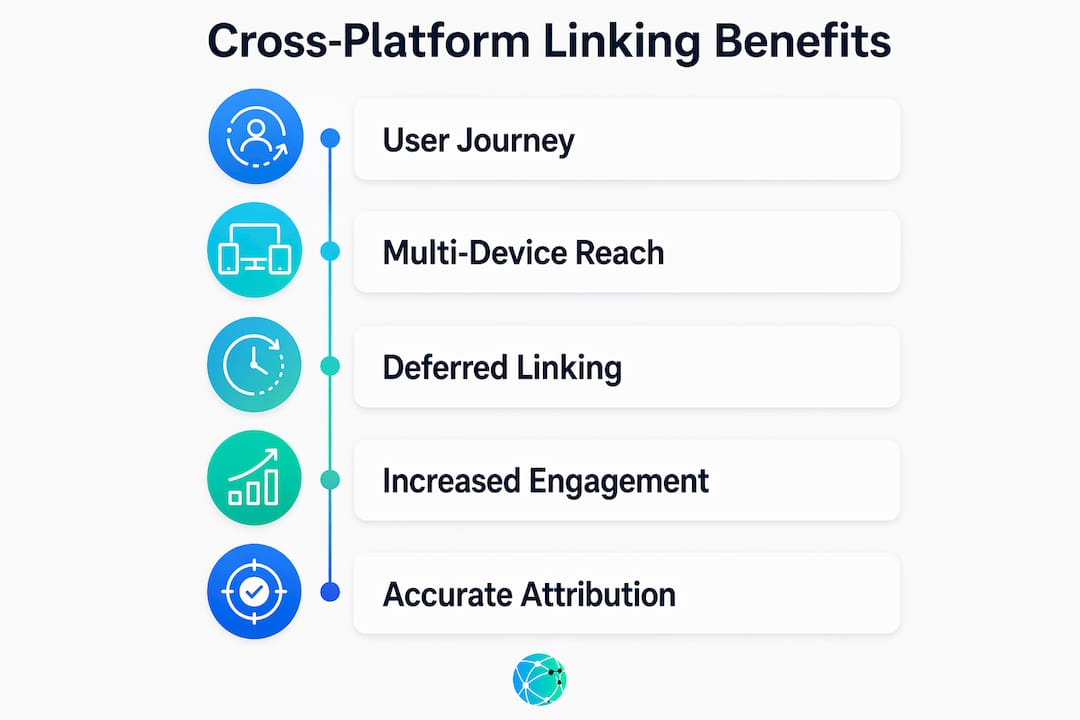
The benefits extend well beyond user experience. Cross-platform attribution linking uses probabilistic modeling to connect ad impressions on one device to installs on another. A user who sees a connected TV ad and later installs the app on their phone can be attributed correctly. That level of measurement accuracy directly improves how you allocate ad spend across channels.
For content creators and social media managers, the practical benefits are immediate:
- Unified content hubs. A single link in bio page can route followers from Instagram, TikTok, YouTube, and LinkedIn to the right destination without requiring separate links for each platform.
- Cross-device campaign tracking. Attribution tools with multi-device campaign support use extended lookback windows and household-level attribution to connect impressions and installs across devices.
- Better user retention. Deferred deep linking directs users to relevant content immediately after install, which reduces drop-off at the critical first-open moment.
- Account synchronization. Linking user accounts across platforms means purchases, preferences, and progress follow the user. This is especially valuable for subscription products and creator membership platforms.
- Offline-to-online campaigns. QR codes embedded in physical materials act as cross-platform links, connecting print, packaging, or event signage directly to specific digital destinations.
The multi-platform reach that cross-platform linking enables is not just a convenience feature. It is the foundation of any campaign that expects users to move between devices and channels without losing their place.
What challenges come with cross-platform linking?
Platform isolation is the biggest barrier to effective cross-platform linking. Each platform stores data in its own format, uses its own field mappings, and operates independently. Middleware that translates data formats across systems is the standard solution, but selecting and configuring that middleware adds complexity to every integration.
The risks are real and worth naming directly:
- Context loss in deferred linking. If the deferred deep linking SDK is not implemented correctly, users who install after clicking a link land on a generic screen. The campaign conversion path fails silently.
- Shadow data silos. When platforms do not communicate through proper API-based integration, shadow processes emerge that undermine data accuracy. Teams end up working from different numbers without realizing it.
- Permanent account linking. Account linking is commonly irreversible. The primary account's data overwrites data on linked secondary accounts. Users must understand this before they confirm the link.
- Probabilistic vs. deterministic attribution. Cross-platform attribution relies on probabilistic matching when deterministic signals like device IDs are unavailable. Probabilistic matching is accurate at scale but introduces uncertainty at the individual user level.
- Native configuration errors. A single misconfigured
apple-app-site-associationorassetlinks.jsonfile breaks every deep link on that domain. These files require exact formatting and must be hosted at the correct path.
Pro Tip: Audit your cross-platform integration for shadow data silos every quarter. If two teams are reporting different conversion numbers for the same campaign, a broken integration is almost always the cause.
The configuration complexity at the native level is not something most marketing teams can manage alone. Partnering with a developer or using a dedicated deep linking platform reduces the risk of silent failures that only surface after a campaign has already run.
How to implement effective cross-platform linking strategies
A working cross-platform linking strategy starts with infrastructure planning, not tool selection. You need to know which platforms your audience uses, which content destinations matter most, and how you will track movement between them before you configure a single link.
- Map your link infrastructure. List every platform where you publish content and every destination you want links to reach. Identify where deferred deep linking is needed versus standard deep links.
- Use a unified attribution setup. Cross-platform attribution tools with multi-device support connect impressions and installs across channels. Configure lookback windows to match your campaign length.
- Link user accounts deliberately. If your product supports account linking, communicate the permanence clearly to users before they confirm. Designate the primary account based on where the most valuable user data lives.
- Centralize link management. A multi-link strategy with branded custom domains keeps your link infrastructure consistent across platforms. Branded links also perform better in click-through rate tests than generic URLs.
- Monitor and adjust continuously. Deep link configurations break when apps update or domains change. Set up automated monitoring for your
apple-app-site-associationandassetlinks.jsonfiles so failures surface immediately.
The table below shows how different implementation approaches compare across key evaluation criteria.
| Criteria | Basic deep linking | Deferred deep linking | Full cross-platform attribution |
|---|---|---|---|
| User context preserved post-install | No | Yes | Yes |
| Multi-device tracking | No | Partial | Yes |
| Native configuration required | Yes | Yes | Yes |
| Attribution accuracy | Low | Medium | High |
| Implementation complexity | Low | Medium | High |
Link management tips that include branded domains and real-time analytics give you the feedback loop you need to catch broken links before they cost you conversions. Custom domain links also reinforce brand recognition every time a user sees the URL, which matters when you are sharing links across Instagram, TikTok, and LinkedIn simultaneously.
Key Takeaways
Cross-platform linking works only when native configuration, deferred deep linking, attribution setup, and link management all function together as a system.
| Point | Details |
|---|---|
| Define the four layers | Native config, framework bridging, routing, and deferred linking must all work together. |
| Deferred linking preserves context | Without it, users land on generic screens and campaign conversion paths break. |
| Attribution uses probabilistic matching | Multi-device attribution connects impressions and installs across platforms using extended lookback windows. |
| Account linking is permanent | Primary account data overwrites secondary accounts; communicate this clearly before users confirm. |
| Middleware solves platform isolation | API-based integration eliminates shadow data silos and keeps teams working from the same numbers. |
What I've learned after watching cross-platform linking break in production
Most marketers treat cross-platform linking as a technical problem to hand off to developers. That is the wrong frame. The technical implementation is the developer's job, but the strategy behind it is yours. If you do not specify which content destination a link should reach, what context should be preserved after install, and how attribution should be measured, the developer will make those decisions for you. And they will make them based on what is easiest to build, not what serves your campaign.
The permanent nature of account linking is the detail I see marketers consistently underestimate. Once a user links accounts and the primary account's data overwrites the secondary, there is no undo. In gaming and subscription products, this has caused real user backlash. The fix is simple: communicate the consequence clearly before the user confirms, and give them time to back up any data they care about. But this requires the marketing team to be involved in the UX copy, not just the campaign setup.
Multi-device attribution is where the real opportunity sits in 2026. Consumer journeys now routinely span connected TV, mobile, desktop, and physical touchpoints. Probabilistic attribution across those devices is not perfect, but it is far better than ignoring the cross-device journey entirely. The marketers who invest in proper attribution infrastructure now will have a measurable advantage as third-party tracking signals continue to erode.
My honest advice: start with deferred deep linking on your highest-traffic campaign, measure the difference in post-install engagement, and use that data to justify the broader infrastructure investment. The results make the case better than any argument.
— Axion
How Lflow supports your cross-platform linking strategy
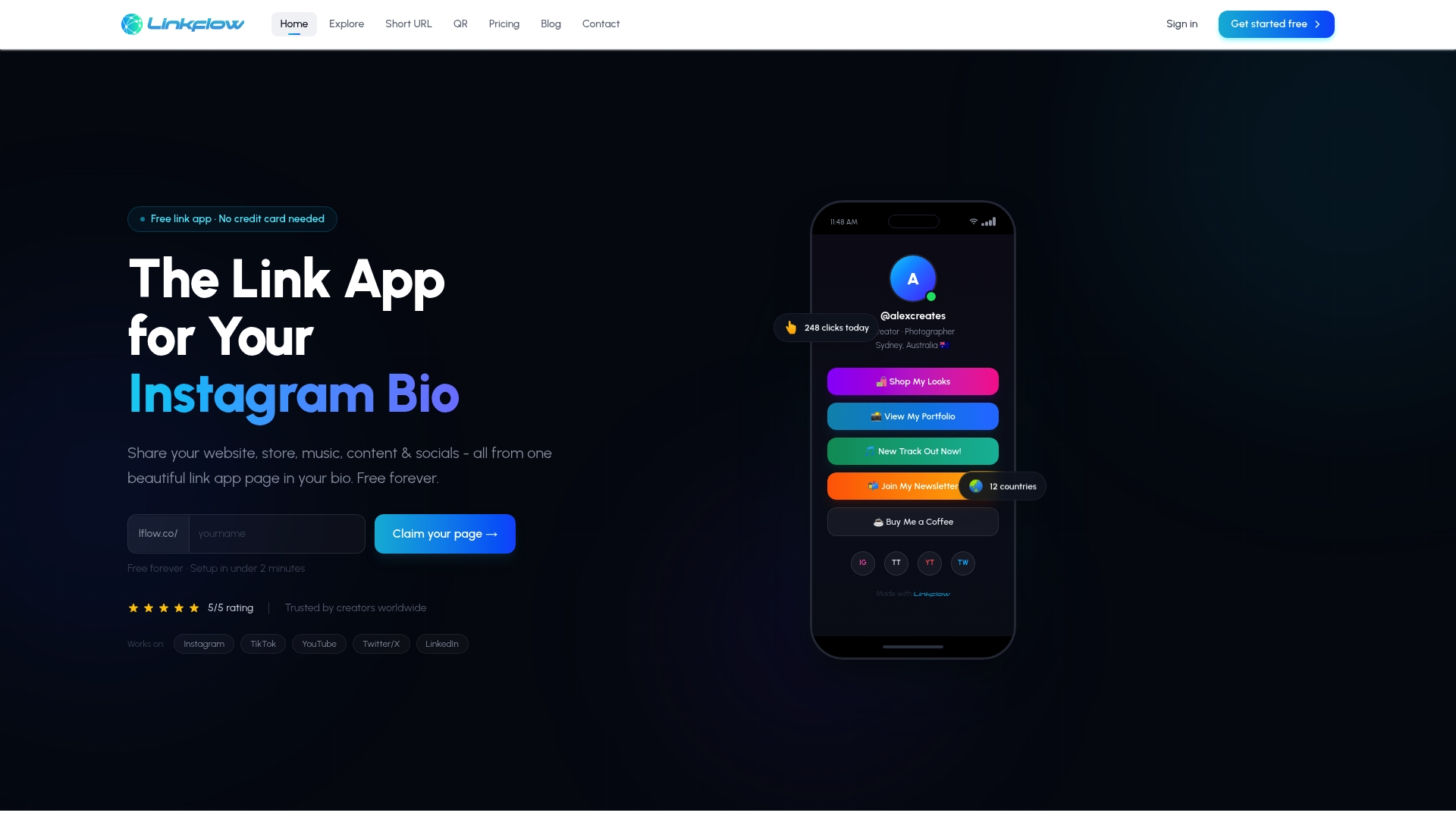
Lflow gives digital marketers, content creators, and social media managers a single branded URL that consolidates every link they need to share across Instagram, TikTok, YouTube, Twitter/X, and LinkedIn. Setting up a page takes under two minutes, and the platform includes real-time analytics so you can see exactly which links drive clicks and from which platforms. Lflow's free link in bio templates are built for multi-platform sharing, with custom domain support and mobile-optimized designs that work across every device. The free QR code generator extends your cross-platform reach into offline campaigns, connecting print and physical materials directly to your digital destinations. For creators and brands ready to centralize their link management, Lflow's free plan includes unlimited links and no setup cost.
FAQ
What is cross-platform linking in digital marketing?
Cross-platform linking is the practice of connecting content, apps, or accounts across multiple platforms so users move between them without losing context. It includes deep links, deferred deep links, and account linking for unified user experiences.
How does deferred deep linking work?
Deferred deep linking captures user context before app install, so the app opens the intended content on first launch instead of a generic home screen. Without it, the context from the original link click is lost permanently.
What is the difference between deep linking and cross-platform attribution?
Deep linking routes users to specific in-app content. Cross-platform attribution uses probabilistic modeling to connect ad impressions on one device to installs on another, enabling accurate multi-device campaign measurement.
Why does account linking carry risks?
Account linking is commonly permanent, and the primary account's data overwrites data on linked secondary accounts. Users should back up important data and confirm they understand the consequences before completing the link.
What causes cross-platform links to fail silently?
Missing or misconfigured native files, specifically apple-app-site-association on iOS and assetlinks.json on Android, prevent the app from receiving deep link events even when all other code is correct.