

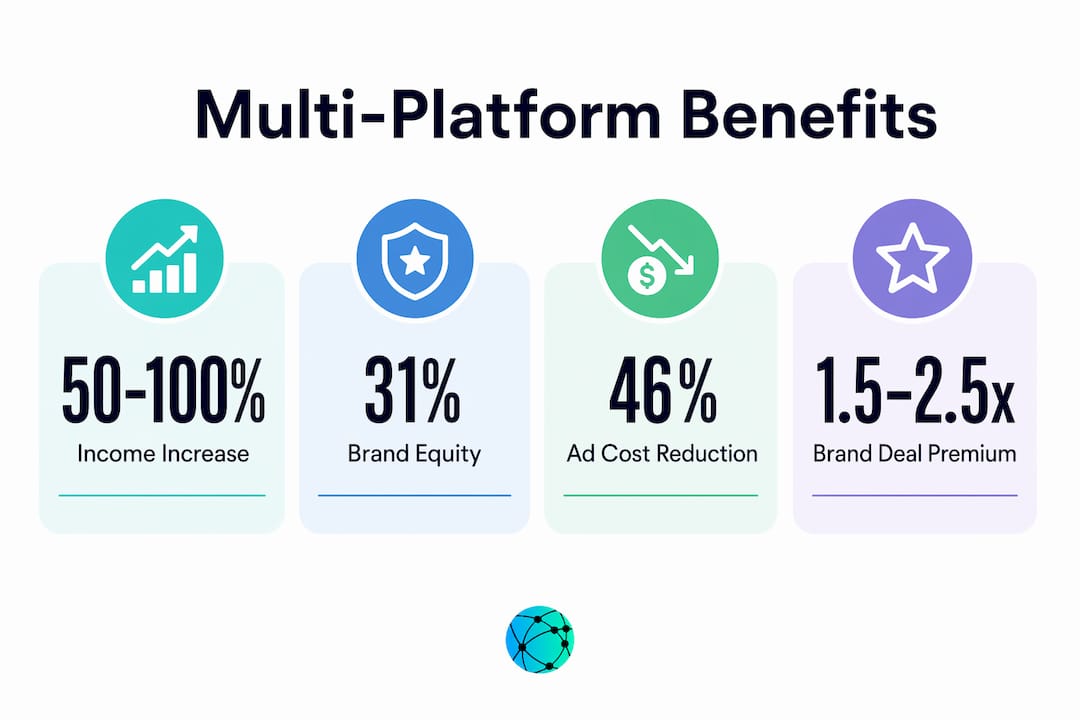
A multi-platform strategy is the single most reliable way for content creators and marketers to grow income, protect their audience, and reduce dependence on any one channel. Creators active on three or more platforms earn 50–100% more than those who stay on one. That gap exists because different platforms reach different people, monetize differently, and respond to algorithm changes independently. Understanding why use multiple platforms is not a philosophical question. It is a business decision with measurable consequences.
Why use multiple platforms to reach more of your audience
Different platforms do not compete for the same people. They attract entirely different audience segments at different points in the buying cycle. Discovery happens on TikTok, engagement deepens on YouTube, and conversion tends to happen through email and owned channels. A creator or marketer who ignores this lifecycle is leaving money and attention on the table.
The demographic split is real and significant. TikTok skews heavily toward Gen Z users who prefer short, fast content. YouTube attracts viewers who want depth, tutorials, and long-form storytelling. Instagram sits between the two, serving visual branding and aspirational content to millennials and older Gen Z. LinkedIn reaches professionals making purchasing decisions. No single platform covers all four of those groups effectively.
The network effect of being present across platforms compounds over time. An audience member who finds you on TikTok, follows you on Instagram, and subscribes on YouTube is far more loyal than someone who only knows you from one channel. That cross-platform familiarity builds trust faster and makes your brand harder to ignore.
- TikTok: Discovery and viral reach, especially for audiences under 30
- YouTube: Long-form engagement, search-driven traffic, and high advertiser CPMs
- Instagram: Visual brand building, Stories engagement, and product-driven conversion
- LinkedIn: B2B reach, professional credibility, and high-value brand partnerships
- Email: Owned audience, highest conversion rates, zero algorithm dependency
Pro Tip: Build your email list from day one across every platform. It is the only audience you fully own. A platform can change its algorithm overnight. Your email list cannot be taken from you.
What income and efficiency gains come from repurposing content?
The financial case for multi-platform presence is direct. Brand deal packages command 1.5–2.5x the rate of single-platform deals. Brands pay a premium for creators who can deliver an audience across YouTube, Instagram, and TikTok simultaneously because it reduces the brand's own coordination costs. A creator who can offer that bundle is a different product than one who cannot.

Content repurposing is what makes multi-platform presence operationally manageable. The hub-and-spoke model works like this: you create one anchor asset, typically a long-form YouTube video or podcast episode, then extract clips, quotes, carousels, and short videos for every other platform. One anchor asset generates 10–20 pieces of platform-specific content. The marginal effort per additional platform drops from hours to minutes when you use AI tools to handle transcription, clipping, and reformatting.
Integrated multi-platform campaigns are 31% more effective at building brand equity than non-integrated ones. That number reflects what happens when your messaging is consistent across channels. Audiences see the same brand voice on YouTube, Instagram, and LinkedIn, and the repetition builds recognition faster than any single channel can.
| Platform | Typical RPM range | Brand deal premium |
|---|---|---|
| YouTube | High | Highest, especially for long-form |
| Medium | Strong for visual and lifestyle brands | |
| TikTok | Lower per view | High volume, growing brand interest |
| Medium to high | Premium for B2B and professional niches | |
| Podcast | Variable | Strong for niche, loyal audiences |
Pro Tip: Record your long-form content with a second camera angle or screen recording running simultaneously. That footage becomes your short-form clips without any extra production session.
How does multi-platform presence protect you from platform risk?
Platform volatility is an existential threat to single-platform creators. Algorithm changes, policy shifts, account bans, and platform decline have ended careers built entirely on one channel. Multi-platform presence mitigates this existential risk by ensuring that no single platform controls your entire income or audience reach.
The pattern repeats across creator history. Vine shut down in 2017 and wiped out thousands of creator businesses overnight. Organic reach on Facebook dropped sharply across the 2010s, devastating pages that had spent years building followings. TikTok faced repeated ban threats in multiple countries. Creators who had diversified across YouTube, Instagram, and email survived those disruptions. Those who had not were forced to start over.
"Diversification is not a growth strategy. It is an insurance policy. The creators who treat it that way build businesses that last." — Later.com
The risk is not hypothetical. It is a recurring feature of the social media industry. A multi-link strategy for marketers that spans owned and rented channels is the only reliable defense. Owned channels, meaning your email list, website, and podcast RSS feed, cannot be algorithmically suppressed or banned. Rented channels, meaning every social platform, can be.
Sticking to one platform also concentrates your data risk. If that platform changes its analytics or restricts API access, you lose visibility into your own audience behavior. Spreading across platforms gives you multiple data sources and a more complete picture of what your audience actually responds to.
What cost and data advantages come from integrated ad campaigns?
Cross-platform advertising produces measurable efficiency gains that single-platform campaigns cannot match. Brands moving to integrated cross-platform advertising reduce customer acquisition cost by 46% on average. That reduction comes from reallocating budget toward the channels that convert, which you can only identify when you are running campaigns across multiple platforms simultaneously.
The CPM differences across platforms are dramatic. LinkedIn CPMs run around $80, reflecting its high-value professional audience. Reddit and similar platforms run $4–$12. YouTube, Instagram, and TikTok sit between those extremes. A single-platform advertiser on LinkedIn pays a premium for every impression. A multi-platform advertiser can test the same creative on Reddit for a fraction of the cost, identify what works, and then scale the winning version on LinkedIn with confidence.
Running tests across multiple platforms generates 5x faster creative feedback. Simultaneous testing across five platforms produces more behavioral data in one week than a single-platform test produces in a month. That speed matters because creative fatigue is real. Audiences stop responding to the same ad after repeated exposure, and faster feedback loops let you refresh creative before performance drops.
- Budget reallocation: Identify low-CPA channels and shift spend toward them
- Creative testing: Run the same ad across platforms to find the highest-performing version faster
- Attribution clarity: Multi-platform data reveals which channel actually drives conversion
- Audience overlap mapping: Understand how the same person moves across platforms before buying
Centralizing performance metrics in a Customer Data Platform prevents siloed analytics from distorting your decisions. Without unified data, marketers routinely misattribute conversions to the last click rather than the full journey. A creator who saw your TikTok, watched your YouTube video, and then clicked your Instagram link to buy did not convert from Instagram alone. Siloed data would tell you that. Unified data tells you the truth.
When should you expand to multiple platforms?
The right time to expand is after you have built a genuine foundation on your primary platform. Building around 7,000 followers on your primary channel before expanding is the threshold most experienced creators recommend. That number is not arbitrary. It represents enough audience feedback to know what content resonates, which formats your audience prefers, and what your content pillars actually are.
Expanding before that foundation exists is a common and costly mistake. Creators who spread across five platforms with 500 followers on each are not building a multi-platform presence. They are building five weak presences. The hub-and-spoke model only works when the hub is strong enough to generate content worth distributing.
- Master one platform first. Understand its algorithm, content format, and audience behavior before adding a second channel.
- Identify your content pillars. Know the three to five topics your audience consistently engages with before you try to adapt them for new formats.
- Add one platform at a time. Each new platform has its own norms and audience expectations. Adding two at once splits your attention and slows learning.
- Use repurposing from day one. The moment you add a second platform, build your workflow around the hub-and-spoke model so the additional channel does not double your workload.
- Track cross-platform performance. Use a unified dashboard or omnichannel link tools to see which platform drives the most valuable audience behavior, not just the most clicks.
Pro Tip: When you add a new platform, spend the first 30 days consuming content there before posting. Understanding what performs natively on that platform will save you months of trial and error.
Key takeaways
A multi-platform strategy directly increases creator income, reduces platform risk, and produces better advertising results than any single-channel approach can deliver.
| Point | Details |
|---|---|
| Income multiplier | Creators on three or more platforms earn 50–100% more than single-platform peers. |
| Audience lifecycle | TikTok drives discovery, YouTube builds engagement, and owned channels convert. |
| Content efficiency | The hub-and-spoke model turns one asset into 10–20 platform-specific pieces. |
| Risk protection | Platform diversification prevents any single algorithm change from ending your business. |
| Ad cost reduction | Integrated cross-platform campaigns reduce customer acquisition cost by 46% on average. |
The uncomfortable truth about platform focus
Most advice about multi-platform strategy gets the order wrong. Creators hear "be everywhere" and interpret it as permission to spread thin immediately. That is the wrong read. The income and resilience benefits of using various platforms effectively only materialize when each platform has a real audience behind it.
What I have seen consistently is that creators who expand too early end up with mediocre content on every channel because they are producing for quantity rather than quality. The hub-and-spoke model is genuinely powerful, but it requires a strong hub. A weak long-form video produces weak short-form clips. The repurposing math only works in your favor when the source material is good.
The data on income is real. The 50–100% income premium for multi-platform creators is not a fantasy. But it reflects creators who built something worth distributing, then distributed it well. It does not reflect creators who posted the same low-effort content to five platforms and wondered why nothing grew.
My honest advice: treat your second platform as a distribution channel for your best first-platform content, not as a separate creative project. That framing keeps your workload manageable and your quality high. Once the second platform has its own momentum, add a third. The risk mitigation benefits alone justify the expansion. The income upside makes it urgent.
— Axion
Lflow makes managing multiple platforms simpler
Managing links across YouTube, TikTok, Instagram, LinkedIn, and your website does not have to be complicated. Lflow gives creators and marketers a single, branded URL that holds every link in one place, from your latest video to your store, your podcast, and your social profiles.
Lflow's free link in bio page takes under two minutes to set up and includes real-time analytics so you can see exactly which platform drives the most clicks. Free QR codes let you extend that reach offline. Custom domains, themes, and fonts keep your brand consistent across every channel. When you are operating across multiple platforms, having one clean link that does all the work is not a convenience. It is a necessity.
FAQ
How many platforms should a creator use?
Most experienced creators recommend starting with one platform, building to around 7,000 followers, and then expanding one platform at a time. Three to four active platforms is a manageable and income-maximizing range for most creators.
Does being on multiple platforms actually increase income?
Creators active on three or more platforms earn 50–100% more than single-platform creators on average. Brand deal packages for multi-platform creators command 1.5–2.5x the rate of single-platform deals.
What is the hub-and-spoke content model?
The hub-and-spoke model means creating one long-form anchor piece, such as a YouTube video or podcast, and repurposing it into 10–20 shorter pieces for other platforms. AI tools reduce the time required to clip, transcribe, and reformat that content.
How does multi-platform presence reduce advertising costs?
Brands running integrated cross-platform ad campaigns reduce customer acquisition cost by 46% on average. Running the same creative across multiple platforms simultaneously also generates 5x faster feedback on what messaging actually works.
When is the wrong time to expand to a new platform?
Expanding before you have a clear content strategy and an engaged audience on your primary platform is the most common mistake. Without a strong hub, the hub-and-spoke model produces weak content across every channel rather than strong content distributed efficiently.