

Consolidating and optimizing your social media accounts, what professionals call social profile optimization, is the single most effective way to increase discoverability, build audience trust, and convert profile visitors into followers, customers, or clients. 67% of prospects check social profiles before deciding to engage with a brand or creator. That number alone explains why scattered, inconsistent profiles cost you real opportunities every day. Whether you manage one account or ten, the case for unified social profiles comes down to one principle: clarity converts.
Why streamline social profiles? The discoverability case
The most direct answer to why you should consolidate your profiles is algorithmic and behavioral. Keyword-rich bios increase discoverability by 3 to 5 times compared to generic descriptions. That is not a minor improvement. It means the difference between appearing in search results on Instagram, LinkedIn, or Google and being invisible to the exact people looking for what you offer.
Profile optimization also drives measurable conversion. Clear CTAs increase click-through rates by 3x, and strategic link placement converts at 2.3x the rate of profiles without one. These numbers reflect a simple truth: when a visitor lands on your profile and immediately understands who you are, what you do, and where to go next, they act. When they have to guess, they leave.
"Consumer engagement significantly mediates brand trust, with an R² of 0.416, meaning that interaction is not just a vanity metric. It is a direct driver of credibility and purchasing confidence." — MDPI, 2026
The authority effect compounds over time. On LinkedIn, profile views increase 2 to 4 weeks before inbound connection requests and DM inquiries rise. This means an optimized profile is not just a static page. It is a lead generation asset that builds momentum the longer it stays consistent and keyword-aligned.
What are the key elements of a cohesive social profile?
Optimizing a profile is not about aesthetics alone. It is about engineering each element to work together toward a single goal: making it effortless for the right person to find you, understand you, and take action.
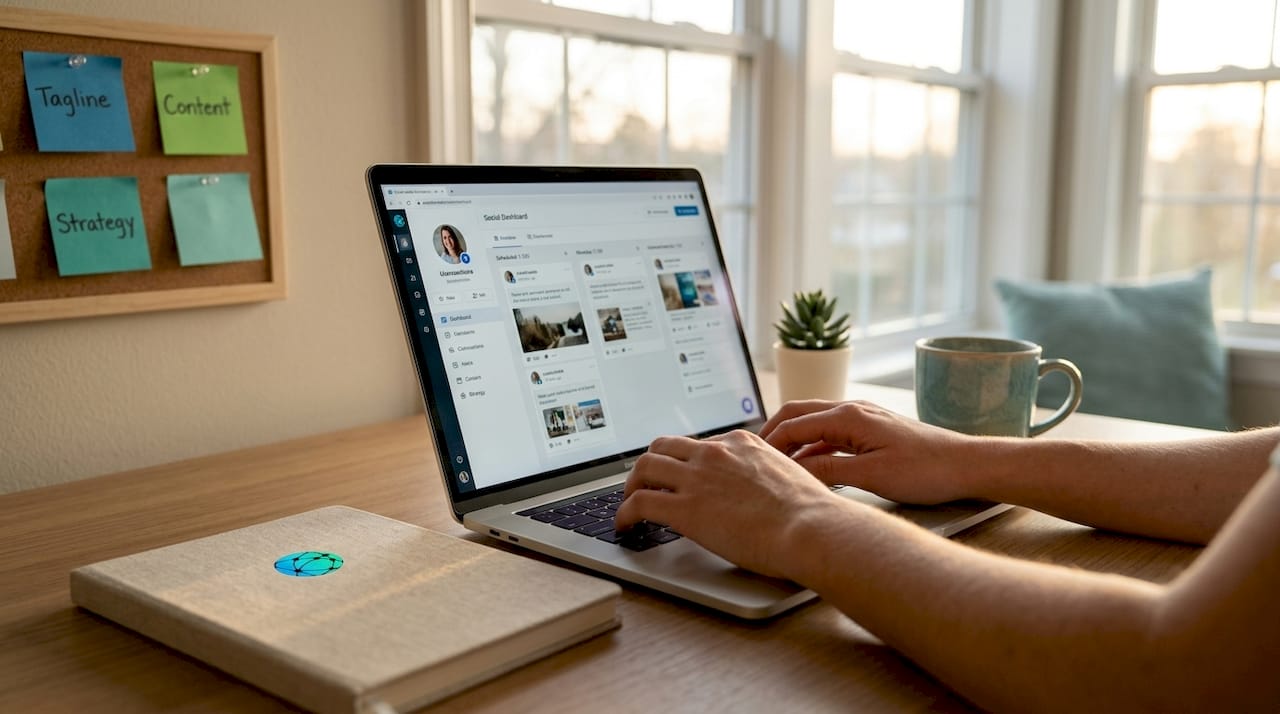
Bio copy is your highest-leverage asset. Write it with a clear benefit statement, not a job title. "I help e-commerce brands grow on TikTok" outperforms "Social Media Manager" every time. Keywords placed across username, display name, bio, and posts multiply your reach because each platform algorithm weighs these signals differently. Instagram favors keyword density in the name field. LinkedIn rewards the headline and About section. TikTok indexes captions and bio text together.
Visual branding creates instant recognition. Your profile photo, cover image, and color palette should be consistent across every platform you use. A visitor who finds you on Twitter/X and then checks your Instagram should feel like they landed in the same place. Inconsistency signals disorganization, and disorganization erodes trust before you say a word.
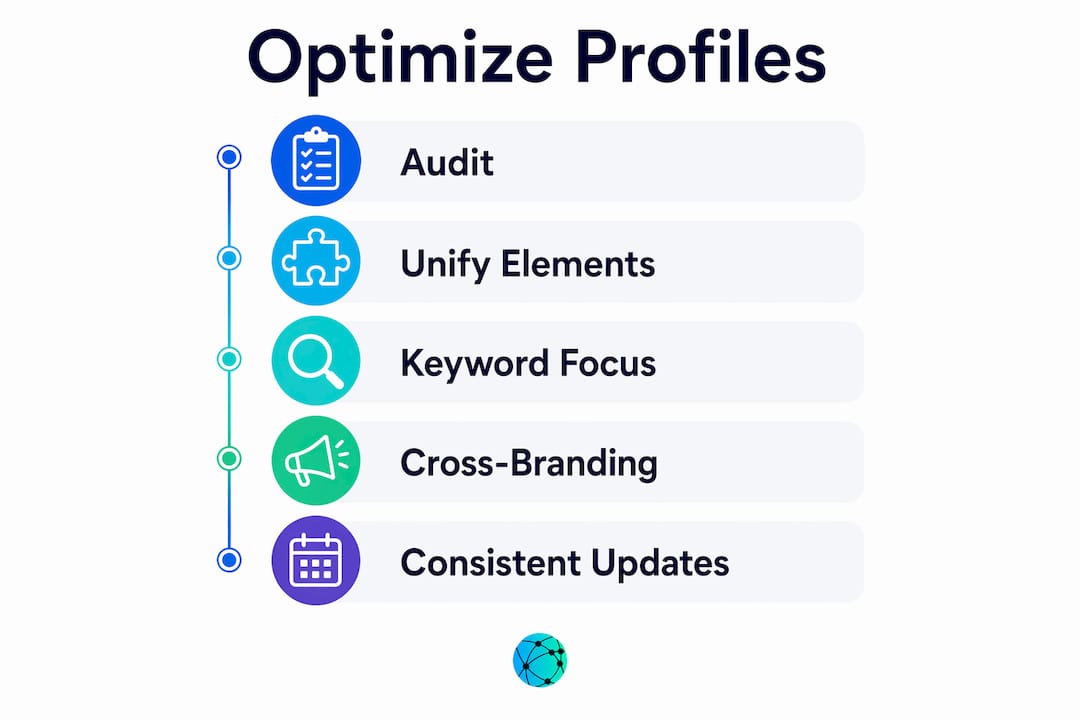
Here are the core profile elements to audit and align across every platform:
- Profile photo: same image or same visual style across all platforms
- Bio or About section: keyword-optimized, benefit-driven, updated within the last 90 days
- Link strategy: one primary destination, ideally a consolidated link page
- Pinned content: your best-performing or most representative post pinned at the top
- Alt text on images: descriptive and keyword-relevant for accessibility and SEO
- Hashtags: platform-specific, niche-relevant, and placed in the first comment or bio where applicable
Pro Tip: Use your bio as a search asset by including the exact phrase your ideal follower or client would type into a platform search bar. Test two versions over 30 days and track which drives more profile visits.
The link in your bio deserves special attention. Sending visitors to a homepage with no clear next step wastes the traffic you worked to earn. A consolidated link page that organizes your website, store, content, and social profiles into one branded URL solves this. It also gives you analytics on what your audience actually clicks, which is data most creators never collect.
How does consistent cross-platform branding build trust?
The psychological mechanism behind brand trust is pattern recognition. When a visitor encounters the same voice, visual identity, and topic focus across multiple platforms, their brain registers coherence. Coherence reads as reliability. Reliability accelerates the decision to follow, buy, or reach out.
The opposite effect, what branding professionals call "voice drift," happens when creators tailor their content so aggressively to each platform that their identity becomes unrecognizable from one channel to the next. Personal brand inconsistency across platforms causes audience friction and measurably reduces conversion. A buyer who finds you on LinkedIn, then checks your Instagram and sees a completely different tone and focus, will hesitate. That hesitation often ends the relationship before it starts.
Five cross-platform anchors keep your identity stable without making every post identical:
- Profile photo: Use the same photo or a consistent visual style. Faces build trust faster than logos for personal brands.
- Bio language: Keep the core benefit statement identical across platforms, even if you adjust the length.
- Topic focus: Stay in your lane. If you cover B2B marketing on LinkedIn, do not pivot to lifestyle content on Instagram without a clear bridge.
- Point of view: Your opinions and perspective should be recognizable regardless of format or platform.
- Link destination: Send all platforms to the same primary URL so your audience always knows where to go next.
Instagram transparency reduces friction by helping audiences quickly understand a brand's identity and activity. This applies across every platform. When a visitor can decode who you are in under five seconds, they stay longer, engage more, and trust faster. Profiles that force visitors to work for basic information lose them before the first scroll.
"Matching key profile elements across platforms increases buyer trust and speeds decision making." — Instant Press, 2026
A professional headshot used consistently across platforms is one of the fastest ways to signal credibility. Professional photos enhance personal brand recognition and make profiles feel polished and intentional rather than assembled at random.
What tools simplify managing multiple social profiles?
Maintaining consistency across four or five platforms without a system is a recipe for burnout. The good news is that the operational side of social profile management has become significantly more efficient with the right tools.
Hootsuite and Zapier are the most widely used platforms for batching content, scheduling posts, and managing unified inboxes across channels. Batching means writing and scheduling a week's worth of posts in one focused session rather than logging into each platform daily. This alone reduces the cognitive load of social media management by a significant margin.
For teams managing brand accounts, approval workflows are the difference between a two-day review cycle and a two-hour one. Approval workflows reduce client review cycles from days to hours by routing content through automated approval chains rather than email threads. Wrike and similar project management platforms integrate directly with social scheduling tools, giving teams version control and audit trails for every post.
Pro Tip: Connect your social profiles across platforms to a single link hub and use its analytics to identify which platform drives the most clicks. Redirect your content energy toward the channel that actually converts, not the one with the most followers.
For individual creators, the most practical starting point is a consolidated link page combined with a scheduling tool. This combination covers the two biggest inefficiencies: scattered link destinations and inconsistent posting. Once those are solved, you can layer in analytics, A/B testing, and platform-specific optimization.
Key takeaways
Optimized, consistent social profiles convert visitors into followers and customers at measurably higher rates than scattered or outdated ones.
| Point | Details |
|---|---|
| Discoverability multiplies with keywords | Keyword-rich bios increase profile visibility 3 to 5 times across platform and Google search results. |
| CTAs and links drive direct conversion | Clear calls to action increase click-through rates 3x; strategic link placement converts at 2.3x the baseline rate. |
| Consistency builds trust faster | Matching profile elements across platforms reduces audience friction and speeds buyer decision making. |
| Unified tools cut management time | Scheduling platforms like Hootsuite and approval workflows reduce posting time and review cycles significantly. |
| Authority compounds over time | LinkedIn profile views rise 2 to 4 weeks before inbound leads, showing optimization creates a self-reinforcing growth effect. |
What I have learned from optimizing profiles at scale
I have audited hundreds of social profiles across Instagram, LinkedIn, TikTok, and YouTube, and the pattern is almost always the same. The profiles that underperform are not bad because of poor content. They underperform because the basics are broken. The bio is vague. The link goes nowhere useful. The profile photo is three years old and does not match the brand's current positioning.
The most common mistake I see is treating profile optimization as a one-time task. You set it up once, then ignore it for 18 months while your offer, audience, and platform algorithms all change around you. LinkedIn authority signals peak 4 to 6 weeks after optimization, which means a stale profile is actively losing ground every week you leave it untouched.
The second mistake is optimizing each platform in isolation. Creators spend hours perfecting their LinkedIn headline and then leave their Instagram bio as " NYC | Content Creator." That disconnect does not just look unprofessional. It tells the algorithm and the visitor two different stories about who you are.
My recommendation for anyone with limited time: start with your bio and your link. Fix those two things across every active platform before you touch anything else. The types of links you include in your profile matter more than most creators realize. A single, well-organized link destination outperforms five scattered URLs every time.
— Axion
Build your optimized profile hub with Lflow
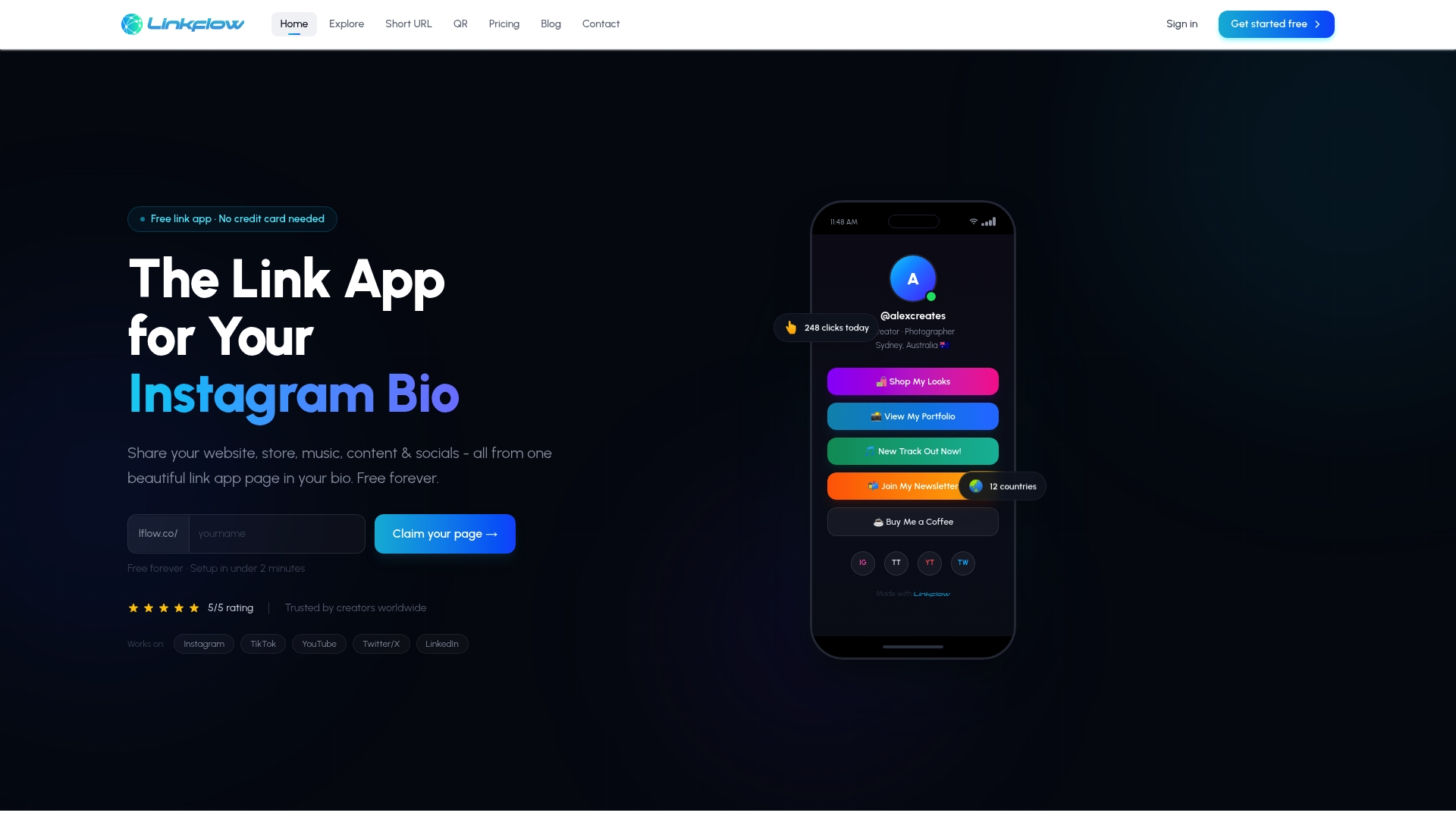
Lflow gives creators and brands a single, branded URL that consolidates every link your audience needs, from your website and store to your social profiles and latest content. Setup takes under two minutes, and the platform includes real-time analytics so you know exactly which links your visitors click. Every Lflow page is fully mobile-optimized and customizable with themes, fonts, and colors that match your brand identity. You can also generate a free QR code to connect your offline presence to your online hub. Start with one of Lflow's free link in bio templates and have a polished, professional profile hub live before your next post goes out.
FAQ
Why should I consolidate my social media profiles?
Consolidating your profiles creates a consistent identity that reduces audience friction and increases conversion. 67% of prospects check social profiles before engaging, so a clear, unified presence directly influences whether they take the next step.
How often should I update my social media profiles?
Profile optimization is not a one-time task. Audit your bios, photos, and links every 60 to 90 days, and update immediately after any change in your offer, positioning, or primary platform.
What is the most important element to optimize first?
Your bio and your link destination are the highest-impact starting points. A keyword-optimized bio increases discoverability 3 to 5 times, and a consolidated link page ensures every visitor has a clear next step regardless of which platform they find you on.
Does profile consistency really affect sales and conversions?
Yes. Matching profile elements across platforms increases buyer trust and speeds decision making. Consumer engagement, driven by clear and consistent profiles, has an R² of 0.416 in mediating brand trust, according to MDPI research.
What tools help manage multiple social profiles efficiently?
Hootsuite handles scheduling and unified inboxes across platforms. Zapier automates repetitive tasks between apps. For teams, Wrike provides approval workflows that cut review cycles from days to hours. A consolidated link in bio tool like Lflow handles the link management layer for all of them.