

Use one optimized bio link that sends new listeners to a player and subscribe option within two taps. That's the whole goal. Not a Spotify URL that half your audience can't open, not a link tree with twelve options and no hierarchy. One page, mobile-first, with a visible play button and subscribe buttons for Apple Podcasts, Spotify, and at least one other platform.
Here's what to do right now:
- Create a single bio link page that opens on mobile with your show's cover art, a playable latest episode, and subscribe buttons above the fold.
- Add a mobile-friendly embedded player or an app-detection link that routes listeners to their preferred app automatically.
- Paste that URL into every social bio you manage: Instagram, TikTok, X, YouTube, and LinkedIn.
The listener path you're building is: tap bio link → land on your page → hit play or tap their preferred app. Two taps, no friction.
Pro Tip: Before you publish anything, open your bio link on your phone. If you have to scroll to find the play button, the layout needs work. Mobile preview is not optional.
Key Takeaways
A podcast bio link page that gets listeners to play or subscribe within two taps is the single highest-leverage promotion tool a podcaster can set up in under an hour.
| Point | Details |
|---|---|
| Two-tap rule | Your bio link page must reach a play button or subscribe option within two taps on mobile. |
| Universal links beat app links | Link to a landing page or app-detection URL, not a single streaming platform, to avoid filtering out listeners. |
| UTM tracking is non-negotiable | Add UTM parameters to every link so you know which platform drives actual listens, not just clicks. |
| Email capture compounds growth | An email signup on your bio link page builds an audience you own, independent of streaming algorithms. |
| Lflow for fast setup | Lflow's free plan gets a mobile-optimized podcast bio page live in under two minutes, with analytics and QR codes included. |
Table of Contents
- Why your podcast link in bio matters more than you think
- Where to find the right podcast URL and episode permalink
- How to build a podcast-optimized link-in-bio page, step by step
- What your podcast bio link page must include
- Which tool should you use for your podcast bio link?
- How to track whether your bio link is actually working
- What to put in your bio on each social platform
- Common mistakes podcasters make with a bio link
- Own the traffic: why pairing a bio link with a podcast website wins
- The two-tap test is the only metric that matters at launch
- Get your podcast bio link live with Lflow
- Official docs and helpful links
- Sources
Why your podcast link in bio matters more than you think
Most podcasters send followers to a single app link, usually Spotify or Apple Podcasts. The problem is obvious once you say it aloud: a Spotify link opens nothing for someone who listens on Overcast, and an Apple Podcasts link is dead on Android. You're filtering out listeners before they even hear a second of your show.
A dedicated bio link page solves this by presenting all your listening options in one place. Bio links for podcasters let you promote multiple destinations simultaneously: your host landing page, individual episode links, an email signup, and even a Patreon or merch link. When you need to update your latest episode, you change one page instead of editing every social bio.
The measurability angle is underrated. A bio link page with click tracking tells you exactly how many people tapped through from Instagram versus TikTok, and which subscribe button they hit. That data shapes your promotion strategy in ways a raw Spotify link never could.
The limit worth naming: a bio link page is not a website replacement. It doesn't build SEO authority, it doesn't host your back catalog, and it doesn't own your audience the way an email list does. Think of it as a high-conversion entry point, not a home base. According to Easy Podcast Tips, a custom bio link with an embedded player and subscribe CTAs directly reduces friction and helps turn social visitors into actual listeners.
Pro Tip: Treat your bio link page as a conversion funnel, not a directory. Every element on it should push toward one action: play this episode or subscribe.
Where to find the right podcast URL and episode permalink
Before you build anything, you need the correct links. There are three types, and they serve different purposes.
The three link types:
- Host landing page: Your podcast host (Transistor, Buzzsprout, Anchor, etc.) generates a public show page. This is your canonical show URL and the safest link to use for first-time discovery because it works on any device.
- Directory app links: Your Spotify show URL, Apple Podcasts URL, and Google Podcasts URL. These are app-specific and only open cleanly for users who already have that app installed.
- RSS feed permalink: The raw feed URL. Useful for advanced listeners and aggregators, but not a good primary link for social promotion.
How to find your canonical show URL:
- Log into your podcast host dashboard.
- Look for "Share," "Publish," or "Distribution" settings.
- Copy the public show page URL, not the RSS feed URL.
- For episode permalinks, open the episode in your dashboard and copy the individual episode page link.
Transistor's share guide recommends using landing-page links for episodes rather than direct app links when distributing across social, email, and text. The reason is simple: a landing page works everywhere, while an app link works only for that app's users.
For first-time discovery, always use a universal landing link or your host page. Save the app-specific links for your bio link page itself, where listeners can choose their preferred platform. Directory pages like Podchaser also serve as discoverability touchpoints and give you a shareable profile URL worth adding to your page.
Pro Tip: Copy your episode permalink from your host dashboard, not from a browser address bar after clicking through. Some hosts generate session-specific URLs that expire.
How to build a podcast-optimized link-in-bio page, step by step
The setup takes under 15 minutes if you have your links ready. Here's the sequence that produces a working, mobile-tested page.
- Choose your tool. A hosted bio link service (like Lflow) gets you live fastest. Your own website works too, but requires more setup time.
- Set your landing behavior. Decide between an embedded audio player (listener plays directly on your page) or an app-detection link (routes to their preferred app automatically). Both work; the embedded player keeps listeners on your page longer.
- Add your hero block. Upload your show's cover art, show title, and a one-sentence description. This is the first thing a new listener sees.
- Add your latest episode card. Include the episode title, a short description, and a play button or deep link. This should sit above the fold on mobile.
- Add persistent subscribe buttons. Apple Podcasts, Spotify, and at least one other platform. These should appear on every scroll position, not just at the bottom.
- Add UTM parameters to each link. Append
?utm_source=instagram&utm_medium=bio&utm_campaign=podcast(or the relevant platform) to every outbound link so you can track which social channel drives clicks. - Add an email signup block. Even a simple form captures listeners before they disappear into a streaming app.
- Preview on mobile. Open the page on your phone. Tap the play button. Tap a subscribe button. If either takes more than two taps, fix the layout.
- Paste the URL into every social bio. One URL, all platforms.
Pro Tip: Use a short, branded URL for your bio link rather than a long auto-generated string. It looks cleaner in bios and is easier to mention verbally on your show.
The multi-link bio guide from Lflow covers how to route social traffic effectively once your page is live, including how to structure links for maximum click-through.
What your podcast bio link page must include
The difference between a page that converts and one that doesn't usually comes down to five elements. Most podcasters include three and wonder why subscribers aren't growing.
Non-negotiable elements:
- App-detection player or deep-link selector. A service like Pod routes listeners to their preferred app based on device. This removes the "wrong app" problem entirely.
- Persistent subscribe buttons. Apple Podcasts, Spotify, Google Podcasts (or YouTube Music), and an RSS option. Make them visible without scrolling on a standard phone screen.
- Latest episode highlight. Episode title, short description, and a direct play or listen link. Add timestamped deep links if your episodes are long.
- Email signup. This is the highest-value element on the page for long-term audience growth. A listener who gives you their email is worth ten passive Spotify followers.
- Short host bio. Two to three sentences. New listeners want to know who they're listening to before they commit.
Conversion elements worth adding:
- Patreon or donation link (if you have one)
- Merchandise or course links
- Social profile links (keep these secondary, not primary)
Pro Tip: Put your email signup above your social links. Social follows are easy to lose; email subscribers are yours regardless of algorithm changes.
Which tool should you use for your podcast bio link?
The honest answer depends on how fast you need to move and how much control you want over branding.
Hosted bio link services get you live in minutes, include built-in analytics, and handle mobile optimization automatically. The tradeoff is that you're on someone else's infrastructure, and free tiers often include the platform's branding on your page.
Your own website gives you full ownership, SEO value, and no platform dependency. The tradeoff is setup time, hosting costs, and the technical work of building a mobile-optimized player embed yourself.
For most podcasters, especially those just starting to build a social presence, a hosted bio link service is the right call. The speed advantage is real, and the analytics you get out of the box are more than enough to make promotion decisions.
Here's how the two approaches compare across the dimensions that matter most for podcasters:
| Feature | Hosted bio link service | Your own website |
|---|---|---|
| Setup time | Under 2 minutes | Hours to days |
| Mobile optimization | Built-in | Requires custom work |
| Built-in analytics | Yes | Requires third-party setup |
| Custom domain | Paid tier (most services) | Yes |
| Branding control | Limited on free tier | Full |
| Cost | Free to ~10 dollars per month | Hosting + dev time |
| Embedded player | Yes (most services) | Requires embed code |
Lflow fits the hosted service category and is worth calling out specifically. The free Lflow plan includes unlimited links, real-time click analytics, a free QR code for each link, and mobile-optimized layouts. Onboarding takes under two minutes. For podcasters who want branding control without building from scratch, Lflow's template library includes customizable designs with support for custom domains on paid plans.
Pro Tip: Whatever tool you choose, make sure it lets you export your analytics data. If you ever switch platforms, you want your historical click data.
How to track whether your bio link is actually working
Clicks alone don't tell you much. A hundred clicks with zero plays means your page has a friction problem. Ten clicks with eight plays means your audience is highly engaged. The metric that matters is the ratio, not the raw number.
Key metrics to watch:
- Total clicks on the bio link (awareness signal).
- Click-to-play rate (clicks on your page vs. plays on your player or app links).
- Plays from social (how many plays your latest episode gets that originate from your bio link).
- New subscribers after a social push.
- Email signups from the bio link page.
Implementation steps:
- Add UTM parameters to every outbound link on your page (source, medium, campaign).
- Check your podcast host's analytics for plays that originate from your landing page URL.
- Compare player plays to bio link clicks weekly. A click-to-play rate below 30% suggests your player is hard to find or your episode description isn't compelling.
- Track email signups separately from play counts. They measure different things: plays measure reach, signups measure retention intent.
| Metric | Question it answers |
|---|---|
| Bio link clicks | Are people tapping through from my social bio? |
| Click-to-play rate | Is my page converting visitors into listeners? |
| Plays from social | Is my social promotion driving actual listens? |
| Email signups | Am I building an owned audience from social traffic? |
| New subscribers | Is my show growing from social discovery? |
Audience engagement strategies for creators emphasize tracking conversion at each step of the funnel, not just top-of-funnel clicks. The same logic applies here: a bio link that gets clicks but no plays is a layout problem, not a promotion problem.
What to put in your bio on each social platform
The bio link URL is the same everywhere. What changes is the text around it and how you drive people to tap it.
Instagram:
- Bio text: "New episode every [day]. Listen: [short CTA]" followed by your bio link URL.
- Use Stories with a link sticker pointing to your latest episode permalink, not your full bio page.
- Pin a Story highlight called "Listen" with episode clips and swipe-up links.
X (formerly Twitter):
- Pin a tweet featuring your latest episode with a short clip or quote and your bio link.
- In tweet copy, use a descriptive CTA ("New episode on [topic]: [bio link]") rather than just dropping the URL.
- Keep the bio text short: show name, topic, and "New episodes [frequency]."
TikTok:
- Your bio link is the only clickable link you get. Make it count.
- Every video CTA should end with "Link in bio to listen."
- The bio link page should surface your player and subscribe options immediately, since TikTok audiences are fast-moving.
YouTube:
- Add your bio link to the channel description and pin it in the first comment of every episode video.
- Link to a landing page that shows both your audio podcast options and your YouTube channel subscribe button.
LinkedIn:
- LinkedIn audiences respond to full show notes and professional context.
- Link to a page that includes episode notes, a subscribe button, and an email signup.
- Add your bio link to your Featured section, not just the website field.
Pro Tip: On TikTok and Instagram, mention your bio link verbally in your video content. "Link in bio" as a spoken CTA outperforms text overlays alone.
- Update your bio link page whenever you publish a new episode.
- Test your bio link on both iOS and Android before posting.
- Use platform-native features (Stories, pinned posts) to drive traffic to the bio link, not just the bio itself.
Common mistakes podcasters make with a bio link
Most of these show up in creator communities repeatedly. The fixes are fast once you know what to look for.
Mistake 1: Linking directly to a single streaming app. Sending all your Instagram followers to your Spotify URL means every Android user who doesn't use Spotify hits a dead end. Fix: use a universal landing page or app-detection link that surfaces the listener's preferred platform automatically.
Mistake 2: No subscribe CTA or buried subscribe buttons. If a listener has to scroll to find your Apple Podcasts button, most won't bother. Fix: place subscribe buttons above the fold and make them visually distinct from your other links.
Mistake 3: No UTM parameters or analytics. Without tracking, you have no idea whether your Instagram bio or your TikTok bio is driving more listens. Fix: add UTM tags to every link on your bio page and check them weekly.
Mistake 4: Stale content on the bio link page. A bio link page showing an episode from three months ago signals to new visitors that the show might be inactive. Fix: update your latest episode card every time you publish.
Mistake 5: Not testing on mobile. Your bio link page will be opened almost exclusively on phones. A layout that looks fine on desktop can be completely broken on a 375px screen. Fix: preview on your phone before every update.
Pro Tip: Ask a friend who doesn't listen to your show to open your bio link and try to play an episode. Watch what they do. You'll find friction points you never noticed.
- Audit your current bio link: does it open a player within two taps on mobile?
- Check that subscribe buttons are visible without scrolling.
- Verify UTM parameters are active on all outbound links.
Own the traffic: why pairing a bio link with a podcast website wins
Sending social traffic directly to Spotify or Apple Podcasts is a gift to those platforms. They get the listener data, the engagement signal, and the relationship. You get a play count.
A bio link page that you control changes that equation. When a listener lands on your page, you can capture their email before they tap through to their preferred app. That email address is yours regardless of what Spotify does with its algorithm next quarter.
The strongest setup pairs a bio link page with a full podcast website. The bio link handles fast, mobile-first discovery from social. The website hosts your back catalog, show notes, transcripts, and SEO content. Bio links that power audience engagement work best when they feed into an owned audience, not just a streaming platform.
A practical hybrid approach: your Lflow bio link page captures emails and routes listeners to their preferred app. Your website hosts full episode pages with transcripts that rank in search. The bio link drives new listeners; the website retains them.
The compounding benefit:
- New listener taps bio link from Instagram.
- They play the episode on your page or tap through to Spotify.
- They see your email signup and subscribe.
- Next episode, you email them directly. No algorithm required.
Pro Tip: Add a simple incentive to your email signup on the bio link page: "Get the episode transcript + bonus links" converts significantly better than a generic "Subscribe to our newsletter."
Social proof elements on your bio link page, like listener counts or review quotes, can also increase email signup rates by giving new visitors a reason to trust the show before they've heard a single episode.
The two-tap test is the only metric that matters at launch
Every podcaster I've seen overthink their bio link setup has the same problem: they're optimizing for completeness instead of conversion. They want every platform listed, every episode linked, every social profile connected. The page ends up looking like a sitemap.
The two-tap test cuts through all of it. Open your bio link on your phone. Can you press play on your latest episode within two taps? Can you hit subscribe within two taps? If yes, the page is working. If no, everything else is noise.
The second thing most creators miss: A/B testing their CTA text. "Listen now" and "Play the latest episode" sound interchangeable, but one will consistently outperform the other for your specific audience. Run both for two weeks, check your click-to-play rate, and keep the winner. It takes 20 minutes to set up and the data is usually clear within a week.
Mobile preview testing before every episode launch is the habit that separates podcasters who grow from those who plateau. Layouts shift, embeds break, and buttons move. Check it every time.
Get your podcast bio link live with Lflow
Lflow gives podcasters a free, mobile-first bio link page that's live in under two minutes. No design skills needed. You get unlimited links, real-time click analytics, and a free QR code for every link, all on the free plan.
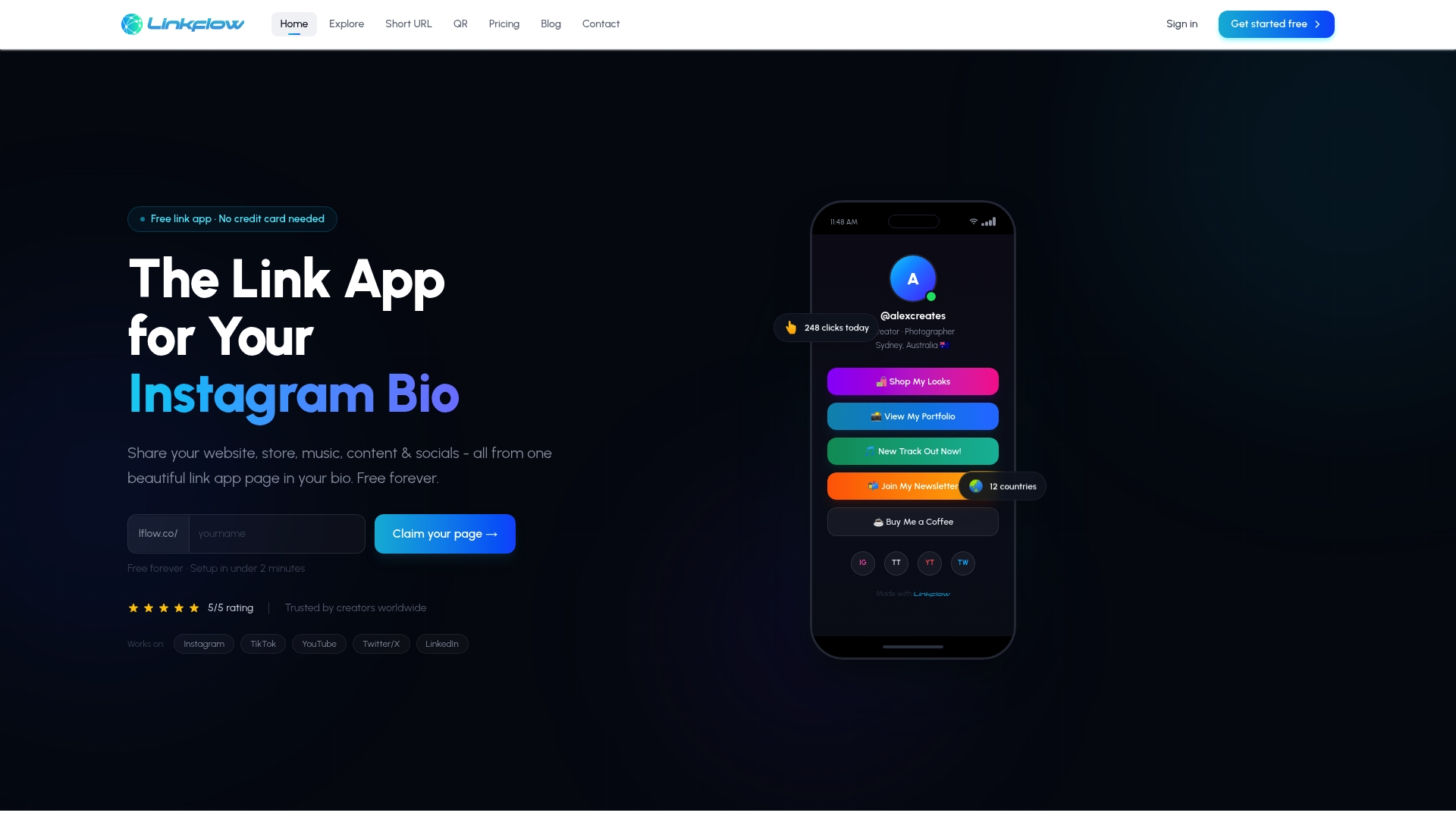
After signup, the immediate wins are concrete: pick a template from the Lflow template library, add your show cover and episode links, drop in your subscribe buttons, and your page is ready to paste into every social bio. Analytics start tracking from the first click. For podcasters who want a custom domain and branding removal, paid plans are available at a low monthly rate.
Start your free Lflow bio link and have your podcast page live before your next episode drops.
Official docs and helpful links
- How to share a podcast episode — Transistor's guide to episode landing pages and shareable links for social and email distribution.
- Custom bio links for podcasters — Easy Podcast Tips walkthrough on embedded players and subscribe CTAs that reduce listener friction.
- Podchaser podcast directory — Example of a directory profile link useful for discoverability and sharing.
- Lflow creator blog — How-to guides on bio link setup, analytics, and platform-specific promotion strategies.
Sources
- Share a podcast episode - Transistor
- Boost Your Podcast Following with a Custom Bio Link - Easy Podcast Tips
- Podchaser podcast entry