

Profile optimization is the strategic process of enhancing your online profiles to increase visibility, engagement, and relevance across social media platforms and search systems. The term covers everything from keyword placement and profile completeness to semantic alignment and visual presentation. Platforms like LinkedIn use AI Hiring Assistants and algorithmic ranking to surface profiles, which means your profile competes as much against machine logic as it does against human judgment. Understanding profile optimization techniques gives you a real edge, whether you are a solo creator, a job seeker, or a brand building an audience.
What is profile optimization, and what does it actually cover?
Profile optimization is the practice of deliberately improving every section of an online profile so that both algorithms and real people find it relevant, credible, and worth engaging with. The industry also calls this "social profile SEO" or "profile discoverability management," but the core idea is the same: your profile is a ranked asset, not a static page.
The scope is wider than most people expect. Optimization covers your visual presentation, your written content, your keyword strategy, your engagement history, and even the URL structure of your profile page. Each of these signals feeds into how platforms rank and surface your profile in search results.
- Profile completeness. Achieving "All-Star" status by filling every primary section, including headline, about, experience, education, and skills, moves profiles from page 5 to page 1 in recruiter searches. Completeness is the single fastest lever most people ignore.
- Profile photo and headline. Profile photo carries the most weight in algorithmic ranking, followed closely by your headline and the opening lines of your About section. A blurry photo or a vague headline costs you visibility before anyone reads a word.
- Keyword relevance and semantic clustering. Platforms no longer reward isolated keywords. They expect logically grouped companion skills and terminology that reflects how real recruiters and clients search.
- Personalized URLs and verification signals. Clean, SEO-friendly profile URLs improve name-based search results and make your profile easier to link externally. Verification badges add a trust signal that both humans and algorithms weigh positively.
- Verified skills and endorsements. Skills that are endorsed by credible connections carry more weight than self-reported ones. Platforms treat peer validation as a quality signal.
Pro Tip: Customize your profile URL to match your full name or brand name exactly. A clean URL like linkedin.com/in/yourname ranks better in external web searches than a default string of numbers.
How do modern algorithms and AI influence profile optimization strategies?

Algorithms now treat your profile as a dynamic document, not a fixed resume. Platforms use AI to analyze semantic clusters, skill trajectories, and engagement patterns before a human recruiter ever sees your name.
AI Hiring Assistants shortlist profiles based on semantic relevance, not just keyword matches. This means the system reads context. It looks at whether your skills, job titles, and experience descriptions form a coherent professional narrative, not just whether a specific word appears.
The shift from keyword stuffing to semantic entity clustering is the most important change in profile strategy over the past two years. Keyword stuffing actively harms ranking because modern AI systems flag profiles with isolated, unrelated skills as low quality. Listing "Python" without any surrounding context of data science, automation, or software development can lower your profile quality score rather than raise it.
- Use the Context-Action-Result (C-A-R) framework. Structure every experience bullet as a situation, what you did, and what changed because of it. AI filters weight measurable outcomes far above passive responsibility lists.
- Group skills logically. Pair technical skills with adjacent competencies. A data analyst profile should cluster SQL, data visualization, and business intelligence together, not scatter them randomly.
- Monitor your Social Selling Index. LinkedIn's Social Selling Index reflects your profile health and engagement level. Most users are unaware it exists, yet it directly affects how often their profile appears in search results.
- Trigger recency signals. Small profile updates, such as tweaking your headline or adding a new skill, give your profile a recency boost that raises search prominence within days.
- Align language with searcher intent. Using the natural terminology that recruiters and clients actually type into search bars increases your profile's relevance score more than any single keyword can.
"Professional profiles have evolved into dynamic AI-ranked assets requiring semantic optimization and machine-readable content alongside human-centered narratives. The profiles that win in 2026 speak two languages at once: the language of algorithms and the language of people."
What practical steps can you take to optimize your profile effectively?
The best place to start is the top of your profile, because that is what algorithms and humans both see first. A strong photo, a specific headline, and a compelling About section opening deliver the fastest visibility gains.
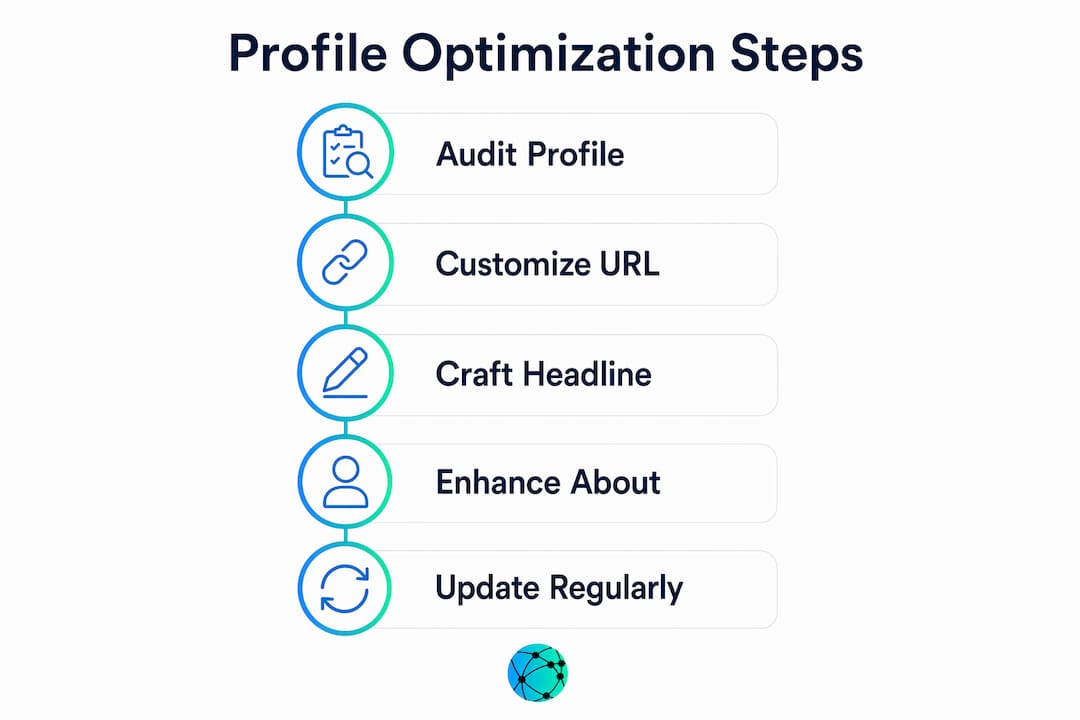
Crafting a headline that works for both humans and machines
Your headline is not your job title. It is a 220-character statement that tells both the algorithm and the reader exactly who you are and what you deliver. Include your core role, your primary skill cluster, and one proof point. "Senior UX Designer | SaaS Products | Reduced churn 22% at Series B startups" outperforms "Senior UX Designer at Company X" in every measurable way.
Writing an About section with a narrative arc
Your About section should open with a one-sentence statement of your professional identity, then move into the problem you solve, the proof you have solved it, and a clear call to action. Aligning your About section language with the exact phrases your audience searches for is the difference between being found and being invisible.
- Lead with your strongest credential or result. Recruiters spend an average of seconds on a first scan. Your opening line must earn the next click.
- Use the C-A-R framework for every experience entry. Demonstrable results and problem-solving proof consistently outrank passive responsibility descriptions in AI recruitment filters.
- Populate your Featured section. Cross-validated Featured content, such as published articles, case studies, or portfolio links, increases what platforms call an Authenticity Score. Profiles with strong Featured sections appear in "Top Fit" recruiter shortlists without any active job application.
- Batch your updates strategically. Significant profile changes take about 7 days for full algorithm re-indexing. Batching updates is more effective than making frequent minor tweaks across multiple sessions.
- Stay active on the platform. Commenting, posting, and sharing content all feed engagement signals back into your profile's ranking. Passive profiles lose visibility over time, regardless of how well written they are.
Pro Tip: Work with an SEO and digital marketing specialist to audit the exact search phrases your ideal clients or recruiters use. Then mirror that language in your headline and About section for a direct relevance boost.
What are the benefits of profile optimization for personal branding and business growth?
A well-optimized profile does not just look better. It performs better across every metric that matters for career growth and business development.
The most immediate benefit is increased profile views and higher search ranking. When your profile hits "All-Star" completeness and uses semantic clustering correctly, it surfaces in far more searches without any additional effort on your part. That passive discoverability compounds over time.
The second benefit is stronger alignment with recruiter and client expectations. Profiles that speak the language of their audience, using the exact terminology a hiring manager or potential client types into a search bar, convert profile visits into real conversations at a much higher rate.
| Benefit | What it means in practice |
|---|---|
| Higher search ranking | Profile appears on page 1 of recruiter or client searches instead of page 5 |
| More inbound opportunities | Recruiters and clients reach out without you applying or pitching |
| Stronger trust signals | Verified skills, endorsements, and Featured content build credibility fast |
| Better profile-to-contact conversion | Visitors who find you through search are already pre-qualified and more likely to engage |
| Long-term career sustainability | A maintained profile keeps generating opportunities even during passive periods |
The long-term case for profile optimization is often underestimated. A profile that ranks well today, and is updated consistently, continues to generate inbound leads, recruiter contacts, and partnership inquiries for months or years. That is a compounding return on a one-time investment of focused effort.
Key Takeaways
Profile optimization is the most cost-effective way to increase your discoverability, build trust, and generate inbound opportunities across social platforms without paid promotion.
| Point | Details |
|---|---|
| Complete every profile section | Reaching "All-Star" status moves your profile from page 5 to page 1 in search results. |
| Use semantic clustering, not keywords | Group related skills logically; isolated keywords lower your AI quality score. |
| Apply the C-A-R framework | Structure experience entries with context, action, and result to pass AI filters. |
| Trigger recency signals regularly | Small updates like a headline tweak raise search prominence within days. |
| Treat your profile as a living asset | Consistent updates and active engagement compound your visibility over time. |
Why I think most people are still optimizing their profiles for 2015
The single biggest mistake I see is people treating their profile like a digital resume. They fill in the fields, upload a photo, and consider the job done. That approach worked a decade ago. It does not work now.
The platforms have changed the rules. AI filters read your profile before any human does. They look for coherent professional narratives, not keyword lists. They reward profiles that demonstrate results and punish ones that just list responsibilities. Most people have no idea this is happening, which is exactly why the gap between a well-optimized profile and an average one is so large right now.
The other thing I have noticed is that people update their profiles reactively, only when they are job hunting or launching something new. The algorithm does not care about your timeline. It rewards recency and consistency. A profile that gets small, thoughtful updates every few weeks stays visible. A profile that sits untouched for six months quietly drops in the rankings.
The creators and professionals who treat their profiles as living assets, updating them, linking them to fresh content, and staying active on the platform, consistently outperform people with objectively stronger credentials but static profiles. That is the uncomfortable truth. Your profile's performance is a function of your behavior, not just your background.
— Axion
How Lflow fits into your profile presence strategy
A strong profile is only part of the picture. Where you send people after they find you matters just as much.
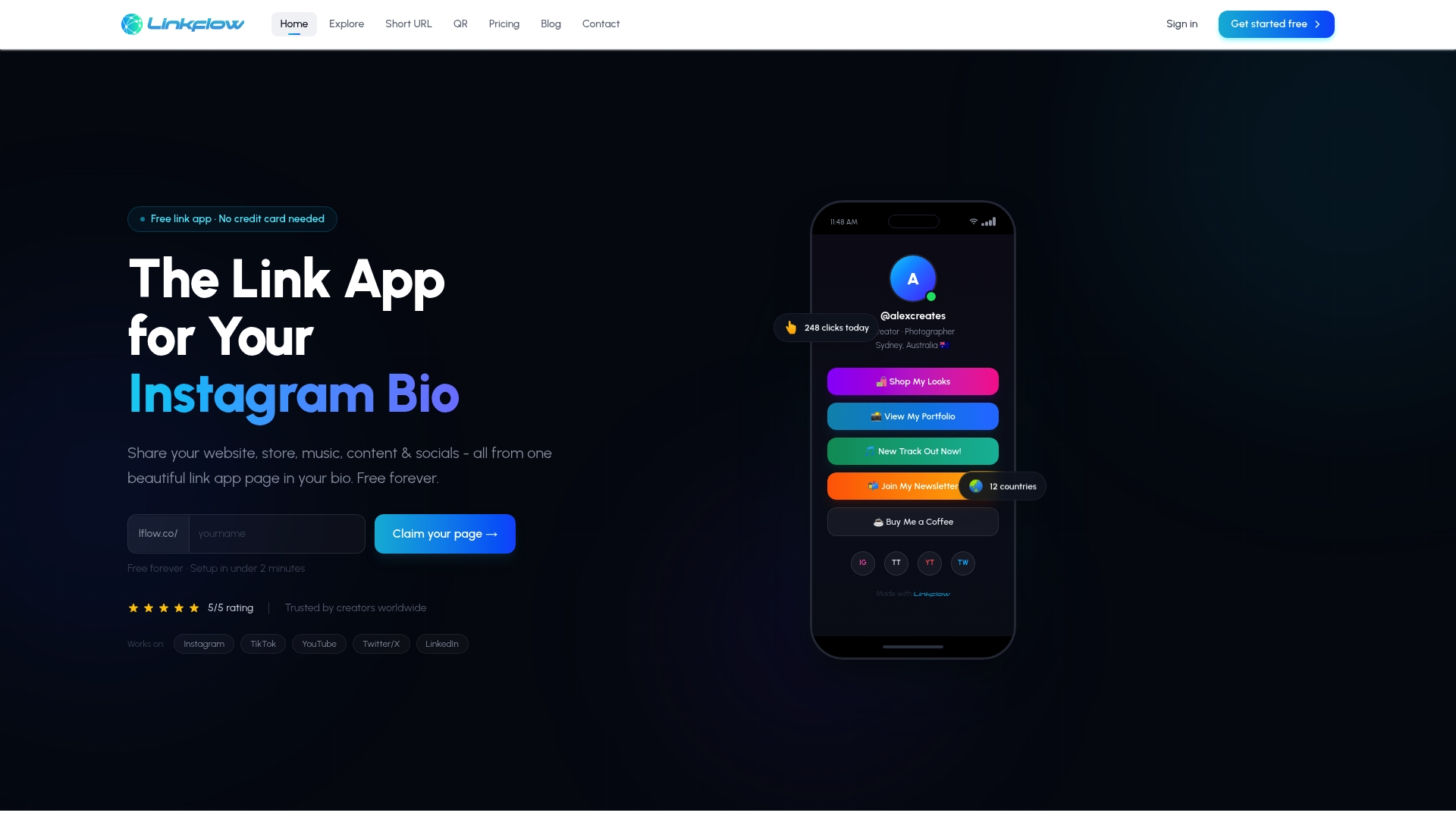
Lflow gives creators and businesses a single, branded URL that consolidates every link worth sharing, from your portfolio and store to your social profiles and latest content. When someone lands on your profile and wants to learn more, a free link in bio page built with Lflow gives them a clean, professional destination instead of a dead end. The platform sets up in under two minutes, includes real-time analytics so you can see what your audience actually clicks, and generates a free QR code you can use offline. For anyone serious about multi-link profile management, Lflow removes the friction between your profile and your audience.
FAQ
What is profile optimization in simple terms?
Profile optimization is the process of improving every section of your online profile so that algorithms rank it higher and real people find it more compelling. It covers your photo, headline, about section, skills, and engagement activity.
How does a profile audit differ from profile optimization?
A profile audit is the assessment step where you identify gaps, weak sections, and missed keyword opportunities. Profile optimization is the ongoing process of fixing and improving those gaps based on what the audit reveals.
How often should you update your profile?
Small updates every few weeks keep your profile fresh and trigger recency signals that raise search visibility. Significant changes, like rewriting your About section, take about 7 days to fully re-index in the algorithm.
Does keyword stuffing help profile ranking?
Keyword stuffing actively harms your ranking. Modern AI systems use semantic entity clustering and flag profiles with isolated, unrelated skills as low quality. Logically grouped companion skills perform far better.
What is the fastest way to improve profile visibility?
Reaching "All-Star" profile completeness by filling every primary section delivers the fastest visibility gain. After that, updating your headline and adding a high-quality profile photo produce the next biggest improvement.