

Driving traffic from your bio is the practice of converting social media profile visitors into website clicks, email subscribers, or paying customers through a single, optimized link and compelling bio copy. Most creators treat the bio as an afterthought. The ones generating consistent referral traffic treat it as a landing page. The difference comes down to three things: what your bio says, what your link points to, and how often you update both.
How to drive traffic from bio with an optimized profile
Your bio has roughly three seconds to communicate who you are, what you offer, and what someone should do next. That is not a lot of room for vague taglines or generic descriptions.
The Name field is your first lever. Using keywords in your Name field, such as "Sara | Travel Blogger" instead of just "Sara," helps your profile appear in niche searches. This is one of the least used organic discovery tactics available on Instagram, TikTok, and LinkedIn. It costs nothing and takes thirty seconds to fix.

Structure your bio copy in three layers: identity, value, and action. Identity tells people who you are. Value tells them what they get by following you. Action tells them exactly where to click. Keep each layer to one line.
Walls of unstructured bio text reduce engagement performance. Line breaks and minimal emojis improve scanning and comprehension significantly. Use vertical bars or line breaks to separate each concept visually.
- Identity line: Your name plus your niche (e.g., "Fitness coach for busy professionals")
- Value line: The specific outcome you deliver (e.g., "5-minute workouts, zero equipment")
- Action line: One direct CTA pointing to your link (e.g., "Free plan below ")
Pro Tip: On Instagram, the link in your bio is the only clickable URL on your profile. Make your CTA line point to it explicitly. "Link below" is weaker than "Get the free guide below" because specificity drives curiosity.
Platform notes matter here. On TikTok, you need 1,000 followers before a clickable bio link activates, so build your audience before leaning on this channel for traffic. On X (formerly Twitter), you can include a website URL and a separate bio URL, giving you two traffic entry points. On LinkedIn, the "Website" field in your profile is separate from your bio text, so use both spaces.
Branded short links vs. multi-link tools: which one wins?
The bio link itself is where most creators leave traffic on the table. Two main approaches exist: a single branded short link and a multi-link bio page. Each serves a different purpose.
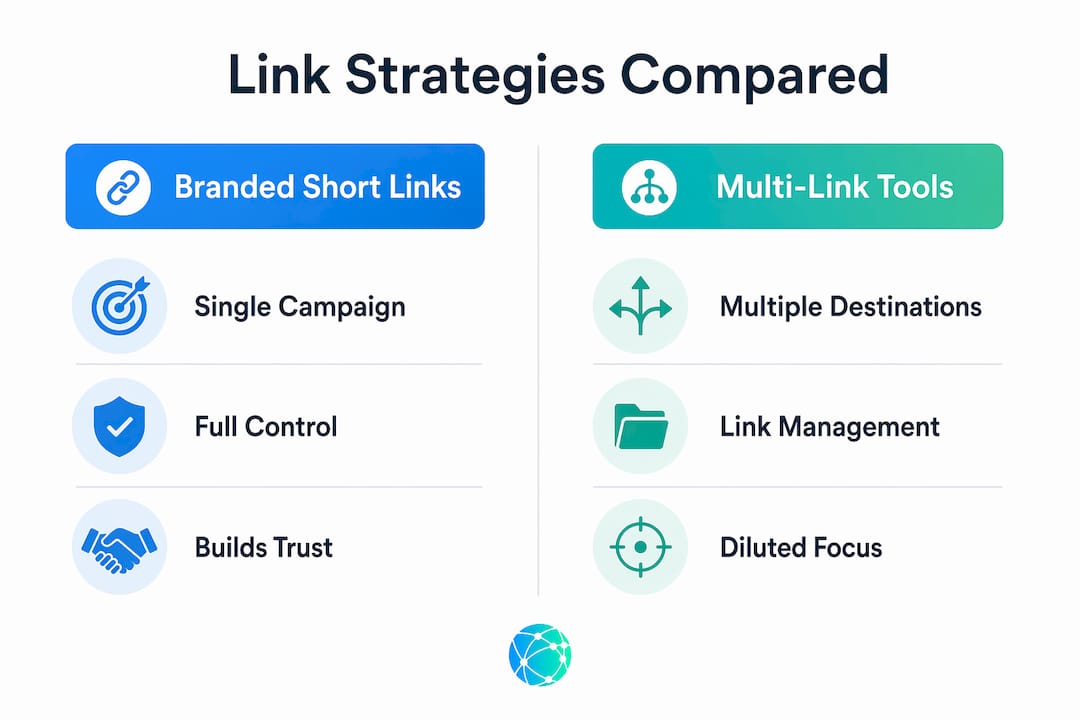
Branded short links on your own domain build trust and give you full control over redirects and analytics. A link like yourbrand.co/go looks professional and signals legitimacy. Generic third-party domains like bit.ly/xk29z look disposable and erode credibility before anyone clicks.
| Approach | Best For | Key Advantage | Key Drawback |
|---|---|---|---|
| Branded short link | Single campaign or product | Clean, trustworthy, fully trackable | Only one destination at a time |
| Multi-link bio page | Multiple offers or channels | Consolidates all destinations | Can dilute the primary CTA |
| Generic short link | Quick tests | Fast setup | No branding, limited analytics |
Multi-link bio tools help manage multiple monetization destinations, but overloading a bio page with ten links dilutes your primary call to action. The fix is simple: pick one featured link at the top and treat the rest as secondary options.
The real power move is using a single short link that redirects dynamically. You keep the same visible URL in your bio forever, but you change where it points based on your current campaign. Launching a course? Point it there. Running a sale? Redirect it to the product page. Your followers never see a broken link, and you never have to update your bio across five platforms simultaneously.
Pro Tip: When you redirect your bio link to match a live campaign, you can shift traffic destinations within seconds. This is reactive marketing at its fastest, and it requires no bio edits at all.
Content tactics that actually get people to click your bio link
Getting followers to your bio link requires more than just having one. You need to actively direct people toward it inside your content.
-
Reference your bio link in every relevant post caption. Phrases like "full tutorial linked in bio" or "grab the free download in my bio" create a direct path. Clear CTAs paired with a consistent posting schedule measurably improve bio link engagement. Vague captions like "check the link" underperform because they give no reason to click.
-
Use Instagram Stories with link stickers. Stories reach your most engaged followers first. A link sticker on a Story that teases a blog post, product, or freebie converts better than a static post CTA because it is interactive and time-sensitive.
-
Pin Instagram Highlights featuring your best offers. Story Highlights with link-worthy content maintain long-term visibility for your most important CTAs. A Highlight labeled "Free Resources" or "Shop" keeps your offer visible to new profile visitors indefinitely.
-
Collaborate with other creators and cross-reference bio links. When a partner mentions your profile in their content, their audience visits your profile and sees your bio link. Bio links power influencer audience engagement precisely because a warm referral from a trusted creator converts at a higher rate than cold discovery.
-
Rotate your bio link destination to build your email list. Your social following lives on a platform you do not own. Linking to newsletter signups builds an owned audience that survives algorithm changes, account suspensions, and platform pivots. Rotate this destination into your bio link rotation at least once a month.
The underlying principle is that your content should create demand, and your bio link should fulfill it. Every post is a trailer. Your bio link is the feature.
How do you track and improve bio link performance?
Tracking bio link traffic without UTM parameters is like running ads without a pixel. You get clicks but no context.
UTM tagging on bio links lets you track traffic by source, medium, and campaign inside Google Analytics or any analytics platform. A properly tagged link looks like this: yourdomain.com/page?utm_source=instagram&utm_medium=bio&utm_campaign=spring-sale. That string tells you exactly which platform sent the visitor and which campaign drove the click.
- Set up UTM parameters for every platform where your bio link appears (Instagram, TikTok, LinkedIn, YouTube).
- Monitor landing page conversion rates, not just click counts. A high click rate with a low conversion rate means your landing page is the problem, not your bio.
- Update your link destination when a campaign ends. Directing followers straight to the relevant product page reduces friction and improves conversion rates. Sending them to a generic homepage after a specific campaign wastes the traffic you worked to generate.
- Check your analytics weekly. Bio link performance shifts with posting frequency, content type, and audience growth. Weekly reviews catch drops before they become trends.
| Metric | What It Tells You | Action If Low |
|---|---|---|
| Click-through rate | How compelling your bio CTA is | Rewrite your action line |
| Bounce rate on landing page | Whether destination matches expectation | Align link destination with CTA copy |
| Conversion rate | Whether the offer is resonating | Test a different offer or page layout |
| Traffic by source | Which platform drives the most value | Double down on that platform's content |
The most common mistake creators make is setting a bio link once and forgetting it. A bio link pointing to a sold-out product or an expired offer actively destroys trust. Audit your bio link destination every time you launch or end a campaign.
Key takeaways
Driving traffic from your bio requires optimized copy, a trackable branded link, and consistent content that directs followers to click.
| Point | Details |
|---|---|
| Optimize your Name field | Add keywords to your Name field to appear in niche searches and attract relevant followers. |
| Use one clear CTA | Lead with a single, specific action line in your bio to maximize click-through rates. |
| Choose a branded short link | Branded links on your own domain outperform generic URLs for trust and analytics control. |
| Match link to current campaign | Update your bio link destination to align with active offers and reduce visitor friction. |
| Tag links with UTM parameters | UTM tracking reveals which platform and campaign drives the most valuable bio link traffic. |
The mistake i see creators make every single week
After years of watching content strategies succeed and fail, the pattern is clear. Creators spend hours on content and thirty seconds on their bio. That ratio is backwards.
The bio is the one place on most social platforms where you control the narrative completely. The algorithm does not suppress it. Competitors cannot outbid you for it. Every person who visits your profile reads it. And yet most bios I review are either a list of personality traits or a wall of hashtags that serve no one.
The branded short link issue is equally frustrating. Free generic shorteners feel like a shortcut, but they signal to visitors that you have not invested in your own brand. A link on your own domain takes twenty minutes to set up and pays dividends in perceived credibility for years. The analytics capabilities alone justify the switch.
The tactic I find most underused is dynamic link rotation. Most creators treat their bio link as a permanent fixture. The best ones treat it as a live campaign tool. They point it at their highest-priority offer this week, then rotate it to a newsletter signup next week, then to a new product launch the week after. Each rotation is tracked with UTM parameters, so they know exactly what converts. That is not complexity. That is discipline.
The future of bio link tools is moving toward real-time personalization and deeper analytics integration. Platforms like Lflow are already building toward this with custom domains, QR code generation, and real-time click tracking. Creators who build these habits now will have a significant advantage as the tools become more sophisticated.
— Axion
Build a bio link page that works while you sleep
If your current bio link setup is a single URL pointing to your homepage, you are leaving measurable traffic and revenue on the table.
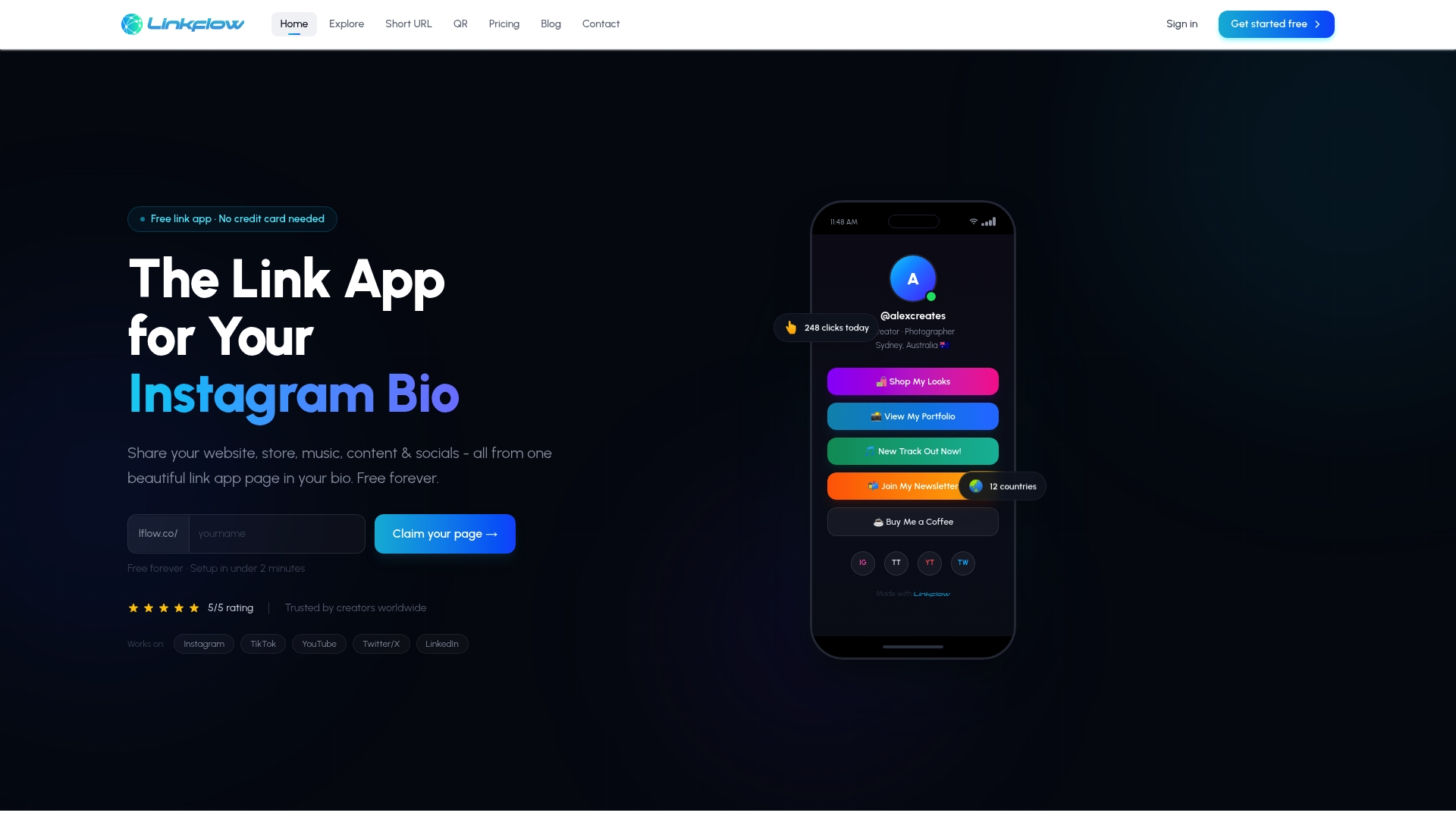
Lflow gives content creators and marketers a free link in bio page that consolidates all your destinations into one branded, mobile-optimized hub. Set it up in under two minutes, connect a custom domain, and track every click in real time. You can also generate a free QR code to extend your bio link into offline promotions, event materials, and packaging. Whether you need a single trackable short URL or a full multi-link page, Lflow covers both without charging you to start.
FAQ
What is a bio link and why does it matter?
A bio link is the clickable URL in your social media profile that directs followers to an external destination. It is the primary traffic channel available to creators on platforms like Instagram and TikTok, where links inside posts are not clickable.
How often should you update your bio link?
Update your bio link destination every time you launch or end a campaign. Using a branded short link that redirects dynamically means you change the destination without editing the visible URL across all your platforms.
What is the best CTA to put in a bio?
The most effective bio CTA is specific and outcome-focused. "Download the free guide below" outperforms "check the link" because it tells the visitor exactly what they get before they click.
Do UTM parameters work on bio links?
UTM parameters work on any URL, including bio links. Adding source, medium, and campaign tags to your bio link URL lets Google Analytics and similar tools show you exactly how much traffic each platform generates.
Should you use a multi-link page or a single link?
Use a single branded short link when you have one primary offer or campaign. Use a multi-link bio page when you manage multiple destinations, but always feature one primary CTA at the top to avoid diluting your conversion focus.