

Platform features are evolving fast, and some are calling it the end of the link in bio era. When Meta introduced product tagging directly inside Instagram Reels, allowing creators to tag up to 30 products per video, headlines suggested the traditional bio link was finished. But that's not the full picture. This article breaks down exactly what's changing, what's not, and how smart creators can use the newest link in bio strategies and AI-powered tools to drive stronger engagement than ever before.
Table of Contents
- How social platforms are changing bio links
- Why link in bio is not obsolete (yet))
- The rise of AI-powered and personalized bio link tools
- What works now: Tactics for creators to maximize link in bio impact
- The uncomfortable truth: Why creators shouldn't chase every trend
- Try the latest bio link solutions for creators
- Frequently asked questions
Key Takeaways
| Point | Details |
|---|---|
| Platforms update quickly | Features like Reels tagging and clickable captions demand creators adapt their link in bio tactics. |
| Bio links still convert | Optimized link in bio pages achieve up to 25 percent click-through rates. |
| AI leads the way | Smart content recommendations and analytics boost audience engagement and revenue. |
| Test, don’t just follow | Industry trends matter, but careful optimization is proven to outperform blindly following new features. |
How social platforms are changing bio links
The ground is shifting under creators' feet. Over the past 12 months, major platforms have pushed new features that directly affect how audiences discover and click links from creator profiles. Understanding these changes is step one for staying competitive.
Instagram is leading the charge. The platform now lets creators tag products inside Reels, which means viewers can purchase without ever tapping the bio. Instagram is also
, a move that could reduce the number of times your audience needs to visit your profile at all. If caption links roll out broadly, it would allow creators to point followers to a specific URL directly from individual posts. That is a meaningful structural change.TikTok has been expanding its in-app shopping ecosystem through TikTok Shop, similarly reducing friction between discovery and purchase. YouTube has long allowed links in video descriptions and pinned comments, keeping bio links less critical for its audience. LinkedIn allows direct links in posts with minimal algorithmic penalty.
So what does this mean in practice? Here's where creators often get confused:
- Product-focused creators feel the biggest pull away from bio links, since in-app purchases reduce friction for buyers
- Multi-niche creators still need a central hub to organize YouTube videos, podcasts, newsletters, and affiliate links
- New and growing accounts may not have access to platform shopping features yet, making bio links essential
- Non-product content (guides, events, memberships, community links) still requires an external destination
"The platforms are optimizing for their own ecosystems. Bio links exist precisely because not everything you want to share can live inside one app."
That insight matters. A multi-link bio guide shows clearly how creators building across multiple platforms still generate their highest-converting traffic through a centralized bio page. The platforms may be adding options, but they are not covering every use case.
Next, we explore why many experts say the changes aren't the end for bio links. Instead, they're an evolution.
Why link in bio is not obsolete (yet)
Let's get specific. Meta may have declared the bio link era "over" for product tagging, but the data doesn't support a blanket retirement of bio links as a strategy. Benchmarks from 2026 show that optimized bio link pages deliver click-through rates of 15% to 25%, while the average sits at just 2% to 5%. Profile-link CTR on Instagram runs 2% to 3%, while TikTok outperforms at 3% to 8% for creators with strong audiences. These are strong numbers for any marketing channel.
"Meta says product tagging ends the link in bio, but tool providers counter that data-driven optimization sustains 15% to 25% CTRs and delivers genuine multi-platform utility."
The performance gap between average and optimized is enormous. A creator pulling 2% CTR and a creator pulling 22% CTR both have bio links, but only one has actually built theirs with intention. Understanding how bio links power engagement is the foundation for moving up that curve.
Here's a numbered breakdown of why bio links remain relevant for creators today:
- Cross-platform control. You own your bio link page. You cannot own TikTok Shop or Instagram's algorithm. If a platform changes its rules, your bio link hub stays put.
- Multi-link consolidation. A single profile only allows one clickable link on most platforms. A bio link page expands that to unlimited destinations.
- Analytics ownership. In-app shopping tells you what sold, but not how your audience behaves across content types. Your bio link analytics reveals which links drive the most interest.
- Non-commerce content. Newsletters, podcast episodes, event registrations, and community memberships all need homes. Bio pages cover this comprehensively.
- Audience segmentation. You can organize content by audience type or topic, giving different followers exactly what they came for.
Pro Tip: Audit your current bio link page monthly. Remove links that haven't received clicks in 30 days and move your highest-converting link to the top position. Position matters far more than most creators realize.
The case for why you should use bio links to boost your brand is built on this kind of evidence. The channels are not disappearing. They are getting more sophisticated, and that benefits creators who treat bio links as a strategic tool rather than a placeholder.
With the case for continued relevance established, let's dive into what emerging bio link tools are doing to stay ahead.
The rise of AI-powered and personalized bio link tools
This is where things get genuinely exciting. Bio link platforms are no longer just a list of clickable URLs. They are becoming intelligent systems that learn from audience behavior and help creators make better decisions in real time.
Linktree recently launched an AI-powered Creator Index that pulls performance data from TikTok, Instagram, and YouTube to recommend content strategies for individual creators. The index analyzes what content formats drive the most bio link clicks, which products convert at the highest rates, and when audiences are most likely to engage. That kind of intelligence shifts bio link optimization from a guessing game into a repeatable system.
Other platforms are following quickly. Here's a comparison of what modern bio link tools now offer versus the basic setups most creators still use:
| Feature | Basic bio link | AI-powered bio link |
|---|---|---|
| Link count | Often limited | Unlimited |
| Analytics | Basic clicks only | Engagement, source, device, time |
| Personalization | Static layout | Dynamic based on visitor data |
| Payment integration | None | Tip jars, paid content, subscriptions |
| Media support | Text links only | Video, image, music embeds |
| Content recommendations | None | AI-driven suggestions |
| QR code | Rarely included | Built-in and downloadable |
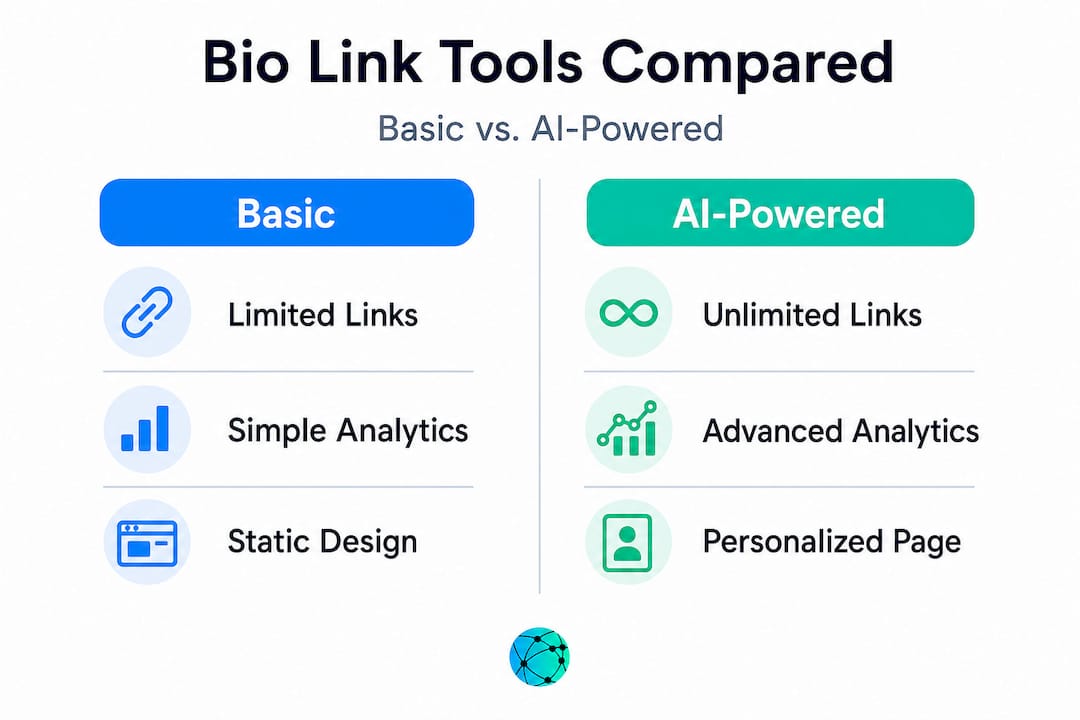
The gap is significant. Most creators are still running basic setups and leaving real engagement on the table. If you want to understand the full range of what's now available, exploring AI tools for link in bio shows how automation is reshaping the whole approach.
Personalization is the most underused lever in this space. Bio link pages that dynamically adjust based on the referring platform, the time of day, or audience segments can dramatically improve CTR. Imagine a follower clicking from TikTok at 9pm and seeing your latest short-form video content at the top of your bio page, versus a YouTube subscriber clicking from a desktop and seeing your course enrollment link first. Same bio page, different experience, higher relevance.
Here's what the best-performing bio link pages include right now:
- Pinned or featured link at the top, updated weekly based on content calendar
- Video or image thumbnails that mirror the aesthetic of the post that drove the click
- Contact and collaboration links for brand partnership inquiries
- Payment or tipping buttons for direct monetization
- Embedded social feeds that show your most recent content without leaving the page
- Newsletter signup integrated directly, not hidden at the bottom
Pro Tip: Look into top bio link features to find out which specific capabilities consistently drive the highest engagement. Some features, like countdown timers on limited content, generate urgency that static links simply cannot match.
With innovative AI features in play, let's explore how these new tools actually perform when put to use.
What works now: Tactics for creators to maximize link in bio impact
The data tells a clear story. Bio page CTR benchmarks show that average is 2% to 5%, but optimized pages hit 15% to 25%. The difference between those numbers is almost never about the platform. It is almost always about setup, strategy, and consistency.
Here's a performance snapshot that most creators can benchmark against:
| Metric | Average performance | Optimized performance |
|---|---|---|
| Bio page CTR | 2% to 5% | 15% to 25% |
| Instagram profile link CTR | 2% to 3% | 8%+ |
| TikTok profile link CTR | 3% to 8% | 12%+ |
| Click-to-sale conversion (Instagram) | 0.6% | 2% to 3% |
The jump from average to optimized doesn't require more followers. It requires smarter setup.
Here are the specific actions that move the needle most:
- Write a bio that tells people exactly what to expect when they click. "Tap for my weekly deals and new recipes" outperforms "Link below" every time.
- Match the top link to your most recent content push. If you just dropped a YouTube video, your bio link page should lead with it.
- Use analytics to identify your best-performing link. Move it to position one. Revisit this weekly, not monthly.
- Add a thumbnail or image to your bio link page. Visual context raises clicks significantly compared to plain text buttons.
- Test your bio page on mobile before publishing anything. Over 80% of social media browsing happens on mobile, and a clunky layout destroys conversions.
- Add a QR code to offline touchpoints. Business cards, packaging, event materials, and merchandise all become clickable when you add a scannable code.
- A/B test your link order. Many platforms allow you to rotate link positions; use this to discover what your audience actually clicks.
Learning from all-in-one link tools shows how creators who consolidate their strategy into a single managed page consistently outperform those managing links manually. Fragmented setups lose clicks at every step. Unified setups capture them.
If you're still building foundational knowledge, understanding what a link in bio actually is and how to fully use its potential is the smartest starting point before applying any of these tactics.
Armed with effective tactics, let's step back and analyze what the industry often overlooks.
The uncomfortable truth: Why creators shouldn't chase every trend
Here's something nobody in the bio link industry wants to say out loud: chasing every new feature is a waste of your time.
Every few months, a platform releases something that the creator economy treats as a revolution. Product tagging in Reels. Clickable caption links. AI content indexes. Each one generates hot takes about how everything is about to change. Some of it matters. A lot of it doesn't, at least not for your specific audience and niche.
We've watched creators abandon perfectly functional bio link setups to chase in-app shopping features, only to see their engagement drop because they moved before understanding their audience's behavior. The creators who consistently grow are not the fastest to adopt new features. They're the most deliberate.
Platform changes like Reels tagging absolutely matter, but they matter differently depending on what you sell, who follows you, and what platforms you actually use. A food blogger with 200,000 Instagram followers who drives traffic to sponsored recipe posts needs a very different bio strategy than a musician pushing listeners to Spotify, Bandcamp, and tour tickets simultaneously.
Sustainable growth comes from identifying what already works for your audience and doubling down on it, not from rebuilding your strategy every quarter based on a headline. Treat your bio link page like a storefront, not a social post. You wouldn't repaint the outside of your store every week because a competitor tried a new color.
The savviest creators we see doing this well treat bio link optimization as an ongoing discipline. They set calendar reminders to review analytics. They test one variable at a time. They make decisions based on their own data, not on what a rival creator announced in a YouTube video. Browsing the Lflow blog for trend analysis and practical guides is one way to stay informed without being overwhelmed by noise.
The most honest advice? Pick a platform that fits your workflow, learn it deeply, and optimize relentlessly. That beats bouncing between tools every time a new one launches.
Try the latest bio link solutions for creators
If the tactics in this article made sense to you, the next step is putting them into practice with the right tool behind you. A cluttered or outdated bio page is actively costing you clicks right now.
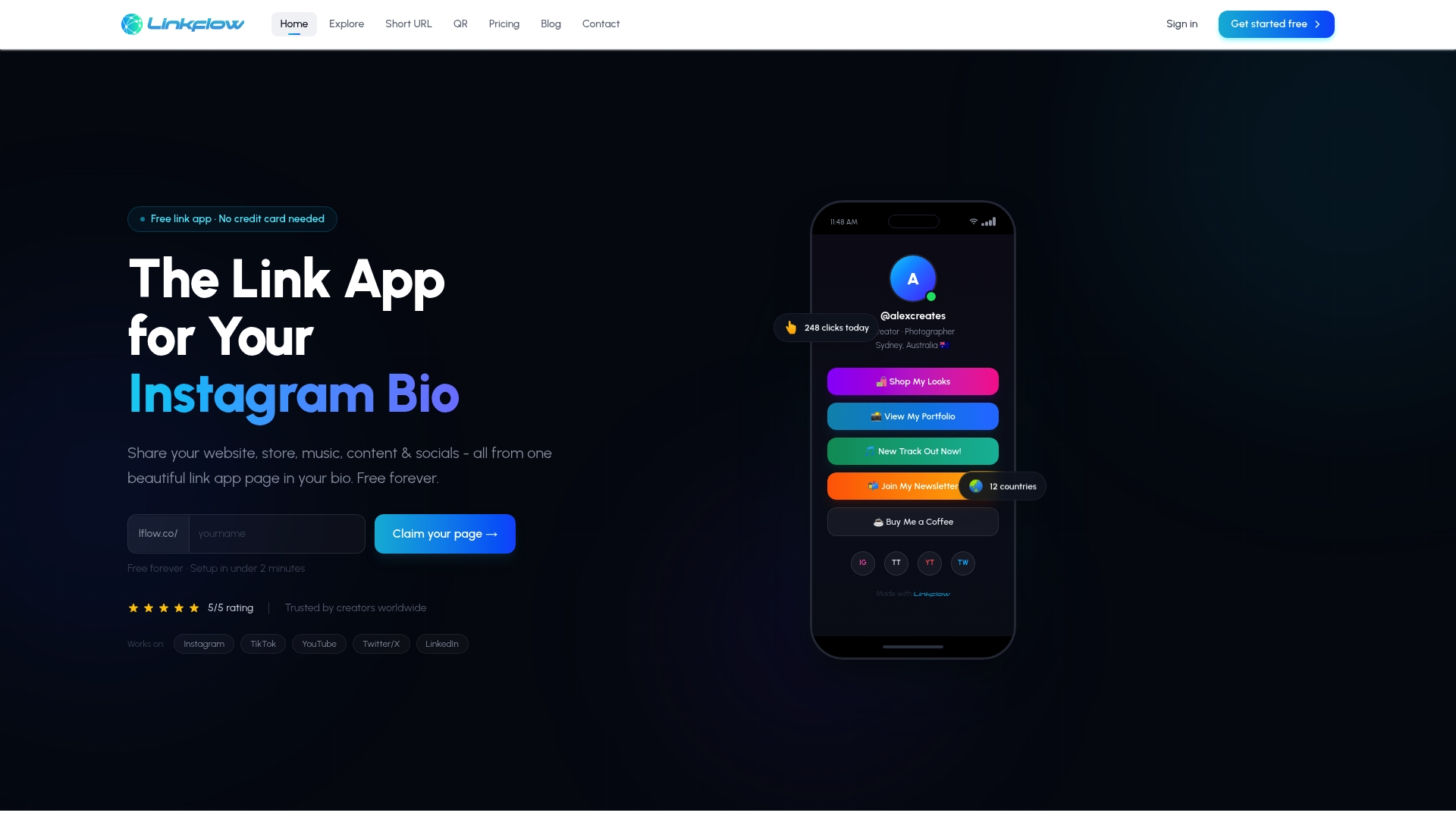
Lflow.co is built specifically for creators who want results without a complicated setup. You can create a free link in bio page in under two minutes, with unlimited links, real-time analytics, free QR code downloads, and full customization options including themes, fonts, custom domains, and mobile-optimized layouts. Whether you're directing traffic to products, playlists, blogs, or community hubs, Lflow keeps everything in one polished place. Explore ready-to-use bio link templates to get started even faster, or try the free link app to see how much cleaner your social traffic strategy can look in minutes.
Frequently asked questions
Are link in bio tools becoming obsolete in 2026?
No, link in bio tools remain crucial for multi-platform reach, strategic linking, and brand control. Platform tools like Reels tagging solve one use case while bio pages cover everything else.
What engagement rates can optimized bio links achieve?
Optimized bio link pages can achieve 15% to 25% click-through rates, far above the 2% to 5% average most creators see with default setups.
How is AI changing bio link strategies for creators?
AI now powers content recommendations, smart analytics, and personalization within bio link platforms. Linktree's Creator Index is a leading example, using TikTok, Instagram, and YouTube data to recommend content strategies.
Should I switch to product tagging on Reels and abandon my bio link?
Not yet. Product tagging is powerful for direct e-commerce but bio links remain vital for driving diverse traffic, controlling your brand presentation, and reaching audiences across multiple platforms simultaneously.