

Influencer marketing is defined as a social media strategy where brands partner with trusted content creators to promote products to dedicated, engaged audiences. Unlike traditional advertising, this approach borrows credibility directly from the creator. Success depends on three variables: relevance, reach, and resonance. Brands that understand all three build campaigns that convert. Those that ignore them burn budget on vanity metrics. The influencer marketing industry has grown into a measurable, process-driven discipline, and marketers who treat it as one will consistently outperform those who treat it as a shortcut.
What is influencer marketing and how does it work?
Influencer marketing is a collaboration model where a brand pays or compensates a creator to produce content that introduces the brand to the creator's audience. The creator's existing trust does the heavy lifting. That trust is the core asset, not the follower count.

The mechanics follow a structured path. Campaigns run through eight distinct steps: strategy definition, creator sourcing, negotiation, contracting, briefing, content review, posting, and performance reporting. Each step has dependencies, and skipping one creates problems downstream.
The three R's framework gives marketers a clear lens for evaluating every campaign decision:
- Relevance — Does the creator's audience match your customer profile? A fitness influencer promoting a protein bar reaches the right people. The same influencer promoting enterprise software does not.
- Reach — How many qualified people will see the content? Reach matters, but only when the audience is relevant. A million uninterested followers produce less value than 50,000 engaged ones.
- Resonance — How deeply does the content connect? Comments, saves, and shares signal resonance. A post that sparks genuine conversation outperforms one that collects passive likes.
Campaign goals map directly to these metrics. Awareness campaigns prioritize reach. Engagement campaigns target resonance. Conversion campaigns require both relevance and resonance working together.
| Campaign Goal | Primary Metric | Key Signal |
|---|---|---|
| Brand awareness | Reach | Impressions, new followers |
| Engagement | Resonance | Comments, shares, saves |
| Website traffic | Click-through rate | Link clicks, sessions |
| Sales and conversions | ROI | Purchases, promo code use |
Content review timelines matter more than most brands expect. Reviews typically happen within 48–72 hours, and contracts usually allow only 1–2 revision rounds. Slow approvals stall campaigns and frustrate creators.
Pro Tip: Brief the creator on your brand's non-negotiables, then step back. Giving creative latitude within clear guardrails produces better content than micromanaging every caption word.
Why influencer marketing outperforms traditional advertising
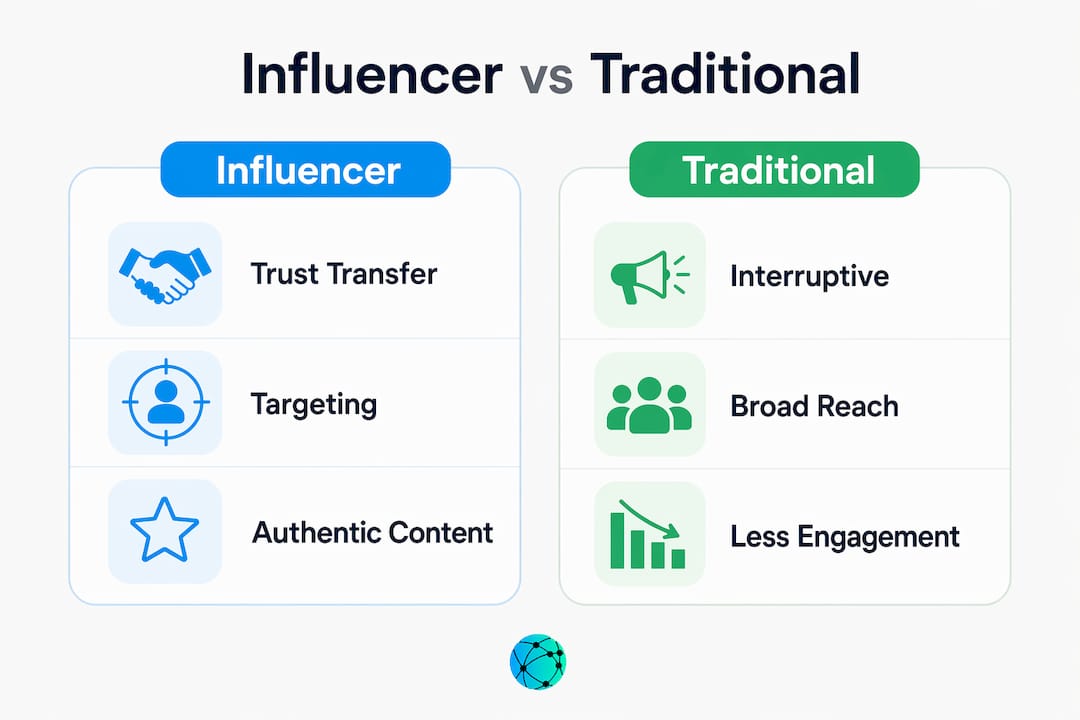
Traditional advertising interrupts. Influencer content integrates. Influencer content fits into existing audience consumption habits rather than breaking them, which is why audiences respond differently to it.
A TV commercial or banner ad signals "this is paid." An influencer's product recommendation inside a cooking tutorial or a morning routine video signals "this is part of my life." That distinction changes how the brain processes the message.
The financial case is concrete. Brands earn an average of $5.78 for every dollar spent on influencer marketing. That return reflects the efficiency of reaching pre-qualified audiences through a trusted voice rather than broadcasting to a general population.
Influencer marketing works because it borrows trust and attention from creators rather than demanding it from strangers. A brand that earns a creator's genuine endorsement inherits a relationship that took years to build.
The benefits extend beyond direct sales:
- Credibility transfer. When a respected creator recommends your product, their credibility attaches to your brand.
- Audience alignment. Niche creators deliver pre-segmented audiences that paid media struggles to replicate at the same cost.
- Content production. Influencer campaigns generate authentic content that brands can repurpose across channels.
- Omnichannel fit. Influencer content works alongside paid social, email, and SEO rather than competing with them.
Understanding how influencer marketing fits into a broader digital marketing strategy helps marketers allocate budget more effectively across channels.
Common pitfalls and best practices in influencer marketing
The biggest mistake marketers make is treating influencer marketing as a one-off tactic. Running it as a rigorous operating system that integrates sourcing, briefing, approvals, and tracking produces far better results than launching a single campaign and calling it done. Long-term campaigns focused on resonance drive higher retention rates than short bursts.
Over-editing kills campaigns quietly. Limiting revisions is an industry best practice because over-editing strips out the authentic voice that makes influencer content work in the first place. When a creator sounds like a press release, their audience notices immediately.
Formal contracts are not optional. Professional contracts must cover FTC disclosure requirements, content usage rights, kill fee policies, and payment terms. Skipping this step creates legal exposure and operational chaos when campaigns go sideways.
Common pitfalls to avoid:
- Chasing follower counts. A creator with 20,000 highly engaged followers in your niche outperforms a celebrity with 2 million disengaged ones.
- Ignoring audience fit. Relevance always beats raw reach. Verify that the creator's audience demographics match your customer profile before signing any agreement.
- Forcing brand voice. Brands that push corporate messaging instead of allowing authentic storytelling consistently underperform.
- Skipping the brief. A weak brief produces weak content. Invest time in a detailed creative brief that covers goals, key messages, and mandatory disclosures.
- No performance tracking. Campaigns without defined KPIs cannot be improved. Set metrics before launch, not after.
Pro Tip: When evaluating a creator, check the comments section before anything else. Genuine questions, personal stories, and direct replies from the creator signal an audience that trusts them. That trust is what you are paying for.
Understanding how bio links power influencer engagement also helps brands track traffic from specific creator campaigns more accurately.
How do you measure influencer marketing success?
Measurement separates professional influencer programs from amateur ones. The metrics that matter most are reach, engagement rate, conversions, and return on investment. Each tells a different part of the story.
Engagement quality predicts campaign success better than follower count. Comments, saves, and direct questions from followers signal that the content resonated. Passive likes signal that it was seen. Both matter, but resonance metrics carry more weight when evaluating long-term partnership value.
Key performance indicators by campaign type:
- Awareness: Impressions, reach, share of voice, new followers
- Engagement: Comments, saves, shares, engagement rate
- Traffic: Link clicks, sessions, bounce rate, time on page
- Conversions: Promo code redemptions, purchases, cost per acquisition
- ROI: Revenue attributed to the campaign divided by total spend
Content repurposing extends campaign value beyond the original post. Creator content that performs well organically can be amplified through paid promotion. Spark Ads on TikTok, for example, allow brands to boost a creator's existing post directly from the creator's account, preserving the authentic feel while expanding reach.
| Metric | What It Measures | Why It Matters |
|---|---|---|
| Engagement rate | Audience interaction per post | Signals content resonance |
| Click-through rate | Traffic driven by the post | Measures intent and interest |
| Conversion rate | Actions taken after clicking | Ties campaign to revenue |
| Cost per acquisition | Spend per new customer | Benchmarks campaign efficiency |
Performance reporting should happen immediately after the campaign closes, not weeks later. Data decays in relevance quickly. Build a reporting cadence into the contract so creators submit metrics on a defined timeline.
Multi-link management tools help marketers track which influencer drove which traffic, especially when running multiple creators simultaneously.
Key Takeaways
Influencer marketing succeeds when brands treat it as a structured, ongoing system built on creator trust, audience relevance, and measurable engagement rather than a one-time promotional tactic.
| Point | Details |
|---|---|
| Trust is the core asset | Partner with creators whose audiences already trust them, not just those with large follower counts. |
| Use the three R's framework | Evaluate every creator and campaign against relevance, reach, and resonance before committing budget. |
| Contracts protect both sides | Cover FTC disclosures, usage rights, kill fees, and payment terms in every formal agreement. |
| Engagement quality beats reach | Comments, saves, and shares predict campaign impact better than raw follower numbers. |
| Treat it as a system | Long-term influencer programs with structured workflows consistently outperform one-off campaigns. |
Why I think most brands are still getting influencer marketing wrong
Most brands approach influencer marketing like they approach display advertising: buy the placement, push the message, measure impressions. That model fails here because the product being purchased is not a placement. It is a relationship.
The shift I have seen work consistently is treating influencer partnerships the way you would treat a long-term hire. You invest in onboarding them properly, give them the context they need, and then trust them to do their job. The brands that brief creators thoroughly and then step back get content that sounds human. The brands that rewrite every caption get content that sounds like a terms-of-service agreement.
The other pattern worth naming: the obsession with reach metrics. A creator with 8,000 followers in a specific professional community can drive more qualified leads than a lifestyle influencer with 800,000 followers who covers everything from skincare to car insurance. Specificity wins. Every time.
The operational side matters just as much as the creative side. Contracts, revision limits, approval timelines, and performance reporting are not administrative overhead. They are the infrastructure that makes campaigns repeatable and scalable. Build the system first. The creative will follow.
— Axion
Lflow makes influencer campaign management simpler
Managing multiple influencer campaigns means juggling dozens of links, tracking traffic from different creators, and keeping your brand presence consistent across platforms.
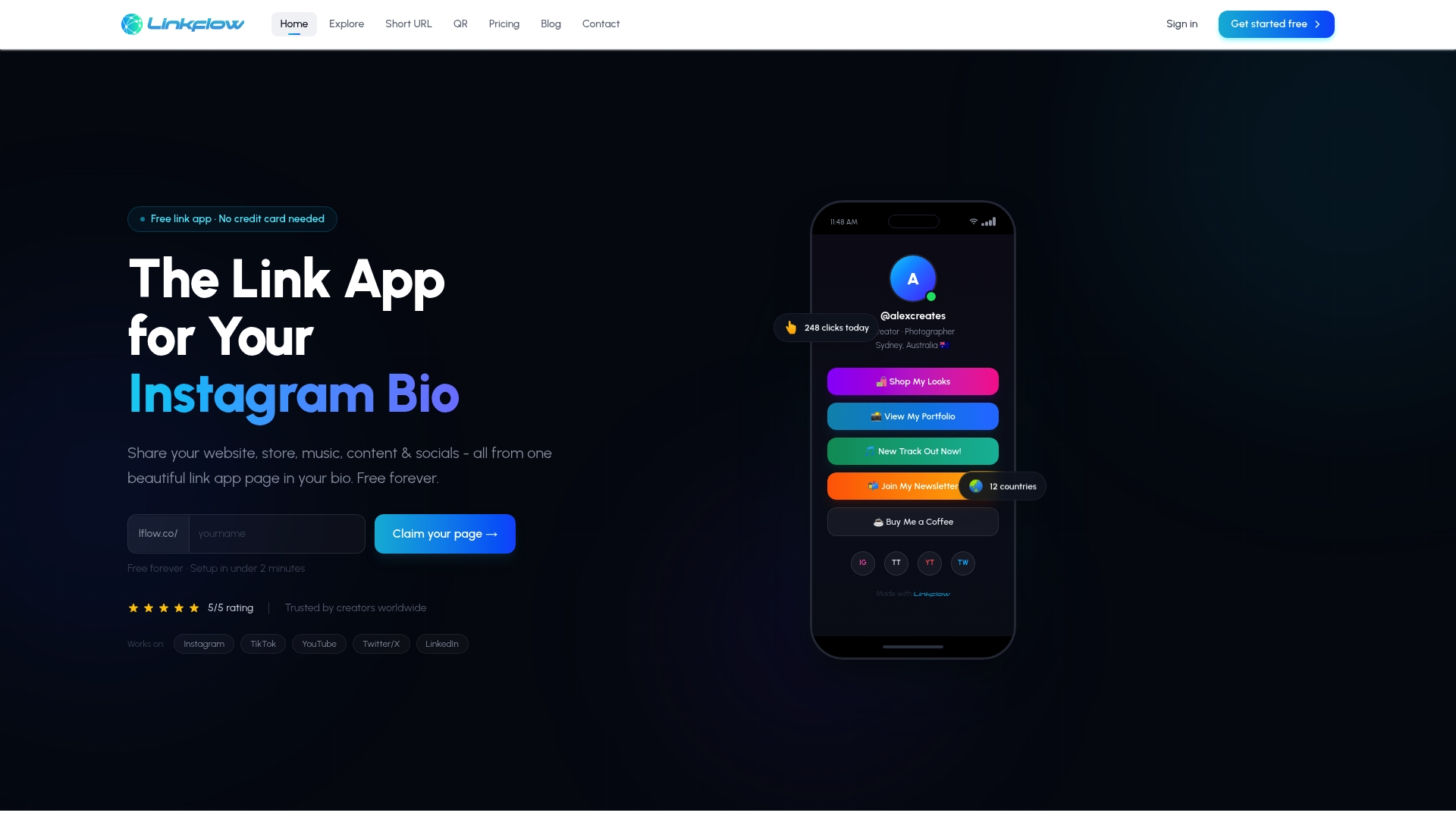
Lflow gives marketers and creators a single branded URL that consolidates every campaign link into one clean, professional page. Set up takes under two minutes, and real-time analytics show you exactly which links are driving traffic. Free link in bio templates are built for influencer workflows, with customizable themes, fonts, and colors that match your brand. For campaigns running across Instagram, TikTok, YouTube, and LinkedIn simultaneously, Lflow's free link in bio tool keeps everything organized and trackable in one place.
FAQ
What is the influencer marketing definition?
Influencer marketing is a social media strategy where brands partner with content creators to promote products to their dedicated audiences, leveraging the creator's existing trust and credibility.
How does influencer marketing work step by step?
Campaigns follow an eight-step process: strategy, creator sourcing, negotiation, contracting, briefing, content review, posting, and performance reporting. Each step builds on the previous one to produce measurable results.
What are the main benefits of influencer marketing?
The core benefits include trust transfer from creator to brand, precise audience targeting, authentic content production, and strong ROI. Brands earn an average of $5.78 for every dollar spent on influencer campaigns.
What are influencer partnerships and how are they structured?
Influencer partnerships are formal agreements between a brand and a creator that define content deliverables, compensation, usage rights, FTC disclosure requirements, and revision limits. A written contract is standard practice.
How do you measure influencer marketing success?
The most reliable indicators are engagement rate, click-through rate, conversion rate, and cost per acquisition. Resonance metrics like comments, saves, and shares predict long-term campaign impact better than follower count alone.