

The top 2026 social media trends are defined by four forces: short-form video dominance, AI-driven content creation, social search optimization, and the shift from reach to community. Social media managers, marketers, and content creators who understand these forces now will build strategies that hold up through the year. This article breaks down the trends with data, platform examples, and practical guidance you can apply immediately.
1. Why short-form video still leads every platform
Short-form video is the top-performing content format in 2026, with video up 49% year over year. That growth rate means the format is not plateauing. It is accelerating. Instagram Reels, YouTube Shorts, and TikTok continue to receive the largest algorithmic boosts of any content type on their respective platforms.
The reason short-form video works is attention economics. A 30-second clip delivers a complete idea before a viewer can scroll away. Longer formats require trust the audience has not yet extended. Short-form earns that trust first.
- Post natively to each platform rather than cross-posting the same file. TikTok and Reels compress watermarked videos and reduce their reach.
- Use captions on every video. A large portion of social media viewing happens without sound.
- Show process, not just results. Behind-the-scenes clips consistently outperform polished product showcases.
Pro Tip: Hook viewers in the first two seconds with a visual action or a spoken question. Algorithms measure completion rate, and a strong opening is the single biggest driver of it.
2. How AI-driven content creation is changing social media marketing
94% of social media marketers now use AI in their workflows, up from 71% a year ago. That jump represents a shift from early adoption to standard practice. AI is no longer a competitive edge. It is a baseline expectation. The marketers who stand out are those who use it without letting it flatten their brand voice.
AI tools now handle caption drafting, content scheduling, hashtag research, and performance analysis. That frees up time for the work AI cannot do: building relationships, reading cultural context, and making creative judgment calls.
- Use AI to generate first drafts, then rewrite them in your brand's voice before publishing.
- Run AI-generated images and copy through a human review step. Audiences notice generic AI aesthetics quickly.
- Use AI analytics tools to identify which content formats perform best for your specific account, not industry averages.
Brands should label AI-generated content and blend it with a human voice to maintain trust. Transparency about AI use is becoming a credibility signal, not a liability. Audiences reward honesty.
Pro Tip: Build a short brand voice guide (tone, vocabulary, phrases to avoid) and paste it into every AI prompt. The output will require far less editing.

3. The rise of social search and content discoverability
Social platforms are evolving into search engines, and content discovery now depends on how well your posts answer real questions. Instagram, TikTok, and Pinterest all index captions, alt text, and profile bios for keyword relevance. A post that ranks in search gets views weeks after it was published. A post optimized only for the feed stops performing within 48 hours.
The practical shift is writing captions the way people speak when they search. "How do I grow on Instagram in 2026?" performs better as a caption opener than "Excited to share my latest tips!" The first version matches a search query. The second does not.
| Platform | Key search signal | Best practice |
|---|---|---|
| TikTok | Caption keywords and spoken words | Say the keyword aloud in the first five seconds |
| Caption text and alt text | Write captions as answers to common questions | |
| Pin title and description | Use long-tail keyword phrases in every description | |
| YouTube | Title, description, and chapters | Include the search query in the video title exactly |
Optimize captions, bios, and profiles with natural language questions for better indexing. Your bio is a search landing page. Treat it like one.
Pro Tip: Search your niche topic directly on TikTok and Instagram before writing a caption. The autocomplete suggestions show you exactly what your audience is typing.
4. Building trust and community over chasing reach
Creators are shifting from chasing reach to building stable, intentional communities amid growing trust scarcity. Trust scarcity means audiences are more skeptical of brand content than at any previous point in social media history. The response is not louder content. It is more specific content for a smaller, more committed group.
40% of social media users want educational posts and 27% want community-focused content in 2026. That data tells you what audiences are actually asking for. They want to learn something or belong to something. Generic promotional content satisfies neither need.
- Create a private community space on Discord, Geneva, or a platform-native group to deepen relationships with your most engaged followers.
- Respond to comments with full sentences, not just emoji. Substantive replies signal that a real person is behind the account.
- Share opinions and take positions. Neutral content is forgettable. Audiences follow people and brands that stand for something specific.
- Community and creator partnerships drive engagement and serve as reliable trust-building mechanisms. Co-created content with trusted voices transfers credibility.
Content designed for educational utility helps brands respect consumer attention and build loyalty. Audiences remember who taught them something useful.
5. Social commerce and platform-native sales
Social commerce has matured from an experiment into a primary sales channel. Native buy buttons are built into every major platform, and live commerce on TikTok Shop and Instagram Live is generating significant revenue for brands that treat it as a real sales format rather than a promotional afterthought.
User-generated content is now the most effective ad creative in social commerce. A customer video showing a product in real use outperforms a polished brand ad in both click-through rate and conversion. The reason is simple: UGC looks like organic content, and audiences trust it more.
- Build a UGC collection system. Ask customers to tag your brand or use a specific hashtag after purchase.
- Run live commerce sessions with a clear product focus and a time-limited offer. Urgency drives live purchases.
- Pinterest and YouTube are underused social commerce platforms. Both have strong purchase intent signals and less competition than TikTok or Instagram.
- Link your product pages directly from your bio using a multi-link tool. Buyers who click your profile should reach a purchase option in one tap.
Pro Tip: Repost customer UGC as paid ads with permission. The creative is free, the trust signal is built in, and the performance typically beats brand-produced content.
6. Influencer marketing shifts toward micro-creators
Trends in influencer marketing have moved decisively toward micro-creators with audiences between 10,000 and 100,000 followers. Engagement rates for micro-creators consistently outperform those of mega-influencers. Smaller audiences are more homogeneous, which means a product recommendation lands with more relevance.
Brands are also building longer-term partnerships rather than one-off sponsored posts. A single post from an influencer generates a spike. A six-month partnership builds genuine association between the creator and the brand in the audience's mind.
76.56% of marketers say authenticity matters more than production quality in social media content. That finding applies directly to influencer selection. A creator who genuinely uses your product and speaks about it naturally will outperform a polished celebrity endorsement.
7. Cross-platform strategy replaces single-platform focus
Relying on one platform is a structural risk in 2026. Algorithm changes, policy shifts, and audience migration can cut reach overnight. The marketers who are most resilient publish across multiple platforms while maintaining a consistent brand identity.
The practical approach is to create content in one primary format and adapt it for each platform rather than building separate strategies from scratch. A long-form YouTube video becomes a Shorts clip, a LinkedIn post, and a TikTok. The core idea travels. The format adapts.
Build owned stability loops by combining platform posts with controlled spaces like newsletters or communities. An email list or a private community is an asset you own. A social media following is an asset you rent from the platform.
Pro Tip: Use your link in bio as a central hub that routes followers to your newsletter, store, and other platforms. One URL does the work of ten.
Key takeaways
The most effective future social media strategy in 2026 combines short-form video for reach, AI for efficiency, social search for longevity, and community for trust.
| Point | Details |
|---|---|
| Short-form video leads | Video is up 49% year over year. Prioritize Reels, Shorts, and TikTok for maximum reach. |
| AI is now standard | 94% of social marketers use AI. Label AI content and preserve your human brand voice. |
| Social search is real | Optimize captions and bios with natural language questions to rank beyond the feed. |
| Community beats reach | 40% of users want educational content. Build smaller, engaged audiences over large passive ones. |
| Own your distribution | Combine platform posts with newsletters or communities to reduce dependency on any single algorithm. |
What I have learned from watching these trends play out
The biggest mistake I see marketers make is treating every new trend as a separate strategy to execute. Short-form video, AI, social search, and community are not four separate to-do lists. They are one integrated approach. Short-form video attracts attention. AI helps you produce it consistently. Social search makes it discoverable after the algorithm stops pushing it. Community converts viewers into people who actually care about what you do next.
The second mistake is chasing platform breadth before achieving depth on one. I have watched brands spread themselves across six platforms in the first quarter of the year and produce mediocre content everywhere. One platform done well builds more momentum than six platforms done poorly.
The authenticity data is the most important signal in this year's research. When 76.56% of marketers say authenticity beats production quality, that is not a soft preference. It is a direct instruction. Audiences have seen enough polished, AI-generated content to recognize it instantly. The brands that win in 2026 are the ones that sound like real people with real opinions.
My practical advice: pick two platforms, build a content system that produces short-form video consistently, write every caption as if it is answering a search query, and invest in one community space you control. That combination covers every major trend without requiring a team of twenty.
— Axion
How Lflow helps you put these trends into practice
Every trend in this article requires one thing: a place to send your audience after they engage. A well-built link in bio page is that place.
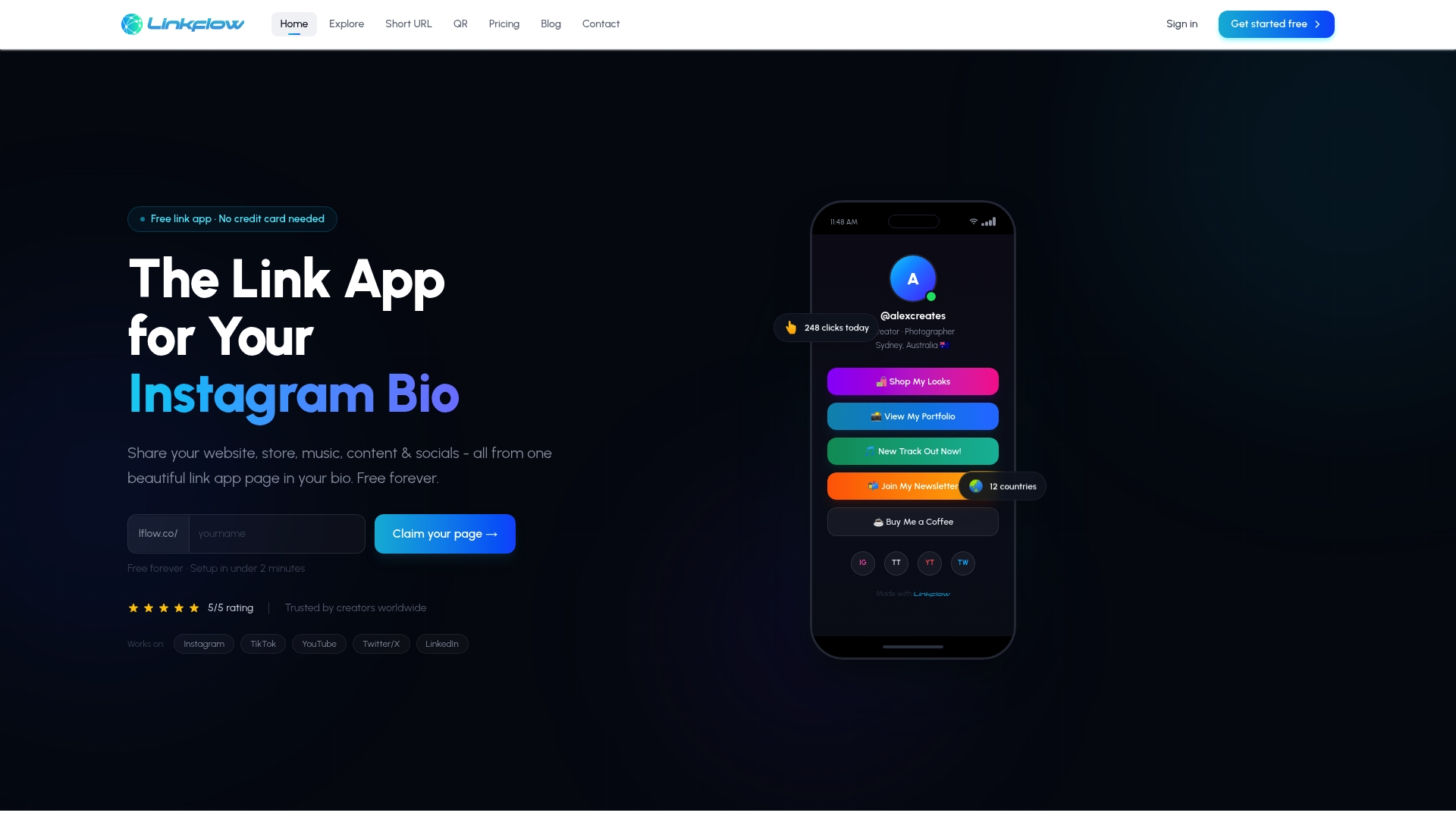
Lflow gives you a single branded URL that connects your Instagram, TikTok, YouTube, and LinkedIn to your store, newsletter, and any other destination. You can set it up in under two minutes with free link in bio templates built for creators and marketers. Lflow also generates a free QR code for every profile, so your offline promotions connect directly to your digital hub. Real-time analytics show you which links your audience actually clicks, so you can adjust your strategy based on behavior rather than guesswork. For social media professionals building for 2026, a clean, trackable link in bio is not optional. It is the foundation.
FAQ
What is the top-performing content format in 2026?
Short-form video is the top format in 2026, with video up 49% year over year according to HubSpot. Instagram Reels, YouTube Shorts, and TikTok receive the strongest algorithmic support of any content type.
How widely is AI used in social media marketing now?
94% of social media marketers use AI in their workflows in 2026, up from 71% a year ago. The standard practice is using AI for drafts and scheduling while keeping a human voice in the final content.
What do social media users actually want to see in 2026?
40% of users want educational posts and 27% want community-focused content, according to Sprout Social. Promotional content without utility or community value is the least requested type.
How does social search differ from traditional SEO?
Social search indexes captions, bios, and spoken words within videos on platforms like TikTok and Instagram. Unlike traditional SEO, it rewards natural language questions and conversational phrasing over keyword density.
Why are micro-creators preferred over mega-influencers in 2026?
Micro-creators with 10,000 to 100,000 followers generate higher engagement rates because their audiences are more focused and trust their recommendations more. Longer-term partnerships with micro-creators build stronger brand association than one-off sponsored posts.