

Influencer marketing tools are specialized software platforms that manage the entire influencer campaign lifecycle, from creator discovery to ROI measurement, in one centralized system. The industry term for this category is "influencer marketing software," and understanding what it actually does separates brands that run profitable campaigns from those that burn budget on guesswork. The role of influencer marketing tools goes far beyond finding creators. These platforms automate outreach, track performance in real time, and connect influencer activity directly to sales data. For marketing professionals, small business owners, and content creators, the right software turns a chaotic, spreadsheet-driven process into a measurable growth channel.
What is the role of influencer marketing tools in campaign management?
Influencer marketing software handles discovery, outreach, contract and payment management, and real-time ROI tracking in one dashboard. That consolidation eliminates the back-and-forth between email threads, spreadsheets, and separate analytics tabs that slows most teams down.
The operational benefits are concrete. Centralizing influencer measurement workflows reduces reporting time by 25% and can cut budgets by 20%. Some organizations have achieved productivity gains worth $310,000 annually by tracking performance more tightly and removing underperforming creators from their programs.
Here is what a well-configured influencer platform automates:
- Creator discovery: Search databases ranging from 1 million to over 200 million profiles across Instagram, TikTok, YouTube, and LinkedIn
- Outreach sequencing: Send personalized campaign briefs at scale without manual copy-paste
- Contract and payment management: Generate agreements and process creator payments inside the platform
- Campaign dashboards: Monitor engagement rates, reach, and conversions across all active campaigns in one view
- Performance reporting: Pull automated reports instead of building them manually each week
Managing a program with dozens of creators across multiple platforms without software is not just slow. It creates gaps where underperformers go unnoticed and top creators get under-resourced.
Pro Tip: Set a performance threshold inside your dashboard before a campaign launches. Flag any creator whose engagement rate drops below your baseline automatically, so you catch problems in week one, not week six.
How does AI-powered influencer discovery change campaign outcomes?
AI changes influencer selection from a gut-feel process into a data-driven one. Brands using AI-driven influencer matching and performance modeling see a 14.3% increase in ad recall and a 41% rise in sales. Those are not marginal improvements. They reflect what happens when creator selection is based on audience overlap, content relevance, and predicted conversion rates rather than follower count alone.
Predictive analytics is the feature that separates entry-level platforms from enterprise-grade software. Instead of evaluating a creator after a campaign ends, AI models forecast performance before you commit budget. The system analyzes historical post data, audience demographics, and category affinity to estimate reach and conversion probability.
- Audience authenticity scoring: AI flags accounts with inflated follower counts or low genuine engagement before you sign a contract
- Content relevance matching: Natural language processing scans a creator's past posts to confirm topical alignment with your product
- Performance forecasting: Predictive models estimate expected impressions, clicks, and conversions based on comparable past campaigns
- Lookalike discovery: AI identifies creators with audience profiles similar to your best-performing past partners
AI functions as a multiplier in influencer marketing operations. It handles volume and data processing at a scale no human team can match. But human expertise remains essential for top-tier talent selection and campaign strategy. The brands that win are the ones that use AI to filter and rank, then apply human judgment to make the final call.
The cross-platform campaign management challenge is where AI earns its cost most clearly. Running creators across Instagram, TikTok, and YouTube simultaneously generates more data than any analyst can process manually. AI consolidates that data and surfaces the signals that matter.
Authenticity, transparency, and ethics in influencer software

Transparency is not a soft value. Disclosure of AI use in influencer marketing, such as labeling a creator as "AI-selected," positively affects consumer trust with a measurable positive influence score of B = 0.295. That means telling your audience how you chose a creator actually increases their confidence in the recommendation rather than reducing it.
Authenticity drives the same outcome from the creator side. Audiences can detect when a partnership feels forced or misaligned. Influencer software helps brands avoid that problem by matching creators based on genuine content history and audience values, not just reach metrics.
Ethical influencer campaigns require attention to several specific practices:
- Disclose AI involvement: Label AI-assisted creator selection in campaign briefs and, where relevant, in public-facing content
- Verify creator consent: Confirm that creators understand how their data and performance metrics are used inside your platform
- Audit for bias: AI matching models can reflect historical biases in creator selection. Review your discovery criteria regularly to avoid systematically excluding certain creator demographics
- Follow FTC guidelines: The Federal Trade Commission requires clear disclosure of paid partnerships. Your software should flag any content that lacks proper disclosure language
Building brand trust through ethical marketing practices compounds over time. A single undisclosed AI-assisted campaign that surfaces publicly can erase months of credibility.
Pro Tip: Add a disclosure checklist to your campaign brief template inside your influencer platform. Require creators to confirm FTC-compliant language before content goes live, not after.
How does tool integration improve influencer marketing ROI?
Influencer marketing software produces its best results when it connects directly to your existing tech stack. Failure to integrate influencer tools with CRM or e-commerce platforms leads to fragmented reporting and poor sales attribution. You end up knowing how many people saw a post but not how many of them bought something.
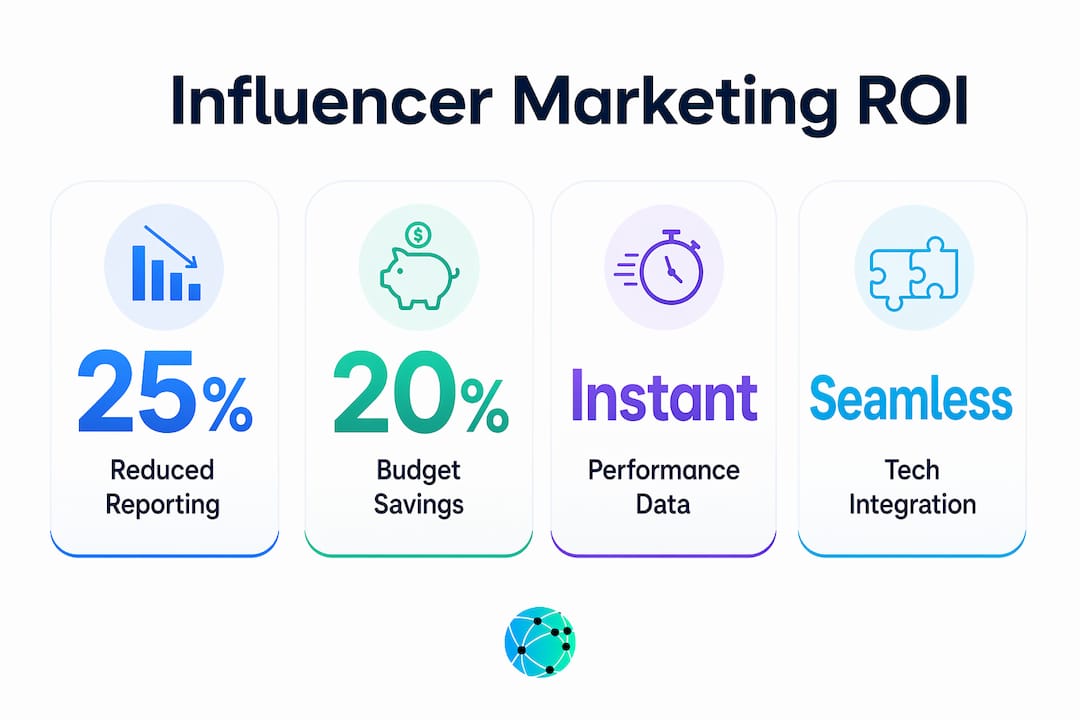
Integration closes that gap. When your influencer platform connects to Shopify, for example, you can trace a customer's path from a creator's post to a product page to a completed purchase. That end-to-end view is what makes influencer marketing defensible in a budget conversation.
| Integration type | What it connects | Business benefit |
|---|---|---|
| E-commerce (Shopify) | Creator posts to product sales | Direct revenue attribution per creator |
| CRM (Salesforce, HubSpot) | Influencer contacts to customer records | Lifetime value tracking for influencer-sourced customers |
| Analytics (Google Analytics) | Campaign traffic to site behavior | Full-funnel conversion visibility |
| Social APIs | Platform data to campaign dashboards | Real-time performance without manual exports |
The brands that treat influencer software as a standalone tool miss most of the value. The platforms that offer AI-powered outreach assistants, Shopify integrations, and predictive analytics in one system give marketing teams a single source of truth for campaign performance.
What features should you prioritize when choosing influencer marketing software?
No single influencer tool fits every program. The right choice depends on your brand's scale, campaign complexity, and the specific bottlenecks slowing your team down. A small business running two to three creator partnerships per quarter needs different capabilities than an enterprise managing hundreds of creators across global markets.
Core features to evaluate in any platform:
- Discovery database size and openness: Verify whether the platform uses open-web discovery or a closed marketplace. Closed ecosystems restrict your creator pool and introduce selection bias
- Fraud detection: Look for audience authenticity scoring that flags fake followers and bot-driven engagement before you commit to a creator
- CRM and relationship management: Track communication history, past campaign performance, and contract status for every creator in one place
- Contract and payment tools: Platforms that handle agreements and payments internally reduce legal overhead and payment delays
- Analytics depth: Prioritize platforms that report on engagement rate, reach, conversions, and earned media value, not just impressions
For small business owners, entry-level platforms with strong discovery and basic analytics cover most needs. Enterprise programs require predictive modeling, multi-user access, and deep integration with internal data systems. Matching the tool to your actual program size prevents overpaying for features you will not use and underinvesting in the ones you need most.
The social profile optimization layer matters too. Creators with well-structured profiles and clear link destinations convert at higher rates. Software that surfaces this data during discovery gives you a more complete picture of a creator's commercial effectiveness.
Key Takeaways
Influencer marketing software delivers measurable ROI only when it connects discovery, performance tracking, and tech stack integration into one accountable system.
| Point | Details |
|---|---|
| Centralization cuts costs | Unified dashboards reduce reporting time by 25% and can cut campaign budgets by 20%. |
| AI improves selection accuracy | AI-driven matching increases ad recall by 14.3% and can drive a 41% rise in sales. |
| Transparency builds trust | Disclosing AI involvement in creator selection measurably increases consumer trust. |
| Integration enables attribution | Connecting influencer tools to CRM and e-commerce platforms links creator activity to actual sales. |
| Tool choice must match program scale | Entry-level platforms suit small programs; enterprise tools require predictive analytics and deep integrations. |
The human factor that software cannot replace
I have watched brands invest in enterprise-grade influencer platforms and still run mediocre campaigns. The software was not the problem. The mistake was treating the tool as a strategy rather than an execution layer.
AI handles volume. It scores thousands of creators in seconds, forecasts performance, and flags fraud. What it does not do is understand why a particular creator's audience trusts them, or whether a brand partnership will feel authentic to that community. That judgment call still belongs to a person.
The teams I have seen run the best influencer programs use software to eliminate the 80% of work that is repetitive and data-driven. They spend the time they save on relationship management, creative direction, and iterative testing. They treat their top creators as long-term partners, not transactional vendors. That relationship quality shows up in content that performs above forecast.
My honest advice: evaluate your influencer software every six months. Programs evolve, platforms add features, and the tool that fit your needs at 10 creators may create friction at 100. The brands that treat tool selection as a one-time decision eventually find themselves working around software rather than with it.
— Axion
Lflow's link tools for your influencer campaigns
Influencer campaigns generate traffic. Where that traffic lands determines whether it converts. Lflow gives creators and brands a single, branded URL that consolidates every destination, from product pages to social profiles to campaign-specific content, into one mobile-optimized hub.
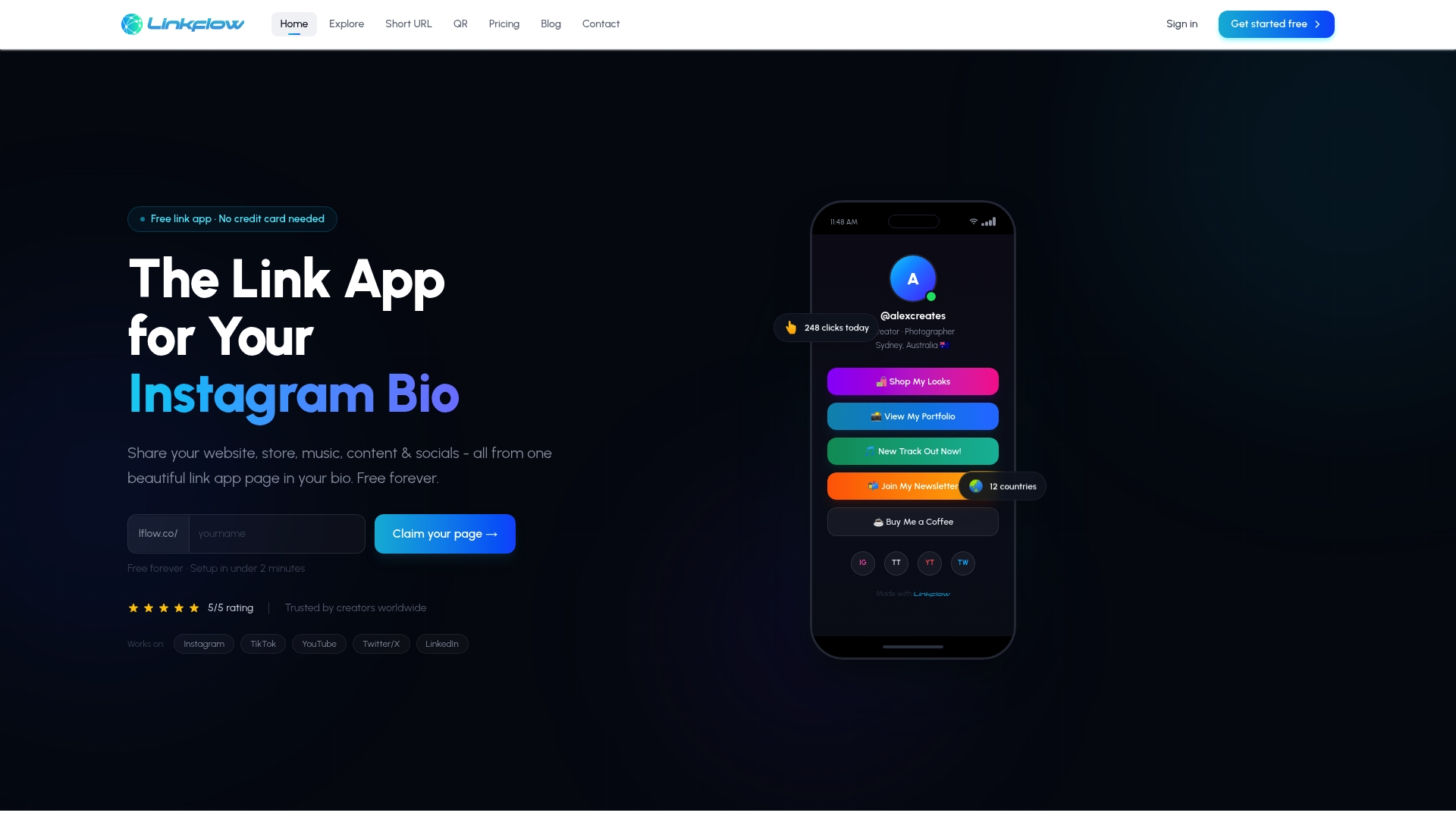
Setup takes under two minutes, and Lflow's real-time analytics show exactly which links your audience clicks after a creator drives them to your profile. The platform's free link in bio tool pairs directly with influencer campaigns on Instagram, TikTok, YouTube, and LinkedIn, giving you a clean, trackable destination for every piece of creator content. Free QR codes extend that tracking offline. If you run influencer campaigns and your bio link is not working as hard as your creators are, Lflow fixes that gap immediately.
FAQ
What is influencer marketing software?
Influencer marketing software is a platform that centralizes creator discovery, outreach, campaign management, and performance measurement in one system. Databases in leading platforms range from 1 million to over 200 million creator profiles.
How do influencer tools improve ROI?
Centralizing measurement workflows reduces reporting time by 25% and can cut campaign budgets by 20%, while AI-driven creator matching increases ad recall and sales conversion rates.
Why does AI matter in influencer discovery?
AI scores creators on audience authenticity, content relevance, and predicted performance before you spend budget. Brands using AI-driven matching see a 14.3% increase in ad recall and a 41% rise in sales.
What ethical rules apply to AI-powered influencer campaigns?
The FTC requires clear disclosure of paid partnerships, and research shows that disclosing AI involvement in creator selection measurably increases consumer trust rather than reducing it.
How do I choose the right influencer marketing tool?
Match the platform to your program scale. Small programs need strong discovery and basic analytics. Enterprise programs require predictive modeling, fraud detection, and integration with CRM and e-commerce systems.