

Online presence consolidation is the process of unifying your digital platforms, profiles, and links into a single, coherent identity that search engines and real people can recognize and trust. Scattered profiles, mismatched bios, and outdated contact details all signal unreliability to both Google and your audience. Knowing how to consolidate online presence is the difference between being found and being ignored. This guide walks you through the exact prerequisites, step-by-step execution, and common pitfalls that determine whether your consolidation effort builds lasting authority or just adds more noise.
What do you need before consolidating your online presence?
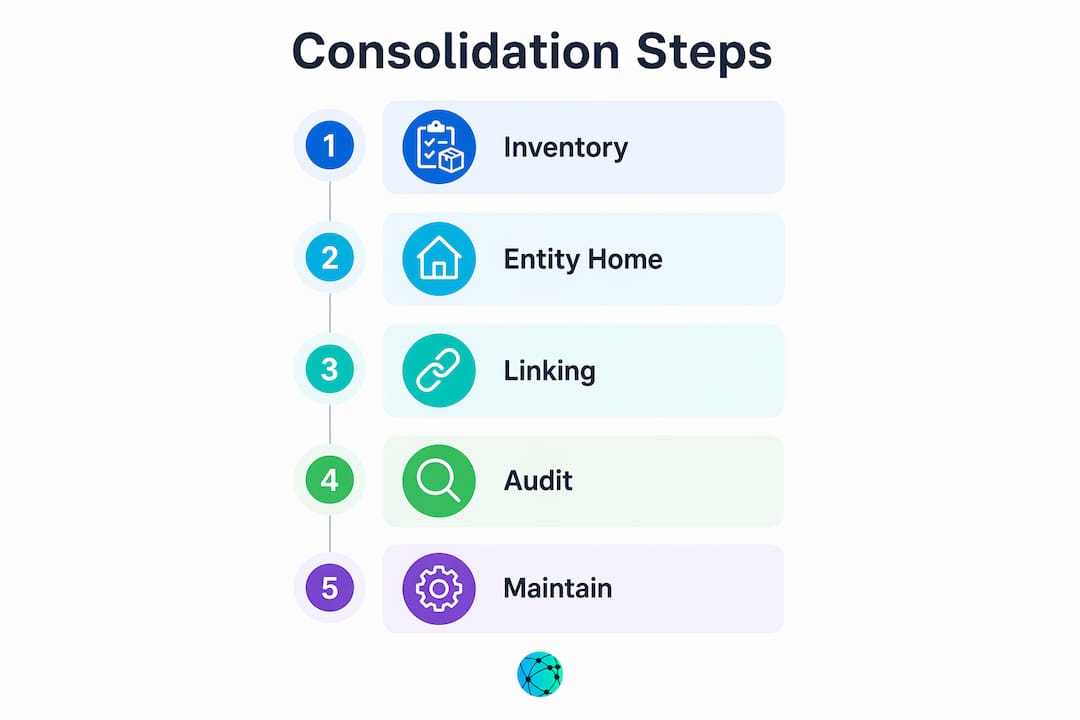
Consolidation starts with a full inventory, not a redesign. Brand experts recommend diagnosing your current fragmented footprint before making any design or content updates. Jumping straight into a visual refresh without knowing what signals your profiles already send is one of the most expensive mistakes you can make.
Build your digital asset inventory
List every platform where your name or brand appears. Include usernames, profile URLs, email addresses tied to each account, and the date you last updated each one. A simple spreadsheet works fine. The goal is a complete picture, not a polished one.
Your inventory should capture at least these categories:
- Social profiles: Instagram, TikTok, YouTube, LinkedIn, Twitter/X, Facebook
- Business listings: Google Business Profile, Yelp, industry directories
- Content platforms: Medium, Substack, podcast directories, guest post bylines
- E-commerce and link pages: Shopify stores, product pages, bio link pages
- Owned properties: Your primary website, any microsites or landing pages
Establish your Entity Home first
Establishing a central "Entity Home" that search engines trust is the foundation of consolidation, not an afterthought. Your Entity Home is the one URL, typically your website or a branded profile page, that all other profiles point back to. Without it, you are building a web with no center.

Security matters here too. Before touching any profiles, confirm you have current login credentials for every account. Enable two-factor authentication on each one. Update any software or plugins on your website. A consolidation effort that leaves old accounts unsecured creates new vulnerabilities.
Pro Tip: If you cannot recover access to an old account, use the platform's official deletion request process rather than leaving it dormant. Dormant accounts are identity risks.
The right tools make inventory management faster. A centralized link management dashboard lets you control all your URLs from one place instead of logging into a dozen platforms separately.
How do you execute a step-by-step consolidation process?
The consolidation process has six distinct phases. Skipping any one of them produces a partial fix that degrades over time.
-
Run a quarterly 5-layer audit. A quarterly audit cycle scores each profile from 0 to 5 across five dimensions: name consistency, photo currency, bio accuracy, contact detail alignment, and link validity. Any profile scoring below 3 needs immediate attention. Any profile scoring 0 or 1 is a candidate for deletion.
-
Prune inactive and duplicate accounts. Deleting dormant accounts is more effective than manually updating all of them. Use bulk-deletion tools where platforms offer them. A leaner footprint is a stronger one.
-
Standardize your core identity signals. Your profile photo, primary handle, and contact information must be identical across every active platform. Photos older than two years should be refreshed. Outdated photos erode trust faster than most creators realize, especially on professional networks like LinkedIn. Professional imagery matters more than most people expect. Consistent, professional visuals are a core signal of credibility across every platform.
-
Synchronize headlines and bios. Your job title or brand descriptor should read consistently across platforms, even if the tone shifts slightly. A LinkedIn headline and a TikTok bio can sound different while still communicating the same core identity. Consistency in substance, not in word-for-word copying, is the goal.
-
Create bidirectional links between profiles and your Entity Home. Every active profile should link back to your Entity Home. Your Entity Home should link out to every active profile. Using sameAs Schema markup on your Entity Home wires all profiles into a credible ecosystem, signaling to search engines that they belong to a unified entity. This is what triggers Google Knowledge Panel creation.
-
Centralize your link management. Centralized link management systems let you update your entire online presence from a single dashboard, improving conversion tracking and cutting administrative overhead. When you change a URL or add a new platform, you update it once and every profile reflects the change. This is where tools like Lflow's link in bio pages pay off directly.
Pro Tip: Schedule your quarterly audit on the same date each quarter, such as the first Monday of january, april, july, and october. Treat it as a fixed business task, not an optional review.
What are common mistakes when consolidating your online presence?
Most consolidation efforts fail not because the strategy is wrong, but because execution skips the diagnostic phase.
Diagnosing your current footprint before redesigning anything is the single most important step. Consistent brand presentation can increase revenue by up to 33%, but only if the consistency is built on an accurate picture of what already exists. Redesigning before diagnosing is like repainting a house with a cracked foundation.
The most common mistakes follow a predictable pattern:
- Skipping the audit and going straight to redesign. New visuals on top of a fragmented identity do not fix the fragmentation. They just make it look prettier.
- Over-standardizing to the point of sounding robotic. Standardizing only core identifiers, such as your photo, handle, and primary link, while adapting your bio tone to each platform's culture, produces better results than copying the same text everywhere.
- Ignoring the E-E-A-T framework. SEO in 2026 prioritizes E-E-A-T, which assesses consistency and authority signals across your digital footprint. A fragmented identity dilutes those signals and hurts both search rankings and AI-generated visibility.
- Treating consolidation as a one-time project. Quarterly audits become an ongoing discipline that catches identity drift, stale content, and inconsistent signals before they compound. One audit is a start. Quarterly audits are a system.
- Leaving old accounts unsecured instead of deleting them. An abandoned profile with your name on it is a liability, not a neutral presence.
How does consolidating your online presence improve visibility and authority?
Consolidation produces a measurable "halo of authority." Appearing consistently across search and social reduces marketing costs and increases customer engagement by building recognition and trust over time. Recognition is what turns a first-time visitor into a repeat buyer.
Search engine confidence and E-E-A-T
Consistency across 12 or more authoritative domains with bidirectional linking to a central Entity Home significantly improves Google's confidence in your online identity. That confidence shows up as higher rankings, Knowledge Panel eligibility, and stronger AI-generated search visibility. The E-E-A-T framework rewards exactly this kind of structured, consistent authority.
Marketing efficiency and conversion tracking
A consolidated presence cuts the cost of every marketing campaign you run. When your audience already recognizes your name, photo, and handle across platforms, you spend less on awareness and more on conversion. Centralized dashboards reduce time spent updating dozens of platform URLs, which directly improves marketing efficiency.
Conversion tracking also becomes far more accurate. When all traffic flows through a single link hub, you can see exactly which platforms drive clicks, sales, and sign-ups. Fragmented links produce fragmented data. Centralized links produce clear attribution.
Platform-specific content with a unified core
The most effective creators and brands build a strong online brand by keeping core identity signals fixed while adapting content format to each platform. A YouTube video, an Instagram Reel, and a LinkedIn article can all serve different audiences while pointing back to the same Entity Home. That structure is what makes a consolidated presence feel natural rather than copy-pasted.
Pro Tip: Use your centralized link page as the single URL in every bio, every email signature, and every offline QR code. One URL to update means zero broken links across your entire presence.
A single authoritative brand identity established before platform expansion is what separates brands that grow with authority from those that grow with noise.
Key Takeaways
A consolidated online presence built on a trusted Entity Home, consistent core signals, and centralized link management is the most direct path to improved search visibility, lower marketing costs, and stronger audience trust.
| Point | Details |
|---|---|
| Audit before redesigning | Run a quarterly 5-layer audit scoring profiles 0–5 before changing any visuals or content. |
| Build your Entity Home first | Establish one trusted central URL that all active profiles link back to before expanding. |
| Standardize core signals only | Keep photo, handle, and primary link identical everywhere; adapt bio tone to each platform. |
| Centralize link management | Use a single dashboard to control all URLs and update your entire presence in one action. |
| Treat audits as ongoing discipline | Schedule quarterly reviews to catch identity drift and stale content before they compound. |
Why I think most people consolidate in the wrong order
The standard advice is to "clean up your profiles and make them consistent." That is not wrong, but it puts the cart before the horse. Every creator or business I have seen struggle with consolidation made the same mistake: they started with the visible layer, the photos, the bios, the color palette, before they understood what their current footprint was actually signaling.
The Entity Home concept changed how I think about this entirely. You cannot wire profiles into a credible ecosystem if there is no center to wire them to. A website with sameAs Schema markup is not a technical nicety. It is the load-bearing wall of your entire digital identity. Build it first, then connect everything else to it.
The quarterly audit discipline is the other piece most people skip after the first round. Identity drift is slow and invisible until it is not. A bio that made sense in 2024 can actively confuse your audience by 2026 if your positioning has shifted. Catching that early costs nothing. Fixing it late costs credibility.
The brands and creators I have seen build real authority online are not the ones with the most platforms. They are the ones with the fewest active profiles, the clearest Entity Home, and the most consistent core signals. Less, done right, outperforms more, done carelessly, every time.
— Axion
Lflow makes centralized link management simple
Managing dozens of profile links manually is where most consolidation efforts break down. Lflow gives you a single, branded link in bio page that holds all your URLs, from your website and store to your social profiles and content, so every platform always points to the right place.
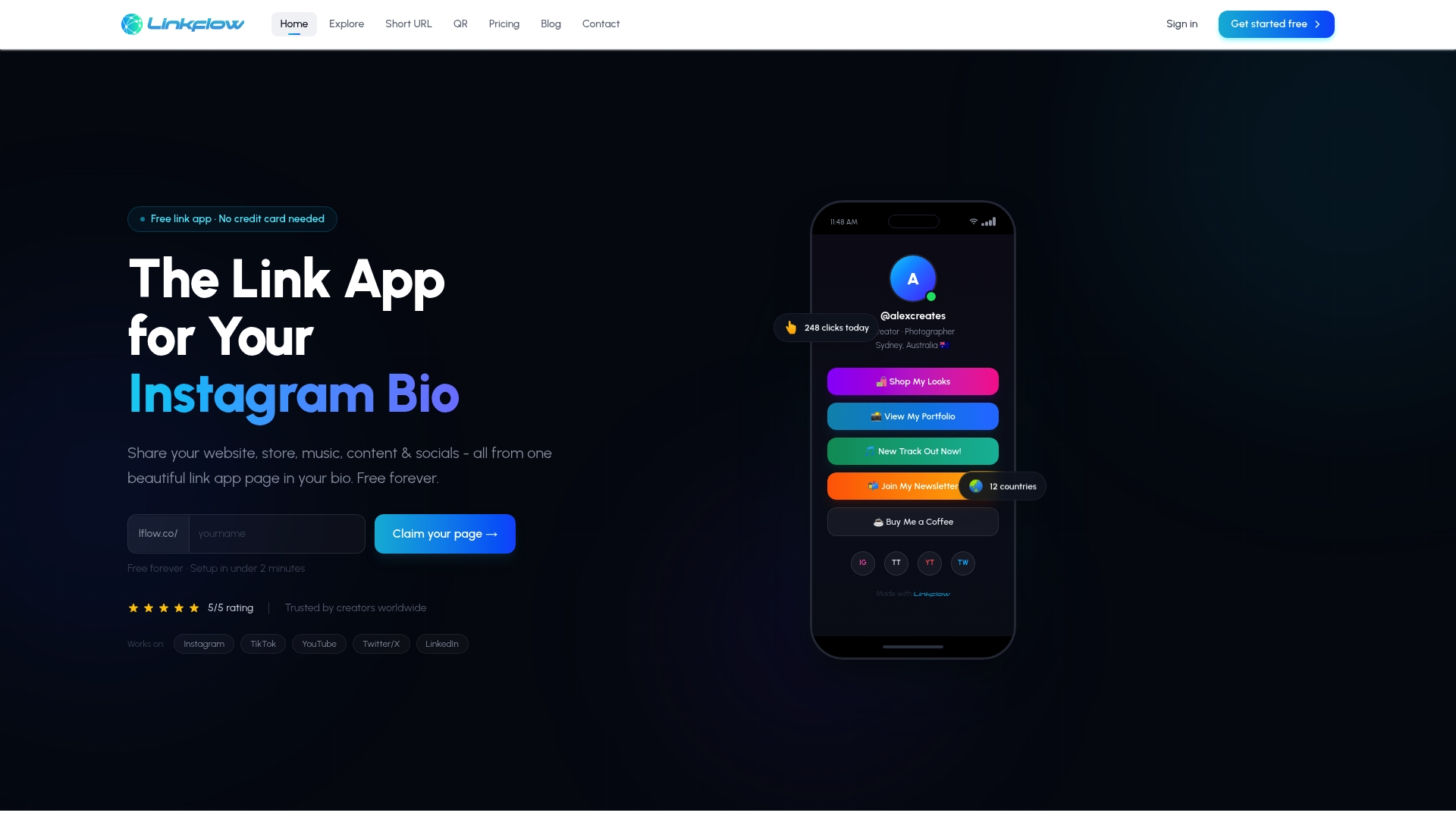
Lflow's free link in bio tool includes unlimited links, a free QR code generator for offline promotion, a built-in URL shortener, and real-time analytics so you can see exactly which links drive traffic. Setup takes under two minutes. When you update a link in Lflow, every bio that uses your Lflow URL reflects the change instantly. No manual edits across a dozen platforms. That is how centralized link management fits directly into the consolidation workflow you just built.
FAQ
What is online presence consolidation?
Online presence consolidation is the process of unifying your digital profiles, platforms, and links around a single, consistent identity and a central Entity Home. The goal is to make your brand recognizable and trustworthy across every channel.
How often should I audit my online presence?
A quarterly audit cycle is the standard best practice. Auditing every three months catches identity drift, stale photos, and broken links before they damage your search visibility or audience trust.
What is an Entity Home and why does it matter?
An Entity Home is the one authoritative URL, typically your website, that all your other profiles link back to. Search engines use it to confirm that your profiles belong to a single, credible entity, which improves rankings and Knowledge Panel eligibility.
Does a consolidated presence actually improve SEO?
Yes. The E-E-A-T framework that Google uses in 2026 rewards consistent authority signals across your digital footprint. Fragmented profiles dilute those signals, while a consolidated identity strengthens them.
How does a link in bio page help with consolidation?
A link in bio page acts as a portable Entity Home for social platforms. It centralizes all your URLs into one link, so updating one page updates your presence everywhere that link appears.