

A fragmented online presence costs you real business. Retail brands with unified digital experiences see a 25% higher conversion rate, while disconnected systems drive administrative overhead up by 30–40%. Consolidating and aligning your digital channels, what you might call digital presence optimization, means every touchpoint tells the same story, earns more trust, and converts more visitors. Here is exactly why it matters.
Why streamlining your digital presence is essential
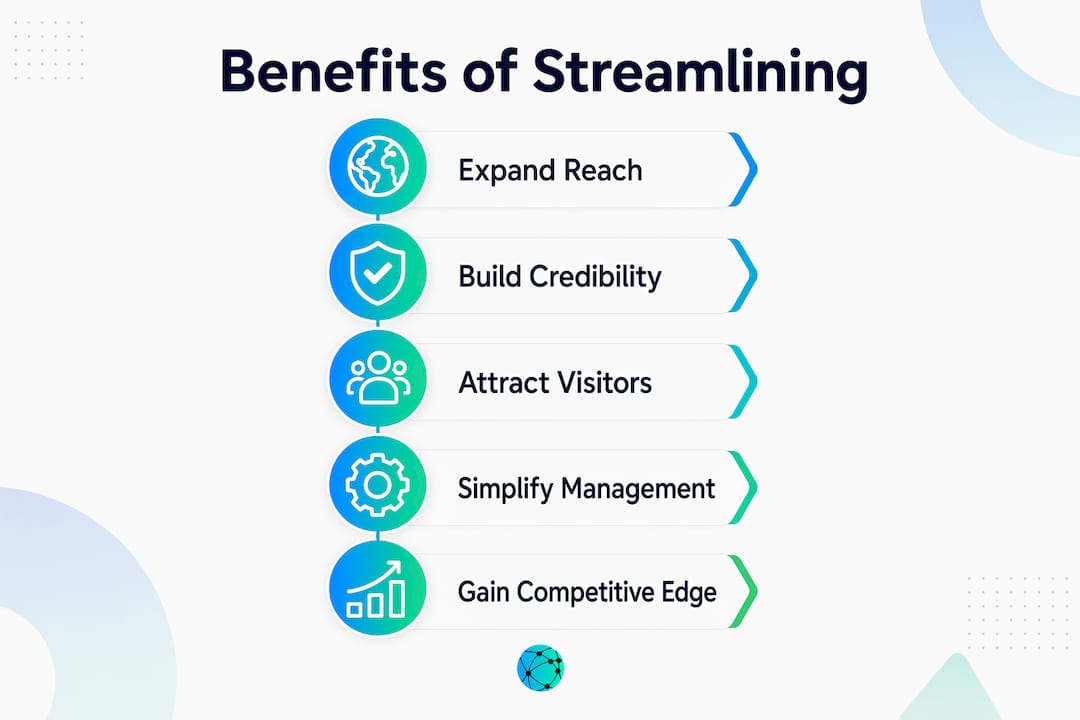
A unified digital presence means every channel you own, your website, social profiles, ads, and email, delivers the same message, the same visuals, and the same brand voice. When those pieces align, visitors move through your funnel faster because they are not second-guessing whether they landed on the right brand.
The benefits show up fast:
- Brand consistency across all channels reduces confusion and builds recognition
- Higher conversion rates because visitors trust what they see
- Lower operational costs from managing fewer, better-maintained assets
- Stronger user experience that keeps people on your pages longer
Fragmentation, on the other hand, signals disorganization. A prospect who finds mismatched logos, conflicting contact details, or a different tone on each platform will simply leave.
1. How a unified presence expands your audience and extends reach
Consistent messaging across platforms compounds your visibility. When your website, Instagram, LinkedIn, and email campaigns all reinforce the same core value proposition, each channel amplifies the others instead of competing with them.

Audiences discover brands through multiple touchpoints before they ever convert. A prospect might see your LinkedIn post, visit your website, and then find you again through a Google search. If each of those experiences feels cohesive, your brand sticks. If they feel disconnected, you lose the thread.
Key ways a unified presence extends reach:
- Cross-channel reinforcement increases brand recall at every stage of the buyer journey
- Consistent SEO signals across your website and profiles improve organic discoverability
- Aligned paid and organic messaging reduces wasted ad spend on confused audiences
- Unified social bios give every platform visitor a clear next step
Pro Tip: Focus on two or three high-impact channels first. Master them before expanding. A strong website, one active social platform, and a consistent email presence outperform six half-managed accounts every time.
Spreading yourself across every platform without a coherent strategy dilutes your message. Multiple platforms work best when they all point back to a central hub.
2. Building credibility and making a strong first impression
Your digital presence is your first handshake with a potential client or customer. Mismatched branding, an outdated bio, or conflicting information across platforms signals that you are not paying attention, and that doubt transfers directly onto your product or service.

Consistent brand voice and visuals reinforce legitimacy. When someone finds you on Instagram and then visits your website, the experience should feel like the same conversation, not a jarring switch. Inconsistent information actively harms SEO and erodes consumer trust, two things that compound against you over time.
What a credible, unified profile looks like in practice:
- Matching profile photos and logos across every platform
- The same business description on your website, Google Business Profile, and social bios
- A consistent tone, whether formal or conversational, that never shifts between channels
- Up-to-date contact details that match everywhere a customer might look
By 2026, 73% of customers expect personalized, consistent brand experiences across every touchpoint. Meeting that expectation starts with getting the basics right: same name, same logo, same story.
3. Creating awareness, attracting visitors, and gaining a competitive edge
A clear, consistent presence makes your brand easier to find and harder to forget. Search engines and AI discovery tools favor brands that present the same information reliably across their website, directories, and social profiles. Search and AI algorithms treat consistency as a trust signal, which means a unified presence directly improves your rankings.
Brands that consolidate their messaging also convert awareness into leads more efficiently. When every channel points visitors toward the same clear call to action, you stop losing people to confusion mid-funnel.
How a focused presence drives competitive advantage:
- Better SEO performance from consistent NAP (name, address, phone) data and unified content signals
- Higher lead quality because targeted, consistent messaging attracts the right audience
- Stronger brand recall that keeps you top of mind when a prospect is ready to buy
- Resilience against algorithm changes because focused digital strategies on high-performance channels outperform scattered approaches
Brands that try to be everywhere without a coherent strategy end up invisible in the places that matter. Focused omnipresence, showing up reliably on the channels your audience actually uses, beats volume every time.
4. Key strategies to build and maintain a focused digital presence
Getting your presence aligned is not a one-time project. It requires a system. The brands that do it well treat their digital footprint as a living asset that needs regular attention, not a set-it-and-forget-it task.
Centralize your brand assets. Keep one master document with your logo files, brand colors, approved copy, and messaging guidelines. Every platform update pulls from that single source. A single source of truth for brand information cuts administrative overhead by 30–40% and keeps your voice consistent without extra effort.
Audit your channels regularly. Old hours, outdated photos, and stale bios create confusion and hurt your search rankings. Set a quarterly reminder to review every platform where your brand appears.
Focus on high-impact channels. Not every platform deserves equal attention. Identify where your audience actually spends time and put your energy there. A strong website, one or two active social profiles, and a consistent email list will outperform a sprawling presence across ten platforms.
Use analytics to guide decisions. Track engagement, click-through rates, and conversions by channel. Drop what is not working. Double down on what is. Tools like Google Analytics and platform-native dashboards give you the data to make those calls confidently.
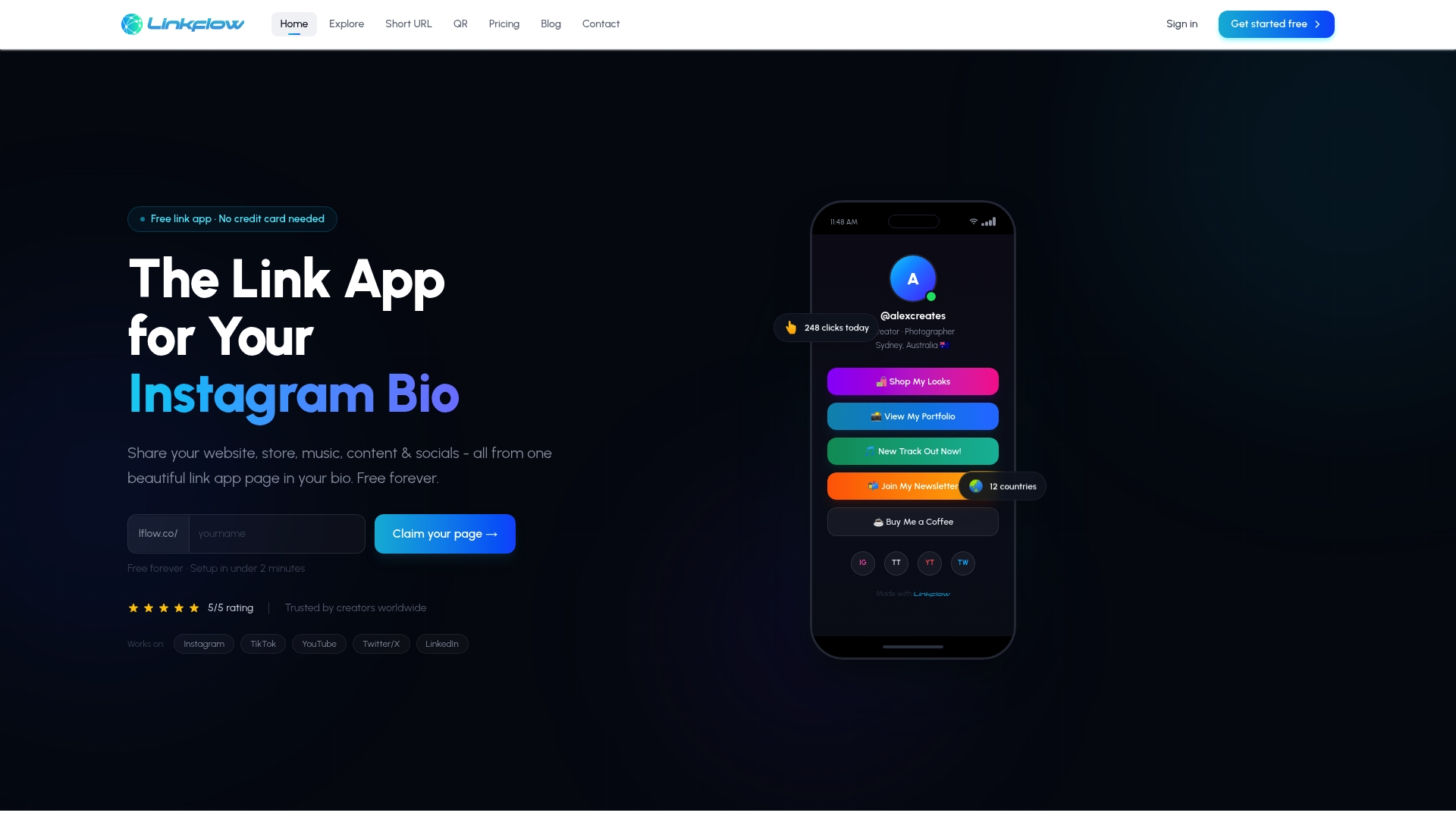
Use a link hub to unify your social bio. Platforms like Instagram and TikTok limit you to one bio link. A branded link page from Lflow consolidates all your destinations, from your website to your store to your latest content, into one clean URL. It takes under two minutes to set up and gives every visitor a clear path forward. You can also explore social media consolidation as a broader strategy for keeping your profiles aligned.
Pro Tip: Use Lflow's real-time analytics to see exactly which links your audience clicks most. That data tells you which content and channels deserve more of your attention.
5. The competitive edge of consolidating your digital presence
The research on this is consistent. Brands that unify their digital presence outperform fragmented competitors on conversion, trust, and operational efficiency.
A 25% higher conversion rate. Retail businesses with consistent online experiences convert at that rate compared to brands with disconnected channels. Administrative overhead, meanwhile, climbs by 30–40% when systems are not integrated.
What the evidence points to:
- Customer expectations are rising. By 2026, personalized, unified journeys are what 73% of customers expect, not a bonus feature
- AI and search engines reward consistency. Clarity and reliability across your digital footprint are now ranking factors, not just branding preferences
- Focused strategies outperform sprawl. Minimalist digital approaches concentrated on high-performance channels protect brands against algorithm shifts and platform instability
- Centralized brand management saves time. A single source of truth for your brand assets eliminates redundant updates and keeps every channel current without doubling your workload
- Consolidated content pages outrank thin ones. Single authoritative pages that cover a topic comprehensively perform better in both traditional search and AI answer engines than multiple thin variations
The brands winning online in 2026 are not the ones with the most platforms. They are the ones whose presence feels intentional, consistent, and easy to trust. That is a strategic choice, not a budget question.
6. Why simplifying content management pays off
Content sprawl is one of the most common and costly mistakes brands make. When you publish thin, overlapping pages across multiple platforms without a central strategy, you split your authority, confuse your audience, and create a maintenance burden that grows faster than the value it produces.
Treating your website as a content hub solves this. Instead of creating separate content for every channel from scratch, you build one strong piece and distribute it. A blog post becomes a LinkedIn article, a series of social posts, and an email newsletter. That approach reduces redundant output and builds a library of SEO-friendly assets that compound in value over time.
Consolidating service pages works the same way. Single, comprehensive pages that cover a topic thoroughly outperform multiple thin variations for both search rankings and AI answer engine visibility. When you stop fragmenting your content, you concentrate authority instead of diluting it.
For creators and brands managing multiple social profiles, a tool like Lflow makes this concrete. One branded link page replaces the chaos of updating five different bios every time something changes. Pair that with a client portal for delivering organized, on-brand experiences to clients, and you have a content management setup that actually scales without adding overhead.
The practical payoff is straightforward: fewer assets to maintain, stronger signals to search engines, and a cleaner experience for every visitor who finds you.
Key Takeaways
A unified digital presence drives measurably better conversion rates, stronger brand trust, and lower operational costs than a fragmented approach across disconnected channels.
| Point | Details |
|---|---|
| Conversion rate impact | Consistent online experiences drive a 25% higher conversion rate for retail businesses. |
| Administrative savings | A single source of truth for brand assets cuts administrative overhead by 30–40%. |
| Customer expectations | By 2026, 73% of customers expect personalized, consistent experiences across every brand touchpoint. |
| Focus over volume | Concentrated presence on high-performance channels outperforms scattered strategies and resists algorithm changes. |
| Content hub approach | Centralizing content on your website reduces redundant output and compounds long-term SEO authority. |
Get your digital presence working as one
Lflow gives creators, brands, and business professionals a single branded link page that consolidates every destination, from your website and store to your social profiles and latest content, into one clean, professional URL. Setup takes under two minutes. Real-time analytics show you exactly what your audience clicks. Free QR codes extend your reach offline.
Start with a free link in bio page today, or browse ready-made templates to find a design that fits your brand.