

A social media hub is a centralized platform that combines content from multiple social channels into one unified space, giving creators and businesses a single point of control over their digital presence. The importance of social media hubs becomes clear when you look at the numbers: centralized hubs reduce operational workloads by up to 80% through mission control management and CRM integration. For content creators, influencers, and small business owners, that kind of efficiency is the difference between growing an audience and burning out trying to manage one. Hubs also enforce brand consistency across Instagram, TikTok, YouTube, LinkedIn, and Twitter/X simultaneously. The industry term for this approach is "social media aggregation," but the practical result is simple: one place to manage everything that matters.
Why the importance of social media hubs is growing fast
Social media is no longer just a communication tool. It has become the center of gravity for public discourse, brand influence, and audience power. Brands and creators who lack a unified hub cede control over their digital reach to platform algorithms they cannot manage. A hub changes that dynamic by putting you back in the driver's seat.
The shift is also driven by how audiences now use social platforms. Social video ad spend in 2026 is growing faster than Connected TV, which signals that audiences treat social feeds as entertainment destinations, not bulletin boards. That means creators and businesses need infrastructure that can handle diverse content types, from short-form video to live streams to static posts, all from one place. A hub provides exactly that infrastructure.

Without a hub, most creators default to reactive posting. They log into each platform separately, respond to comments in isolation, and have no clear picture of which content actually drives business results. A hub replaces that scattered approach with a system.
How social media hubs improve audience engagement and connection
Engagement is not just about likes. Active, meaningful engagement on social media significantly improves well-being and community belonging, while passive scrolling does the opposite. A hub helps creators build the kind of intentional content environments that encourage real interaction rather than mindless consumption.
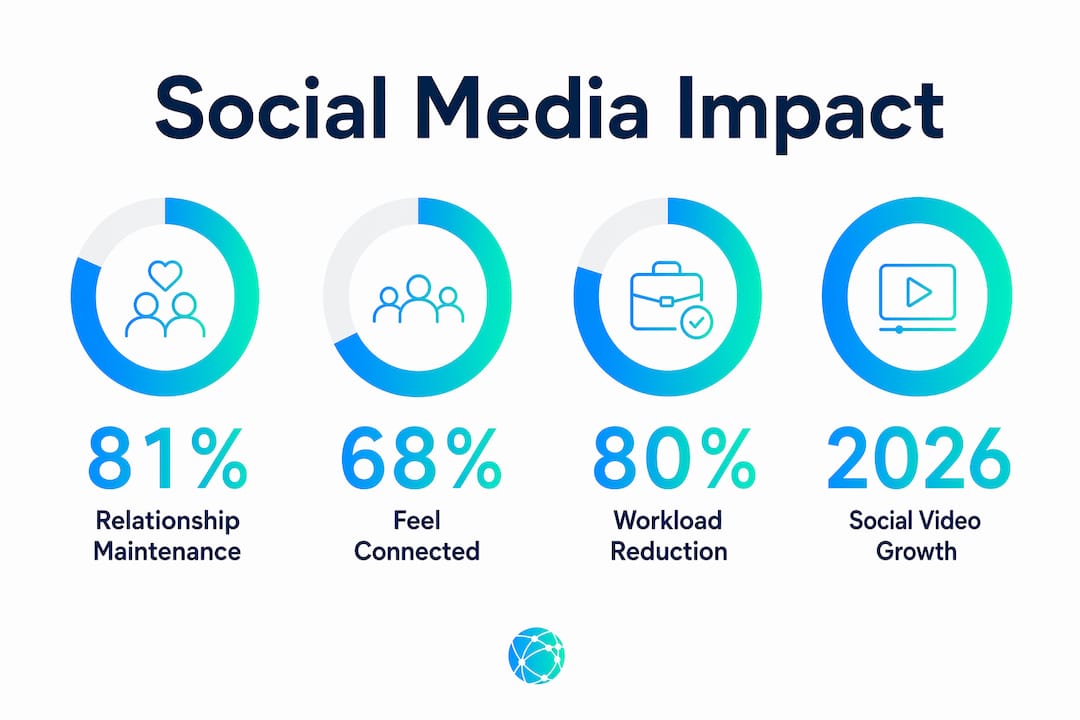
The data on connection is striking. 81% of adults report that social media helps them maintain relationships, and 68% say it increases their sense of connection to communities of interest. Those numbers reflect what happens when social media is used with purpose. A hub gives creators the tools to be purposeful, not reactive.
Hubs also make it easier to direct followers to the right content at the right time. Instead of hoping an algorithm surfaces your best post, you control the path. A single branded link sends your audience to a curated page with your store, your latest video, your newsletter, and your community, all organized for them.
Pro Tip: Use your hub's analytics to identify which linked destinations get the most clicks, then feature those links prominently on your hub page. Audience behavior tells you what they actually want, not what you assume they want.
- Respond to comments across platforms from one dashboard rather than switching between apps.
- Pin your highest-converting content at the top of your hub page each week.
- Use your hub link in every bio, email signature, and offline QR code to create a consistent entry point.
Pro Tip: Treat your hub page like a storefront window. Update it weekly to reflect your current priorities, whether that is a new product, a trending video, or an upcoming event.
What operational advantages do social media hubs offer?
Managing multiple social channels without a hub is like running a business from five different offices with no phone system connecting them. The workload reduction that hubs deliver, up to 80%, comes from eliminating that fragmentation. That figure represents real hours recovered every week.
The operational gains break down into four concrete areas:
- Centralized scheduling. You plan and publish content across Instagram, TikTok, YouTube, and LinkedIn from one calendar. No duplicate effort, no missed posting windows.
- Unified monitoring. Comments, mentions, and direct messages from every platform appear in one feed. You respond faster and miss nothing.
- Consolidated analytics. Reach, engagement, and click data from all channels appear in one report. You see the full picture instead of platform-specific fragments.
- CRM integration. Linking social posts directly to CRM lets you identify which posts drive revenue versus which ones just generate impressions. That distinction is what separates data-driven growth from vanity metric chasing.
The CRM connection deserves extra attention. Most creators track followers and likes because those numbers are easy to see. A hub connected to a CRM shows you which Instagram post led to a product sale, which TikTok video drove newsletter signups, and which LinkedIn article generated a business inquiry. That is the information that actually shapes budget and content decisions.
Without a hub, small business owners often discover too late that their most-liked posts generate zero revenue. With a hub, you catch that pattern in week two, not month six.
What is Interest Channel Architecture and why does it matter?
Interest Channel Architecture is a content organization framework that groups your social media presence by audience interest clusters rather than by platform accounts. Instead of thinking "my Instagram account" and "my TikTok account," you think "my cooking content" and "my business advice content," then distribute each cluster across whichever platforms serve that audience best.
Interest clusters outperform traditional platform-centric strategies because they align with how audiences actually discover and follow content. People follow topics, not platforms. A creator who organizes content by interest cluster reaches more of the right people with less total output.
Most creators focus on content volume rather than distribution architecture. That is the mistake that limits reach. Posting more on Instagram does not fix a structural problem. Organizing your content by what your audience cares about does.
| Strategy type | Content organization | Primary metric | Hub role |
|---|---|---|---|
| Traditional platform-centric | By platform account | Follower count | Passive link list |
| Interest Channel Architecture | By audience interest cluster | Engagement within cluster | Active traffic director |
A hub enables Interest Channel Architecture by giving you one URL that routes different audience segments to the content most relevant to them. Your cooking followers click through to your recipe videos. Your business followers land on your consulting page. The hub does the sorting. Conversion from content to customer becomes the metric that matters, not raw follower counts.
How are brands adapting to social media as an entertainment hub?
Social media feeds have become entertainment destinations. Brands must rethink social media's role as entertainment hubs to build emotional connections rather than relying on traditional advertising outreach. Brand health is now linked to cultural resonance, not follower counts or impression volume.
That shift has direct implications for how creators and small businesses should use their hubs:
- Produce native content, not repurposed ads. Content that feels native to a platform's entertainment format outperforms content that looks like a banner ad dropped into a feed.
- Centralize diverse formats. A hub that connects short-form video, live stream replays, and long-form articles gives your audience multiple ways to engage with the same brand story.
- Measure cultural resonance. Track saves, shares, and comment sentiment alongside clicks. Those signals tell you whether your content is connecting emotionally, not just reaching eyeballs.
- Act like a media company. The most effective creators in 2026 think of themselves as publishers with a content calendar, not posters with a phone.
A hub supports all four of these shifts by giving you a single place to organize and direct your content output. When your audience lands on your hub page, they see a curated media brand, not a scattered collection of links. That perception gap between organized creators and disorganized ones is widening every month.
Key Takeaways
Social media hubs are the most direct path from scattered posting to a measurable, organized digital presence that converts audience attention into business results.
| Point | Details |
|---|---|
| Workload reduction | Centralized hubs cut operational workload by up to 80% by eliminating platform switching and duplicate effort. |
| Engagement quality | Active hub-based engagement improves community belonging and well-being, unlike passive scrolling. |
| CRM integration | Linking your hub to a CRM reveals which posts drive revenue, replacing vanity metrics with real business data. |
| Interest Channel Architecture | Organizing content by audience interest clusters outperforms platform-centric strategies for reach and engagement. |
| Entertainment shift | Social feeds are now entertainment hubs, requiring native content strategies and cultural resonance as success metrics. |
The mistake most creators make with their hub
Most creators set up a hub page, add five links, and never touch it again. That is treating a hub as a static business card instead of a live mission control center. I have seen this pattern repeatedly, and it is the single biggest reason creators fail to get ROI from their hub.
The creators who get real results treat their hub as a weekly priority. They update links to reflect current campaigns, check analytics to see what their audience is clicking, and use that data to decide what content to make next. That feedback loop is what makes a hub genuinely valuable. Without it, you have a pretty page that does nothing.
The deeper issue is that most creators still think in terms of platforms rather than audience interests. They ask "what should I post on Instagram this week?" instead of "what does my cooking audience need right now, and where are they most likely to see it?" Interest Channel Architecture fixes that thinking, but only if you use your hub to implement it deliberately.
My honest advice: spend 20 minutes every Monday reviewing your hub analytics. Look at which links got clicked, which ones were ignored, and what that tells you about your audience's priorities. Then update your hub accordingly. That one habit separates creators who grow from creators who plateau.
— Axion
How Lflow helps creators build a real social media hub
Creators who want to put these ideas into practice need a hub that does more than collect links.
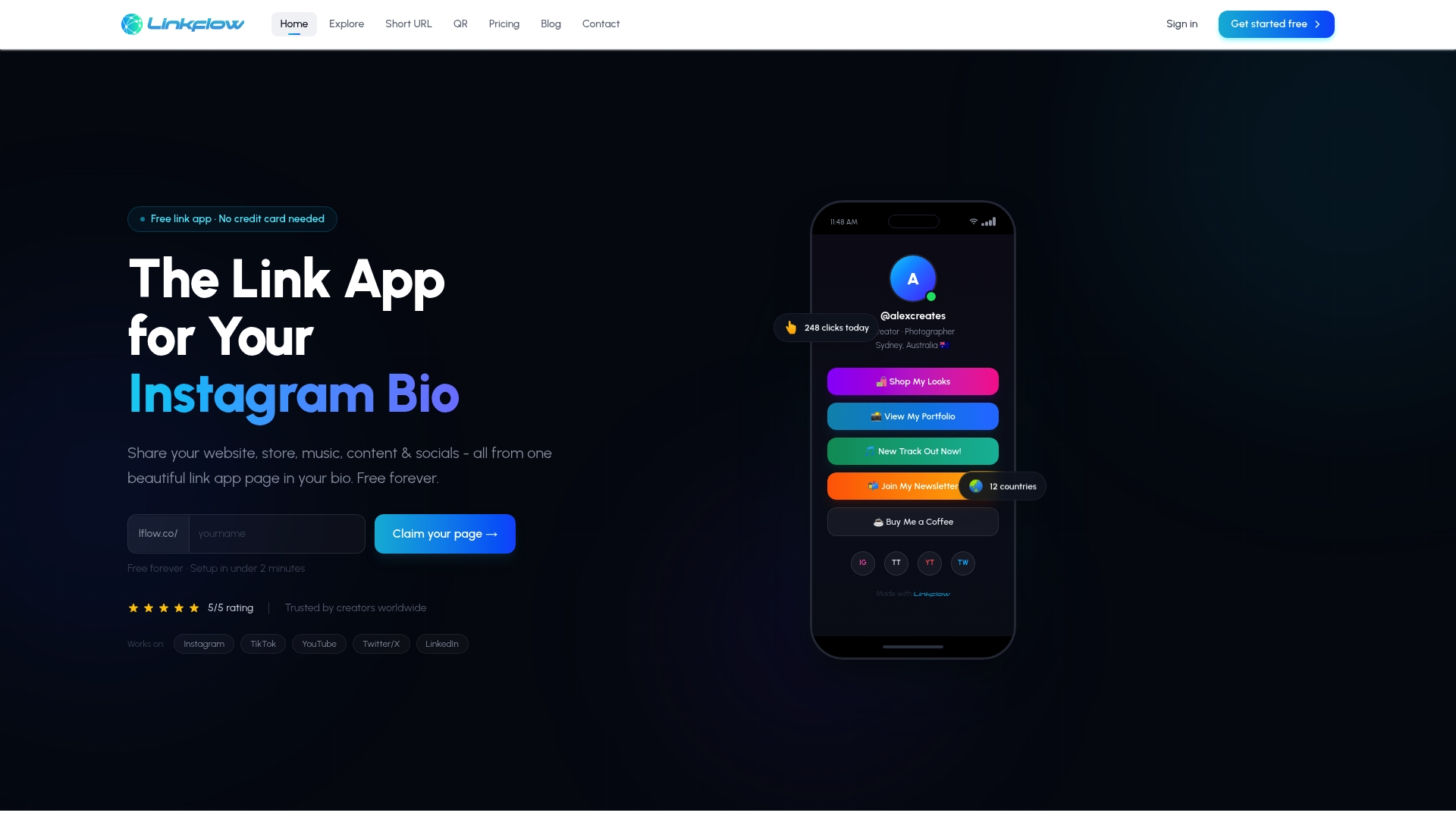
Lflow gives you a free link in bio page with unlimited links, real-time analytics, and a free QR code for offline promotion. Setup takes under two minutes. You get full customization over themes, colors, fonts, and custom domains, so your hub looks like a brand, not a template. The analytics dashboard shows you exactly which links your audience clicks, giving you the data to apply Interest Channel Architecture from day one. For creators on Instagram, TikTok, YouTube, and LinkedIn, Lflow functions as the mission control center that ties every channel together into one professional, measurable presence.
FAQ
What is a social media hub?
A social media hub is a centralized platform that aggregates content and links from multiple social channels into one unified space. It gives creators and businesses a single point of control for content distribution, audience engagement, and performance tracking.
How much can a social media hub reduce my workload?
Centralized social media hubs reduce operational workloads by up to 80% by eliminating the need to switch between platforms for scheduling, monitoring, and reporting.
Why does Interest Channel Architecture matter for creators?
Interest Channel Architecture organizes your content by audience interest clusters rather than platform accounts. This approach improves engagement because audiences follow topics, not platforms, and it directs the right content to the right people more efficiently.
How does CRM integration improve social media results?
CRM integration connects your social posts to actual business outcomes like sales and inquiries. It replaces vanity metrics such as likes and follower counts with revenue data, showing you which content is worth repeating.
How does social media's shift to entertainment affect my hub strategy?
As social feeds become entertainment destinations, your hub needs to centralize diverse content formats including video, live streams, and articles. Measuring cultural resonance through saves and shares becomes as important as tracking clicks.