

Social media branding is defined as the strategic practice of shaping how a business or individual is perceived online through a consistent identity across platforms to build trust, recognition, and loyalty. The industry term for this practice is "brand identity management," though "social media branding" is the phrase most creators and businesses use day to day. 72% of consumers are willing to pay more for a brand they trust. That single statistic explains why social media branding has moved from a nice-to-have to a core business function. With global social media use reaching 5.2 billion people, the stakes for getting your brand identity right have never been higher.
What is social media branding and why does it matter?
Social media branding is the sum of every visual, verbal, and behavioral signal your brand sends across platforms like Instagram, TikTok, LinkedIn, YouTube, and X. It includes your profile photo, color palette, caption style, response tone, and the values you express through content. Together, these signals create an emotional association in the minds of your audience. Strong social media branding helps people quickly understand who you are, what you offer, and why they should trust you.
The importance of social media branding goes beyond aesthetics. Social media has become the front door of business. Customers often make purchase decisions based on their social media experience with a brand before they ever speak to a salesperson. A fragmented or inconsistent presence sends the wrong signal at exactly the wrong moment.

Repeated exposure and consistent messaging are necessary for brand recall and customer conversion. People typically need multiple brand impressions before they engage or buy. This means your branding must hold up across dozens of touchpoints, not just your best post of the week.
How do you build a social media brand step by step?
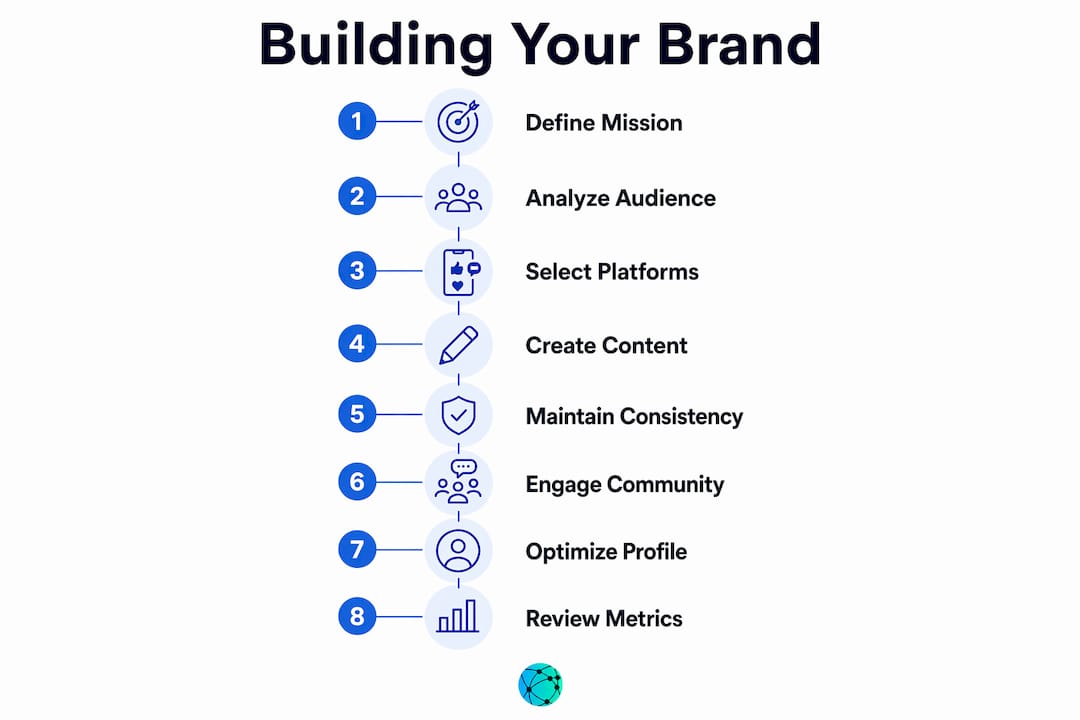
An 8-step process covers the full arc of building a social media brand: define your mission, analyze your audience, select platforms, establish visual and voice identity, set content pillars, build a publishing schedule, optimize your profiles, and commit to ongoing maintenance. Each step compounds the last. Skipping audience analysis, for example, means your content pillars will miss the mark no matter how polished your visuals are.
| Step | Key action |
|---|---|
| Define your mission | Write a one-sentence brand purpose that guides every content decision. |
| Analyze your audience | Identify demographics, pain points, and platform habits before creating content. |
| Select platforms | Choose 2–3 platforms where your audience is most active rather than spreading thin. |
| Establish visual identity | Lock in a color palette, font set, and logo usage rules in a style guide. |
| Set content pillars | Define 3–5 recurring content themes that reflect your brand values. |
| Build a schedule | Publish consistently; erratic posting breaks the trust that repetition builds. |
| Optimize profiles | Write keyword-rich bios, use branded profile images, and add a single link hub. |
| Maintain and adapt | Review performance monthly and adjust without abandoning your core identity. |
Consistency is the non-negotiable rule across every step. Erratic visual or voice changes cause audience confusion, and confused audiences do not convert. Your social media brand strategy should treat every platform as a chapter in the same story, not a separate book.
Pro Tip: Build your style guide before you post a single piece of content. Document your exact hex color codes, approved fonts, and three to five words that describe your brand voice. This takes two hours upfront and saves months of inconsistency later.
Profile optimization deserves special attention. A well-written bio, a consistent profile image, and a single branded link that consolidates your key destinations are the three elements that make your profile work as a 24/7 brand ambassador. Read more on profile optimization tips that drive real results.
How does social media branding differ from traditional marketing?
Traditional advertising is one-directional. A brand publishes a TV spot or print ad, and the audience receives it passively. Social media branding is multi-directional and real-time. Brand reputation is built or dismantled daily via public interaction on platforms. A single comment thread can shift perception faster than a six-figure ad campaign.
This shift changes what "branding" actually requires:
- Community engagement: Responding to comments, DMs, and mentions is now a branding act, not just customer service.
- Sentiment analysis: Monitoring how your audience talks about you reveals gaps between your intended identity and your perceived one.
- Brand equity measurement: Reach and impressions tell you how many people saw your content. Branded search volume and retention tell you whether your brand actually stuck.
- Real-time adaptation: A crisis, a viral moment, or a cultural shift can require a brand response within hours, not weeks.
"Brands that try to script every interaction often fail. Authentic engagement, where the brand listens and responds like a real participant in the conversation, drives growth far more reliably than polished control."
This co-creation dynamic is the defining feature of effective social media branding. Your audience does not just receive your brand. They shape it through their reactions, shares, and conversations. The brands that accept this reality grow. The ones that resist it stagnate.
Best practices for maintaining a strong social media brand identity
Governance is the foundation of a sustainable brand. Brands with documented style guides scale better than those without. A style guide should specify exact hex codes for colors, approved typefaces, image treatment rules, and a defined brand voice with example phrases. This document becomes the single source of truth for every person who posts on your behalf.
- Document your brand voice in writing. Subtle wording changes across platforms significantly affect consumer perception. Write down the words your brand uses and the words it never uses. Share this with every team member or collaborator.
- Adapt to feedback without losing your core identity. Audience preferences shift. Your content formats, posting times, and topics should evolve based on performance data. Your values, visual system, and voice should not.
- Avoid fragmented messaging. Running different tones on different platforms confuses your audience. Your Instagram can be warmer than your LinkedIn, but both should be unmistakably the same brand.
- Audit your profiles quarterly. Check that bios, profile images, link destinations, and pinned content are current and consistent across every platform.
- Consolidate your link presence. A single branded link hub in your bio, rather than a rotating single URL, gives your audience one reliable place to find everything you offer.
Pro Tip: When a platform trend conflicts with your brand voice, skip it. Chasing every format or audio trend dilutes the consistency that makes your brand recognizable. Participate in trends that fit your identity; ignore the rest.
Working with a professional branding studio can accelerate the governance process, especially for businesses building a brand from scratch across multiple platforms.
How do you measure social media branding success?
Follower count is the least useful metric for measuring brand health. Metrics beyond follower reach — branded search volume, sentiment analysis, and audience retention — offer far better insight into whether your branding is actually working.
| Metric | What it tells you |
|---|---|
| Branded search volume | How often people search for your brand by name; a direct signal of awareness and recall. |
| Sentiment score | Whether audience conversations about your brand are positive, neutral, or negative. |
| Audience retention rate | Whether followers stay and engage over time, or arrive and immediately disengage. |
| Comment quality | Whether comments reflect genuine connection or generic reactions to content. |
| Profile link clicks | How often your bio link converts visitors into active audience members or customers. |
Community interaction is the engine of brand equity on social media. A brand that publishes great content but never responds to its audience builds a one-sided relationship. That relationship does not generate the loyalty that justifies a price premium or survives a public mistake.
Ongoing monitoring means setting a monthly review cadence. Check your sentiment trends, your branded search data in tools like Google Search Console, and your top-performing content by saves and shares rather than likes. Saves and shares signal that your content delivered enough value for someone to act on it.
Social media consolidation across platforms also makes measurement cleaner. When your brand identity is consistent, you can compare performance across channels without accounting for identity variables.
Key Takeaways
Social media branding succeeds when consistent identity, documented governance, and genuine community engagement work together across every platform and touchpoint.
| Point | Details |
|---|---|
| Define before you post | Lock in mission, voice, and visual rules in a style guide before publishing any content. |
| Consistency drives recall | Repeated, consistent messaging across platforms builds the trust that converts audiences into buyers. |
| Engagement is branding | Every comment reply, DM, and public response shapes brand perception as much as designed content does. |
| Measure what matters | Track branded search volume, sentiment, and retention rather than follower count or raw reach. |
| Governance scales brands | Documented style guides prevent fragmentation as teams, platforms, and content volume grow. |
The part most brands get wrong about social media identity
Most brands treat social media branding as a design problem. They pick colors, write a bio, and call it done. The brands that actually build lasting recognition treat it as a governance problem.
The hardest part is not creating a brand identity. It is maintaining one when five different people are posting across three platforms under deadline pressure. Without a written style guide and a clear approval process, brand voice drifts. Colors get approximated. Tone shifts between whoever is writing that day. The audience feels the inconsistency even when they cannot name it.
The other mistake I see constantly is confusing authenticity with informality. Authenticity means your brand behaves the same way in a crisis as it does on a good day. It means your values show up in how you respond to a critical comment, not just in your best-performing Reel. Informality is just a tone choice. The two are not the same thing.
The brands I respect most are the ones that have accepted co-creation as a feature, not a threat. They let their community shape the conversation, respond to criticism publicly and honestly, and adjust their content based on what their audience actually wants. That approach builds the kind of brand equity that no ad budget can manufacture.
The future of social media branding belongs to brands that are consistent enough to be recognized and flexible enough to stay relevant. That combination is harder than it sounds, and it starts with writing things down.
— Axion
How Lflow helps you put your brand in one place
Building a consistent brand across Instagram, TikTok, YouTube, LinkedIn, and X is hard enough. Sending your audience to a different link every week makes it harder. Lflow solves the link problem with a free, customizable link in bio page that consolidates all your key destinations into one branded URL.
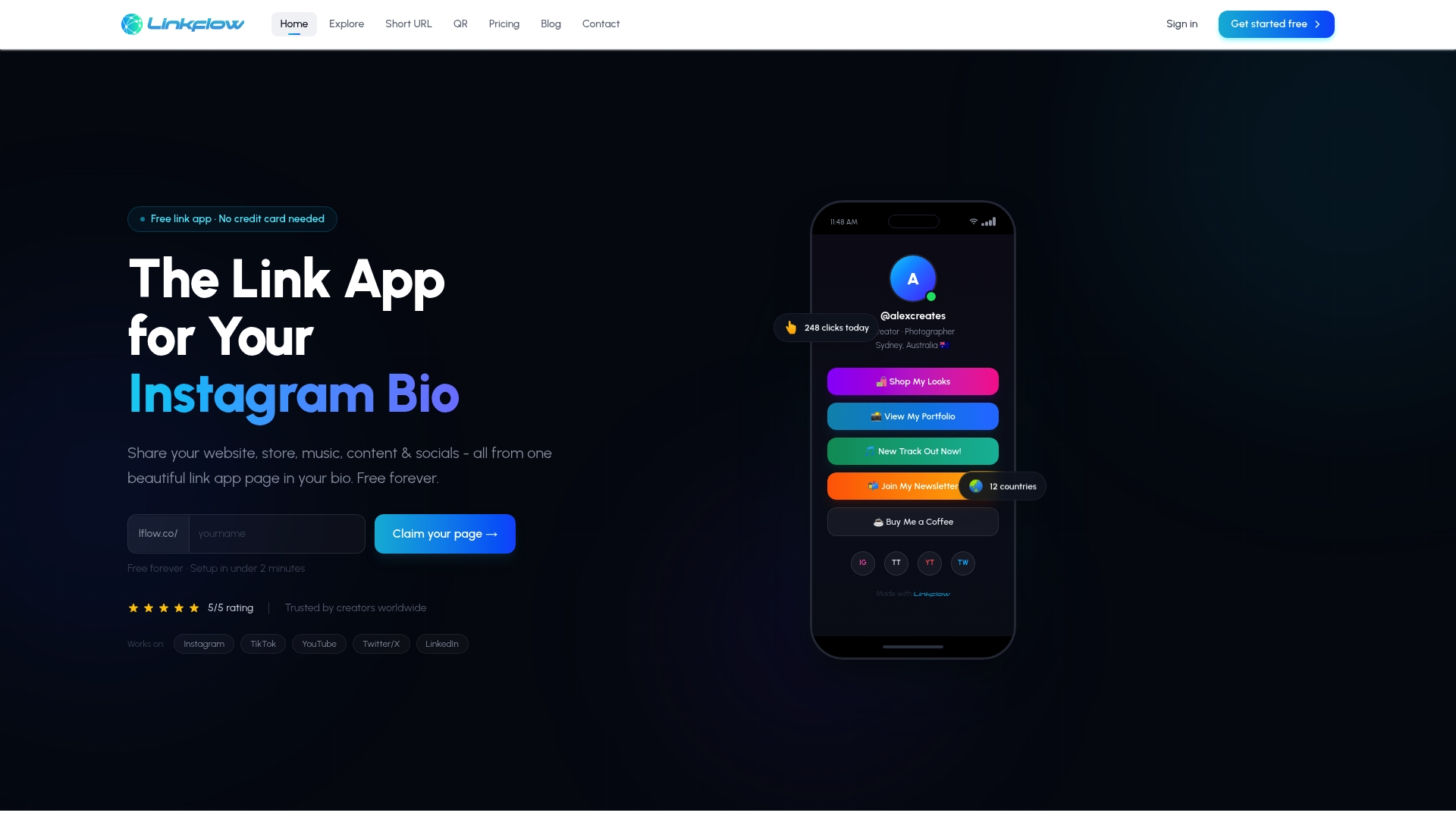
Lflow lets you match your page to your brand's exact colors, fonts, and style in minutes. The setup takes under two minutes, and the result is a professional link hub that works on every device. Real-time analytics show you which links your audience actually clicks, so you can make smarter content decisions. Free QR codes let you extend your brand presence offline without extra tools or cost. For creators and businesses building a brand that holds together across every platform, Lflow is the practical starting point.
FAQ
What is social media branding in simple terms?
Social media branding is the practice of presenting a consistent identity, including visuals, voice, and values, across social platforms to build recognition and trust with your audience.
Why is consistency so important in social media branding?
Consistent messaging and visuals build brand recall because people typically need multiple impressions before they engage or buy. Inconsistency signals unreliability and slows audience growth.
How does social media branding differ from a social media marketing campaign?
A marketing campaign is a time-limited effort to drive a specific action. Social media branding is an ongoing practice of shaping perception and building identity that runs beneath every campaign.
What metrics show that social media branding is working?
Branded search volume, audience sentiment, and retention rates are stronger indicators of branding success than follower count or post reach alone.
How do I start building a social media brand from scratch?
Define your mission and audience first, then document your visual and voice identity in a style guide before publishing any content. Consistent execution from day one is far easier than correcting fragmentation later.