

To measure who clicks the URL in your Twitter/X bio, replace the raw link with a tracked, branded short link tagged with UTM parameters, then read clicks, unique visitors, and CTR in your link dashboard. Watch CTR per link first, since it tells you how much of your profile traffic actually converts into action. Once that number moves, check whether the destination page is turning clicks into signups or sales.
TL;DR:
- Using UTM parameters and branded short links is essential to accurately track bio link clicks and understand visitor behavior.
- Positioning your most important link in the first slot of your bio significantly increases its click-through rate.
- Monitoring device type, traffic source, and conversion rate helps optimize landing pages and improve overall campaign performance.
- Consistently naming and exporting data weekly allows for clearer insights and better evaluation of what works.
- Implementing a dedicated tracking setup like Lflow simplifies analytics, provides real-time data, and enhances campaign decision-making.
Table of Contents
- Twitter Bio Link Analytics: The Metrics That Actually Matter
- How to Set Up Reliable Bio-Link Tracking
- How to Turn Bio Link Data Into Real Decisions
- How Lflow Maps Every Step to a Real Feature
- What Creators Get Wrong About Bio Link Tracking
- Try Lflow's Free Link-in-Bio Page Today
- Sources
Twitter Bio Link Analytics: The Metrics That Actually Matter
Native X doesn't tell you how many people clicked your bio link. Profile visits show up in your X analytics, but the click itself vanishes behind the t.co wrapper the moment someone taps it. That gap is why creators keep guessing at what's working, when the answer is sitting one link away.
Four numbers separate a real analytics setup from a guess: profile visits, bio page views, clicks, and unique visitors. Profile visits count how many people saw your profile at all. Page views count how many of those visitors actually landed on your bio destination. Clicks count total taps on your links, and unique visitors strip out repeat clicks from the same person, which matters if you're judging real reach instead of one enthusiastic fan refreshing the page.
CTR per link is the number to obsess over. Calculate it as clicks divided by page views (or profile visits), multiplied by 100. A single link with 40 clicks out of 2,000 page views tells you almost nothing on its own, but a 2% CTR against a benchmark of 1% to 3% tells you where you stand against typical performance.
Position matters more than most creators assume. The first one to three links on a bio page absorb a disproportionate share of clicks, so what you put in slot one carries more weight than everything below it combined.
Track these alongside CTR:
- Device split: most bio traffic skews mobile, so a desktop-only landing page is leaking conversions
- Traffic source: UTMs separate Twitter clicks from Instagram or newsletter clicks hitting the same page
- Top links: which destinations pull weight, and which are dead weight
- Conversion rate: clicks that turn into signups, purchases, or downloads, not just page visits
Clicks are attention. Conversions are proof the attention paid off.
How to Set Up Reliable Bio-Link Tracking
Getting real numbers takes about ten minutes, and most of that is decision making, not technical work.
- Create a branded short link or link-in-bio page, then paste that single URL into your Twitter/X profile's website field. This is the single biggest fix, since t.co wraps every link shared on the platform and gives you no outbound click data of your own.
- Tag the link with UTM parameters. Use
utm_source=twitter,utm_medium=bio, andutm_campaign=NAMEat minimum. If you post the same link in individual tweets and want to know which tweet drove a click, addutm_contentper tweet for that layer of attribution. - Use a unique slug per campaign instead of reusing one generic link. Something like
yourbrand.co/newsletter-0426keeps each push separated in your dashboard instead of blending into one undifferentiated pile of clicks. - Verify the setup before trusting it. Click your own link, then check the dashboard for clicks, unique visitors, device, referrer, and timestamp. Export a CSV and confirm the row matches what you expect.
- Standardize your naming before you scale. Keep
utm_sourcelocked to "twitter" and reuse the sameutm_mediumandutm_campaignstructure across every post, since inconsistent naming fragments your traffic data into duplicate rows that look like separate sources when they're really the same one.
Pro Tip: Pre-shortening your link before it hits Twitter preserves your analytics even though t.co wraps it again on the platform side. Test this yourself: post a known tracked link, click it from a second device, and confirm the click shows up in your dashboard with the right device and referrer info before you rely on it for a real campaign.
How to Turn Bio Link Data Into Real Decisions
Data without action is just a dashboard you check out of habit. Here's how to make each metric earn its place.
Use CTR and top-link data to reorder your bio, not just admire it. If your second link is outperforming your first, swap them. The position effect is real enough that a low-performing offer in slot one can quietly cap your entire bio page's output.
Run tests for at least a full week, not a day, before deciding anything. Traffic patterns shift with your posting schedule and time zone, and a single viral tweet can distort a 24-hour sample beyond usefulness.
Diagnose low CTR correctly before you change anything. If people click through to your landing page but bounce immediately, that's a landing-page problem: weak headline, slow load, unclear next step. If people barely click the link at all, that's a call-to-action problem, meaning the bio copy or link label itself isn't earning the tap.
Use device and geo splits to adjust the experience, not just the numbers. A mostly-mobile audience needs a mobile-first landing page and thumbnails sized for a small screen, and a geographic cluster you didn't expect might justify shifting your posting time to match their peak hours.
| Signal you see | Likely cause | Action to take |
|---|---|---|
| High CTR, low conversions | Landing page friction | Simplify the page, cut steps |
| Low CTR, high page views | Weak call-to-action copy | Rewrite the bio link label |
| Strong mobile clicks, weak desktop | Layout not optimized for mobile | Redesign for mobile-first |
| One link dominates all others | Position or offer strength | Test moving runner-up to slot one |
To trace a conversion back to its source, match your UTM-tagged click data against whatever tool tracks the actual signup or sale, whether that's an email platform, a checkout tool, or a CRM. The UTM parameters travel with the click, so a consistent naming structure lets you connect a specific campaign slug to a specific downstream result weeks later.
How Lflow Maps Every Step to a Real Feature
Everything above is a workflow. Lflow builds that workflow into the product so you're not stitching together three separate tools to get one clean answer.
- Branded short links and UTM-friendly slugs replace the raw Twitter website field with something you control and can rename per campaign
- Real-time analytics show clicks, unique visitors, device breakdown, and geography as they happen, not on a delay
- CSV export lets you pull raw click data for week-over-week comparison instead of trusting a single day's snapshot
- QR codes generate automatically for the same tracked link, so an offline promotion and your Twitter bio feed the same dataset
- Onboarding takes under two minutes, and the layout is mobile-optimized by default, which matters given how much bio traffic arrives on a phone
Running a campaign slug through Lflow means your Twitter push, your newsletter mention, and your Instagram bio can all point to variations of the same tracked link while staying separable in the dashboard.
The gap between a creator who guesses at what's working and one who knows isn't effort. It's whether their bio link was ever set up to report back in the first place.
What Creators Get Wrong About Bio Link Tracking
Most tracking failures aren't analytical, they're structural. Creators leave the raw, untagged URL in their bio for months, then wonder why the numbers never add up. Others tag some campaigns and skip others, so half their traffic history is unusable for comparison. And almost nobody checks device split until a redesign already broke the mobile experience.
Three fixes cover most of the gap: put your strongest offer in slot one, lock down one UTM naming convention before you post anything else, and export your data weekly instead of reacting to daily swings. A creator who moved their newsletter signup from slot three to slot one, using a consistent utm_campaign name across four weeks of tweets, could finally see whether the offer itself or its placement was holding CTR down. That's the difference tracking is supposed to deliver.
— Axion
Try Lflow's Free Link-in-Bio Page Today
Lflow turns everything in this playbook into a five-minute setup: one branded link, real-time CTR and device data, and a CSV export whenever you want to check your own numbers instead of taking anyone's word for it. If you're still running a raw URL in your Twitter bio, that's the first thing to fix.
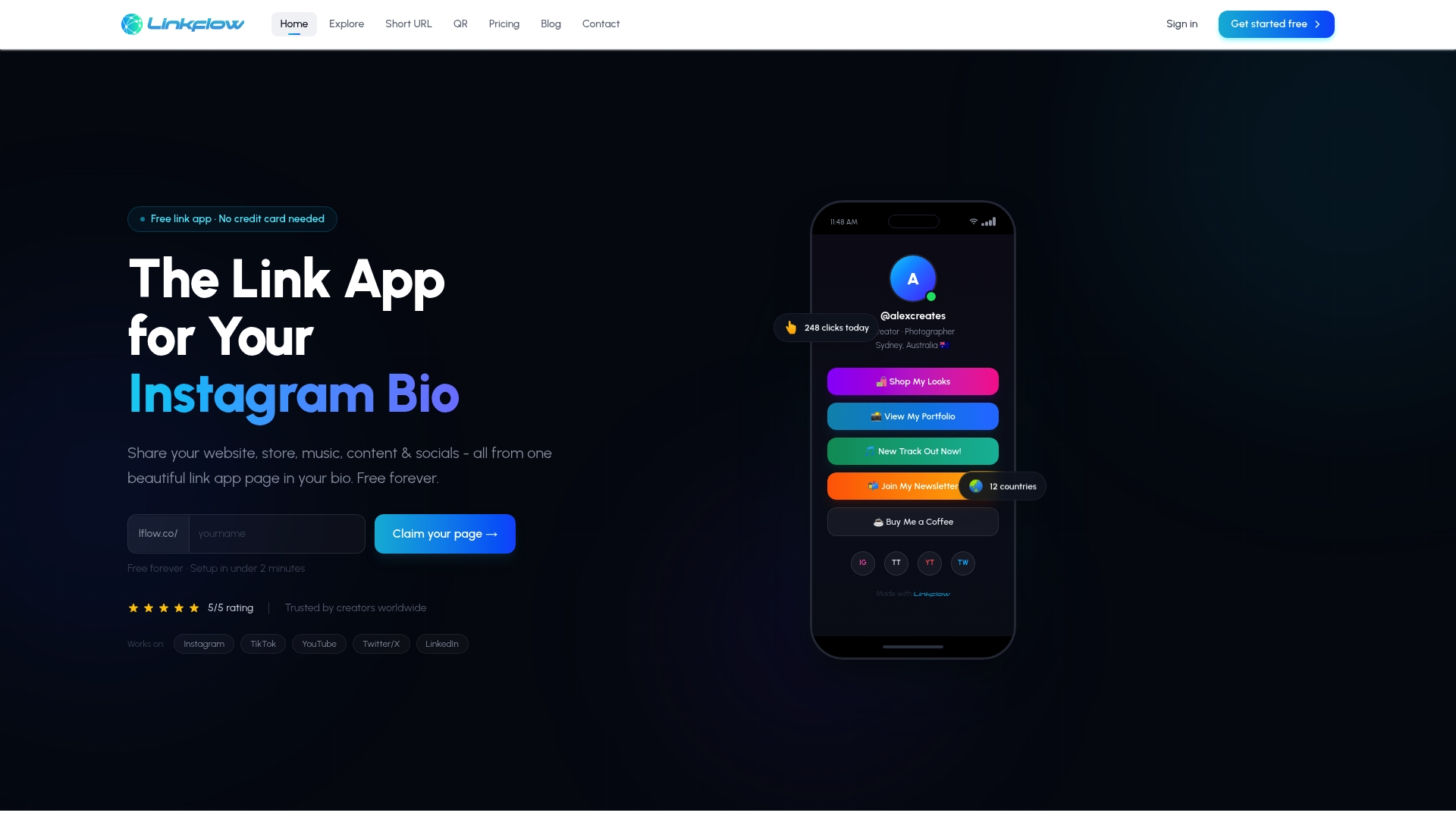
Building your page takes less time than reading this article did. Start your free link-in-bio page and paste your first tracked link into your Twitter bio before your next post goes out. If you only need a short link without the full bio page, Lflow's free URL shortener keeps your UTMs intact and lets you swap the destination later without breaking anything you've already shared.
Sources
For more on preserving analytics past X's link wrapper, see ClickDash's guide to Twitter link shortening. Weely AI breaks down the full metrics list creators should track beyond CTR. And for a broader look at connecting social clicks to website performance, Baby Love Growth's traffic analysis guide covers UTM-based attribution in more depth.
- X (Twitter) Link Shortener — Track & Brand Your URLs — ClickDash
- How to Track Links from Twitter/X - Free Analytics | Track Link