

Link click analytics means capturing who clicked which link, from where, on what device, and when, then using that data to attribute credit correctly and improve performance. The fastest reliable setup pairs redirect-based tracked short links with UTM parameters for cross-channel coverage, layered with GA4 events for internal navigation. A tool like a dedicated link management platform can get that tracked-link layer running in minutes.
TL;DR:
- Redirect tracking is essential for external channels like email, SMS, or QR codes, because referrer data is often stripped elsewhere.
- Unique click counts reveal actual reach, while total clicks may be inflated by bot traffic or repeated visits from the same user.
- Using UTM parameters consistently across all destination URLs improves attribution accuracy and simplifies report reconciliation in GA4.
- Setting up link tracking requires testing in DebugView and validation of raw logs to prevent silent failures or inaccurate data collection.
- Employing a link management platform can streamline creation, tracking, and reporting of tracked short links, saving setup time and reducing errors.
Table of Contents
- What Counts as Link Click Analytics: Your Core Options
- The Metrics That Actually Tell You Something
- How to Set Up Link Click Tracking Step by Step
- Choosing the Right Method for Your Channel
- Making Click Data Work With Your Analytics Stack
- Turning Click Data Into Decisions
- What Most Teams Get Wrong About Link Tracking
- Get Tracked Links Running Today With a Link Management Platform
- Sources
What Counts as Link Click Analytics: Your Core Options
Three technical approaches cover almost every use case, and they are not interchangeable.
Server-side redirect tracking logs a click at the moment someone hits your short URL, before their browser ever reaches the destination. It reads the request headers to log device, referrer, country, and timestamp, and it works regardless of what platform sent the traffic. That is why it is the go-to method for cross-channel link analytics: email and SMS clients strip referrer data, and redirect-layer logging catches the click anyway.
GA4 paired with Google Tag Manager handles the other half of the picture: what happens after someone lands on your site. A GTM link click trigger captures internal navigation and ties it to session-level behavior, which redirect tracking cannot do on its own.
On-page JavaScript listeners fill the gap when you need element-level detail. A few scenarios where each method fits:
- Redirect-based short links: channels outside your own domain, such as email newsletters, SMS, printed QR codes, or third-party marketplaces
- GA4 + GTM events: internal nav bars, in-app CTAs, anything tied to a logged-in session
- On-page JS listeners: tracking specific buttons or widgets buried in a single page template
- UTM tags: the connective layer that lets GA4 recognize a click that started as a short link
The Metrics That Actually Tell You Something
Total clicks and unique clicks answer two different questions, and mixing them up is one of the most common analysis errors marketers make.
Total clicks tell you volume; unique clicks (deduplicated by visitor) tell you actual reach. A link with 400 total clicks but only 90 unique visitors usually means a handful of people are refreshing or re-clicking, not that your audience is large. Click reporting dashboards typically surface both numbers side by side for exactly this reason.
Beyond volume, a handful of dimensions matter most:
- Referrer/source: which platform or email actually drove the click
- Device and browser: mobile versus desktop behavior often diverges sharply on the same campaign
- Country: useful for catching mismatched geo-targeting or fraud
- Timestamp: the raw material for daypart and scheduling decisions
Watch for bot and preview crawlers inflating totals. Slack, iMessage, and some email clients auto-fetch a link to generate a preview card, registering as a click that never happened. Filtering known bot user agents and preview requests before reporting helps keep your numbers accurate, and distinguishes between total reach and engagement metrics.
How to Set Up Link Click Tracking Step by Step
Pick the method that matches your channel, then follow through on testing. Skipping validation is where most tracking setups quietly fail.
GA4 + GTM for internal links:
- In Google Tag Manager, create a new trigger of type "Click, Just Links," scoped to the pages or link patterns you want to track.
- Enable the built‑in Click URL and Click Text variables so GTM captures where the link points and what the anchor text says.
- Build a GA4 event tag (commonly named
link_click), map the Click URL and Click Text variables to event parameters, and attach it to the trigger. - Publish the container in Preview mode and confirm the event fires correctly in GA4 DebugView before pushing live.
Short-link plus UTM for external channels:
- Create a tracked short link for the destination URL.
- Append UTM parameters (
utm_source,utm_medium,utm_campaign) to the destination, using a campaign URL builder to keep formatting consistent. - Test the redirect yourself: check latency, confirm it lands on the right page, and exclude known bot traffic from your click count if the platform allows it.
- Send one real click through and confirm the session shows up correctly attributed in GA4 acquisition reports.
On-page JS listeners for element-level detail:
- Attach a single delegated click listener at the document or container level rather than one listener per element.
- Add deduplication logic so a rapid double-click does not register as two separate events.
- Push a consistent event schema to the
dataLayer(link URL, link text, position) so GTM or GA4 can read it reliably.
Before calling any setup done, run three checks: verify in DebugView, click the link yourself in an incognito window, and pull a small sample export of raw click logs to eyeball against what your dashboard reports.
Choosing the Right Method for Your Channel
Overbuilding your tracking stack wastes time; underbuilding it loses data you cannot recover later.
Reach for short links whenever the channel is outside your own domain: email, SMS, printed QR codes, or a link sitting on someone else's platform. GA4 events make more sense once the click happens on a page you control and you need to connect it to a session or a downstream conversion. The tradeoffs come down to four things:
- Attribution accuracy: redirect logging wins on channels without referrer data
- Privacy and cookie dependence: GA4 events rely on browser-side scripts that consent tools can block
- Implementation cost: short links deploy in minutes; GTM setups need testing cycles
- Measurement coverage: redirect tracking sees the click even if the visitor never loads a page
A fast decision checklist: is the destination on your domain or someone else's? Do you need session-level attribution, or just click counts? Is the channel one where referrer data survives (social, ads) or gets stripped (email, SMS)? Answer those three and the method usually picks itself.
Making Click Data Work With Your Analytics Stack
Raw click counts are close to useless until they connect to the rest of your reporting.
UTM parameters are the bridge. Add them to every destination URL behind a tracked short link so GA4 attributes the resulting session to the right campaign instead of dumping it into "direct" traffic. A consistent naming convention across utm_campaign values and your short-link slugs saves hours later when you are trying to reconcile two reports that use different labels for the same push.
A few habits worth building in early:
- Standardize on lowercase, hyphenated UTM values (
spring-sale, notSpring Sale) so GA4 does not split identical campaigns into duplicate rows - Export raw click logs as CSV when you need to join redirect-layer data with GA4 session data for a full-funnel view
- Note consent status before trying to stitch click identity across platforms; cookie restrictions increasingly limit what you can join client-side
Turning Click Data Into Decisions
Collecting the data is the easy part. Acting on it is where most link programs stall out.
- Segment clicks by referrer and landing page first. This usually surfaces one or two channels quietly outperforming everything else.
- Break clicks down by hour and day of week to find your actual peak engagement windows, then schedule future posts and sends around them instead of guessing.
- Compare total versus unique clicks on the same link. A high total with relatively low unique count usually signals a navigational link (people bookmarking or returning), rather than fresh campaign interest.
- Run a real test: change the CTA copy, swap the placement, or try new creative, and track the full path from click to session to conversion, not just the click count alone.
Pro Tip: *Before you act on a difference between two campaigns, pull the raw click logs and check the sample size.
What Most Teams Get Wrong About Link Tracking
The most common failure isn't a broken tag. It's a link sent out with no UTM parameters at all, usually from email or SMS, which then shows up in GA4 as anonymous direct traffic with no way to trace it back.
Second most common: teams build a beautiful GTM setup for their website and forget the QR code on last month's flyer entirely. Start with tracked short links and UTMs everywhere, because that covers every channel by default. Add GA4 event tracking once you need session-level detail on-site. And write down your naming convention before campaign three, not after campaign thirty, when the link registry has already turned into guesswork.
— Axion
Get Tracked Links Running Today With a Link Management Platform
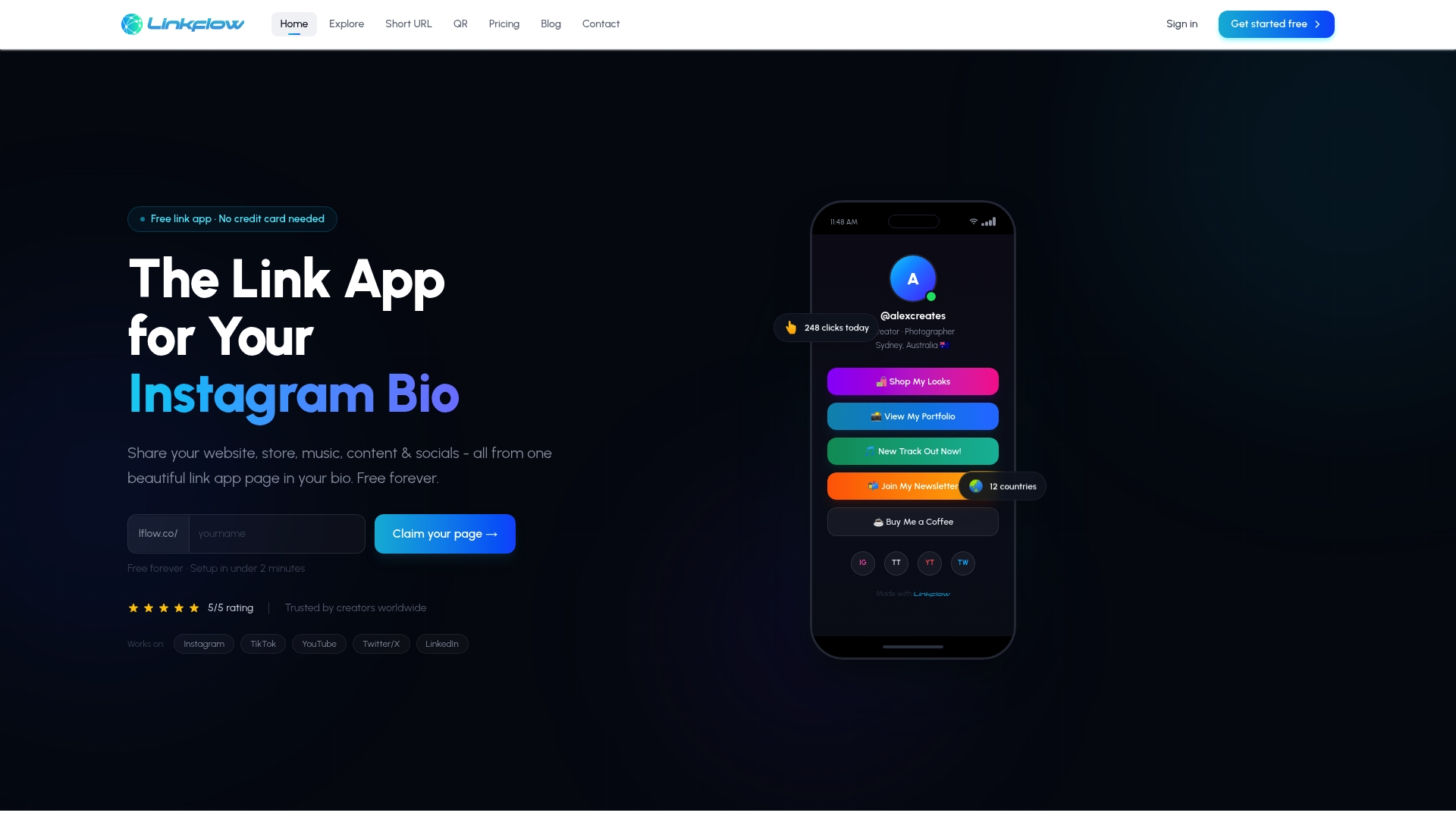
Everything above assumes you're stitching together redirect logging, UTM builders, and GA4 configuration by hand. Some platforms collapse that into one dashboard: create a branded short link, get a real-time click count with device, referrer, and country breakdowns, generate a QR code for print or offline use, and export the raw logs to CSV without touching Google Tag Manager.
UTM parameters attach to your destination URL the same way described earlier, so the click still shows up correctly attributed inside GA4. A link management platform can save time upstream of that: no separate redirect service to configure, no bot-filtering logic to write yourself, no waiting on a developer to add tracking code to a landing page. If you're running an email push, a social bio link, or a printed campaign this month, create a free tracked short link and test it against a single campaign before you build anything more complicated. For deeper reading on connecting click data to campaign strategy, see how to monitor link clicks for campaign attribution.
Sources
- The Complete Guide to Link Analytics in 2026
- How to Track Link Clicks with Google Analytics 4
- Campaign URL Builder — GA Dev Tools
- Track and Analyse Link Click Data | Sprinklr Help Center