

An effective artist marketing checklist is a compact set of repeatable actions you can do today to make your work findable, presentable, and sale-ready. Here is the distilled version — start here, then use the rest of this guide to build each item out properly.
Your core checklist:
- Curate your portfolio to a strong, cohesive selection of images
- Photograph or re-photograph work to professional specs
- Write a concise artist statement and a clear elevator pitch
- Define one or two primary buyer personas
- Build a brand-asset kit including logo or name lockup, a palette, fonts, and cover images
- Launch a simple website with bio, gallery, and contact form
- Set up a single link-in-bio hub to centralize all traffic
- Start collecting email addresses with a clear opt-in offer
- Choose primary social platforms and commit to a regular posting cadence
- Create a one-page press kit PDF suitable for easy sharing
- Attend or submit to a local art event or open call regularly
- Set a measurable goal and regularly review your progress
Pro Tip: The single fastest win on this list is step 7. A link-in-bio hub takes under two minutes to set up and immediately routes every social visitor to your shop, email signup, and press kit at once. Do it before anything else.
Your first 10–30 minutes: write your artist statement draft and claim your name on Instagram and your website domain. Everything else builds on those two assets.

Table of Contents
- How to evaluate and curate your portfolio
- What image specs actually make your work look professional
- How to craft an artist story that actually gets read
- How to identify your ideal buyer and where to find them
- What brand assets every artist needs before going public
- How to build an online presence that actually works for you
- Why email is still your most reliable marketing channel
- A realistic daily, weekly, and monthly cadence
- Why a single branded link-in-bio hub changes everything
- How to use social media specifically for visual art
- How art communities and forums build your career faster than ads
- Print and digital materials that still move the needle
- How to work with galleries, art shows, and local events
- How to set goals and track your marketing progress
- Affordable tools for content creation and scheduling
- Key Takeaways
- Why sustainable marketing beats short bursts
- Lflow gives artists one hub for every link they need
- Useful sources and further reading
How to evaluate and curate your portfolio
Show a concise, cohesive selection of your best work. For gallery or press outreach, 10–15 images is the right range. For a public-facing portfolio page, highlight 3–7 pieces that represent your current direction most clearly.
Curation rules that actually matter:
- Thematic cohesion: every piece should feel like it belongs to the same body of work, even across series
- Chronological vs. series grouping: group by series for collectors; chronological order works better for curators reviewing development
- Context shots: include at least one installation or hanging photo per series — collectors want to see scale in a real room
- Metadata on every image: title, year, medium, dimensions, and either a price or "inquire" — missing this detail kills momentum
A simple portfolio layout that works: one hero image at full width; three to five series tiles below it; one or two context/installation photos; and a clear contact or inquiry call to action at the bottom.
Pro Tip: Keep a "production folder" for each body of work: high-res TIFFs, web-optimized JPEGs, and a naming convention like LastName_Title_Year_Medium.jpg. When a gallery emails asking for images, you can send a curated PDF in minutes instead of scrambling.
When cold-pitching galleries, personalize your outreach by keeping about 80% of your pitch static and customizing the final 20% to reference a recent show or an artist the gallery represents. It signals genuine research, not a mass email.
What image specs actually make your work look professional
Professional-looking images sell better. Poor photography undermines work that deserves attention, and collectors notice immediately.
Image quality checklist:
- Format: JPEG for web (sRGB color profile), TIFF for print and archival use
- Resolution: minimum 2,000 pixels on the longest edge for web; 300 DPI at print size for physical submissions
- Lighting: natural diffused light or two softbox lights at 45-degree angles — no flash, no harsh shadows
- Crop: square to the canvas edges, no wall or floor visible unless it is an intentional context shot
- Color correction: calibrate to the actual work; a color checker card like X-Rite ColorChecker costs under $30 and removes guesswork
- Scale reference: include one shot with a common object or a person nearby so buyers understand size
- Detail shot: one close-up per piece showing texture or brushwork, especially for paintings and mixed media
Alt text template: [Artist last name], "[Title]," [Year]. [Medium] on [support], [dimensions]. [One descriptive sentence about subject or color].
Example: Rivera, "Morning Tide," 2024. Oil on linen, 36 × 48 inches. Pale blue and ochre coastal landscape with soft horizon light.
Good alt text serves two purposes: screen-reader accessibility and search indexing. Both matter for discoverability.
How to craft an artist story that actually gets read
A one-sentence positioning line plus a 150–300 word artist statement is the priority. Everything else — social bio, press kit bio, elevator pitch — adapts from that core document.
Fill-in-the-blank artist statement template:
I make [medium/form] that explores [core theme or tension]. My work is rooted in [personal context, place, or material process], and I am drawn to [specific subject or question]. [One sentence about your process or materials.] [One sentence about what you want the viewer to experience or take away.]
Two-line elevator pitch for openings or outreach:
Adapt the full statement for different contexts:
- Social bio (Instagram/TikTok): — 1–2 sentences maximum, end with a link prompt ("New work in bio")
One thing worth saying plainly: sustainable artist marketing is about clear language that connects your work to people who already value it. You are not changing the art to chase a trend. You are making it easier to find.
How to identify your ideal buyer and where to find them
Define one or two primary buyer personas and one secondary persona before you spend time on any channel. Without this, you are posting into a void.
Primary persona template:
| Field | Example |
|---|---|
| Who they are | Professional, 35–55, decorates a modern home |
| What they search for | "Large abstract painting for living room," "original art under $2,000" |
| Where they spend time | Instagram, Pinterest, local art fairs, interior design blogs |
| What they buy | Wall-scale originals or limited prints for residential spaces |
Secondary persona: gallery directors and curators who research artists through website portfolios, Instagram, and referrals from other artists.
Prioritized channels by persona:
- Collectors: Instagram (discovery), Pinterest (long-term search), local art fairs, your email list
- Curators/galleries: your website portfolio, LinkedIn, artist residency networks, open calls
Collectors and curators often search by end-use criteria — phrases like "large landscape painting for bedroom" rather than by movement or technique. Map your artwork titles, descriptions, and website copy to that buyer language.
Pro Tip: Search your own work on Google the way a buyer would. If nothing comes up, your copy needs to shift toward size, color palette, and room use.
What brand assets every artist needs before going public
A short brand-asset checklist: logo or name lockup, a color palette of two to four colors, one or two fonts, three cover images sized for social headers, and a press kit PDF.
Minimal press kit contents:
- Third-person bio (150–300 words)
- CV with exhibitions, residencies, and press (reverse chronological)
- 5–10 images with captions and full metadata
- Contact details and website URL
- PDF under 10MB — galleries will not open large attachments
One-hour brand-asset checklist:
- Choose your two fonts (one for headings, one for body) and lock them in
- Pull three to four colors from your most representative artwork and build a palette
- Export three cover images at 1,500 × 500 pixels (Twitter/X header size works across most platforms)
- Save all assets in a single "Brand" folder with consistent naming
Visual consistency across channels means using the same fonts, colors, and image style on your website, social profiles, and PDFs. It does not require a designer. Canva's free plan handles most of this with templates you can lock to your palette.
How to build an online presence that actually works for you
Own a simple website, add an email signup form, claim your name across platforms, and use one link-in-bio hub as the gateway from every social profile to everything else.
Site minimum checklist:
- Artist bio (first or third person, consistent)
- Gallery pages organized by series or medium
- Individual artwork pages: title, medium, dimensions, price or "inquire," and a high-res image
- Contact form with a clear response-time expectation
- Basic SEO metadata: page titles, meta descriptions, and alt text on every image
Organic search drives roughly 53% of all website traffic; SEO is a major long-term channel for artist discovery. Targeted SEO and content can increase organic visitors by an estimated 45%–111% over time. That is not a reason to obsess over keywords — it is a reason to write real descriptions for every artwork page instead of leaving them blank.
Platform lifespan comparison:
| Platform | Content lifespan | Primary use for artists |
|---|---|---|
| ~90 days | Long-term discovery, collector search | |
| Hours | Community, daily visibility | |
| Your website | Permanent | Collector research, press, SEO |
| Email list | Permanent (owned) | Direct sales, event announcements |
Pinterest content has a longer lifespan (about 90 days) compared with Instagram’s much shorter reach window (example cited as hours), making Pinterest a strong long-term traffic engine for visual artists.
The link-in-bio hub sits between your social profiles and everything else. It routes visitors to your shop, email signup, event RSVPs, and press kit from a single URL. For a deeper look at structuring those links, bio links for artists covers the setup specific to portfolio and sales use.
Pro Tip: Write every artwork description in buyer language first, then add your artistic context. "36 × 48 inch oil painting, warm amber and deep blue, works well in a dining room or entryway" gets found. "An exploration of liminal space" does not.
Why email is still your most reliable marketing channel
Email is the most reliable channel for direct sales and event announcements. Start collecting addresses now, and give people a specific reason to sign up.
Strong opt-in offers for artists: a printable artwork card, a behind-the-scenes process video, early access to a new series before it goes public, or a discount on prints.
A simple 3-email welcome sequence:
- Day 1 — Welcome + value: deliver the opt-in offer, introduce yourself briefly, and link to your three strongest pieces
- Day 4 — Story + featured work: share the story behind one piece or series; include one soft "available" note
- Day 10 — Soft offer: announce early access, a commission slot, or an upcoming show; include a clear single call to action
Email segmentation that separates buyers from general subscribers can improve conversion by approximately 300% compared with undifferentiated sends. Even a simple two-segment setup (buyers vs. browsers) makes a measurable difference.
Simple metrics to track monthly: open rate, click-to-site rate, new signups, and which signup source (Instagram, Pinterest, in-person event) drives the most growth. Set a 30-day target of 25 new subscribers and a 90-day target of 100 before you evaluate which opt-in offer is working.
A realistic daily, weekly, and monthly cadence
A simple, consistent cadence beats sporadic promotional bursts every time. Consistent systems — inventory, pricing, email, and records — let you follow up when opportunity arrives instead of scrambling.
Daily (10–20 minutes):
- Reply to comments and DMs on your two primary platforms
- Leave three to five genuine comments on accounts in your collector or curator community
- Check your link-in-bio analytics for any traffic spikes worth acting on
Weekly (2–4 hours total):
- Create and schedule two to three posts across your primary platforms (batch on one day)
- Send or draft your next email if one is due
- Update your inventory spreadsheet with any new work or sales
Monthly (1–2 hours):
- Review your numbers: email open rate, website traffic, social reach, and sales
- Send one outreach email to a gallery, publication, or collaborator
- Refresh your link-in-bio hub with current work and any upcoming events
Cost and time budget guidance:
- Shoestring (under $20/month): Canva free, a basic website builder, free email platform tier (Mailchimp or MailerLite free plans), and your phone camera
- Modest ($50–$100/month): a paid website plan with custom domain, a mid-tier email platform, and a scheduling tool like Buffer or Later
Pro Tip: Batch your content creation into one two-hour session per week. Shoot, edit, write captions, and schedule everything at once. Protecting studio time from daily social admin is what makes a cadence sustainable.
Why a single branded link-in-bio hub changes everything
A branded link-in-bio hub centralizes discovery, protects you from platform algorithm changes, and routes clicks into channels you own — your website and email list. Every social platform limits you to one clickable link. A hub makes that one link do the work of ten.
A well-structured link-in-bio hub serves as the connective tissue between your social presence and your commercial goals — collector discovery, curator research, and press visibility — all from a single URL that you control.
Hub implementation checklist:
- Primary CTA at the top (your most important current action: "View new work," "Book a commission," "Join the list")
- Segmented links below: shop, commissions open/closed, press kit download, email signup, latest show or event
- QR code version for business cards, postcards, and exhibition signage
- UTM parameters on each link so you know which social post or platform drives the most traffic
Hub content template:
- Intro line: your name + one-sentence positioning
- Featured work link (current series or best-seller)
- Subscribe CTA ("Get early access to new work")
- Latest show or event link
- Contact/inquiry link
For creative link-in-bio ideas that go beyond the basics, including micro-campaign formats and seasonal updates, that resource covers formats artists can adapt immediately.
Pro Tip: Check your hub analytics weekly. If your Instagram Reels drive clicks to your shop but your static posts drive email signups, that tells you exactly what to post more of — and what to stop.
How to use social media specifically for visual art
Instagram and Pinterest are the two primary platforms for most visual artists. Focus deeply on two primary social platforms and maintain a light presence on one secondary platform to avoid platform fatigue and sustain marketing effort.
On Instagram, Reels consistently outperform static posts for reach. A 15–30 second process video — brush strokes, color mixing, framing a finished piece — reaches new audiences that a gallery photo never would. Post Reels two to three times per week during your growth phase.
Hashtag strategy: use a mix of large tags (under 500K posts), mid-size tags (50K–200K), and niche tags specific to your medium or subject. Avoid tags with over 1 million posts — your work disappears in seconds. Rotate sets of 10–15 tags rather than using the same block every time.
Engagement tactics that actually build community: reply to every comment within the first hour of posting, ask a specific question in your caption (not "what do you think?" but "which color reads warmer to you?"), and spend 10 minutes before posting engaging with accounts in your niche. The algorithm rewards accounts that participate, not just broadcast.
On Pinterest, create boards organized by series, medium, and room use (not just "my art"). Pin each artwork with a keyword-rich description written in buyer language, and link every pin directly to the individual artwork page on your website.
How art communities and forums build your career faster than ads
Showing up consistently in the right communities compounds over time in ways that paid ads cannot replicate. Other artists refer collectors. Curators notice who participates.
Online communities worth your time: r/Art and r/ArtBusiness on Reddit for peer feedback and business questions; Discord servers organized around your medium; Facebook groups for collectors in your niche (join as an artist, contribute genuinely before promoting). For photographers and fine artists, marketing fine art online covers platform-specific tactics worth adapting.
Offline: attend openings at galleries you want to show in, even before you approach them. Volunteer at art fairs. Join your local arts council or a regional artist collective. These relationships take months to develop and years to pay off — which is exactly why most artists skip them and why the ones who do not have a consistent advantage.
One practical rule: contribute value three times before you ask for anything. Comment thoughtfully, share someone else's work, answer a question. Then mention your own.
Print and digital materials that still move the needle
Business cards are not dead. A well-designed card with a QR code linking to your hub is the most efficient handoff at an opening, fair, or studio visit.
Print materials worth the investment:
- Business cards: name, medium, website, and a QR code (4 × 2.5 inches, 300 DPI print file)
- Postcards: 4 × 6 inches with one strong image on the front, your hub URL and QR code on the back — mail these to your collector list after a new series launch
- Exhibition flyers: one image, show dates, gallery address, and your hub URL
Digital materials:
- Email signature with your name, current show or series, and a linked hub URL
- A PDF portfolio under 10MB for gallery outreach (named
LastName_Portfolio_2026.pdf) - Social cover images sized correctly for each platform (update these when you launch a new series)
Printing costs: Moo and Vistaprint both offer short runs. A set of 250 business cards runs $25–$50 depending on finish. Postcards in runs of 100 cost roughly $30–$60. Budget these as a recurring quarterly expense, not a one-time cost.
How to work with galleries, art shows, and local events
Galleries want to see that you have an audience before they take a risk on you. Your email list and social following are evidence of that audience — build them first, then approach galleries.
For open calls and juried shows, read the submission guidelines twice and follow them exactly. Misformatted files or wrong image dimensions are the most common reason strong work gets rejected before a juror sees it.
When approaching a gallery directly, send a concise email: two to three sentences about your work, three to five images inline (not as attachments), a link to your full portfolio, and a specific ask ("I would love to discuss whether my current series might be a fit for your program"). Keep the pitch PDF under 10MB and personalize the final 20% to reference a recent show or an artist they represent.
Local events — art walks, studio tours, pop-up markets — are underrated for building a collector base in your own city. Bring a card reader, a sign-up sheet for your email list, and printed postcards. One studio tour can add 30–50 email subscribers in a single afternoon.
How to set goals and track your marketing progress
Set one measurable goal per quarter. Not "post more" — something like "grow email list to 200 subscribers" or "submit to three open calls." Vague goals produce vague results.
Simple metrics to track monthly:
- Website sessions and top traffic sources (Google Analytics 4, free)
- Email list size, open rate, and click rate (your email platform's built-in dashboard)
- Social reach and follower growth on your two primary platforms
- Sales and inquiries: how many, from which channel
Use a simple spreadsheet — one row per month, one column per metric. After three months, patterns emerge. After six, you know which channels drive actual sales versus which ones just feel productive.
Google Analytics 4 is free and takes about 30 minutes to set up correctly. Connect it to your website before you do anything else so you have baseline data from day one.
Affordable tools for content creation and scheduling
You do not need expensive software to produce consistent, professional content.
Content creation: Canva (free plan covers most needs) for graphics, social covers, and press kit layouts. Adobe Lightroom Mobile (free version) for photo editing on your phone. CapCut (free) for Reels and short video editing.
Scheduling: Buffer's free plan allows three social channels and ten scheduled posts per channel. Later's free plan works similarly and has a strong visual planner for Instagram. Both integrate with Instagram, Pinterest, Facebook, and LinkedIn.
Email: Mailchimp's free plan supports up to 500 contacts and 1,000 sends per month. MailerLite's free plan goes to 1,000 subscribers. Either works until your list grows past those thresholds.
Analytics: Google Analytics 4 (free) for your website. Your email platform's built-in dashboard for list metrics. Your link-in-bio hub's analytics for click data across all destinations.
Total monthly cost for a shoestring setup: $0. Total for a modest professional setup with a custom domain, paid website plan, and mid-tier email platform: roughly $30–$60 per month.
Key Takeaways
A consistent artist marketing checklist built around owned channels — your website, email list, and a single link-in-bio hub — outperforms any amount of sporadic social posting.
| Point | Details |
|---|---|
| Portfolio first | Curate a cohesive selection of images with full metadata before outreach or promotion. |
| Own your channels | Build your email list and website before investing heavily in any social platform. |
| Platform focus | Commit deeply to two primary platforms; a third spreads effort too thin to sustain. |
| Email segmentation | Separating buyers from browsers can improve conversion by approximately 300%. |
| Lflow as your hub | Use Lflow's free link-in-bio to centralize shop, email signup, press kit, and events behind one branded URL. |
Why sustainable marketing beats short bursts
Most artists treat marketing like a launch: intense effort around a show or release, then silence. The problem is that collectors rarely buy on the first encounter. They follow for months, sometimes years, before reaching out. A promotional sprint that goes quiet afterward breaks exactly the relationship you were building.
The artists who sell consistently are not the ones with the most followers. They are the ones with a functioning system: a portfolio that is always current, an email list that hears from them monthly, a website that ranks for their medium and location, and a link-in-bio hub that routes every new visitor somewhere useful. These are not exciting tasks. They take about two to four hours per week to maintain. That is the whole secret.
The "Admin Hour" concept is worth adopting literally: block one hour per week on your calendar, label it "Marketing Admin," and use it exclusively for updating your inventory spreadsheet, checking your analytics, and queuing your next email. Treat it like a studio appointment you cannot cancel.
Lflow gives artists one hub for every link they need
Every item on this checklist eventually points somewhere: your shop, your email signup, your press kit, your latest show. Without a central hub, you are asking collectors and curators to hunt across multiple platforms to find what they need. Most will not bother.
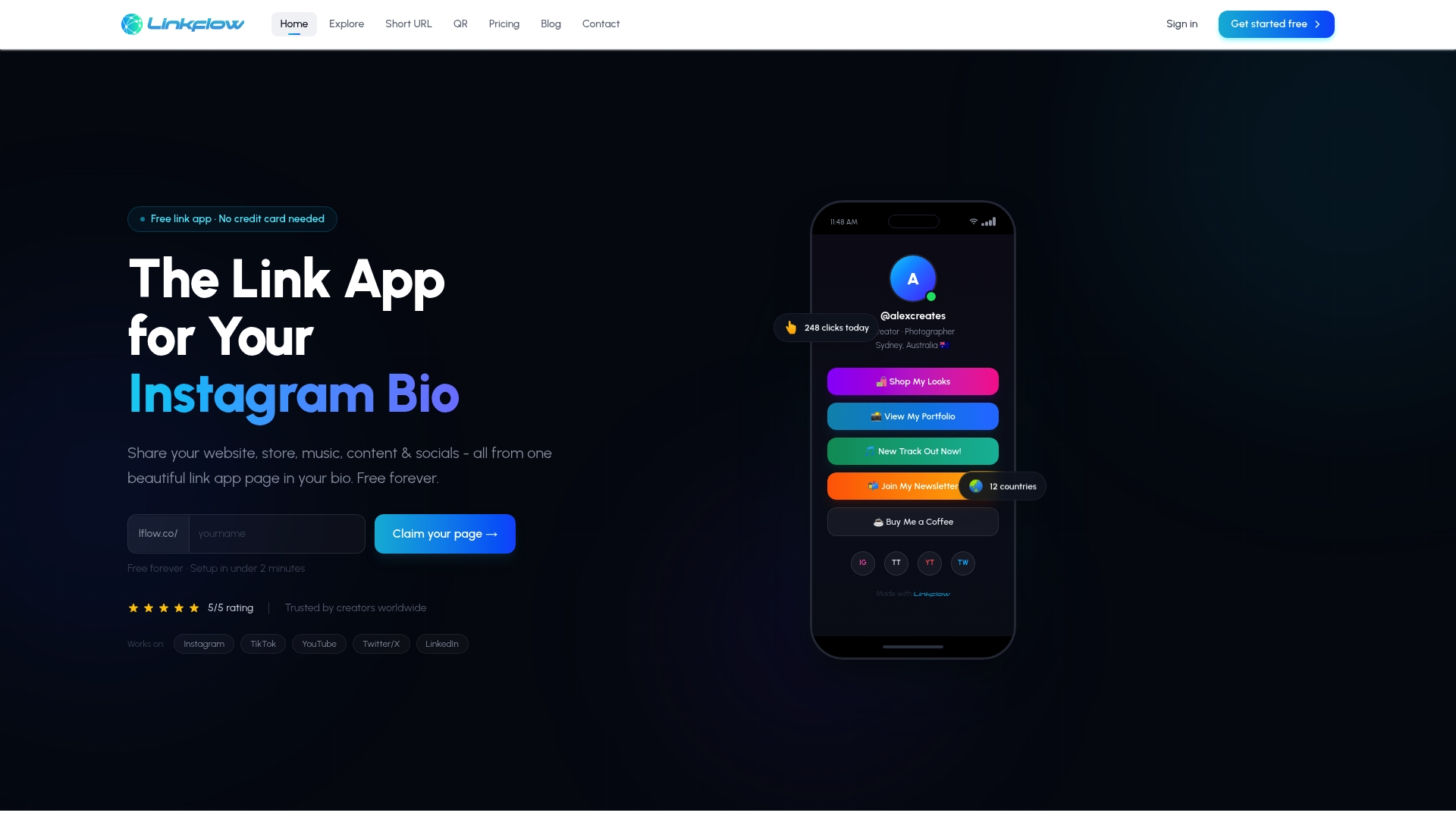
Lflow's free link-in-bio solves that in under two minutes. You get unlimited links, a branded URL, real-time click analytics so you know which posts drive actual traffic, a free QR code for your business cards and exhibition signage, and scheduled links that automatically archive when a show closes. Custom domains, advanced analytics, and password-protected pages are available on paid plans when your needs grow. No long-term contract, no design skills required.
Start your free link-in-bio hub and give every social visitor a clear path to your work, your list, and your inbox.
Useful sources and further reading
- Build Art Business Online Presence: 2026 Strategy Guide — platform lifespan data, SEO traffic share, and email segmentation research cited throughout this article
- SEO for Artists in 2026 | Art World Marketing — collector search behavior and buyer-language SEO guidance
- Art Marketing: A Complete Guide for Independent Artists — systems-based approach to sustainable marketing for independent artists
- Marketing For Fine Art Photographers and Artists | Art + Copy — gallery outreach templates and the 80/20 pitch personalization framework
- Marketing Fine Art Photography Online: 2026 Guide — platform-specific tactics for photographers and visual artists
- Bio links for artists: maximize your online impact — how to structure a link-in-bio page for portfolio and sales
- Creative link-in-bio ideas to maximize engagement — formats and micro-campaign ideas artists can adapt immediately