

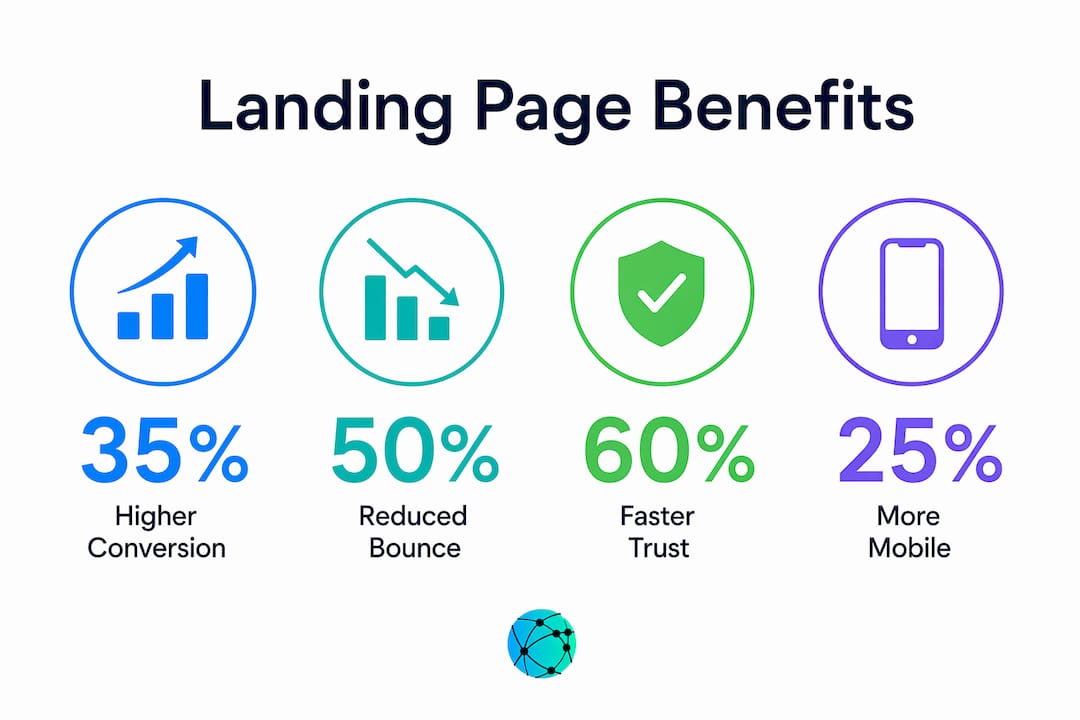
Customizable landing pages are the single most reliable lever for improving conversion rates in paid and organic campaigns. Dedicated landing pages increase conversion rates by an average of 25% over generic homepages, according to recent research. Personalized calls-to-action push that advantage further, converting at 202% higher rates than generic versions. The core reason is simple: when a page reflects exactly what a visitor searched for, they stop second-guessing and start acting.
Here is what customizable landing pages deliver:
- Higher conversions from message alignment between ad and page
- Lower cost-per-click (CPC) through improved Google Ads Quality Scores
- Reduced bounce rates by removing navigation and off-topic links
- Faster A/B testing without touching your main website
- Cleaner attribution with one conversion goal per page
- Personalized experiences that build trust faster than generic pages
Table of Contents
- Why customizable landing pages outperform generic pages
- How Lflow makes customizable landing pages work for creators
- How customization reduces friction and builds trust fast
- How to implement customizable landing pages effectively
- Common pitfalls and how to avoid them
- Lflow gives you a branded landing page in under two minutes
- Key takeaways
Why customizable landing pages outperform generic pages
The gap between a generic homepage and a purpose-built landing page comes down to five compounding factors, as Centric's analysis of paid traffic programs confirms: message match, focused attention, Quality Score, measurement clarity, and iteration speed.
Message match is the most immediate. When your ad says "Free 14-day trial of HR software for hospitals," your landing page needs to say exactly that. Any mismatch creates a split-second of doubt that kills conversions before the visitor reads a single bullet point. Improved message match between ads and landing pages raises Google Ads Quality Scores, which directly lowers CPC and improves ad placement.
Stat to know: Nearly 75% of consumers expect brands to offer improved personalization. A generic page fails that expectation before the visitor even reads the headline.
Focused attention matters too. Homepages carry menus, footer links, and "explore more" cards, each one a potential exit from your funnel. Landing pages strip all of that away. One goal, one CTA, one path forward.
Key benefits for digital marketers:
- Message match reduces the most common conversion killer in paid campaigns
- Focused design eliminates competing exit links and keeps visitors on task
- Quality Score lift means the same ad budget buys more clicks
- One-goal measurement makes conversion rate, cost-per-acquisition, and ROAS honest numbers
- Independent testing lets campaign teams ship variants weekly without touching the corporate site
Separating campaign pages from your main website also removes the approval bottlenecks that slow most marketing teams. You test, iterate, and improve without waiting on a developer or a brand review cycle.
How Lflow makes customizable landing pages work for creators
Lflow is built for exactly the scenario described above: a creator or marketer who needs a branded, conversion-focused page live in minutes, not days. The onboarding process takes under two minutes, and the customization options go well beyond basic templates.
Lflow's platform covers the practical requirements that matter most:
- Deep visual customization including themes, fonts, colors, and custom domains for consistent branding
- Real-time analytics to track clicks, engagement, and which links drive the most action
- Free QR codes for offline-to-online campaigns across print, packaging, and events
- Mobile-optimized design built for Instagram, TikTok, YouTube, Twitter/X, and LinkedIn traffic
- Micro landing page support for campaign-specific pages that stay separate from your main profile
The micro landing page format is particularly useful for paid campaigns. Instead of sending ad traffic to a full website, you send it to a focused, branded page with one clear action. That structure maps directly onto the message-match and focused-attention principles that drive higher Quality Scores.
Pro Tip: Start with Lflow's analytics dashboard before building a new campaign page. The click data from your existing link page tells you which destinations your audience actually wants, so you personalize based on behavior rather than guesswork.

Lflow's customization guide walks through practical ways to match page design to campaign tone, which matters more than most marketers expect. A page that looks like your brand converts better than one that looks like a template, even when the copy is identical.
How customization reduces friction and builds trust fast
Cognitive friction is the mental effort a visitor spends deciding whether an offer applies to them. Every second of that effort is a second closer to leaving. Customization cuts it short.
Landing pages reduce cognitive friction by removing site-wide navigation and unrelated links, which lowers bounce rates and keeps visitors focused on the conversion action. The effect is psychological as much as structural: a visitor who sees their own industry, location, or search term reflected in the headline immediately feels like the page was built for them. That feeling accelerates trust.
Personalized content builds trust faster by delivering relevant messages and location-specific or industry-specific details that reduce the visitor's need to evaluate whether the offer fits. Digital marketing leaders treat personalization as a functional tool for reducing decision friction, not a cosmetic feature.
Tactics that reduce friction and build confidence:
- Remove navigation menus, footers, and sidebars from campaign pages
- Match the headline to the ad copy or search term that brought the visitor
- Use industry-specific language and local references where relevant
- Keep forms short: reducing from 11 fields to 4 has been shown to increase form completions by 120%
- Place social proof (testimonials, logos, ratings) near the CTA, not buried at the bottom
The custom bio page research reinforces this: branded, personalized pages consistently outperform generic ones on engagement metrics because visitors recognize the brand and feel the page was made for their context.
How to implement customizable landing pages effectively
Start with your analytics. Look at where visitors exit on your current pages. The element with the highest drop-off rate is your first target, and in most cases that is the headline, because it is where visitors decide in under three seconds whether the page is for them.
Dynamic landing pages that tailor headlines, CTAs, and images based on visitor data convert more mobile users than static pages. Dynamic keyword insertion, where the visitor's search term appears in the headline, is the highest-value, lowest-effort starting point. Geo-targeting, which swaps in city names, regional imagery, or local offers, adds another layer of relevance without requiring separate pages for every location.
Integration with CRM and marketing automation tools enables audience segmentation that goes beyond traffic source. A visitor from a bottom-funnel retargeting ad needs a different page than one arriving from a top-of-funnel blog post. Connecting your landing page platform to your CRM lets you serve the right version automatically. For freelancers and small businesses managing client relationships alongside campaigns, tools like RealClients can help keep client-facing pages and communications organized in one place.
Implementation do's and don'ts:
- Do personalize the headline first; it has the highest impact per unit of effort
- Do run A/B tests on one element at a time so you know what actually moved the number
- Do use specific campaign pages per traffic source for clean attribution data
- Don't over-personalize; excessive dynamic elements undermine trust and feel intrusive
- Don't send paid traffic to your homepage and expect landing-page-level results
- Don't build a separate page for every keyword group when dynamic text replacement handles it from one template
Common pitfalls and how to avoid them
The most common mistake is message mismatch: a tight, specific ad pointing to a generic page. Visitors feel the disconnect even when they cannot name it, and they leave. Fix it by auditing every active campaign and confirming the landing page headline mirrors the ad copy word for word.
Over-personalization is the opposite problem. When a page references too many data points (browsing history, location, device, and past purchases all at once), it reads as surveillance rather than relevance. Keep dynamic elements to the headline, one body insertion, and the CTA. Beyond that, the page starts to feel like it is parroting the visitor, which erodes the trust you were trying to build.
Ignoring mobile is still surprisingly common. With 25.2% more mobile conversions available from dynamic versus static pages, a page that is not optimized for mobile is leaving a measurable share of conversions on the table. Test every page variant on a phone before it goes live.
Finally, skipping attribution setup means you cannot learn from your results. Without a dedicated page per campaign, conversion data from multiple traffic sources mixes together and you lose the ability to identify which channel or ad actually drove the result.
Lflow gives you a branded landing page in under two minutes
Most landing page tools require a developer, a design review, and a week of back-and-forth. Lflow skips all of that. You get a fully branded, mobile-optimized page with real-time analytics, a free QR code, and a custom domain, ready before your next campaign goes live.
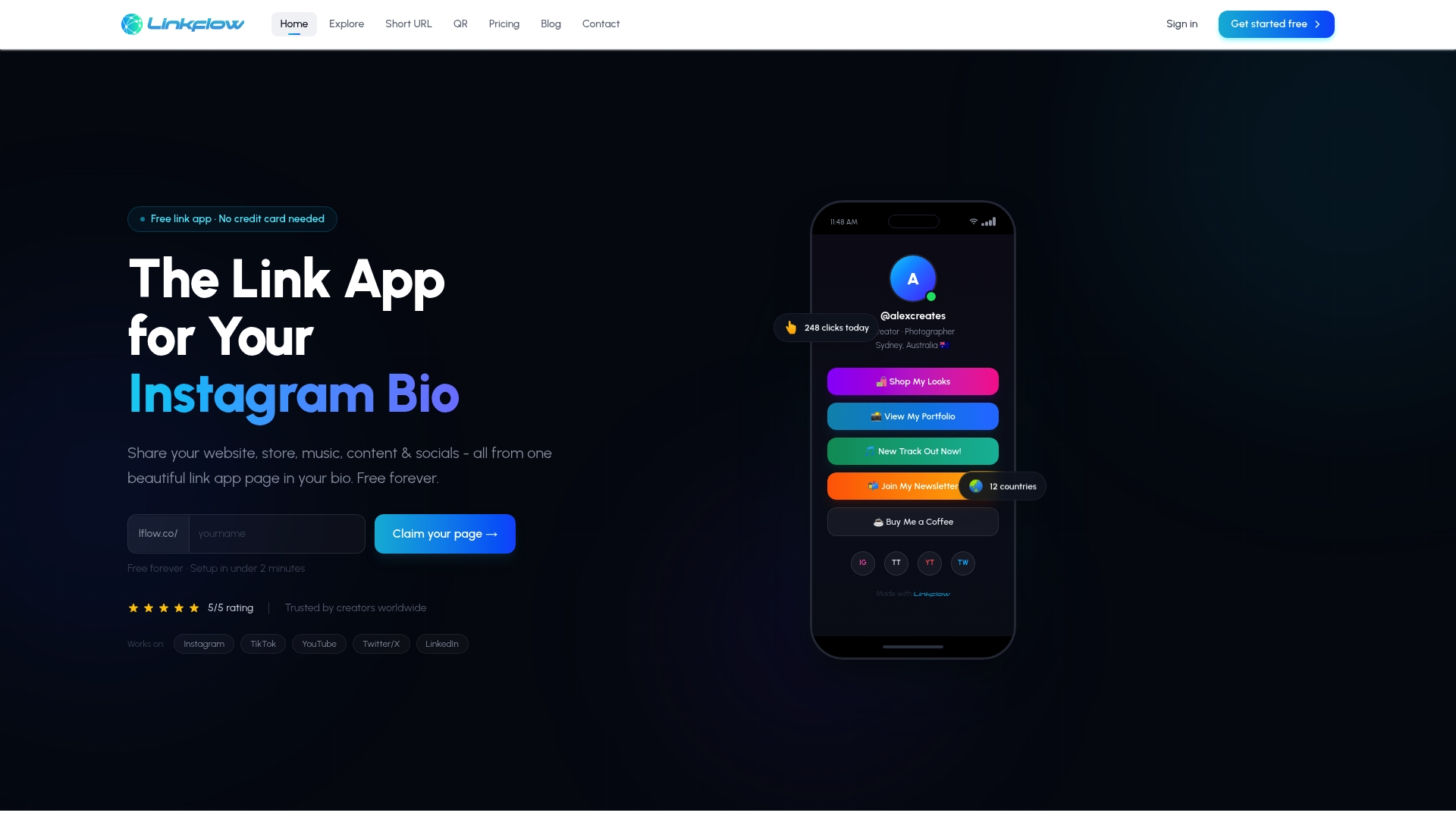
For content creators and marketers who need campaign-specific pages that actually reflect their brand, Lflow's free customizable templates are the fastest path from "I need a landing page" to "my page is live and converting." The platform handles the technical setup so you can focus on the message match, personalization, and testing that actually move conversion rates. Start your free page at Lflow and have something live today.
Key takeaways
Customizable landing pages consistently outperform generic pages because message match, focused design, and personalization compound to reduce friction and increase conversions at every stage of the funnel.
| Point | Details |
|---|---|
| Conversion uplift | Dedicated landing pages increase conversion rates by an average of 25% over generic homepages. |
| Personalized CTAs | Personalized calls-to-action convert at 202% higher rates than generic versions. |
| Mobile performance | Dynamic pages convert 25.2% more mobile users than static pages. |
| Friction reduction | Removing navigation and shortening forms (from 11 fields to 4) drives measurable engagement gains. |
| Lflow for creators | Lflow delivers branded, mobile-optimized landing pages with real-time analytics and free QR codes in under two minutes. |