

Branded links are customized URLs that replace generic shorteners with your own domain, and they are the single most underused trust signal in digital marketing. Content creators and digital marketers who understand why leverage branded links matters are already capturing a measurable edge: CTR increases of 34% to 39% over generic shortened URLs. That gap exists because users read the domain before they click anything else. A link from "yourbrand.co/summer-sale` communicates identity, context, and safety in under a second. A link from a generic shortener communicates none of those things.
Why leverage branded links for trust and recognition
The domain is the first element a user sees in any link, and it functions as a pre-click trust signal comparable to a verified payment page. Branded domains reduce click hesitation in the same way a recognizable storefront reduces foot-traffic hesitation. Users have been trained by years of phishing scams and spam to scan URLs before clicking. A branded domain passes that scan instantly. A random string of characters from a generic shortener does not.
Every time you share a branded link, you are also placing your brand name in front of an audience member, whether they click or not. That passive exposure compounds over thousands of shares and impressions. Bitly, one of the most widely used link management platforms, describes this effect as turning every link into a brand micro-impression. The implication for creators and marketers is direct: your link is advertising even when it goes unclicked.
Branded links also carry a concrete technical advantage in email marketing. Generic shorteners trigger spam filters more frequently than branded domains, which means campaigns using bit.ly or tinyurl.com links face higher rates of inbox rejection. Switching to a branded domain improves deliverability without changing a single word of your email copy.
"The URL is the first UI. Before the page loads, before the image renders, the domain tells the user whether to trust what comes next." — Linked.Codes
Pro Tip: Use your primary brand domain or a short subdomain like go.yourbrand.com rather than registering a completely separate domain. This keeps your branded links connected to your existing domain authority from day one.
Understanding the full scope of link branding benefits helps you see why this is not just a cosmetic upgrade. It is a structural change to how your audience perceives and interacts with everything you share.
How to set up branded links without technical headaches
Setting up a branded link system is faster than most marketers expect. The full process takes between 5 and 30 minutes, covering subdomain registration and CNAME DNS configuration. The steps below cover what actually matters.
- Register a subdomain. Choose something short and recognizable, such as
go.yourbrand.comorlink.yourbrand.com. Avoid subdomains longer than eight characters. - Configure your CNAME record. Point your subdomain to your link management platform's servers through your DNS provider. This is typically a single record entry in platforms like Cloudflare, Namecheap, or GoDaddy.
- Provision SSL for HTTPS. This step is non-negotiable. Improper HTTPS setup causes referrer data loss, which means your analytics will show traffic arriving from nowhere. Most link management tools handle SSL automatically once the CNAME is verified.
- Set your redirect type. Use 302 redirects rather than 301s for campaign links. 302 redirects allow destination updates without breaking the original link, which is critical when you need to swap landing pages mid-campaign.
- Test before publishing. Click your branded link from both desktop and mobile, then verify that your analytics platform registers the correct referrer source.
| Setup step | Common mistake | Fix |
|---|---|---|
| CNAME configuration | Pointing to wrong server address | Copy the exact value from your link platform's documentation |
| SSL provisioning | Skipping HTTPS, using HTTP destination | Enable SSL in your link platform; confirm the padlock appears |
| Redirect type | Using 301 for campaign links | Switch to 302 to retain destination flexibility |
| Slug creation | Using random strings | Write descriptive slugs like /spring-drop or /podcast-ep12 |
Pro Tip: After DNS propagation, use a tool like MXToolbox or Google's DNS checker to confirm your CNAME record is live globally before sending any traffic to your new branded link.
Branded links vs. generic short links: what the data shows
The performance gap between branded and generic links is not marginal. Studies from 2026 confirm 34% to 39% higher click-through rates for branded links across social, email, and SMS channels. That difference compounds quickly across a campaign with tens of thousands of impressions.

| Factor | Branded links | Generic short links |
|---|---|---|
| Click-through rate | 34–39% higher | Baseline |
| Email deliverability | Improved inbox placement | Higher spam filter risk |
| Domain authority | Consolidates to your domain | Distributed to third-party domain |
| Analytics ownership | Full geographic, device, referral data | Dependent on third-party platform |
| Brand recall | High (domain visible in link) | None |
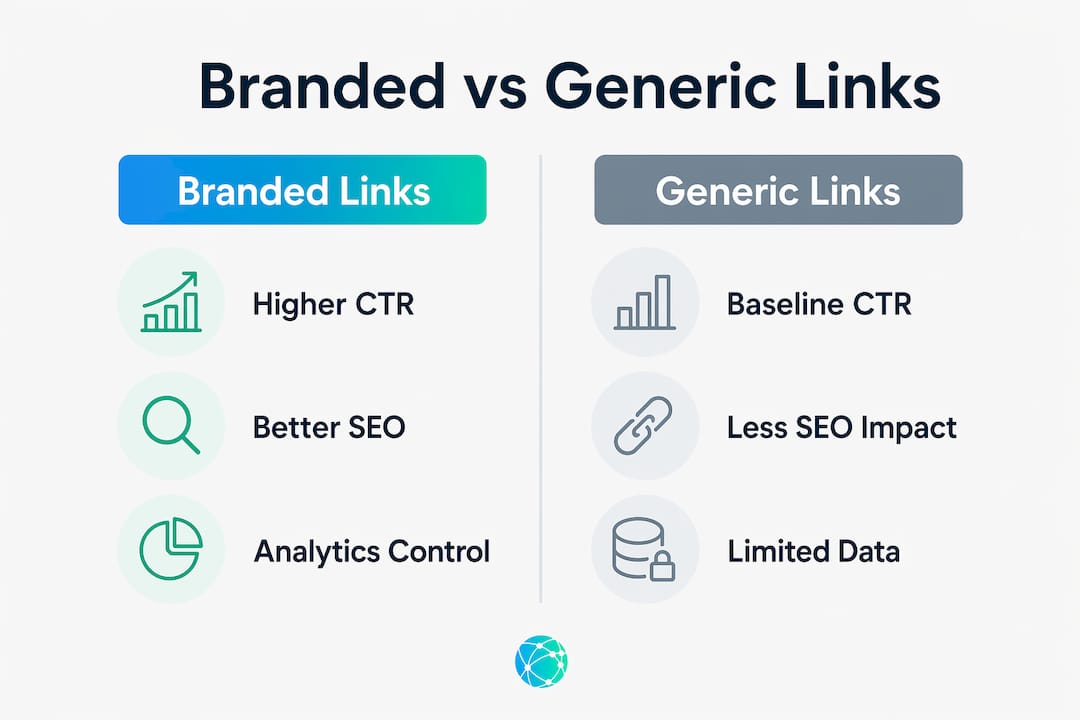
Beyond click rates, the SEO implications are significant. A dedicated branded domain consolidates domain authority, meaning every click and every share contributes to your own domain's reputation rather than Bitly's or TinyURL's. Over months and years, that is a meaningful SEO asset that generic shorteners actively prevent you from building.
Analytics ownership is another underappreciated advantage. Branded link users capture geographic, device, and referral data directly, without depending on a third-party platform's data policies or pricing tiers. When a generic shortener changes its free plan or shuts down, your historical data disappears with it. Your own branded domain keeps that data under your control permanently.
For creators managing personalized links across platforms, the analytics advantage translates directly into knowing which channel drives the most engaged audience. That knowledge shapes every future content and distribution decision.
How to use branded links across every marketing channel
The importance of branded links multiplies when you apply them consistently across channels rather than selectively. Here is where the advantages of link branding show up most clearly in practice.
Social media bios are the highest-leverage placement for a branded link. On Instagram, TikTok, and LinkedIn, you get one clickable link. A branded URL like lflow.co/yourname signals professionalism and makes the link memorable enough for users to type manually if needed. Platforms like Lflow are built specifically to turn that single bio link into a full branded hub connecting your store, content, and social profiles.
Email campaigns benefit from branded links in two ways: improved deliverability (as covered above) and higher click rates from recipients who recognize your domain. Pair your branded link with a descriptive slug. yourbrand.co/june-offer outperforms yourbrand.co/xK92p because it tells the recipient what they are clicking before they click it. Descriptive slugs strengthen brand recall and reduce the cognitive friction that kills conversions.
SMS and print materials are where branded links become indispensable. A 20-character branded link fits comfortably in an SMS message and looks intentional on a business card or flyer. Generic shorteners in print materials signal low production value. A QR code generated from your branded link, printed on packaging or signage, carries your domain visually even before it is scanned.
Affiliate and influencer marketing requires branded links for tracking accuracy. Assign each creator a unique branded slug, such as yourbrand.co/partner-name, and you get clean attribution data without exposing your affiliate platform's backend URL structure. This also protects your brand from the reputational risk of a creator sharing a link that looks like a spam URL.
Pro Tip: Always append UTM parameters to your branded links before distributing them. A link like yourbrand.co/summer?utm_source=instagram&utm_medium=bio gives you channel-level attribution in Google Analytics 4 without any additional tagging infrastructure.
Monitoring how each branded link performs is as important as creating them. The guide on why to monitor link clicks breaks down exactly what engagement data to track and how to act on it.
Key takeaways
Branded links deliver measurable performance gains because they combine trust signals, analytics ownership, and brand consistency into a single URL.
| Point | Details |
|---|---|
| CTR advantage | Branded links generate 34–39% higher click-through rates than generic shorteners. |
| Trust before the click | The domain is the first trust signal users evaluate, before any content loads. |
| Technical setup | Full branded link setup takes 5–30 minutes; SSL and 302 redirects are non-negotiable. |
| Analytics ownership | Branded domains keep geographic, device, and referral data under your direct control. |
| Domain commitment | Changing your branded domain after deployment breaks all historical links and erases accumulated trust. |
The long game most marketers ignore
Most marketers treat branded links as a cosmetic upgrade. They are not. They are a compounding asset, and the compounding only works if you commit to a single domain and stick with it.
Changing your branded domain breaks every historical link you have ever published, across every channel, every piece of content, and every campaign. I have seen brands go through rebrands and casually swap their short link domain, then spend months wondering why their older content stopped driving traffic. The links were dead. The trust signals accumulated over years were gone.
The brands that treat their branded link domain with the same seriousness as their primary website domain are the ones that build a genuine SEO and trust advantage over time. Link age matters. Domain reputation matters. Every month you maintain a consistent branded domain, you are building something that a competitor who just started cannot replicate quickly.
There is also a psychological dimension that analytics cannot fully capture. Audiences who see your branded domain repeatedly across Instagram, email, YouTube descriptions, and podcast show notes start to associate that domain with reliability. It becomes part of your brand identity in the same way your logo or color palette does. That recognition is worth protecting.
My recommendation: choose your branded link domain before you need it, not after. Treat it as infrastructure, not decoration. And if you are a creator or marketer who has been putting this off because it sounds technical, the 5 to 30 minute setup time should remove that objection permanently.
— Axion
Start building your branded link presence with Lflow
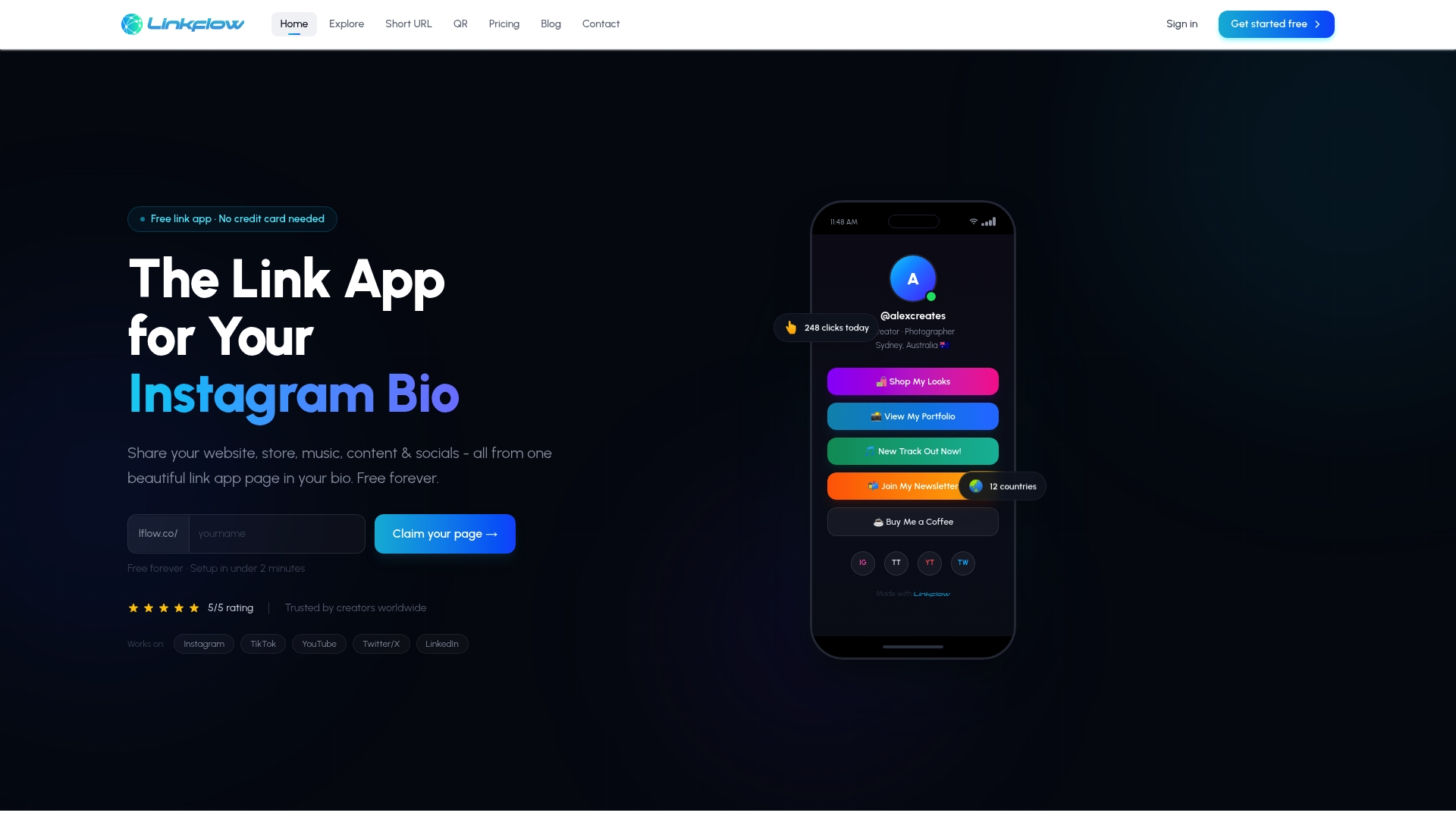
Lflow gives content creators and digital marketers everything needed to put branded links to work immediately. The platform's free link in bio tool lets you consolidate unlimited links under a single branded URL, complete with custom domains, real-time analytics, and free QR code generation for offline promotion. Setup takes under two minutes, and the customization options cover themes, fonts, and colors to match your brand identity exactly. Whether you are managing affiliate links, social bios, or multi-channel campaigns, Lflow's free URL shortener gives you the branded link infrastructure to track performance and own your audience data from day one.
FAQ
What are branded links and why do they matter?
Branded links are customized short URLs that use your own domain instead of a generic shortener. They matter because they increase click-through rates by 34% to 39% and serve as pre-click trust signals that reduce audience hesitation.
How long does it take to set up a branded link system?
Setting up a branded link system takes between 5 and 30 minutes, covering subdomain registration, CNAME DNS configuration, and SSL provisioning. Most link management platforms automate the SSL step once the CNAME record is verified.
Do branded links improve SEO?
Yes. A dedicated branded domain consolidates domain authority to your own web property rather than distributing it to a third-party shortener. Every click and share contributes to your domain's reputation over time.
Can I change my branded link domain later?
Changing your branded domain after deployment breaks all previously published links and eliminates accumulated trust signals. Choose your domain with long-term consistency in mind and treat it as permanent infrastructure.
Are branded links worth it for small creators?
Branded links require no large budget. Consistency and clarity in your links drive significant engagement gains regardless of audience size, and platforms like Lflow offer free tools that make branded link management accessible from day one.