

Offline link promotion is the practice of using physical marketing channels, including print, events, signage, and direct mail, to drive measurable online traffic, earn backlinks, and build brand authority that search engines recognize. Most marketers treat digital and physical marketing as separate budgets with separate goals. That separation costs them. The role of offline link promotion is to create trust-building touchpoints that no banner ad can replicate, then convert that trust into clicks, referrals, and SEO signals that compound over time. Tools like QR codes, vanity URLs, and UTM-tagged landing pages make every physical interaction trackable and attributable.
What are the primary offline link promotion techniques used in 2026?
Offline marketing covers print, direct mail, billboards, events, and trade shows. Each format can carry a link, and each link can be tracked. The techniques below are the ones generating real attribution data for marketers right now.
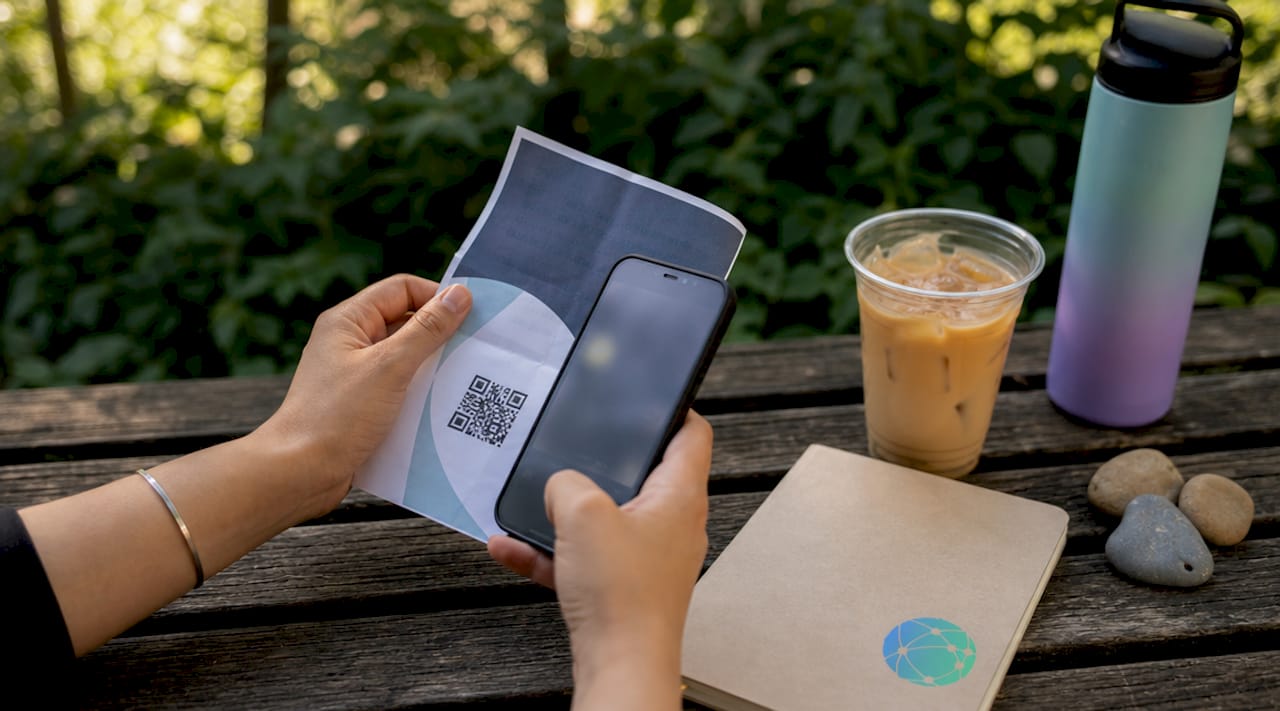
- QR codes on physical materials. Business cards, flyers, product packaging, and in-store signage all become traffic drivers when they carry a QR code pointing to a UTM-tagged URL. Customers scan in the moment of highest intent, and your analytics capture the source.
- Affiliate and referral cards. Local professionals like hair stylists, personal trainers, and nutritionists hand clients a card with a unique referral link or QR code. Referral cookie tracking captures the attribution even if the purchase happens days later, enabling full commission processing.
- Event sponsorships and speaker bios. Conference programs, event signage, and speaker bio pages on organizer websites generate offline signals for SEO that search engines treat as authority indicators. A speaker bio linking to a specific content page carries more weight than a generic homepage link.
- Direct mail and print ads with trackable URLs. Postcards and catalog inserts with a short, memorable vanity URL (redirecting to a campaign-specific landing page) let you measure print ROI inside Google Analytics or any CRM.
Pro Tip: Never point a QR code or vanity URL at your homepage. Send traffic to a page built specifically for that campaign so you can measure conversions, not just visits.
The offline link building techniques above work because physical context creates intent. A person scanning a QR code at a trade show booth is far more qualified than someone who clicked a retargeted ad after visiting your site once.
How does offline link promotion benefit SEO and brand authority?
The benefits of offline link building go beyond raw traffic. Physical interactions build trust faster than digital ads, and that trust translates into higher conversion rates and stronger engagement signals that search engines notice.
| Factor | Online-only strategy | Offline + online strategy |
|---|---|---|
| Trust level at first contact | Low (anonymous ad) | High (in-person or print) |
| Referral traffic quality | Variable | Higher intent, lower bounce |
| SEO authority signals | Links from digital outreach | Links from event sites, press, speaker bios |
| Attribution accuracy | Strong (native tracking) | Strong when UTM tags are used |
| Audience reach | Broad but filtered by algorithm | Targeted by physical location or event |
The impact of offline marketing on SEO is most visible in the authority signals generated by event recaps, conference speaker pages, and local press coverage. These are earned links that no paid digital campaign can manufacture. Search engines treat them as genuine third-party endorsements because they originate outside the brand's own digital ecosystem.
Physical interactions also generate what researchers call a trust advantage. Local professionals recommending products with QR codes see higher conversion rates than anonymous online ads because the recommendation comes from a trusted human source. That trust advantage is consistently underestimated by marketers who measure only digital touchpoints.
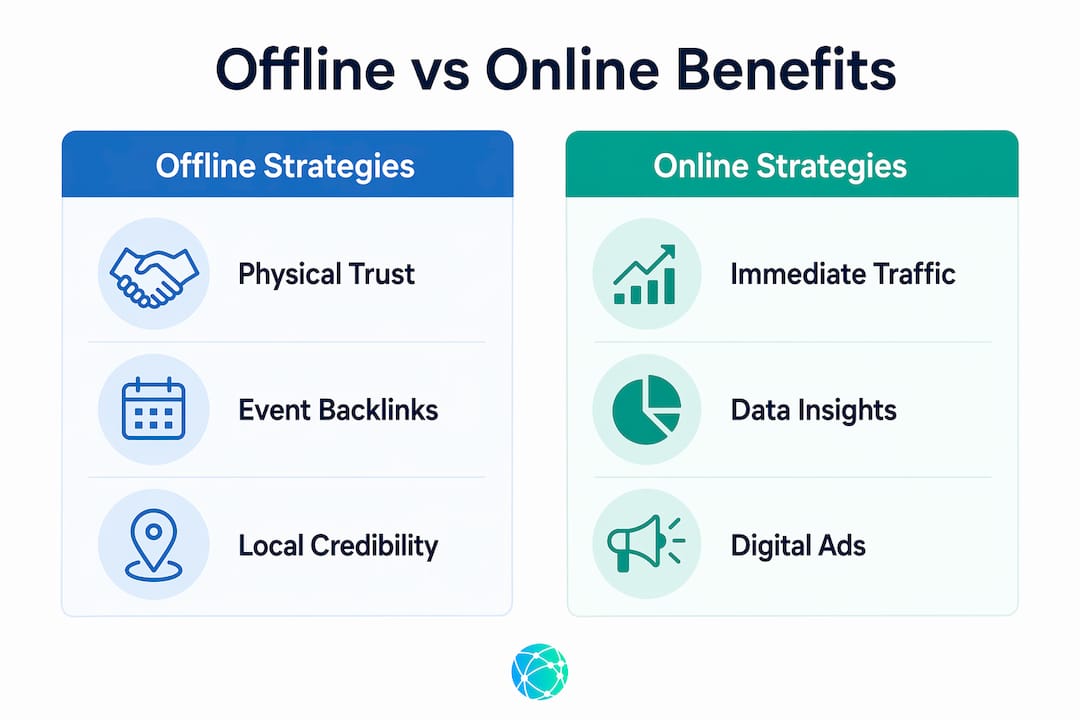
Hybrid strategies that combine offline and online efforts also protect against algorithm changes. When Google adjusts how it weights certain link types, brands with diverse link profiles that include offline-generated backlinks are less exposed than those relying entirely on digital outreach.
What are effective strategies and tracking best practices for offline campaigns?
Execution separates offline link promotion from offline marketing that simply wastes budget. The following numbered process covers the full campaign lifecycle.
- Create a dedicated landing page for each offline campaign. Redirecting to offer-specific pages rather than your homepage removes consumer hesitation and keeps the user experience consistent with the physical ad they just saw.
- Build your URL with UTM parameters before printing anything. UTM-tagged redirect links for offline QR codes preserve source tracking inside Google Analytics and your CRM. Without them, offline traffic appears as direct traffic and attribution disappears.
- Use a short URL or vanity URL as the printed address. A URL like yourbrand.com/event2026 is scannable by eye and memorable enough to type. Use a short URL generator to create a clean redirect that points to your UTM-tagged destination.
- Choose dynamic QR codes over static ones. Dynamic codes let you update the destination URL after printing, which means you can fix errors or redirect traffic to a new offer without reprinting materials. Understanding the difference between static and dynamic QR codes is one of the most practical decisions you will make in an offline campaign.
- Follow up within 48 hours of any offline lead collection. Offline interactions create a cooling-off window where leads are warm but not yet committed. An email or text sent within 48 hours capitalizes on the momentum from the physical interaction before it fades.
Pro Tip: Match the visual design of your landing page to the offline material that drove the visit. If your flyer uses a specific color scheme and offer headline, replicate both on the landing page. Consistency reduces the cognitive gap between physical and digital and increases conversions.
Tracking accuracy is the single biggest gap in most offline campaigns. Marketers who skip UTM tags or send traffic to homepages cannot prove ROI, which is why offline budgets get cut first when finances tighten.
How can marketers integrate offline promotion with online channels?
The omnichannel approach requires consistent branding, aligned messaging, and a deliberate plan for how each physical touchpoint feeds into your digital ecosystem. Many business owners treat offline and online as separate silos, missing the compounding benefits that come from connecting them.
- Consistent visual identity across all materials. The same logo, color palette, and tone of voice should appear on your Instagram profile, your trade show banner, and your direct mail piece. Customers who encounter your brand in multiple contexts recognize it faster and trust it more.
- Use digital data to optimize physical placements. Google Analytics audience data, social media insights, and CRM records tell you where your best customers live, what they care about, and when they buy. Use that data to decide which neighborhoods get your direct mail, which events deserve sponsorship, and which physical locations warrant signage.
- Build online community from offline touchpoints. A customer who meets you at a farmers market or trade show is a warm lead. Collect their email or direct them to a link in bio page that consolidates your social profiles, store, and newsletter signup. That single URL converts a one-time physical encounter into a long-term digital relationship.
- Create offline-to-online content loops. Record your conference talks and upload them with links in the description. Turn your printed case studies into blog posts. Photograph your event booth and post it with location tags. Each of these actions creates a new digital asset that carries the authority signal from the original offline event.
- Align your marketing messaging across channels. The role of traditional marketing in SEO depends on message consistency. A brand that says one thing in a print ad and something different on its website creates confusion that undermines both channels.
The most effective offline-to-online flows are built around a single, clear next step. Every physical touchpoint should answer one question for the customer: "What do I do now?" A QR code, a short URL, or a social handle gives them that answer immediately.
Key takeaways
Offline link promotion works because physical trust signals, precise UTM tracking, and consistent omnichannel messaging combine to produce higher-quality traffic and more durable SEO authority than digital-only campaigns.
| Point | Details |
|---|---|
| Use UTM tags on every offline link | Without UTM parameters, offline traffic appears as direct traffic and attribution is lost. |
| Send traffic to campaign-specific pages | Dedicated landing pages that match the offline offer reduce confusion and increase conversions. |
| Dynamic QR codes outperform static ones | Dynamic codes allow destination updates after printing, protecting your campaign from errors. |
| Follow up within 48 hours | Offline leads cool quickly; timely email or text follow-up preserves the trust built in person. |
| Offline signals strengthen SEO authority | Speaker bios, event recaps, and press mentions generate backlinks that digital outreach cannot replicate. |
Why most marketers are leaving offline link value on the table
I have reviewed hundreds of marketing campaigns where the offline component was treated as a brand awareness exercise with no measurable output. The team prints flyers, sponsors a booth, hands out business cards, and then reports "increased visibility" because they have no data to show anything else. That is not a strategy. That is a budget line waiting to be cut.
The uncomfortable truth about offline link promotion is that its value is not in the physical materials. It is in the intent of the person holding them. Someone who picks up your card at a networking event, scans your QR code at a trade show, or reads your direct mail piece has already made a micro-commitment that no digital retargeting campaign can manufacture. The link intent principle applies here: the best links come from genuine interest, and genuine interest is far more common in physical contexts than in digital ones.
What I see businesses get wrong most often is the landing page. They spend money on beautiful print materials and then send traffic to a homepage that has nothing to do with the offer on the card. The customer arrives, sees no connection to what they expected, and leaves. The bounce rate looks terrible, the campaign looks like a failure, and offline marketing gets blamed. The real problem was the landing page, not the channel.
The second mistake is waiting too long to follow up. Physical interactions create a window of warmth that closes fast. A lead collected at a Saturday event who receives no contact until the following Thursday is already cold. The 48-hour follow-up rule is not a suggestion. It is the difference between a conversion and a forgotten business card at the bottom of a bag.
— Axion
How Lflow supports your offline link promotion campaigns
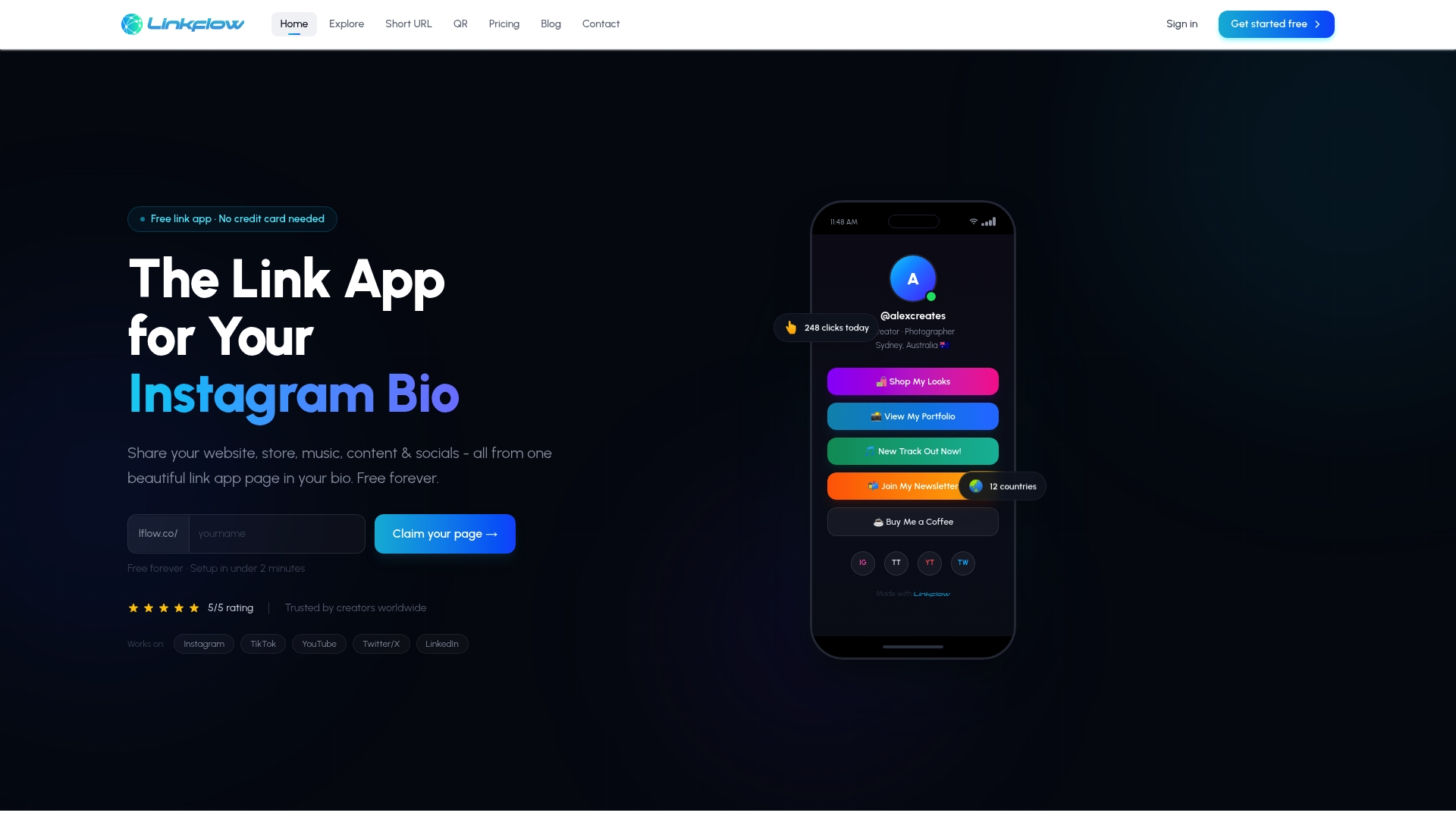
Lflow gives marketers and business owners the tools to connect every physical touchpoint to a trackable digital destination. The platform's free QR code generator creates branded, downloadable codes ready for print in under two minutes, with no design experience required. Each code links to a fully customizable page that consolidates your links, social profiles, and offers in one place. Real-time analytics show you exactly which offline materials are driving traffic and engagement, so you can cut what does not work and scale what does. Start with one of Lflow's free link in bio templates to build a landing page that matches your offline campaign and converts visitors from the first click.
FAQ
What is offline link promotion?
Offline link promotion is the use of physical marketing channels, including print, events, signage, and direct mail, to drive online traffic, earn backlinks, and build SEO authority through trackable links like QR codes and vanity URLs.
How do QR codes help with offline link building?
QR codes on physical materials direct customers to UTM-tagged landing pages, allowing marketers to track offline traffic sources accurately inside Google Analytics or any CRM platform.
Does offline marketing actually improve SEO?
Yes. Speaker bios on conference sites, event recap pages, and local press coverage generate backlinks that search engines treat as genuine authority signals, strengthening a site's overall link profile.
What is the biggest mistake in offline link campaigns?
Sending offline traffic to a homepage instead of a campaign-specific landing page is the most common error. It breaks the connection between the physical offer and the digital experience, increasing bounce rates and reducing conversions.
How soon should you follow up with offline leads?
Follow up within 48 hours of any offline lead collection. Research shows that offline interactions create a cooling-off window, and timely contact by email or text preserves the trust built during the physical interaction.