

A campaign link hub is a single branded link-in-bio page, backed by QR codes and per-link analytics, that routes your social traffic straight to the actions that matter for one specific push. That's different from a generic bio link you set up once and forget. Social traffic is overwhelmingly mobile, and people tapping through Instagram or TikTok's in-app browser convert or bounce within seconds, so the hub's job is to get them to the right link fast. Lflow.co offers this as a direct, ready-to-use option, with free onboarding that takes under two minutes.
- Custom URL that carries your brand instead of a generic vendor subdomain
- QR code generation for offline promotion (flyers, packaging, event signage)
- Real-time, per-link analytics so you know which CTA actually worked
Key Takeaways
A campaign link hub converts better than a generic bio link because it routes mobile social traffic to one clear priority action, backed by real-time tracking.
| Point | Details |
|---|---|
| Define one goal first | Pick a single primary conversion action before you touch design or links. |
| Keep the link count tight | Show three to seven links, with your campaign CTA ranked first. |
| Optimize for in-app browsers | Compress images and cut scripts to protect load speed inside WebViews. |
| Track and rotate weekly | Tag links with UTMs, check mid-week, and audit monthly to retire dead links. |
| Use Lflow.co to launch fast | Lflow.co covers custom domains, QR codes, and analytics with under two minute onboarding. |
A Quick Note From Axion
The campaign-first approach works because it forces one decision before design ever starts: what's the one thing this post should make people do? Pick that first, and the rest of the page nearly builds itself.
— Axion
Table of Contents
- Checklist: Features Your Campaign Link Hub Must Include
- Step-by-Step: Launch a Campaign Link Hub in Under 5 Minutes
- Design and Technical Optimizations for In-App Browsers
- Measure Success: The Metrics and Setup You Need
- Repeatable Workflow: Planning, Syncing, and Auditing Your Campaign Hub
- Why Lflow Fits This Campaign Hub Playbook
- Sources
Checklist: Features Your Campaign Link Hub Must Include
Not every link-in-bio tool is built for campaigns. Before you commit to one, run it against this checklist.
- Custom domain or branded short link. A vendor subdomain in your bio dilutes your brand and looks less trustworthy to a cold audience; owning the domain keeps brand control in the visible link.
- Per-link analytics with CSV export. You need to see clicks by link, not just total page views, and pull the numbers into a spreadsheet when a campaign wraps.
- QR codes generated per link. Physical promotion (a poster, a product insert, a business card) needs its own trackable code, not a screenshot of your bio link.
- Scheduling and expiration. Campaign links should auto-archive when the promotion ends instead of sitting there confusing new visitors for months.
- Mobile-optimized templates. Buttons sized for a thumb, not a mouse cursor.
- UTM support, password protection, and easy embedding. Useful for gated content or partner-only pages.
Pro Tip: Don't add every feature you can find. A hub with 20 toggles you never use is worse than one with the six above, executed cleanly.
Step-by-Step: Launch a Campaign Link Hub in Under 5 Minutes
Speed matters here because campaigns are time-sensitive. If setup takes an hour, you've already lost the moment.
- Pick one primary conversion goal. A single hub should push toward one main outcome (buy the drop, register for the event, stream the single) plus one or two supporting CTAs, not eight competing offers.
- Choose a branded URL. Connect a custom domain if you have one, or use a clean branded short link if you don't.
- Build the page. Write a short hero line that states what the visitor gets, place the primary CTA button right below it, and add two or three supporting links beneath that. This hero-then-CTA structure is the same pattern that performs well on micro-landing pages generally.
- Generate QR codes and add UTM parameters. Tag each link by platform and post so you can trace clicks back to the exact piece of content that drove them. Set an expiration date if the campaign has a hard end.
- Confirm the hero text matches what your post promises
- Tap every button once to check it lands on the right destination
- Check load time on a mid-range phone, not just your own device
For a deeper walkthrough with visual examples, see how creators build link hubs step by step.
Design and Technical Optimizations for In-App Browsers
Most of your campaign traffic will hit this page inside an app's embedded browser, not Safari or Chrome. That browser is slower, and slower pages lose conversions.
- Put the hero and one primary CTA above the fold. Nothing else should compete for that first glance.
- Cap visible choices at three to seven links, with a tiered hierarchy: campaign link first, everything else after.
- Compress images before upload and avoid heavy scripts. Lazy-load anything below the fold so it doesn't block the first paint.
- Aim for a perceived load time that feels almost instantaneous where the platform allows it.
- Use button labels that name the action ("Get 20% Off Today," not "Click Here") and give buttons enough spacing that a thumb doesn't miss.
In-app browsers on platforms like Instagram and TikTok run noticeably slower than a device's native browser, and that gap shows up directly in conversion rates. A heavy page with autoplay video and five embedded widgets might load fine on Wi-Fi at your desk. On a shaky cell connection inside a WebView, it can cost you the click before the visitor even sees your offer.
Measure Success: The Metrics and Setup You Need
You can't fix what you don't measure, and a campaign hub without tracking is just a nicer-looking guess.
- Click-through rate per link. Tells you which CTA the audience actually noticed.
- Click-to-conversion rate. Tracks how many of those clicks turned into a sale, sign-up, or stream.
- Conversion events on the destination page. Purchases, form fills, email captures.
- Engagement by traffic source. Which platform, and which specific post, sent the people who actually converted.
Tag every post with its own UTM parameters and map them to the destination page's goal, so a click from a Tuesday Reel and a click from a Thursday TikTok don't get lumped together. UTM tagging done right is what makes the difference between "the campaign did fine" and knowing exactly which post drove it.
| Metric | What it tells you |
|---|---|
| Click-through rate | Which link or CTA earns the tap |
| Click-to-conversion rate | Whether clicks turn into real outcomes |
| Traffic source breakdown | Which platform and post are worth repeating |
| A/B test result | Whether new CTA copy or button order beats the old version |
Run quick A/B tests on CTA wording or button order when a campaign runs longer than a week or two. Two versions, split evenly, checked after a few days is usually enough signal to pick a winner.
Repeatable Workflow: Planning, Syncing, and Auditing Your Campaign Hub
A campaign hub decays fast if nobody owns the upkeep. Treat it like any other piece of your content calendar, not a one-time setup task.
- Weekly planning. Pick your top three active campaign goals and map each to a spot on the hub before you plan the week's posts.
- Update the hub before the post goes live, never after. A viral post pointing at a dead or outdated link burns the exact traffic spike you wanted to capture.
- Mid-week check. Swap out anything underperforming and confirm your UTM tags are still mapped to the right destinations.
- Monthly audit. Export your metrics, retire links that ran their course, rotate in evergreen content, and refresh any creative assets that look stale.
Automating the swap and schedule steps matters more than it sounds, especially if you post across time zones. Syncing hub updates to your publishing calendar prevents the classic mistake of a link going live six hours before the post it supports. For a ready-made structure, this personalized workflow template breaks the cadence down further.
Why Lflow Fits This Campaign Hub Playbook
Everything in the checklist above (custom domains, per-link QR codes, real-time analytics, mobile-first templates) is built into Lflow.co from the start, and the onboarding takes under two minutes.
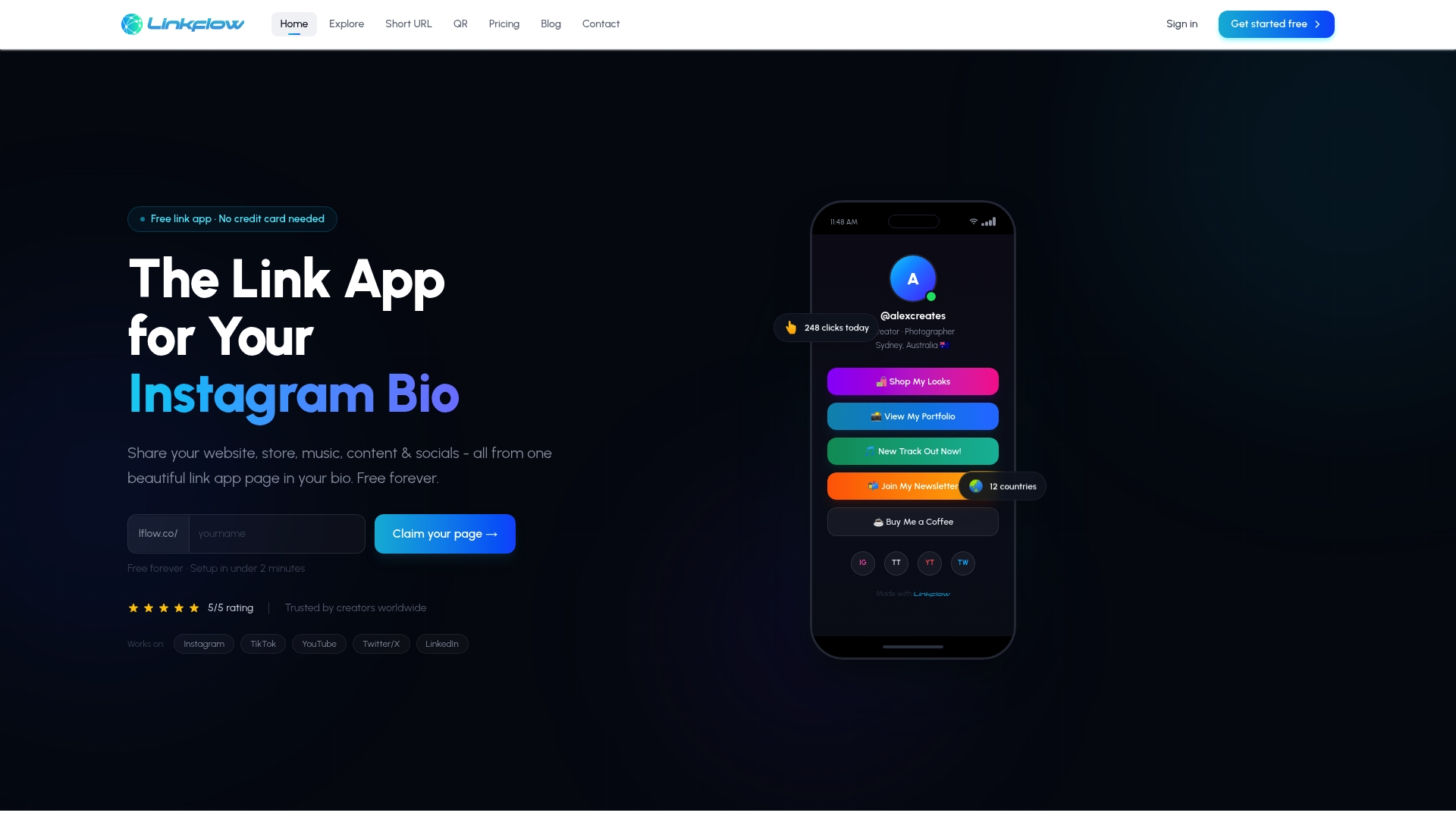
Setting up your first campaign hub takes a specific order. Start with your primary conversion goal, then pick or connect your custom domain, then add your top two or three supporting links underneath the hero CTA. From there, generate a QR code for any offline promotion and switch on real-time analytics so you can watch clicks land as your post goes live. If you sell services and want to capture leads through the same hub, a resource like Coleman Web Design's lead-generation guidance pairs well with a campaign page built for booking calls.
The free plan covers unlimited links, QR codes, and core analytics with no credit card required, and you can layer on a custom domain or advanced reporting later if the campaign grows. Need just a short link for a single post instead of a full hub? The free URL shortener handles that in seconds. Start building your hub now and have it live before your next post goes out.
Sources
- Page speed & conversion statistics (OuterBox)
- Link-in-Bio vs Landing Page: Which is Best in 2025? (Tagnovate)
- How to create a high-converting link-in-bio page (MydropAI)