

A mobile-first, branded link hub with short-URL support and real-time analytics is the right choice for artists who need to convert social followers into fans, buyers, and subscribers. One URL replaces a dozen scattered links, and when it carries your own domain and brand colors, it works as a storefront, not just a directory. This article covers what features actually matter, how to pick a plan, and a step-by-step setup you can finish in under 30 minutes.
- Fast setup: Lflow onboards in under two minutes, so you spend time on your art, not configuration.
- Branding and custom domain: your link hub should look like you, not like the platform that built it.
- Fan-conversion features: email capture, QR codes, and pre-save links turn passive clicks into lasting audience relationships.
Table of Contents
- What do artists actually need from a social link platform?
- How do you pick the right link hub for your workflow?
- How do you set up and optimize your artist link hub?
- How does a link hub handle security and privacy?
- What does good customer support look like for artists?
- What do artists say about using link hub platforms?
- How do top artists actually use link hub platforms?
- Does your link hub affect how fans discover you through search?
- Key Takeaways
- What actually matters when artists choose a link hub
- Lflow gives artists a real head start
- Further reading and primary sources
What do artists actually need from a social link platform?
The best social link platforms for artists do more than list URLs. They function as a mini-storefront that fans land on from Instagram, TikTok, YouTube, or anywhere else you post. Here is what separates a useful tool from a generic one:
- Mobile-optimized templates: most fans tap your bio link on a phone. Responsive, fast-loading layouts are non-negotiable, and one-primary-CTA page structures consistently outperform cluttered ones.
- Branding and custom domain: a generic short URL erodes trust. A branded short link tied to your own domain builds recognition across every platform and piece of physical merch.
- QR code generation: QR usage has grown roughly 300% since 2021 and has become standard in creator marketing. Free, downloadable QR codes let you bridge posters, packaging, and event booths to your digital hub.
- Email capture and fan-conversion tools: for musicians especially, turning streams into a mailing list is the highest-leverage move on a link page. Music-focused platforms emphasize pre-save campaigns and email capture as key differentiators.
Pro Tip: Place your single most time-sensitive link at the very top of your hub, not your most permanent one. Fans who click from a new post expect to land on whatever you just announced.
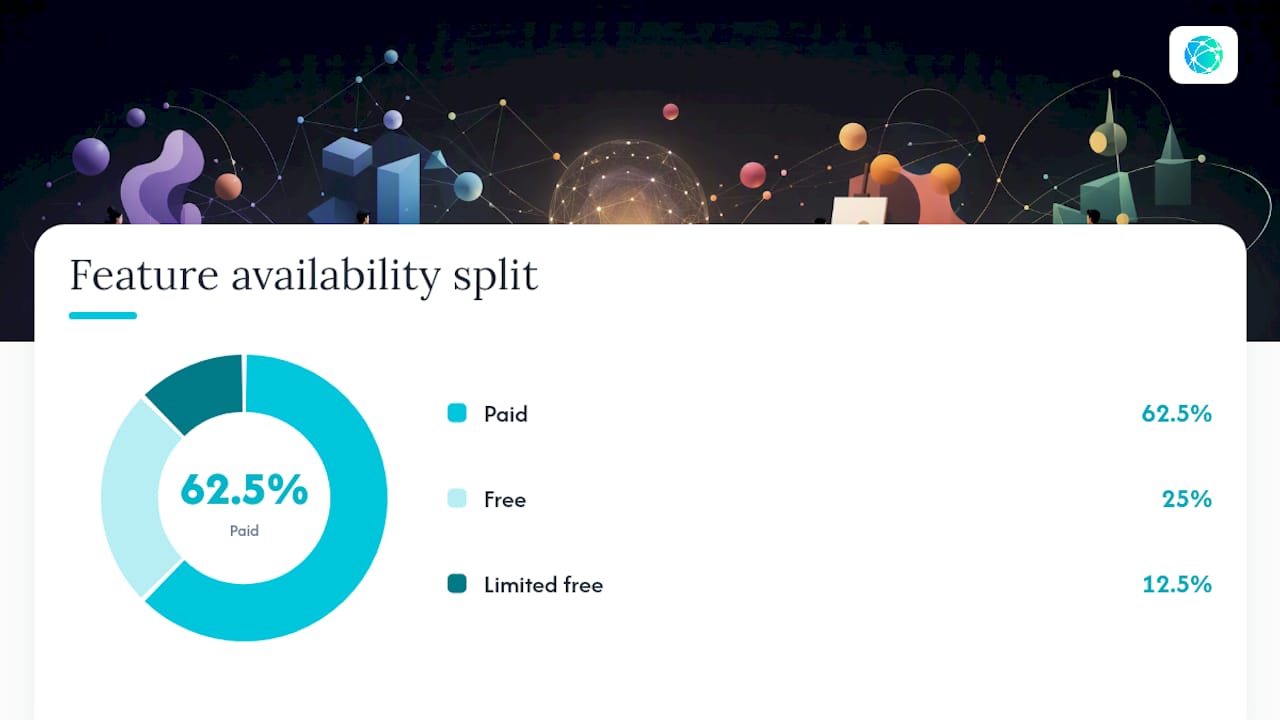
| Feature | Why it matters for artists | Typically free? |
|---|---|---|
| Mobile-optimized design | Most bio traffic is mobile | Yes |
| Custom domain | Brand trust, recognition | Paid |
| Branded short links | Offline/online consistency | Paid |
| QR code generation | Offline promotion | Free on Lflow |
| Real-time analytics | Campaign decisions | Limited free / full paid |
| Email capture | Audience ownership | Paid on most platforms |
| Scheduled/archived links | Release campaigns | Paid |
| CSV export | Reporting and backup | Paid |
How do you pick the right link hub for your workflow?
The right platform depends on how often you update your hub and how complex your campaigns get. Matching tool complexity to your maintenance cadence is the single most practical filter.
Start by mapping your use case:
- Release campaigns (musicians, authors): you need scheduled links, pre-save support, and per-link analytics to measure what drives streams.
- Evergreen catalog (visual artists, photographers): you need a clean, always-current storefront with shop and commission links, plus a custom domain.
- Ticketed events (performers, workshop instructors): you need fast link swaps, QR codes for physical venues, and email capture for follow-up.
Core criteria to evaluate:
- Does it support a custom domain on the plan you can afford?
- How deep are the analytics? (Click source, device, geography, or just total clicks?)
- Can you capture email addresses directly on the page?
- Does it generate QR codes, and are they free?
- Can you schedule links to go live and expire automatically?
- Is there a mobile editor for on-the-go updates?
- What happens to your data if you cancel? (CSV export matters here.)
Red flags to walk away from:
- No custom domain option at any price point
- Platform branding you cannot remove even on paid plans
- No data export, ever
- Analytics limited to total clicks only
- No mobile editing capability
- Pricing that jumps dramatically between tiers with no mid-range option
Decision rule: list your must-haves, find the lowest-cost plan that covers all of them, and treat everything else as a bonus.
How do you set up and optimize your artist link hub?
Getting a working, well-optimized hub takes under 30 minutes if you follow a clear sequence. Here is the workflow:
-
Choose your plan and claim your URL. Start with a free plan to test the interface, then upgrade once you confirm the custom domain and analytics meet your needs. Set your branded short URL immediately, even on a free plan, so your bio links stay consistent.
-
Build the page with priority ordering. Put your top CTA first (latest release, current commission slots, or upcoming show). Add your shop, mailing list signup, and social profiles below it. Check the mobile preview before publishing. One clear primary CTA with supporting sections below it is the structure that converts best.
-
Add conversion elements. Connect your email capture form. Add music smart links with UTM parameters so you can trace which platform drove each click. Link your store with trackable URLs. If you run pre-save campaigns, set them up as dedicated links with their own analytics.
-
Generate and deploy QR codes. Download a QR code for your hub and for individual high-priority links. Print them on packaging, posters, and event materials. Test each one on two different phones before printing at scale.
-
Set up your analytics routine. Check platform source breakdown, top-clicked links, geographic hotspots, and device split every week. Weekly analytics checks let you catch a dead link or a traffic spike before it costs you.
Optimization habits that compound over time:
- Rotate the top link to match your current campaign, then archive it when the campaign ends.
- Schedule links for launch day so they go live at midnight without you staying up.
- A/B test your CTA copy when the platform allows it.
- Export your click data to CSV monthly so you own a record of your growth.
Pro Tip: If your platform has a mobile app, add it to your home screen and set a weekly reminder to check analytics. Five minutes of data review beats an hour of guessing which post drove your best week.
How does a link hub handle security and privacy?
Your link hub collects click data, and on paid plans it may collect email addresses. That means the platform's data practices matter. Look for HTTPS on all pages, clear data retention policies, and the ability to delete your account and its data on request. Password-protected links add a layer of control for private content like unreleased demos or client previews. For email capture, confirm the platform is compliant with CAN-SPAM and, if you have international fans, GDPR. Always check whether the platform sells or shares your audience data with third parties before you hand over your mailing list.
What does good customer support look like for artists?
Artists often update their hub around launches, which means support requests tend to cluster at the worst possible times: midnight before a release, the morning of a show. A platform with only email support and a 48-hour response window is a liability in those moments. Look for live chat, a responsive help center with video walkthroughs, and a community forum where other creators share solutions. Lflow offers priority support on paid plans, which matters most when a broken link is costing you clicks in real time.
What do artists say about using link hub platforms?
Across creator communities on Reddit, Discord servers for independent musicians, and visual artist forums, the consistent feedback points to a few patterns. Artists who switched from generic short-link tools to dedicated link hubs report that having all their destinations in one place reduced the number of "where do I find your music?" messages they received. Musicians specifically highlight email capture as the feature they wish they had set up earlier, since a mailing list outlasts any algorithm change. Visual artists and illustrators tend to prioritize clean templates and custom domains so their hub matches their portfolio aesthetic. The most common complaint across platforms is analytics that are too shallow on free tiers, which is why upgrading for full click-source data is a recurring recommendation in artist communities.
How do top artists actually use link hub platforms?
The pattern among working artists is consistent: the link hub is the one URL that goes everywhere. It sits in every social bio, gets printed on every piece of merch, and anchors every email signature. Musicians use it to route fans to their preferred streaming service via smart links, run pre-save campaigns for upcoming releases, and capture email addresses in exchange for a free download or early access. Visual artists use it as a lightweight portfolio gateway, linking to their full site, their print shop, their commission waitlist, and their newsletter in one place. Performers and workshop instructors swap the top link for each new event and use QR codes at the venue to drive post-show follows and signups. The strategic value of a link hub is that it turns every social post into a conversion opportunity, not just a content moment.
Does your link hub affect how fans discover you through search?
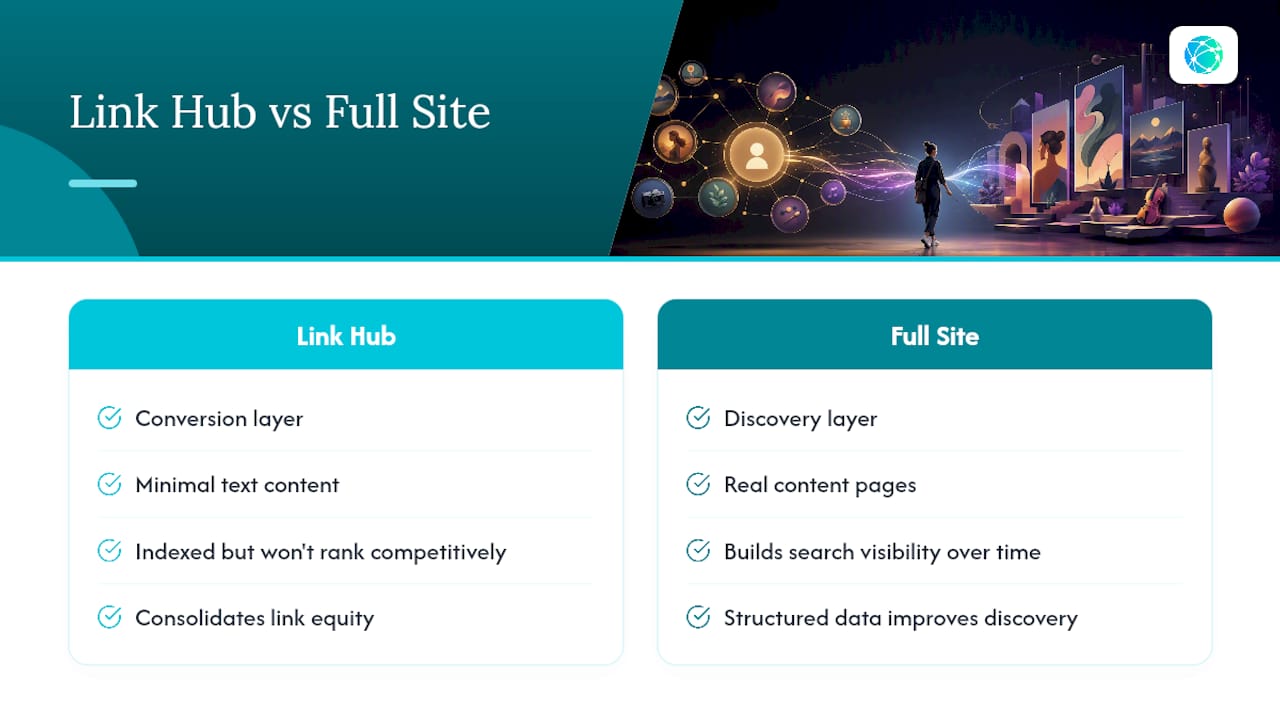
A link hub page itself is not a substitute for a full website when it comes to SEO. Search engines index it, but a single-page hub with minimal text content will not rank for competitive terms on its own. What it does do is consolidate your link equity: when fans or press mention your bio URL, all that attention flows to one destination. Pairing your hub with destination pages that include real content and structured data is the move that actually builds search visibility over time. Think of the hub as the conversion layer and your full site or blog as the discovery layer. For artists who rely entirely on social platforms, a well-structured hub with a custom domain at least ensures your branded URL appears in search results when someone looks up your name directly. Content structure and fast page load times also contribute to how social traffic converts once it lands, which indirectly supports your overall digital presence.
Key Takeaways
A mobile-first, branded link hub with real-time analytics and QR code support is the most practical and cost-effective way for artists to consolidate their online presence and convert social traffic into fans.
| Point | Details |
|---|---|
| Start with a free plan | Create your account and claim your branded short URL immediately, even before upgrading. |
| First-week analytics | Watch platform source breakdown, top-clicked links, and device split to understand where your audience comes from. |
| One-month goal | Build your mailing list via email capture and rotate your top CTA to match your current campaign. |
| Pay for what drives growth | Custom domain, full analytics, and email capture are the three paid features that justify upgrading from free. |
| Lflow as your hub | Lflow offers free QR codes, mobile-optimized designs, and under-two-minute onboarding, with Pro features including custom domains and advanced analytics. |
What actually matters when artists choose a link hub
Most articles on this topic treat every feature as equally important. They are not. For artists, three things determine whether a link hub actually grows your audience: whether fans trust the URL enough to click it (custom domain), whether you know which platform is sending traffic (analytics depth), and whether you capture something durable from each visit (email). Everything else is secondary.
The platforms that get this right give you those three things at a reasonable price and stay out of your way. The ones that bury analytics behind expensive tiers or make email capture a premium add-on are optimizing for their revenue, not yours. Build your shortlist around those three criteria, test the free plan for a week, and upgrade only when you hit a wall.
Lflow gives artists a real head start
Artists who want a branded link hub without the setup overhead have a direct path with Lflow. You get mobile-optimized pages, free QR codes for every link, branded short URLs, and real-time analytics from day one, with onboarding that takes under two minutes. The free plan is genuinely useful, not a stripped demo, and the Pro tier adds custom domains, advanced analytics, email capture, and scheduled links for artists running active release campaigns.
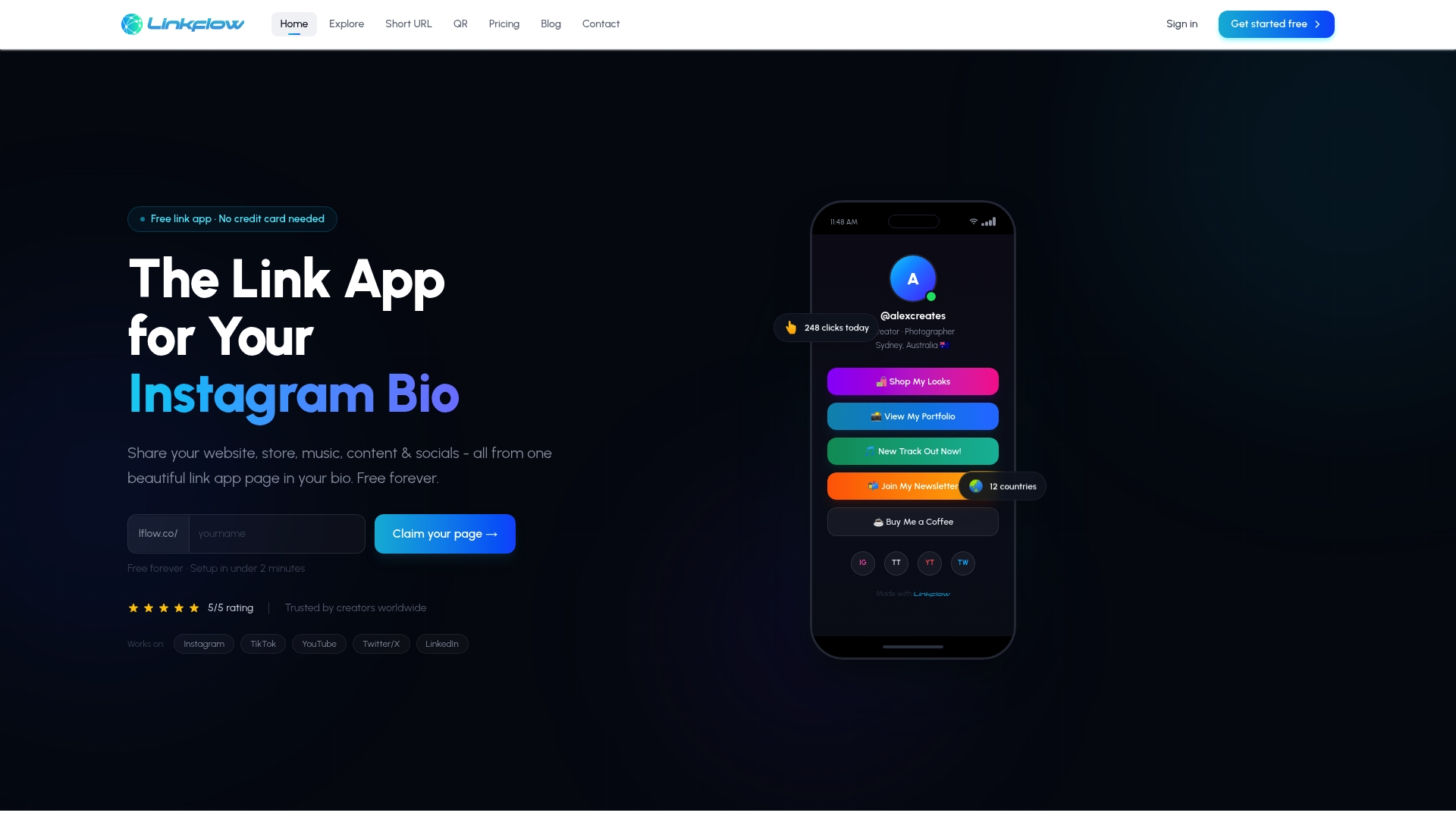
Start with the free link-in-bio plan and have your hub live before your next post goes up. When you're ready to add a custom domain or unlock full analytics, the pricing page shows exactly what each tier includes.
Further reading and primary sources
- Lflow.co
- Bio links for artists: maximize your online impact
- How to Optimize Links for Artists: 2026 Guide
- Why Every Creator Needs a Link-in-Bio Tool — Forjio Blog
- Link in Bio Ideas for Creators: Best Strategies & Tools for 2026
- link-in-bio-tools-musicians | Orphi
- marketingguardians.com